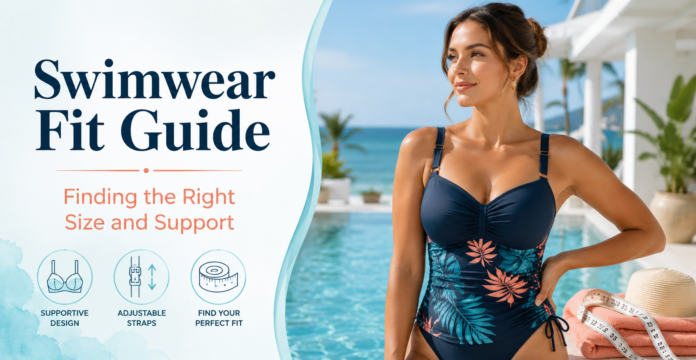
A good swimsuit should feel secure, smooth, and comfortable without pulling, slipping, or digging into your skin. This swimwear fit guide explains how to choose the right size, shape, coverage, and support so your swimwear works well in real life, not just on a size chart. The best fit depends on your body shape, bust support needs, torso length, waist comfort, hip coverage, fabric stretch, and how you plan to use the swimsuit. A swimsuit for swimming laps needs stronger hold than one made for relaxing at the beach. A modest swimsuit may need more coverage, while a fashion swimsuit may focus more on style. This swimwear fit guide will help you understand simple signs of a good fit, common sizing mistakes, and easy ways to choose swimwear that feels right from the first wear.
Swimwear Fit Guide: Start With Your Real Body Measurements
The first step in any swimwear fit guide is measuring your body before choosing a size. Many people buy swimwear based on their normal clothing size, but swimsuits fit differently because they stretch, hold, and sit close to the body. Measure your bust, underbust, waist, hips, and torso length with a soft measuring tape. The tape should sit flat against your body, but it should not be tight. Bust measurement helps with cup and chest support. Waist measurement helps with one-piece suits, high-waisted bottoms, and tankinis. Hip measurement helps you avoid bottoms that cut into the skin or become loose in water. Torso length is very important for one-piece swimwear because a short torso fit can pull at the shoulders, while a long torso fit can sag around the waist. A clear swimwear fit guide always starts with numbers because guessing often leads to returns, discomfort, and poor support.
Choose Swimwear Based on Activity, Not Only Style
A swimsuit should match how you plan to use it. This swimwear fit guide is not only about size; it is also about purpose. If you swim, dive, play beach sports, or move a lot, you need swimwear that stays in place. Look for wider straps, secure waistbands, lined fabric, strong stitching, and good stretch recovery. If you mostly relax near the pool or beach, you may care more about shape, color, and coverage. For a wider range of water-ready styles, the swimwear collection can help you compare different options without forcing every body type into one style. A sporty swimsuit should not slip when you raise your arms. A supportive swimsuit should not press too hard on the ribs. A stylish swimsuit should still feel safe when wet. The best swimsuit is the one that matches your movement, comfort, and confidence at the same time.
How the Top Should Fit for Support and Comfort
The top part of swimwear should hold the bust without squeezing it. In this swimwear fit guide, the best top fit has three signs: the band feels firm, the cups cover well, and the straps stay in place. If the band rides up at the back, the top may be too loose or not supportive enough. If the cups create gaps, the size may be too large or the shape may not match your bust. If the bust spills from the top or sides, the cup area may be too small. Straps should help with comfort, but they should not carry all the weight. A strong underband gives better support than thin loose straps. For larger busts, look for wider straps, molded cups, shelf bras, underbust elastic, or adjustable closures. For smaller busts, light padding, shaping seams, and triangle tops can work well. A proper top fit should make you feel supported while breathing and moving normally.
How the Bottom Should Fit Around Waist and Hips
Swimwear bottoms should sit smoothly on the waist and hips without cutting, rolling, or sliding. A good swimwear fit guide must explain that tighter is not always better. If the waistband digs into your skin, it may look tight even before getting wet. If the leg openings pinch, they can cause discomfort when walking or sitting. If the bottom becomes loose when you move, swim, or bend, it may be too large or the fabric may have weak recovery. High-waisted bottoms give more tummy coverage and can feel more secure. Mid-rise bottoms are simple and easy for everyday swimwear. Low-rise bottoms create a lighter style but may not suit people who want more hold. Full-coverage bottoms are useful for active swimming and family beach days. Cheeky cuts are more fashion-focused. The right bottom should stay in place without needing constant fixing.
Coverage, Modesty, and Personal Comfort
Coverage is a personal choice, and this swimwear fit guide supports comfort first. Some people feel best in bikinis, while others prefer one-pieces, swim dresses, rash guards, or full-coverage sets. Modest swimwear is a strong option for people who want more body coverage, sun protection, or a secure fit during movement. For example, modest swimwear can be useful when you want coverage around the arms, legs, chest, or hips while still staying comfortable in water. Coverage should not mean heavy or stiff. Good modest swimwear should still use stretch fabric, smooth seams, and quick-dry materials. If a covered swimsuit feels too heavy when wet, it may slow movement. If it is too loose, it can drag in water. The best modest fit feels light, secure, breathable, and easy to move in.
One-Piece, Tankini, Bikini, and Swim Dress Fit
Different swimwear styles solve different fit problems. This swimwear fit guide helps you understand which style may suit your body and comfort level. A one-piece swimsuit gives a clean shape and full body hold, but torso length must be correct. A tankini gives more flexibility because the top and bottom can be different sizes. This is helpful when your bust, waist, and hips do not match one size chart. A bikini is easy to mix and match, but it needs secure bands and straps for movement. A swim dress gives extra hip and thigh coverage and can feel more relaxed. If you like a top that covers the midsection but still feels easy to wear, tankinis for women’s swimwear can be a practical middle option. Each style can fit well if the size, stretch, and support match your body.
Fabric Stretch and Recovery Are Very Important
Swimwear fabric should stretch when you move and return to shape after use. A strong swimwear fit guide must include fabric because size alone does not decide comfort. Good swimwear usually uses blends with nylon, polyester, or spandex. Spandex gives stretch, while polyester and nylon help with strength and shape. Stretch recovery means the fabric does not become loose after swimming. Poor recovery causes sagging around the seat, waist, or chest. Fabric should feel snug when dry because it may relax slightly in water. However, it should not feel painful, tight, or hard to breathe in. Lined swimwear gives more coverage and a smoother look. Thicker fabric may offer better support, but it should still dry well. Thin fabric may feel light, but it can become see-through or lose shape faster. A balanced fabric gives comfort, coverage, and long-term wear.
Quick Fit Checklist Before You Buy
Use this simple checklist from the swimwear fit guide before choosing your final size:
- The straps stay in place without digging.
- The bust feels supported without spilling.
- The waist does not roll, pinch, or slide.
- The hips feel covered and secure.
- The fabric stretches but returns to shape.
- The leg openings do not cut into the skin.
- The swimsuit does not pull at the shoulders.
- You can sit, bend, walk, and raise your arms.
- The lining gives enough coverage when wet.
- The style matches your swimming or beach activity.
Common Swimwear Sizing Mistakes to Avoid
Many swimwear problems happen because people choose style before fit. This swimwear fit guide can help you avoid the most common mistakes. Do not size down only because you want a tighter look. A swimsuit that is too small can dig into the skin, flatten the bust, pull at the shoulders, and feel worse when wet. Do not size up only because you want comfort. A swimsuit that is too large may sag, shift, or fill with water. Do not ignore torso length in one-piece swimwear. A wrong torso fit can make even the correct bust and hip size feel bad. Do not trust every brand size equally because swimwear sizing can change by cut and fabric. Also, do not forget movement testing. Raise your arms, sit down, bend forward, and walk around. If the swimsuit moves too much during a dry test, it may move even more in water.
Support Features That Make Swimwear Feel Better
Support comes from design, not just tightness. A helpful swimwear fit guide should show which features improve comfort. Adjustable straps help you control shoulder fit. Wide straps spread pressure better than thin straps. Shelf bras give light support inside one-piece suits and tankinis. Molded cups help shape the bust and reduce movement. Underbust bands give a secure base. High necklines can help during active swimming. Racerback designs can keep straps steady. Power mesh panels can support the waist and tummy area without feeling too stiff. Drawstrings can help swim shorts and bottoms stay secure. A supportive swimsuit should feel firm but not painful. If you feel marks, sharp pressure, or rubbing after a short try-on, the fit may not be right. The goal is simple: the swimsuit should support your body while letting you enjoy water, sun, and movement.
Final Thoughts: Choose Fit Before Fashion
The best swimsuit is not always the smallest, tightest, trendiest, or most expensive one. The best swimsuit is the one that fits your body, supports your movement, and makes you feel relaxed. This swimwear fit guide shows that good fit comes from measurements, activity needs, bust support, waist comfort, hip coverage, fabric quality, and personal confidence. A swimsuit should stay in place when you move, feel comfortable when wet, and match your coverage needs. Fashion matters, but fit matters first. When you choose swimwear with the right size and support, you spend less time adjusting your outfit and more time enjoying the beach, pool, or swim day. Use this swimwear fit guide before buying so your next swimsuit feels secure, comfortable, and easy to wear.
FAQs
What is the most important part of swimwear fit?
The most important part of swimwear fit is balance. The swimsuit should feel secure without being too tight. It should support the bust, sit smoothly on the waist and hips, and stay in place during movement.
Should swimwear feel tight when dry?
Swimwear should feel snug when dry, but it should not feel painful or hard to breathe in. Some swimwear relaxes slightly in water, so a secure dry fit is normal. However, digging, pulling, or squeezing means the size may be wrong.
How do I know if my swimsuit is too small?
Your swimsuit may be too small if the straps dig in, the bust spills out, the leg openings cut into your skin, or the fabric pulls strongly across the body. A swimsuit that limits movement is usually not the right fit.
Is a tankini better than a one-piece swimsuit?
A tankini can be better if your top and bottom sizes are different or if you want more flexibility. A one-piece can be better if you want full-body hold and a smooth shape. The best choice depends on your body, comfort, and activity.