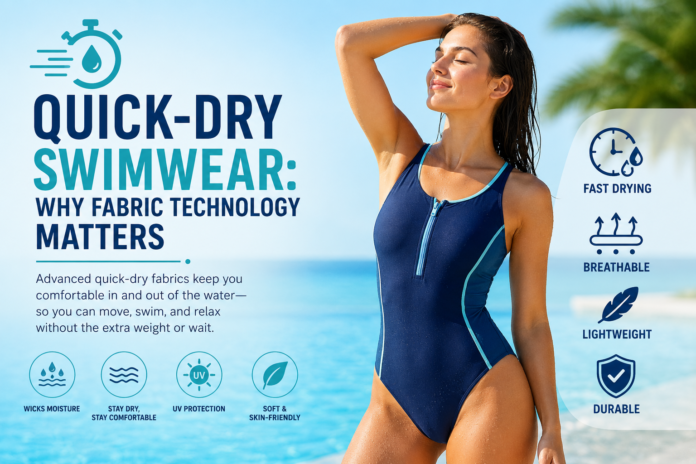
Quick-dry swimwear is made to dry faster than regular swimwear after swimming, sweating, or washing. This matters because wet fabric can feel heavy, sticky, cold, and uncomfortable on the skin. Good swimwear should not only look nice. It should also help the body feel fresh before, during, and after water activities. Quick-dry swimwear uses special fabric technology to move water away from the body and spread moisture across the surface so it can dry faster. This is useful at the beach, pool, gym, resort, spa, and even during summer travel. When swimwear dries quickly, it reduces discomfort, helps prevent rubbing, and makes it easier to move from water to normal activities without feeling soaked. That is why quick-dry swimwear is not just a fashion feature. It is a real comfort feature.
What Is Quick-Dry Swimwear?
Quick-dry swimwear is swimwear made from fabrics that absorb less water and release moisture faster than heavy cotton or basic fabric blends. Most quick-dry swimwear is made with synthetic fibers such as polyester, nylon, spandex, or blended performance materials. These fabrics do not hold water deep inside the fiber like cotton does. Instead, they allow water to sit closer to the surface and evaporate more quickly. This makes quick-dry swimwear feel lighter after swimming and more comfortable when the wearer leaves the water. It is especially helpful for people who spend long hours outdoors, travel between beach and hotel, or wear swimwear under casual summer clothing. The main goal is simple: the fabric should dry fast, stay light, and keep the body comfortable.
Why Quick-Dry Swimwear Fabric Technology Matters
Quick-dry swimwear fabric technology matters because the fabric controls how the swimwear feels in real use. A swimsuit can have a nice design, but if the fabric stays wet too long, it can still feel uncomfortable. Fabric technology affects drying speed, stretch, breathability, weight, shape recovery, and skin comfort. A good fabric lets water pass away from the body instead of trapping it. For shoppers comparing different options, the main swimwear category can help show how different swimwear styles use fabric, coverage, and fit in different ways. Quick-dry swimwear is better for active beach days because it supports easy movement, faster drying, and less wet cling. This is why fabric choice should be checked before style, color, or print.
Stretch Fitness Apparel vs Compression Fitness Apparel and Swimwear Comfort
Stretch fitness apparel vs compression fitness apparel is an important idea because both use stretch, but they do not feel the same on the body. Stretch fabric allows easy movement without strong pressure. Compression fabric gives a tighter feel and supports muscles by holding the body more firmly. In swimwear, quick-dry swimwear often uses stretch fabric because swimming, walking, sitting, and playing all need comfort. Some swimwear may feel lightly supportive, but it should not feel too tight unless it is designed for performance use. Stretch fitness apparel vs compression fitness apparel also helps buyers understand that comfort is not only about softness. It is also about how the fabric moves, dries, and returns to shape. For everyday swimming, stretch and quick drying are usually more important than strong compression.
How Quick-Dry Fabric Works
Quick-dry swimwear works by using fibers that do not soak up too much water. These fibers help water move across the fabric surface instead of staying trapped inside. When the water spreads out, more of it is exposed to air, so it dries faster. This process is often called moisture management. Some fabrics also use special knitting or weaving methods that improve airflow. Better airflow helps heat and moisture escape. Quick-dry swimwear is also usually lightweight, which means there is less fabric to hold water. This is why a good swimsuit can feel wet for a short time but not remain heavy for hours. The best quick-dry swimwear balances drying speed with stretch, softness, strength, and shape control.
Key Benefits of Quick-Dry Swimwear
Quick-dry swimwear gives many simple benefits that people can feel in daily use.
- It feels lighter after swimming.
- It helps reduce sticky wet fabric on the skin.
- It makes beach-to-café movement easier.
- It is better for travel because it dries faster after washing.
- It can help reduce rubbing caused by long-lasting wet fabric.
- It keeps the body more comfortable in warm weather.
- It supports active movement during swimming, walking, and beach games.
- It is easier to pack because it does not stay wet for too long.
- It helps swimwear feel fresh during repeated use.
- It works well for pools, beaches, resorts, and water parks.
Why Fit and Coverage Still Matter
Quick-dry swimwear is useful, but fit and coverage are also important. A swimsuit that dries fast but fits badly will still feel uncomfortable. Tight areas can rub the skin, loose areas can move too much in water, and poor coverage can make the wearer feel less confident. Some people prefer more coverage for comfort, culture, sun protection, or personal style. Options like modest swimwear show how swimwear can provide better coverage while still focusing on movement and comfort. Quick-dry swimwear should match the wearer’s activity level and comfort needs. A good fit allows the fabric to do its job without pulling, sagging, or trapping water in awkward areas.
Quick-Dry Swimwear for Travel and Daily Use
Quick-dry swimwear is very useful for travel because travelers often need clothing that dries fast and packs easily. A swimsuit that stays wet for many hours can create bad smells in a bag and make packing difficult. Quick-dry swimwear is better for hotel stays, beach trips, pool visits, cruises, and family vacations because it can be rinsed and reused more easily. It also works well for people who move from swimming to walking, eating, or shopping. Styles such as tankinis women’s swimwear are useful for people who want comfort, coverage, and easy movement in one outfit. Fast-drying fabric makes these styles more practical for full-day wear.
Stretch, Shape Recovery, and Long-Term Comfort
Quick-dry swimwear should not only dry fast. It should also keep its shape after use. This is where stretch and shape recovery matter. Stretch helps the fabric move with the body, while shape recovery helps it return to its original form after stretching. Without good recovery, swimwear can become loose, baggy, or uneven after repeated swimming. This is especially important because swimwear faces water, heat, salt, chlorine, sunscreen, and body movement. Quick-dry swimwear with good stretch can support comfort without feeling stiff. Stretch fitness apparel vs compression fitness apparel also connects here because strong compression may feel supportive, but too much pressure can reduce comfort in casual swimwear. For most people, balanced stretch is the better choice.
Common Mistakes When Choosing Quick-Dry Swimwear
Many people choose swimwear only by color, print, or price. This can lead to poor comfort later. One common mistake is choosing thick fabric that feels strong but dries slowly. Another mistake is choosing swimwear that is too tight because the buyer thinks tight means better support. In reality, tight swimwear can rub, restrict movement, and feel worse when wet. Some people also forget to check fabric labels. A good label can tell whether the swimwear contains polyester, nylon, or spandex. Quick-dry swimwear should feel light, smooth, and flexible. Buyers should also avoid fabric that becomes transparent when wet. A swimsuit should stay comfortable, secure, and practical in real water conditions, not only look good when dry.
Quick-Dry Swimwear vs Regular Swimwear
Quick-dry swimwear is usually more practical than regular swimwear because it handles moisture better. Regular swimwear may look similar, but if the fabric holds too much water, it can feel heavy after swimming. Quick-dry swimwear helps the wearer feel cleaner and more comfortable because it reduces the time spent in wet clothing. This is especially helpful for children, travelers, active swimmers, and people who visit beaches or pools often. Regular swimwear may be fine for short use, but quick-dry swimwear gives better comfort during longer wear. Stretch fitness apparel vs compression fitness apparel also shows that fabric performance matters more than simple appearance. The best swimwear should dry fast, stretch well, fit properly, and feel easy on the skin.
Conclusion
Quick-dry swimwear is worth it for anyone who wants better comfort, faster drying, easier movement, and more practical use after swimming. It helps reduce the heavy, sticky feeling that comes from wet fabric and makes beach, pool, and travel days easier. The best quick-dry swimwear should feel light, stretch comfortably, keep its shape, and dry faster than regular fabric. It should also match the wearer’s fit, coverage, and activity needs. Stretch fitness apparel vs compression fitness apparel is a helpful comparison because it shows that stretch, support, and comfort are different things. For most everyday swimmers, quick-dry swimwear with balanced stretch is the better choice. In the end, fabric technology matters because it changes how swimwear feels in real life.
FAQs
What is quick-dry swimwear?
Quick-dry swimwear is swimwear made from fabric that releases water faster than regular fabric. It usually uses polyester, nylon, spandex, or similar performance fibers to reduce water holding and improve drying speed.
Is quick-dry swimwear better than regular swimwear?
Yes, quick-dry swimwear is better for comfort, travel, beach days, and repeated use because it dries faster and feels lighter after swimming. Regular swimwear may stay wet longer and feel heavier on the body.
Does quick-dry swimwear stop sweating?
No, quick-dry swimwear does not stop sweating. It helps move moisture away from the body and allows it to dry faster, which can make the wearer feel more comfortable in warm weather.
What fabric is best for quick-dry swimwear?
Polyester, nylon, and spandex blends are commonly used for quick-dry swimwear. These fabrics are lightweight, flexible, and better at releasing moisture than cotton or heavy natural fabrics.