Home Blog Page 17

Finishes and Washing Tests for Compression Wear

Compression wear fails for one of two reasons. Either the fabric was wrong from the start, or the finishing and testing steps were skipped during development. Both problems are avoidable. Both are expensive when they reach your customer.

Finishes and washing tests are the two most overlooked quality tools in compression garment manufacturing. Brands that take them seriously produce garments that hold their shape, color, and compression level wash after wash. Brands that skip them learn the hard way — through returns, bad reviews, and unhappy customers.

This guide covers everything you need to know about durable finishes and washing tests before your next compression collection goes into bulk production.

Why Finishes and Washing Tests Matter More in Compression Wear

Standard activewear faces regular washing. Compression wear faces something harder. Because compression garments apply constant physical pressure to the body, the elastic fibers inside the fabric are always under tension — during wear and even during storage. This continuous stress accelerates fiber fatigue over time.

Add frequent washing to that equation and you have a product that degrades faster than almost any other activewear category if the fabric and finishes are not up to standard. Therefore, finishes and washing tests are not optional extras for compression brands. They are the foundation of a durable, market-ready product.

This applies equally whether you are building a performance compression range for serious athletes or a softer compression line for yoga wear customers who prioritize comfort and longevity in equal measure.

Key Durable Finishes for Compression Garments

Anti-Pilling Finish

Pilling — the formation of small fiber balls on the fabric surface — is one of the most common customer complaints in compression wear. It happens because loose fiber ends work their way to the surface through friction during wear and washing.

An anti-pilling finish binds those loose fiber ends to the fabric structure, significantly reducing surface pilling through extended use. This finish is especially important for gym wear compression styles that face high surface friction against gym equipment, training mats, and clothing layers during workouts.

Without this finish, even a high-quality nylon-spandex fabric can look worn and rough after twenty to thirty wash cycles — which is completely unacceptable in a product category where customers pay premium prices.

Moisture Management Finish

A moisture management finish pulls sweat away from the skin and disperses it across the fabric surface for faster evaporation. In compression wear, this finish is critical because the garments sit tightly against the body during intense physical activity.

However, the key word here is durable. Many basic moisture management finishes wash out within fifteen to twenty cycles — which means the garment loses its functional benefit well before it reaches the end of its useful life.

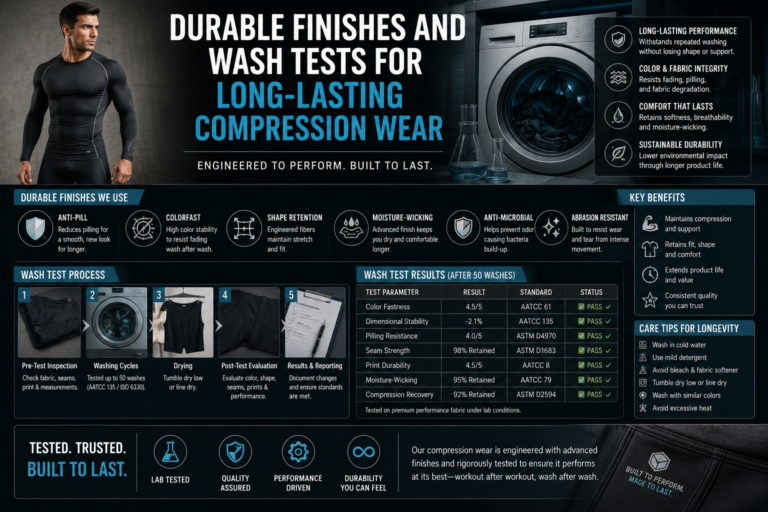
Therefore, always specify a durable moisture management finish rated to a minimum of fifty wash cycles. Then verify that rating through finishes and washing tests on fabric swatches before approving any material for production. A finish that cannot survive fifty washes has no place in a serious compression collection.

Additional Finishes Worth Specifying

Beyond anti-pilling and moisture management, several other finishes add meaningful value to compression garments depending on your target market:

  • UV protection finish: Essential for outdoor compression styles used in running, cycling, or triathlon. A UPF 50+ rated finish blocks harmful ultraviolet radiation and should maintain that rating through at least thirty wash cycles. Brands building outdoor fitness apparel compression ranges should make this finish a standard specification across all exposed styles.
  • Anti-odor finish: Compression garments trap heat and sweat during intense activity, creating ideal conditions for odor-causing bacteria. An anti-odor or antimicrobial finish inhibits bacterial growth on the fabric surface, keeping garments fresher between washes. Like moisture management, always verify the durability of this finish through washing tests — not just the manufacturer’s specification sheet.

Washing Tests Every Compression Brand Should Run

H3: Dimensional Stability Washing Test

This is the most important finishes and washing tests procedure for compression wear specifically. Dimensional stability testing measures how much the garment shrinks or stretches after a defined number of wash cycles — typically tested at twenty, thirty, and fifty cycle intervals.

Why does this matter so much? Because compression levels depend entirely on precise dimensions. A garment that shrinks 5% after twenty washes now applies a different pressure than it did when new. That shift changes the product’s performance — and customers who buy compression wear for specific athletic or recovery benefits will notice immediately.

Every compression fabric must pass dimensional stability testing within a defined tolerance — typically no more than 3–5% change in either direction — before it is approved for bulk production.

H3: Colorfastness Washing Test

Finishes and washing tests for colorfastness evaluate how well the dye holds through repeated laundering. Compression fabrics — particularly dark colors like navy, black, and charcoal — are prone to fading if dye fixation was not carried out correctly during manufacturing.

The test rates color retention on an international grey scale, from grade 1 (severe fading) to grade 5 (no change). For activewear and compression wear, a minimum grade of 4 is the industry standard. Anything below that is not acceptable for a market-facing product.

Furthermore, colorfastness to perspiration testing is equally important for compression wear. Because these garments come into frequent contact with sweat during intense activity, brands should run both wash and perspiration colorfastness tests during fabric approval — not just one or the other.

[Image Placement: A washing test result board showing compression fabric swatches graded against a colorfastness grey scale after multiple wash cycles in a quality control setting] Alt Text: Colorfastness washing test results for compression wear fabric showing grey scale grading after multiple wash cycles in quality control

H3: Elastic Recovery Test

This test stretches the compression fabric to a defined extension, holds it under tension for a set period, and then measures how completely it returns to its original dimensions after release.

High elastic recovery is the defining performance property of any compression fabric. A fabric that passes elastic recovery finishes and washing tests at fifty cycles has demonstrated that it will maintain its compression performance through real-world use — not just when it comes off the production line.

Brands that skip this test frequently discover the problem at the worst possible time: when customer reviews start mentioning that the garment feels loose after a few months of regular use.

H3: Seam Strength Test

Compression garments place far greater stress on seams than standard activewear because the fabric is always under tension during wear. Seam strength testing pulls seams apart under controlled force to verify they meet minimum strength standards before bulk production begins.

This test is especially critical for compression wear styles with flatlock or coverstitch construction at high-stress points — inner thighs, gussets, and waistband joins. Seam failures in compression garments tend to be sudden and complete, which makes them one of the most damaging quality issues a brand can face in this category.

How to Build Finishes and Washing Tests Into Your Development Timeline

The most effective approach is to run finishes and washing tests at two separate stages — not just one.

Stage One — Fabric Swatch Approval: When you receive fabric swatches from a supplier, immediately run them through a twenty to fifty cycle wash test. If the fabric fails dimensional stability, colorfastness, or elastic recovery at this stage, you find out before investing in patterns, samples, and production commitments. This is by far the cheapest point to catch a fabric problem.

Stage Two — Pre-Production Sample Approval: After sampling is complete and fit is approved, run the final garment through a complete finishes and washing tests cycle before releasing bulk production. This confirms that the finished garment — including all seams, applied finishes, trims, and labels — performs correctly after laundering, not just the base fabric in isolation.

Brands building out a full activewear range that includes compression alongside other categories should apply the same two-stage testing discipline across all product types. Consistency in testing standards produces consistency in product quality — and that consistency is what builds a brand customers return to.

For brands that also produce broader fitness apparel collections, establishing one unified wash testing protocol across all styles simplifies quality management significantly as production volumes grow.

Final Thoughts

Finishes and washing tests are not technical formalities. They are the practical tools that determine whether your compression garments perform for one season or five years. Brands that invest in proper finishing specifications and thorough pre-production testing produce garments their customers trust, reorder, and recommend.

Specify your finishes clearly in every tech pack. Test your fabrics before sampling. Test your samples before bulk production. Set minimum passing standards and hold every supplier to them.

That discipline is what separates a compression collection built to last from one that quietly disappoints.

FAQs

What are durable finishes in compression garment manufacturing?

Durable finishes are chemical treatments applied to fabric after knitting and dyeing. They add functional properties — such as anti-pilling, moisture management, UV protection, or anti-odor — and maintain those properties through repeated washing cycles.

How many wash cycles should compression fabric go through during testing?

A minimum of fifty wash cycles is the industry standard for performance compression wear. Testing at twenty and thirty cycle intervals as well helps brands identify exactly when fabric performance begins to decline.

What does a dimensional stability washing test measure?

It measures how much a compression garment shrinks or stretches after washing. Because compression levels depend on precise dimensions, garments must maintain their original measurements within a defined tolerance — typically 3–5% — after repeated laundering.

Why is colorfastness testing especially important for compression wear?

Compression garments are worn during intense activity and washed very frequently. Both perspiration and repeated laundering accelerate color fading, making high colorfastness ratings — minimum grade 4 on the grey scale — essential for market-ready compression products.

When should brands run finishes and washing tests — before or after sampling?

Both. Run washing tests on fabric swatches during swatch approval to catch material problems early. Then run a final test on pre-production samples to confirm that the complete finished garment — including seams, trims, and applied finishes — performs correctly after laundering.
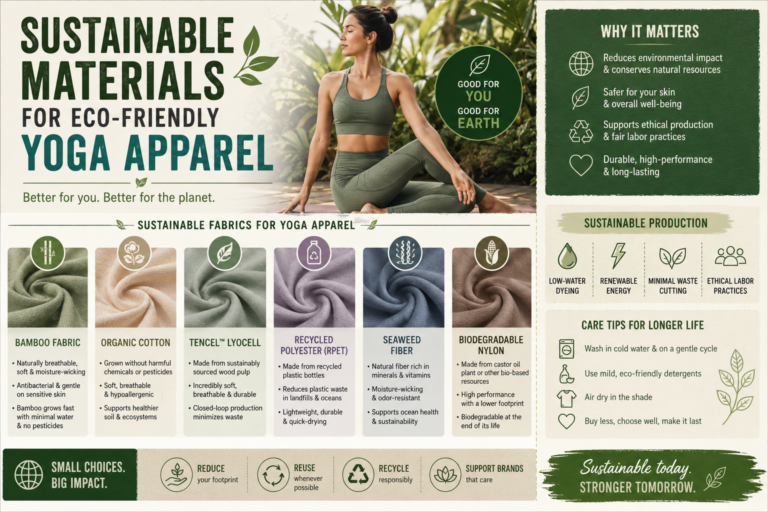
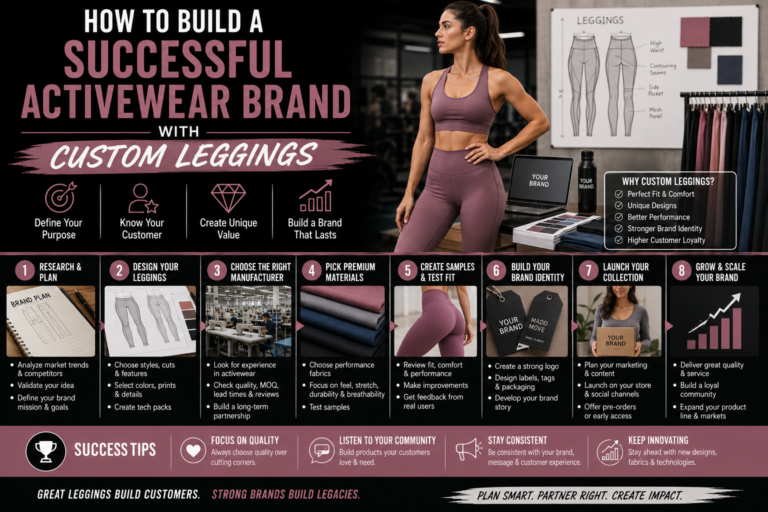
Sustainable Materials for Eco-Friendly Yoga Apparel

Sustainable materials for yoga apparel are closely related. For many practitioners, the practice revolves around mindfulness. Meeting this expectation as a brand isn’t only good business. It’s good for business. It’s more complicated than just picking an eco-friendly fabric to make yoga clothing. Performance is still important. Durability is still important. Not all sustainable fabrics offer both.

This guide explains the best sustainable materials for yoga clothing and what you should know before choosing your fabric.

What sustainable materials matter in yoga apparel

The environmental impact of conventional sportswear fabrics, particularly virgin nylon and polyester, is significant. These fabrics are made from petroleum and take hundreds of year to degrade. They also shed microplastics after every wash.

This is a tension that yoga clothing brands face when they are trying to build their brand on the values of environmental responsibility and wellness. Customers take notice. Retailers inquire about it. Brands that have a track record of sustainability are also better positioned on the market.

Sustainable alternatives have dramatically improved. Eco-friendly fabrics today match traditional performance materials in terms of stretch, durability and moisture management, but without the same impact on the environment.

Recycled polyester

Recycled Polyester (rPET) is made of post-consumer waste plastic, usually recycled bottles. It is almost identical to virgin polyester when it comes to stretch recovery, moisture wicking and durability. Its production is much more energy-efficient and diverts waste plastic from landfill.

Recycled polyester blended with spandex is a great choice for yoga wear. It offers excellent stretch in all directions and retains its shape.

The demand for GRS-certified recycled poly with full traceability documentation is increasing among retailers and consumers.

Organic Cotton

Organic cotton uses less water and no synthetic pesticides. Organic cotton is ideal for yoga wear that’s designed to be worn in lower-impact situations, such as restorative or meditation yoga, or casual studio clothing. It has a natural, soft handfeel, which many yoga practitioners prefer.

Performance is the limitation. The organic cotton takes longer to dry and does not wick moisture like synthetic blends. It has less stretch compared to polyester-spandex blends, which makes it less suitable for styles such as power yoga and hot yoga.

Organic cotton is best used in casual yoga clothing, such as wide-leg pants, oversized tops and pieces that can be worn from the studio to the street. Comfort and natural feel are more important than technical performance.

Bamboo Fabric

Bamboo is one the fastest growing plants on Earth. It requires no pesticides and minimal water. After harvest, it regenerates quickly. Bamboo fabric is soft and breathable. It also has antibacterial properties. This makes it ideal for activewear.

Most bamboo fabrics on the market are processed through a chemcial process, which can be energy intensive and polluting. For a truly sustainable option, look for bamboo lyocell, which is produced using a closed-loop system that reuses and recaptures the solvents.

Blends of bamboo are ideal for workout apparel, where breathability and comfort next to the skin are important. These blends are ideal for lighter yoga styles, and they’re popular in lifestyle collections.

Recycled nylon

Recycled nylon, which is derived from fabric scraps and industrial plastics waste, offers the same performance as virgin nylon, but at a fraction the cost. It is lightweight, durable and offers excellent recovery and stretch.

Recycled nylon is a great choice for yoga wear that requires a premium, smooth handfeel. This includes compression leggings or sports bras with fitted cups. It retains its shape well even after repeated stretching and washing. This makes it one of most durable and sustainable options.

compressionwear manufacturer with experience in recycled nylon can provide advice on the best blend ratios and fabricweights for different garment styles and compression levels.

Image placement: after this section Image : Recycled fishing net material with smooth, premium texture Alt text: recycled material for premium activewear and compression yoga wear

How to choose the right sustainable material for your collection

Your brand’s sustainability position, the intended use of your collection, and customer expectations will determine which sustainable materials you should choose for your yoga clothing.

Here’s a simple guide to help you make your decision.

  • Dynamic Yoga Styles — recycled nylon or recycled polyester blended with spandex
  • Casual or restorative yoga — organic bamboo or cotton blends
  • Compression Pieces — recycled Nylon for shape retention and durability
  • Premium Lifestyle Collection — Bamboo lyocell for softness, natural credentials and superior qualities
  • Sustainable option for the budget-conscious — recycled Polyester rPET

This decision is made much easier when you work with an activewear designer that has relationships with certified sustainable fabrics suppliers. You can be assured your chosen fabric will come with the documentation and certification your customers and retail partner expect.

What to look for in Sustainable Fabrics Certification

Not all fabric claims about sustainability are the same. Look for independent third-party certifications before approving any fabric for production.

Most sustainable yoga clothing is certified by GRS (Global Recycled Standard), GOTS (Global Organic Textile Standard), and OEKOTEX Standard 100, which ensures fabric safety and chemical compliance.

manufacturer who has experience in sustainable sourcing will be able provide certified fabrics and full documentation, giving your brand an authentic, verifiable story of sustainability to share with customers.

Conclusion

The use of sustainable materials in yoga clothing has never been more popular. The performance gap between eco friendly and conventional fabrics is largely closed, meaning that brands don’t have to choose between quality and sustainability.

It is important to choose the right fabric for each garment, independently verifying the certifications, and working with a producer who understands the technical and sustainable requirements of your collection.

Explore the range of Activewear Manufacturing options to find the best partner for your project.

FAQs

What is the most sustainable fabric for yoga wear?

Recycled polyester and recycled nylon are among the most practical sustainable choices — they match conventional performance fabrics while significantly reducing environmental impact.

Is organic cotton good for yoga wear?

It works well for casual and restorative yoga styles but lacks the stretch and moisture management of synthetic blends for dynamic or hot yoga practices.

What certifications should I look for in sustainable yoga fabrics?

GRS for recycled content, GOTS for organic fibres, and OEKO-TEX Standard 100 for chemical safety are the most widely recognised and respected certifications.

Is bamboo fabric genuinely sustainable?

It depends on how it is processed. Bamboo lyocell — produced through a closed-loop process — is the most sustainable option. Standard bamboo viscose involves more chemical processing.

How to Build a Successful Activewear Brand With Custom Leggings

In recent years, a lot more people have adopted a regimen centered around active living and fitness. This rapid growth of the active population has made the activewear industry a pretty enticing place to invest in establishing a business. Entrepreneurs have been rushing to open activewear brands that can stand out in the race.

As a result of their desirable combination of flexibility, comfort, and an appealing aesthetic that can be worn outside the gym, custom leggings have become a trademark item for many contemporary activewear brands. This is one of the reasons that the leggings market is becoming quite crowded. Leggings have also become a staple for many of the businesses starting up With Build a Successful Activewear Brand industry.

Today, brands often work with experienced Leggings Manufacturer services to create custom products that match their quality standards and brand identity.

Strong planning, dependable production, and developing products with the customer in mind provide a solid foundation when learning how to develop an activewear brand.

Build a Successful Activewear Brand With Strong Product Planning

A solid product strategy is the first step for any activewear business that want to be successful. Before diving into production, brands must identify their target audience, fitness focus area, and product goals.

Brands may focus on yoga clothing, apparel for training in the gym, compression clothing, or fashionable athleisure. Well defined goals allow brands to develop engaging and purposeful collections.

Many startups work with experienced Activewear Manufacturer services because they help simplify production while maintaining product quality and consistency.

Good planning helps businesses mitigate a range of manufacturing mistakes when just starting out.

Fabric Quality Plays a Major Role

The choice of fabric determines how custom leggings feel, how they fit, how long they last, and how well they work. For leggings, customers want them to be active and flexible while still keeping them comfortable.

Today’s leggings tend to incorporate performance features and include the following:

  • Moisture-wicking fabrics
  • Four-way stretch flexibility
  • Breathable construction
  • Lightweight comfort
  • Long-lasting durability

Brands that use high-quality fabrics tend to cultivate greater customer trust and achieve longer lasting consumer growth.

Many businesses partner with professional Fitness Apparel Manufacturer services to ensure products meet modern activewear performance standards.

Build a Successful Activewear Brand Through Custom Design

Custom designs are the key to success for activewear brands in a saturated market. Genuinely appealing designs prioritize uniqueness, comfort, and versatility.

Custom leggings give brands the power to manufacture one-of-a-kind products using colors, prints, stitching, waistbands, and customizable branding.

Many activewear collections also combine leggings with products from experienced Tank Tops Manufacturer and Gym T-Shirts Manufacturer services to create complete workout outfits.

Robust design identities allow customers to easily identify and recall brands.

Manufacturing Quality Builds Customer Trust

Establishing is Build a Successful Activewear Brand requires a commitment to quality manufacturing. Activewear with weak fabric, poor stitching, or poor sizing will lose customer trust.

Good manufacturers pay attention to the cutting of fabric, stitching, quality control, and the final inspection of the product. These processes help maintain consistent quality.

Many brands work with professional Compression Wear Manufacturer services because performance-focused products require advanced construction and durable stitching techniques.

High-quality manufacturing ensures customer satisfaction and results in fewer product returns and complaints.

Building Complete Activewear Collections

Modern customers prefer buying matching apparel. Successful brands extend their apparel collections beyond leggings due to this preference.

Brands commonly combine leggings with products from experienced Shorts Manufacturer, Joggers Manufacturer, and Hoodies Manufacturer services to create more versatile activewear collections.

Full collections enhance product display and boost customer buying chances.

Many growing brands also expand into yoga and wellness apparel by partnering with professional Yoga Wear Manufacturer services.

Branding and Marketing Matter

Quality alone isn’t enough to Build a Successful Activewear Brand product. Branding and marketing go hand in hand with product development. Businesses build customer trust through consistency in presentation, messaging, and product quality.

All of the above factors have a direct impact on performance branding.

The same can be said of any start up which is beginning to Build a Successful Activewear Brand

Quality, functionality, and modern sensibility in all aspects of life, are the Build a Successful Activewear Brand blocks of a successful product.

Customer Experience Drives Long-Term Growth

For long term business success, one need only to look to repeat customers for guidance. Comfort, fit, and durability in activewear can be key motivators in driving purchasing behavior and, thus, subsequent customer reviews.

In activewear, the best brands are those that are willing to continue the process of constant improvement even after they reach initial success.

In activewear, it’s a customer experience-focused brand that creates the stronger loyal consumer base and growth potential in an industry like fitness apparel where customers have endless options.

Conclusion

There are certain aspects of making an activewear brand successful and these include consistency, patience, meticulous planning and quality ensuring. Custom leggings are a great example of an ideal first product because they have a great balance of comfort, flexibility, performance and fashion.

Various aspects of an activewear brand are integral to the brand’s success and growth, including the choice of fabric, the quality of manufacturing, and brand development.

With a focus on customer trust, and passion, a growing activewear market can be captured, and a successful activewear brand established.

FAQs

Why are custom leggings popular in activewear brands?

Custom leggings combine comfort, flexibility, performance, and modern fashion appeal.

How do brands build a successful activewear brand?

Brands succeed by focusing on quality products, strong branding, and customer satisfaction.

Why is fabric quality important in activewear?

High-quality fabrics improve comfort, durability, flexibility, and workout performance.

What products are commonly paired with leggings?

Leggings are often paired with tank tops, gym t-shirts, hoodies, and joggers.

Why do startups work with activewear manufacturers?

Experienced manufacturers help improve product quality, consistency, and production efficiency.

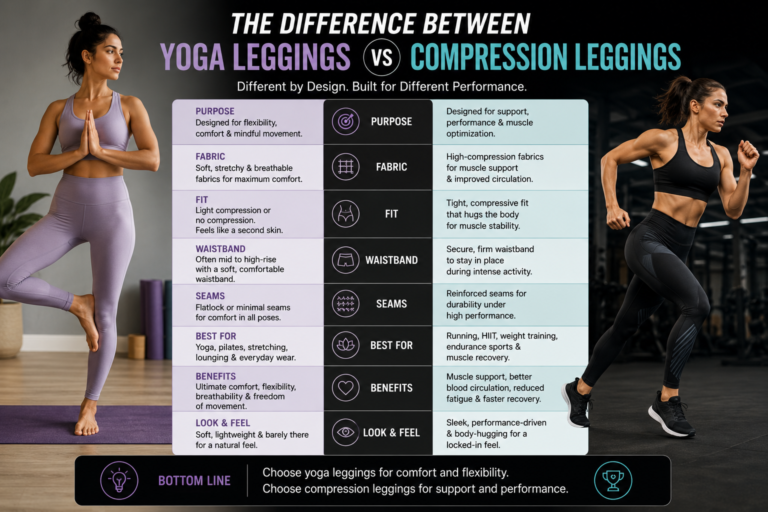
The Difference Between Yoga Leggings and Compression Leggings

Leggings have become integral to most activewear setups. But not all leggings serve all purposes. Certain styles prioritize comfort and flexibility, while others aid performance and improve muscle stability.

Many consumers have begun to compare yoga leggings to compression leggings. Knowing the differences helps brands, retailers, and consumers select the appropriate product based on the activities intended and the expected performance.

Today, many activewear brands work with experienced Leggings Manufacturer services to develop leggings collections for different fitness categories and customer preferences.

Understanding Yoga Leggings and Compression Leggings

Leggings for yoga are made of soft and stretchy fabrics to enhance comfort and flexibility, and to ensure there is no restriction to movement. Because of this, they are soft and stretchable which make them ideal for activities like yoga, pilates, and stretching. They are even suitable for casual wear.

Compression leggings are quite the opposite of yoga leggings. The Difference Between Yoga Leggings and Compression Leggings

are made to target specific muscles and apply a controlled force. This makes them ideal for improving support to muscles, stability during a workout, and enhances recovery speeds.

Many activewear brands partner with professional Activewear Manufacturer services because they help create specialized products for different activewear categories.

Knowing the intended use of each item makes choosing the right style easier.

Difference Between Yoga Leggings and Compression Leggings in Fabric Feel

There the differences in the fabric. Leggings used for yoga are often made from soft fabrics and lightweight materials which enhance comfort and facilitate natural movements.

Conversely compression leggings are made from firmer and tighter fabrics which are used for muscle support and offer performance stability.

Essential characteristics of the fabric may include the following:

  • Stretch and flexibility
  • Moisture management
  • Breathability
  • Compression support
  • Durability during workouts

Many brands work with experienced Fitness Apparel Manufacturer services to choose fabrics that balance performance and comfort across different product lines.

Customer satisfaction and product performance are a direct reflection of fabric quality.

Purpose and Performance Benefits

Yoga leggings and compression leggings are designed for different workout experiences.

Yoga leggings are designed for freedom to bend and flexibility, smoothness, and a few other features. They are great for yoga and stretching exercises and are also great for light training and even athleisure style.

Difference Between Yoga Leggings and Compression Leggings

are designed for performance training. Because of this they are great for running, high intensity workouts, and strength training.

Many brands partner with professional Compression Wear Manufacturer services to create products that improve muscle support and training performance.

Selecting the right purpose-driven product enhances the comfort level and overall experience of the workout.

Difference Between Yoga Leggings and Compression Leggings in Fit and Support

Fit is also one of the bigger differences between the two types of activewear.

Yoga leggings provide a soft fit that moves with the body. The design focuses on soft comfort and unrestricted stretching.

Compression leggings provide a tighter fit which is also more supportive. The construction is designed to apply controlled muscle compression.

Many activewear brands also work with experienced Yoga Wear Manufacturer services to develop leggings specifically tailored for yoga movements, flexibility, and all-day comfort.

The correct fit is founded upon workout preference, personal choice and performance aspirations.

Styling Leggings With Other Activewear Products

Modern customers frequently pair leggings with various activewear items to create cohesive fitness outfits.

Yoga leggings are commonly paired with products from experienced Tank Tops Manufacturer and Gym T-Shirts Manufacturer services for lightweight training looks.

Difference Between Yoga Leggings and Compression Leggings

are often styled with products from professional Hoodies Manufacturer and Shorts Manufacturer collections for layered training outfits and performance-focused sportswear styling.

With complete activewear combinations, brands are able to develop stronger collections and enhance customer purchasing experiences.

Choosing the Right Leggings for Your Needs

Choosing leggings requires considering your workout goals, your desired preferences, and your requirements.

Yoga leggings are popular for their softness and flexibility. Less common options have average everyday use comfort. Compression leggings are popular for their muscle support in training and capability for sporting use.

Many activewear collections also combine leggings with products from experienced Joggers Manufacturer services to provide more versatility across training and casual wear categories.

By selecting the proper product type, we can deliver enhanced comfort, mobility, and greater long-term contentment to the customer.

Conclusion

Learning about yoga leggings and compression leggings allows both consumers and brands to choose better activewear. Even though both fall under the same leggings category, their purposes and the performance benefits are distinct.

Comfort, flexibility, and movement are the core benefits of yoga leggings. In contrast, compression leggings benefits provide support, muscle stability, and speed.

When brands understand the feel and fit of each fabric, the purpose of the workout, and the functionality of the garments, they are better able to build an activewear line. And consumers are able to select activewear that best fits their lifestyle and workout demands.

FAQs

What is the main difference between yoga leggings and compression leggings?

Yoga leggings focus on comfort and flexibility, while compression leggings focus on muscle support and performance.

Are compression leggings good for workouts?

Yes, compression leggings are popular for running, strength training, and high-intensity workouts.

Can yoga leggings be worn casually?

Yes, many people wear yoga leggings for casual activities, travel, and everyday comfort.

Why do compression leggings fit tighter?

They use controlled compression to support muscles during movement and exercise.

Which leggings are better for yoga practice?

Yoga leggings are usually better for yoga because they prioritize flexibility and unrestricted movement.

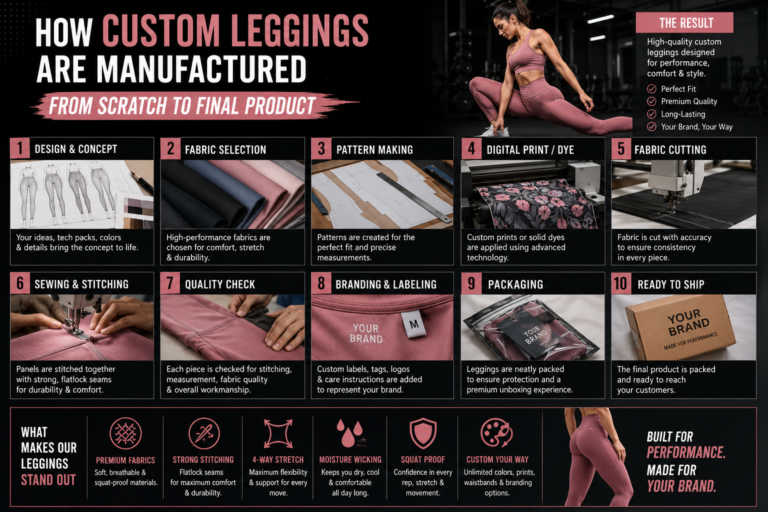
How Custom Leggings Are Manufactured From Scratch to Final Product

Custom leggings became activewears’ top sellers. Leggings are worn while they work out in a gym, do yoga, go for a run, travel, or just used for casual or at leisure. The demand caused brands to prioritize quality and performance in their production.

Knowing how to construct custom leggings helps businesses manufacture products that integrate style and comfort. Each stage is integral to the production process, from sourcing to fabric to stitching.

Today, many activewear brands work with experienced Leggings Manufacturer services to create high-quality leggings designed for both performance and lifestyle wear.

Planning and Designing the Leggings

The first step in manufacturing is product planning and design. Brands determine the product purpose. This may vary from leggings made for working out at the gym to leggings made for practicing yoga or running. Some brands may even make leggings for casual activewear.

Companies also need to make decisions on the style of the waistband, type of stitching, level of compression, fabric weight, and sizing at this particular stage.

Many growing brands also work with professional Activewear Manufacturer services because they help simplify the activewear development process while improving product consistency.

Good planning creates a stronger foundation for successful production.

How Custom Leggings Are Manufactured With Performance Fabrics

Leggings manufacturing almost always needs the best quality fabrics to make the best leggings possible. The comfort and durability of leggings can be determined by the fabric used to make them.

Leggings are made of fabrics that allow for more movement while remaining form-fitting after extended use.

They also tend to feature:

  • Moisture-wicking technology
  • Four-way stretch flexibility
  • Breathable fabric construction
  • Lightweight comfort
  • Long-lasting durability

Selecting the appropriate material enhances product quality and increases customer satisfaction.

Many brands also partner with experienced Fitness Apparel Manufacturer services to ensure fabrics meet modern activewear performance standards.

Cutting and Pattern Development

Pattern creation and fabric cutting follow selection of fabrics. Creating accurate patterns directly impacts fit at different body locations as well as comfort and range of motion.

To standardize sizing, production teams measure each panel accurately before cutting fabric.

Robust patterns contribute to the proper fit of leggings and enhance flexibility for physical activities.

Effective cutting also minimizes waste of the product and improves efficiency in production.

Stitching and Garment Construction

Once cut, leggings enter the stitching and assembly process. This stage combines all fabric panels into a completed garment using specialized stitching techniques for activewear.

This stitching has to be strong, as leggings will be subjected to movement and stretching during workouts.

Many activewear brands also work with professional Compression Wear Manufacturer services to create leggings with performance enhancement features that strengthen muscles, support them, and improve their flexibility.

Quality stitching enhances durability and retention of garment shape over extended wear.

How Custom Leggings Are Manufactured for Different Activewear Categories

Leggings have expanded far beyond the gym, with brands making leggings for yoga, athleisure fashion, travel, and performance sports.

Many activewear collections now combine leggings with products from experienced Yoga Wear Manufacturer services to create coordinated fitness and wellness apparel collections.

Some brands also pair leggings with products from professional Tank Tops Manufacturer and Gym T-Shirts Manufacturer services for complete workout outfits.

This product diversity helps brands attract a wider customer audience.

Quality Control and Product Inspection

In leggings manufacturing, quality control is crucial. Customers wantHow Custom Leggings Are Manufactured to balance comfort, flexibility, and durability.

Before the final packaging, manufacturers inspect leggings for stitching quality, consistency of fabric, accurate sizing, and performance of the garment.

Quality control establishes strong systems that help customers’ complaints, return of products, and defects.

Many activewear brands also combineHow Custom Leggings Are Manufactured with products from experienced Shorts Manufacturer and Joggers Manufacturer services to build larger activewear collections with consistent quality standards.

Branding, Packaging, and Final Finishing

After finishing inspection, How Custom Leggings Are Manufactured are sent to branding and finishing. Manufacturers will add labels, logos, and packaging. The final touches are added for the final presentation.

How Custom Leggings Are Manufactured will appear more premium and professional with the added branding. This increases customer trust.

Many brands also expand their activewear collections with products from experienced Hoodies Manufacturer services to create complete lifestyle and fitness apparel collections.

An aesthetically pleasing package and quality finish enhance the customer experience and improve product value.

Conclusion

Breathable fabric options, stitching methods, and quality control techniques are some of the aspects of production processes that determine the final quality of a product, and knowledge of all this allows brands to design leggings that integrate style, comfort, and durability with athletic functionality.

Today’s consumers wish to find leggings that deliver all day comfort while supporting a full range of motion. How Custom Leggings Are Manufactured built to last build trust with consumers and bolster a company’s long-term growth.

By partnering with a quality leggings manufacturer, companies can design and develop leggings that meet the demands of modern consumers and solidify the success of the brand.

FAQs

What fabrics are commonly used in custom leggings?

Most custom leggings use stretchable, moisture-wicking, and breathable performance fabrics.

Why is stitching important in leggings manufacturing?

Strong stitching improves durability, flexibility, and long-term garment performance.

What does a leggings manufacturer do?

A leggings manufacturer handles fabric sourcing, cutting, stitching, quality control, and final production.

Are leggings only made for gym workouts?

No, modern leggings are also designed for yoga, athleisure, travel, and casual everyday wear.

Why is quality control important in activewear manufacturing?

Quality control helps maintain product consistency, durability, and customer satisfaction.

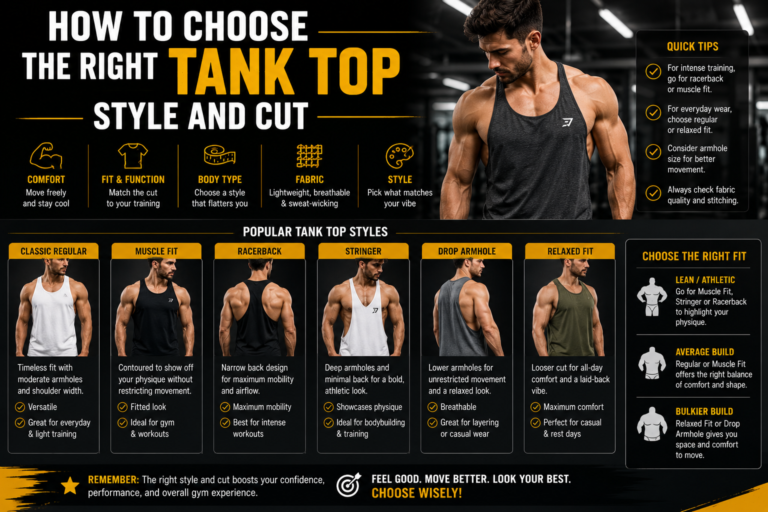
How to Choose the Right Tank Top Style and Cut

In modern active and casual wear, it’s easy to see why tank tops are a favorite. Outfitted for almost every occasion from casual streetwear to workouts, tank tops are everywhere. The correct choice in tank top style therefore requires more thought.

Tank tops come in a variety of cuts, fabrics, and fits. Some styles of tank top are focused more on movement with the elements and more breathable fabrics, while other styles are more concerned with casual comfort.

Today, many activewear brands work with experienced Tank Tops Manufacturer services to create high-quality tank tops designed for both performance and lifestyle wear.

Understanding Different Tank Top Styles

There are lots of different types of tank tops, and some are better suited to different activities than others. For example, some are better for a day of lounging than others.

During a workout, snug tank tops allow for better stretch and an overall more athletic look. For a more relaxed feel and better airflow, try a loose-fit top.

Many fitness-focused brands also work with professional Gym T-Shirts Manufacturer services to create matching activewear collections that combine comfort with performance-focused design.

Understanding different styles helps customers Choose the Right Tank Top Style products that match both their body type and activity level.

Choose the Right Tank Top Style for Comfort

Comfort is critical when buying activewear. An ideal Choose the Right Tank Top Style top should allow for movement that is natural and free, and it should not feel tight or lose.

What is ‘right’ is dependent on personal and body preference, as well as the type of workout being performed. Training for the gym for some people, heavyweight athletics might be preferred, and others opt for loose or relaxed casual style clothing for yoga.

Important features to consider include:

  • Breathable fabric construction
  • Flexible arm openings
  • Comfortable shoulder straps
  • Lightweight performance materials
  • Proper body fit and movement support

Choosing the right fit improves both comfort and overall confidence during workouts.

Fabric Selection Plays a Major Role

Fabric quality helps determine how well a Choose the Right Tank Top Style functions during physical activity. Good quality fabric helps improve breathability, moisture management, and long-lasting durability.

Many activewear brands partner with experienced Fitness Apparel Manufacturer services because they understand how important performance fabrics are in modern sportswear production.

During rigorous workouts, moisture-wicking materials keep the body dry while helping to control temperature.

First-rate textile quality aids in tank tops holding their appearance and retaining their structure after multiple laundries.

Choose the Right Tank Top Style for Different Activities

There is a multitude of different tank tops made for different purposes and different activities. Different workout styles require wear that provides various levels of support, flexibility, and coverage.

For Choose the Right Tank Top Style, training and fitness activities tend to focus on performance and movement, while yoga tops focus on softness and flexibility.

Many activewear brands work with professional Yoga Wear Manufacturer services to create tank tops designed specifically for stretching, flexibility, and comfort-focused activities.

Quality and customer satisfaction increase when the right style is used for the right task.

Matching Tank Tops With Other Activewear

Using the correct style for individual tasks improves both the level of efficiency and the satisfaction of the customer.

For example, modern activewear collections often include products from experienced Leggings Manufacturer and Joggers Manufacturer services to create coordinated fitness outfits.

Some brands also pair lightweight tank tops with products from professional Hoodies Manufacturer services for layering during colder weather.

Matching collections enable brands to strengthen their visual identity and increase customer purchasing options.

Performance Features Improve Product Value

Activewear should be performance-oriented and stylish. Performance tank tops include breathable stretch fabric, ventilation, and moisture control.

Many brands also combine Choose the Right Tank Top Style with products from experienced Compression Wear Manufacturer services to build more performance-focused activewear collections.

Functional features help products stand out while simultaneously enhancing the customer experience in the competitive fitness apparel market.

Shorts and Tank Tops Create Popular Gym Outfits

Choose the Right Tank Top Style and gym shorts go together because the pair maximizes comfort and freedom of movement while improving breathability during exercise.

Many activewear businesses work with professional Shorts Manufacturer services to create lightweight workout outfits suitable for training, running, and fitness activities.

Product presentation is enhanced with matching activewear sets, and brands can better formulate complete collections.

Conclusion

Grasping the concepts of selecting the appropriate tank top style benefits both activewear manufacturers and consumers. The optimal tank top merges comfort, adaptability, fabric utility, and aesthetically pleasing design.

From the gym to the streets, tank tops are essential in contemporary activewear lines.

Brands can offer tank tops that specialize in comfort and style with an emphasis on quality design that is built to last.

FAQs

How do I choose the right tank top style?

Choose a tank top based on comfort, activity type, fabric quality, and body fit preference.

Why are moisture-wicking fabrics important in tank tops?

They help keep the body cool and dry during workouts and physical activities.

What type of tank top works best for gym training?

Athletic-fit tank tops with breathable and stretchable fabrics work best for gym workouts.

Can tank tops be used for yoga wear?

Yes, many tank tops are designed for yoga, stretching, and comfort-focused activities.

Why do activewear brands create matching collections?

Matching collections improve brand identity and create more complete activewear outfits.

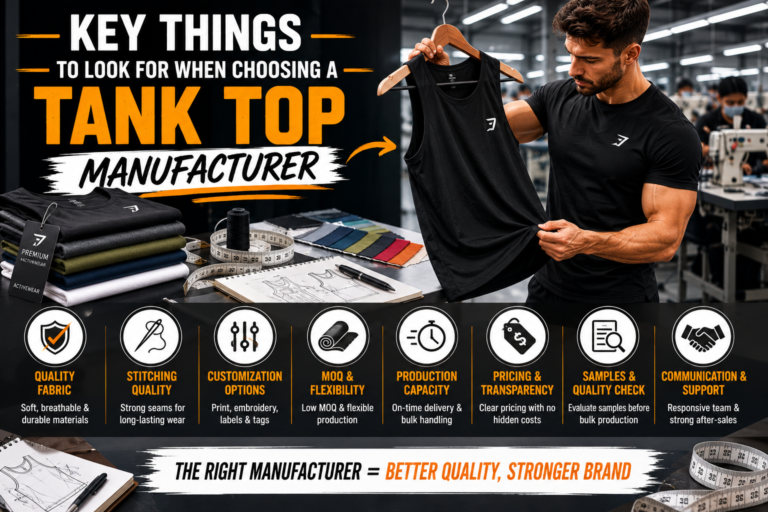
Key Things to Look for When Choosing a Tank Top Manufacturer

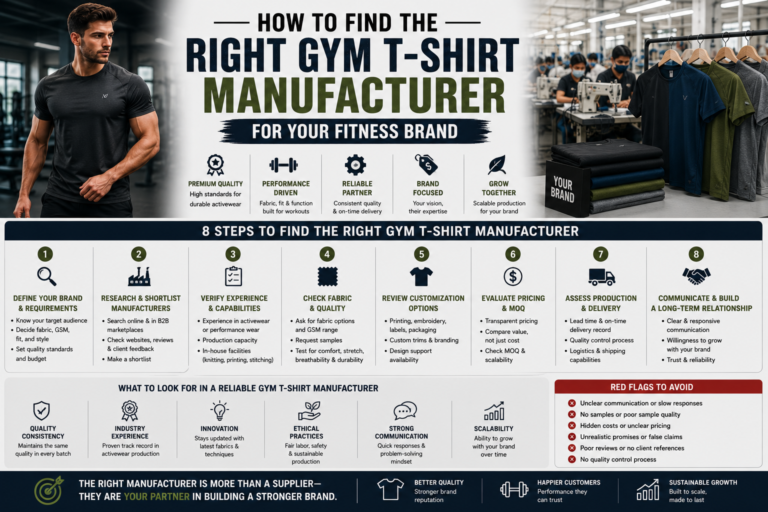
For activewear brands, selecting a tank top manufacturer is a crucial decision. The best partner will ensure quality standards are upheld, deliveries are punctual, and your brand can increase in volumes without the hassle of sourcing new manufacturers. Conversely, poorChoosing a Tank Top Manufacturer choices drain time, money, and brand equity.

The good news is that the right tank top manufacturer can be found. You just have to know what to look for before signing any contracts. This guide will take you through the necessary considerations and will allow you to assess potential partners with total confidence.

[Image Placement: A brand founder examining fabric swatches and tank top samples on a table in a brightly lit garment factory. A manufacturer representative is standing next to the brand founder, indicating vertical construction lines on the tank top samples.]

Alt Text: Brand founder showing manufacturer tank top fabric swatches in production table during supplier evaluation meeting

Why You Need to Be Careful When Selecting a Manufacturer for Your Tank Tops

Most brands consider the manufacturer selection process to be the easiest step in getting to market. They collect a handful of quotes, select the cheapest option, and jump straight into sampling without properly vetting their supplier. While this approach can work, it’s only the case for a fraction of brands. Too often, it results in quality complaints, delivery delays, and communication breakdowns, all of which have a negative impact on an entire collection launch.

When it comes to evaluating manufacturers for tank tops, take the time to enact a structured process; it’s more than a superficial comparison. The following sections provide a framework to help you analyze each and every prospective manufacturing partner before you make a final decision.

1. Previous Production Experience with Tank Tops and Activewear

When evaluating manufacturers for tank tops, the first thing you want to ascertain is whether they have actual production experience with activewear and, more specifically, tank tops.

Tank tops may seem simple, and in some cases, they can be. Constructing them, however, is no easy task: everything from the tension of fabric to the stretch of the fabric to the lightweight handling, and how the fabric is cut and sewn, need to be done with great precision and care. Just because a factory is doing outerwear or formal shirts does not necessarily mean they will be adept with the production of activewear.

Request a sample of tank tops they have manufactured for other brands and evaluate their portfolio. Pay close attention to:

  • Seam quality and consistency: Flatlock and coverstitch seams should be flush to the body. Raised or uneven seams can irritate the skin and create negative reviews and unwanted returns. Inspect seams for consistency in width, tension, and stitch density.
  • Armhole and neckline finish: These areas present the most common construction defects in tank tops. Binding in these areas should be even, flush, and stretch evenly the same as the body fabric. Uneven binding or puckered edges signal a factory that lacks experience with this type of garment.

A manufacturer with a strong tank tops production background will show you samples with successful completion of the checks above. One without that experience will show defects that will only worsen in bulk production.

2. Understanding Fabric and Sourcing

When selecting a tank top manufacturer, a solid understanding of fabrics is critical. Tank tops can be made from numerous technical fabrics including lightweight polyester mesh, nylon-spandex blends, recycled fiber constructions, cotton-poly blends, etc. An adept manufacturer must have a great understanding of how such fabrics behave during cutting, sewing, and finishing.

Again, you must be direct with your prospective manufacturer. Which fabric mills do you work with? Can you procure recycled polyester or certified organic cotton if you want? When you can’t get the fabric you designated for this style, how do you manage that?

A manufacturer that knows fabrics and has good sourcing helps you a lot in the development of your collection. They can explain to you the fabrics you can use to prevent certain issues with how the fabric may perform before you do any sampling, and help you with replacements if you face issues along the supply chain.

Also, if your brand is growing to cover multiple activewear categories, a manufacturer with a lot of broad fabric knowledge can help you as your collection grows. Brands that produce gym wear along with tank tops need a partner who fabric along with tank tops.

3. Minimum Order Quantities That Align With Your Stage Of Business

Minimum Order Quantity, or MOQ, is a vital consideration when selecting a manufacturer for tank tops. If a business requires 500 units per style and color for each tank top, that is not the ideal partner for a tank top manufacturer for a business that is launching a first collection or trying a new design.

It is important to understand a factory’s MOQ requirements in all of the following situations before finalizing a contract with them:

Splits by style, color, and fabric type.

Whether the order is a repeat one or a first order.

Some factories provide flexible MOQs for first-time customers that show promise for long term growth. For others, the relationship stage doesn’t make a difference to their MOQ policies, and they maintain high minimums.

Brands that are in the early growth stages should select factories that are willing to place lower values on order MOQ, even if the per-unit price is higher, instead of having an unnecessarily large run of unsold product. This tenet holds true across all of activewear, including shorts, leggings, and everything in between.

4. Revision Policy and Sampling

Out of all the factors affecting a manufacturer’s viability, the sampling policy of a factory is perhaps the most informative one. In the context of tank top manufacturing, ensure you have all your questions with regards to sampling answered prior to signing your contract with a manufacturer.

Focus on the following details:

How many sample rounds occur before production? What is the average time for a sample revision? Who pays for the samples? How are ambiguities handled in the tech pack during the sample phase?

A manufacturer showing the ability to produce the first sample as requested demonstrates their ability to accurately interpret the instructions the brand is providing and is likely a manufacturer with a good level of communication and understanding. On the other hand, a manufacturer showing the inability to produce a sample that doesn’t deviate from the brand’s instructions or that takes multiple rounds to achieve an accurate level of construction is likely to have significant issues that will reflect on their ability to manufacture a product in greater volumes.

Also ask about issues that may occur during production. If a quality issue occurs during bulk production, what is the process for correcting it and who pays for it? This answer reflects their culture of responsibility, and is important because issues will always happen.

Image Caption: A quality control inspector measuring a finished tank top sampl

Communication Quality and Responsiveness

Tank top manufacturers never seem to get the credit they deserve for good communication, however, they are always noted as a primary cause of frustration when a good communication manufacturing relationship goes poorly.

As a partner located across multiple barriers including distance, time zones, and languages, you will need to have a clear, quick, and proactive communication style in order to manage the relationship effectively. As you begin your communication with the partner, watch for key indicators.

How Long does it take for them to respond? Do they answer the question, or do they provide a generic answer? Do they give clues to potential problems, or do they wait for you to figure out the problem on your own? When they are unable to answer the question, how do they respond?

Poor communication will almost always worsen with the added pressure of a production deadline. When choosing a manufacturing partner, prioritize those who consider communication as a key component of the quality of their manufacturing.

Sustainability Credentials

For the activewear industry, sustainability has increased to a baseline or foundational expectation as opposed to a premium differentiator. As a result, you should evaluate sustainability practices of your tank top manufacturer.

Be sure to ask about their certifications. Look for GOTS, OEKO-TEX, GRS, or Bluesign. Be sure to ask how they manage production waste, water use, and chemical waste; and perhaps most importantly, will they be able to locate and use certified sustainable fabrics in your garment styles?

A supplier who focuses on sustainability will allow your brand to market their products using verifiable and credible sustainability claims. On the other hand, a partner who lacks sustainability will be detrimental to your brand as it will limit your ability to compete in the growing activewear market where consumer demands for conflict free and sustainable claims are scrutizined.

Brands that include yoga wear or fitness apparel in their collections should not only evaluate their tank tops but should also use the same sustainability criteria across their manufacturer partners for all products within the collection.

Capacity and Scalability

When choosing a tank top manufacturer, try to forecast a bigger picture beyond your immediate demand. Look at how you want your brand to be in two to three years and evaluate if this manufacturer will be able to grow to support you.

A manufacturer that can comfortably produce your current order of 200 units and cannot support you to grow demand and be able to produce 2,000 units will become a problem when your brand begins to grow. It will be costly to disrupt the business to switch manufacturers mid-growth and have several collections that have inconsistent quality when you start to grow.

Because of this, it is recommended that you ask: what is your maximum monthly production capacity? When your clients have overlapping lead times, how do you set production priorities? If there is a significant shift in demand, do you have plans to increase your manufacturing capacity?

A manufacturer that can answer with assurance each of these questions is someone that has a sustainable business, and has also considered the sustainability of their clients’ businesses.

Final Thoughts

The quality, target, and success of your brand are intrinsically tied to the tank top manufacturer you choose. Use the selection criteria rigorously and select a manufacturer that ticks all the boxes with your business at the center.

The right manufacturer is not purely transactional. Each collection adds value to your brand and to the manufacturer as well. You have multiple collections of tank tops to harness your brand.

FAQs

What is the most important factor when choosing a tank top manufacturer?

Experience with tank tops is the most important consideration for manufacturers. If a factory is familiar with handling tank tops, flatlock seaming, or stretch and technical fabrics, they will have a better understanding than a factory that specializes in other types of apparel.

How do I verify a manufacturer’s quality before placing a bulk order?

You should always ask a manufacturer to send you samples of the tank tops they’ve made based on your tech pack during the prototyping stage to verify the quality of their other activewear before you move forward with bulk production. You will be looking for the quality of the seams, construction of the neckline and armhole, and the fabric’s tension and measurements.

What MOQ should I expect when choosing a tank top manufacturer?

Minimum order quantity (MOQ) varies based on the manufacturer. Some manufacturers will be fine with 50–100 units per style, while others will set a minimum order between 300 to 500 units. The MOQ should not be based on the activewear line you hope to sell; it should be based on how your line is selling now.

How important is sustainability when choosing a tank top manufacturer?

Sustainability is more important than it used to be. Activewear customers are looking for brands that are actively caring for the environment when they are purchasing items. If you are working with a factory with sustainable certifications, you aren’t at risk of losing customers through possible greenwashing.

Can one manufacturer handle my full activewear range — not just tank tops?

Yes, and they should. Taking your collection to a factory that can handle the full range will give your line activewear collection and simplify and coordinate all of the aforementioned activities. Manufacturers should be working with a factory that has the ability to handle all of your requirements.

Lightweight vs Midweight Fabric for Gym Tank Tops

Choosing the right fabric for gym tank tops has several downstream implications. It influences how well the garment moves and holds up to the rigor of repeated use. It also plays a considerable role in how the wearer feels when exercising with you.

The choice isn’t about which fabric is better, but rather which one aligns better with your client, training setting, and brand. This guide covers the options clearly so you can know exactly the fabric for gym tank tops you’re using for your upcoming collection.

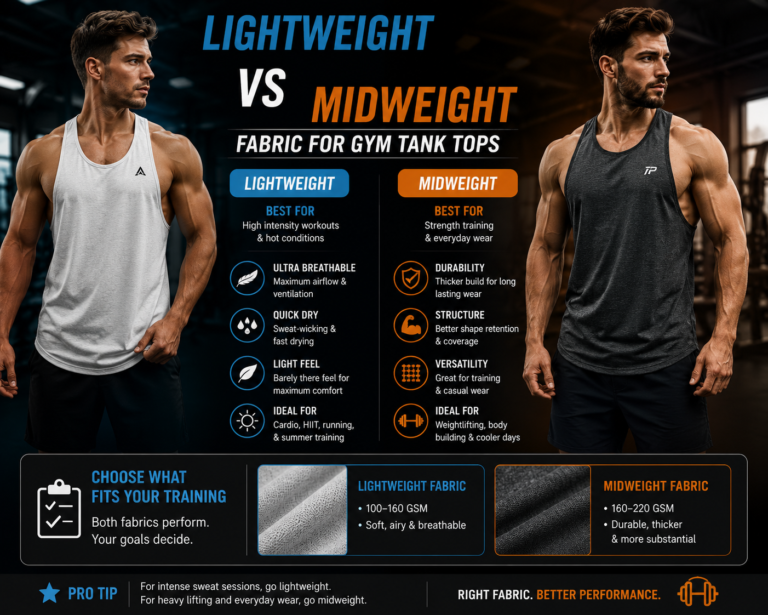
What GSM Weighs in for Fabric for Gym Tank Tops

Weight matters in tank fabric for comparisons, so here’s how tank fabric GSMs break down. Fabric weight GSM refers to how many grams of fabric fill a square of one by one meter.

For gym tank fabrics, lighter options are in the 100 to 150 GSM range. Midweight fabrics range from 150 to 220 GSM. The GSM rating impacts how the fabric of gym tank tops holds and how the fabric moves during and after any physical activity.

However, considering the GSM alone presents an incomplete picture. The fiber used, the type of knit, and the type of finish used affect the fabric’s performance as much as the weight of the fabric. Therefore, a thorough evaluation of a fabric sample should not be limited to just the GSM.

Tank Tops That Stay Cool

Why Lightweight Fabric for Gym Tank Tops Shines in HIIT

Tank tops made from lightweight fabric shine in training and hot weather. Fabric that is thin and breathable helps move through every plane in the gym as the body moves. Customers who prefer HIIT sessions, cardio circuits, or outdoor runs use lighter fabrics to help prevent the tops from trapping body heat while they put in the effort.

Lightweight fabric options include:

  • Polyester mesh and open-knit constructions at 100-130 GSM: These lightweight fabrics have small gaps in the knit structure to help airflow and prevent heat and moisture. They are extremely lightweight and cause discomfort. They are designed as high output training apparel where the color design and the open structure assist in content and customer visualization.
  • Recycled polyester blends at 110-140 GSM: Fabrics that have the technical capacity of active fabrics help provide softer and lighter designs while helping the structure. These assist the marketing position in the sustainable fabrics section of active apparel and provide high performance and responsibility apparel for training.

Drawbacks of Lightweight Fabric for Gym Tank Tops

Lightweight fabrics have some drawbacks worth considering. A fabric with a weight under 120 GSM often feels flimsy and cheap to the average customer, who equates a heavier fabric with better value. Some lightweight fabrics may become a bit transparent when stretched. While some customers may not mind this, it often results in a higher rate of return due to their discomfort.

Lightweight fabrics provide less structural support around necklines and armholes. Without careful placement of the pattern pieces, these gaps will shift during movement and are often cited as a major fit complaint.

Midweight Fabric for Gym Tank Tops

Premium Feel of Midweight Fabric for Gym Tank Tops

Midweight fabrics provide a premium feel for both the designer and the customer, as they have a greater weight and structure, are more durable, and maintain their shape better after repeated wash and wear. They also sit more confidently on the body, adding to the overall comfort, and appeal to customers desiring a gym tank that can be worn throughout the day.

Here are some of the most commonly used midweight fabrics:

  1. Cotton-polyester blends at 160–200 GSM: This blend works for the relaxed natural cotton layering with the durable polyester. Functional but relaxed gym wear aligns with training aesthetics, making this fabric ideal for brands building relaxed gym wear collections. This contrasts with a purely technical and performance identity.
  2. Nylon-spandex blends at 150–180 GSM: This fabric offers great stretch recovery and smooth surfaces with colorfastness. It fits structured tank silhouettes, especially racerback styles. When choosing fabrics for their premium fitness apparel collections, brands gravitate towards this fabric because of the performance and quality perception.

[Image Placement: A model in a gym lifting with the load supported by a nylon-spandex gym tank top]

Alt Text: Midweight nylon spandex fabric for gym tank tops worn during training showing structured systems fit for use

Where Midweight Fabric for Gym Tank Tops Falls Short

Midweight fabrics at gyms or tank tops are not suitable for every training context. In environments featuring intense activity like hot yoga studios or outdoor summer training, midweight fabric traps more body heat than lightweight options. For customers who overheat easily, these fabrics will be uncomfortable for extended period of use.

Midweight fabrics are more expensive than lightweight fabrics, affecting the unit’s economics. This is vital when brands launch collections constrained by budget and low minimum order quantity (MOQ).

How to Choose the Right Fabric for Gym Tank Tops

Choosing fabric involves four questions:

Who is your customer and how do they train?

High-intensity, heat-generating workouts need lightweight fabric for gym tank tops. Midweight fabric suits moderate-intensity workouts and lifestyle training. For an audience that spans both, consider multiple styles in a collection by offering various weight categories in the same collection.

What is your brand positioning?

Brands that are focused on function while training gravitate towards lightweight fabrics while brands in the lifestyle space gravitate towards midweight fabrics or heavier fabrics of better quality or ‘substance’ and ‘handfeel’.

What silhouette are you building?

Light fabrics naturally incorporate drape and movement necessary for loose, dropped-armhole tanks. Midweight fabrics hold close-fit shapes and movement cleanly which suits fitted racerbacks and tanks. Brands wishing to expand their functional range offering midweight fabrics for coordinating sets should consider how their tank fabric choices pair visually and functionally with bottom weights.

What does your production model need?

Lightweight fabrics are easier to cut and sew at lower quantities as opposed to midweight which may require more careful cutting to avoid distortion. Both factors should be discussed with your manufacturer before finalizing your fabric for gym tank tops choice.

Fabric for Gym Tank Tops Across Your Broader Range

In an activewear line, tank tops often pair with shorts, joggers, and hoodies. Therefore, your choices related to fabric weight for tanks will have an impact on how the full range functions and coordinates.

For a cohesive high-performance look, a lightweight mesh tank and a lightweight woven short can pair well. A midweight structured tank will pair better with heavier joggers or premium French terry hoodies. For this reason, your fabric selections for gym tank tops should be a part of your overall range strategy, rather than an independent selection.

Final Thoughts

The correct fabric for gym tank tops will match your customer’s training, your brand’s visual identity, and your production strategy. For high-intensity training, the fabric should be lightweight, as they are more breathable and allow greater movement. A midweight fabric will offer more structure and be more versatile for use in other situations. These attributes are perceived as higher quality, probably due to their greater versatility.

To be successful, most activewear brands target both weight ranges across their tank top offering. Your short term focus should be on offering the weight range that most closely meets your core customer’s needs, with the other weight range added as your customer base and understanding is more developed.

FAQs

What is the best fabric for gym tank tops in terms of GSM?

For the most intense training, lightweight fabrics in the range of 100–150 GSM will be the best option. Midweight fabrics in the 150–220 GSM range will be more suited to lifestyle gym use and lower intensity training, and will be perceived to be of higher quality.

Is polyester or nylon better as fabric for gym tank tops?

Both options work well. But polyester is cheaper and has better moisture management. Nylon tank tops have a nicer feel, better stretch, better color retention, and are great for premium tank tops.

Can lightweight fabric for gym tank tops look cheap?

Lightweight fabrics can look cheap if they have low GSM and/or a poor knit. But with a proper construction and a GSM of 120–150, lightweight fabrics can look great and perform durably, especially when designed as a technical mesh for high-intensity training.

What fabric for gym tank tops works best for a racerback silhouette?

For a racerback style, 150–180 GSM nylon-spandex blends work great as they provide enough body for a clean and dynamic fitted silhouette without the extra weight.

How does fabric weight affect gym tank top production costs?

For medium-weight fabrics, the cost difference between lightweight and medium-weight is usually not as significant as the GSM numbers suggest, as they often require fewer finishing steps to achieve a good look.

Printed vs Embroidered Gym Tees: Which Branding Method Lasts Longer?

When you’re building a fitness brand, the branding on your gear says a lot about who you are. And one of the most common questions new brand owners ask is simple: should I go with printed or embroidered gym tees? Both methods look great in photos. Both can represent your logo well. But when it comes to durability, cost, feel during a workout, and long-term brand perception — they perform very differently. If you’re ordering from an activewear manufacturer, this decision is worth getting right before you place your first bulk order.

Let’s break it all down so you can make a confident choice for your brand.

What Are Printed vs Embroidered Gym Tees, Really?

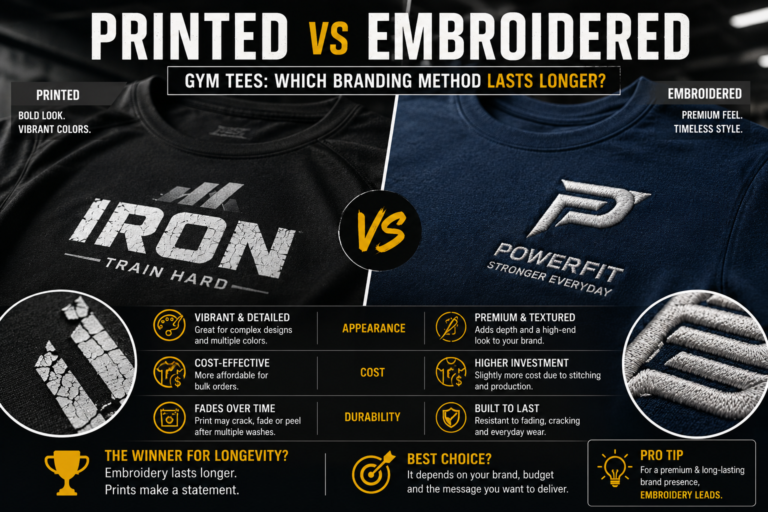
Before comparing the two, it helps to understand what each method actually involves. Printed gym tees use ink or dye applied directly to the fabric — through screen printing, sublimation, DTG (direct-to-garment), or heat transfer. Embroidered gym tees, on the other hand, use thread stitched directly into the fabric using a needle and machine to recreate your logo or design. Both printed vs embroidered gym tees have their place in the market — but they serve different brand identities and use cases. If you’re manufacturing gym t-shirts for a performance-focused line, the method you choose affects more than just aesthetics.

Durability: Which One Actually Holds Up Over Time?

This is a common question brand owners have, and we completely understand why. You have a good amount of money on the line with branded apparel. You want that branding to last after dozens (if not hundreds) of washes. Between printed and embroidered gym tees, we have to give the edge to embroidered Printed vs Embroidered Gym Tees. Printed branding can alter the fabric, making it unwearable. With embroidery, the thread is only stitched to the fabric and does not alter it. Because of this, we can confidently say that embroidery will withstand washing, heavy use, and the treatment that gym apparel is generally put through.

Printing, however, varies a lot depending on the method. Sublimation printing — where dye is bonded into the fabric rather than sitting on top — is extremely durable and works especially well on fitness apparel made from polyester. Standard screen printing can crack over time if not done with quality inks and a proper curing process. So if you go the printing route, the quality of your manufacturer’s process matters just as much as the method itself.

Comfort and Feel During a Workout

Printed versus embroidered gym tees feel different when you are trying to comfortable enough to get a workout in. It’s not just the fabric that is raised. It’s branding that can get irritating. Gym apparel is designed for movement for lifting and running and all the workouts. So it is important to consider how a branding method feels. Something that can only irritate on a casual hoodie can feel very different on gym apparel.

Printing sits flatter against the fabric and generally doesn’t interfere with comfort. Sublimation in particular feels like part of the fabric because it essentially is — making it a popular choice for compression wear and other close-fitting performance pieces where any texture would be felt immediately.

Where Printed vs Embroidered Gym Tees Differ in Brand Perception

Here’s something worth thinking about: the branding method you choose communicates something about your brand before a customer even reads your logo. Embroidery feels premium. It signals craftsmanship, quality, and durability. Brands that position themselves in the mid-to-high price range often choose embroidery on their gym wear for exactly this reason — it looks and feels expensive.

Printing, especially sublimation or high-quality screen printing, gives you more creative freedom. Full-color graphics, gradients, photographic elements — none of that is possible with embroidery. If your brand identity is bold, colorful, and visually expressive, printing will serve you far better. Brands selling tank tops and tees with graphic designs, slogans, or all-over prints almost always go the printing route for this reason.

Cost Comparison Printed vs Embroidered Gym Tees

A brand needs to have some cost control and for new brands that is always a concern. Printing can be the more cost-effective option, especially at higher quantities. Screen-printing runs a relatively low cost with bulk production. Sublimation pricing usually works on a large enough size of a print area.

Embroidery is priced based on stitch count — the more complex and larger your design, the more it costs per piece. A small chest logo in embroidery is very affordable. A large back embroidery with a detailed design can get expensive quickly. If you’re ordering custom hoodies alongside your gym tees, embroidery on both can add up fast — so it’s worth mapping out your full product range before committing to a branding method across the board.

Which Method Works Best for Different Products?

Not all activewear is the same, and the right branding method often depends on the specific garment. For fitted, stretchy pieces like leggings, embroidery is usually a bad idea — the stitching can pucker when the fabric stretches and feels uncomfortable against the skin. Printing, especially sublimation, is the go-to for leggings and other tight-fitting performance wear.

For joggers and looser-fitting pieces, both methods can work depending on placement and design complexity. A small embroidered logo on the hip or thigh of a jogger looks clean and premium. A full sublimated print across the leg is eye-catching and bold. For gym shorts, the same logic applies — consider where the branding sits and how the garment moves before deciding.

Printed vs Embroidered Gym Tees: The Verdict on Longevity

So, what method lasts longer? In terms of physical durability, embroidery wins because thread holds up longer compared to the ink, which fades after many washes. But, with the advancement in printing technology, particularly sublimation, this field has more equality. A good sublimation print is better than a poorly done embroidery.

The more honest answer is this: longevity depends as much on your manufacturer’s quality as it does on the method. Printed vs embroidered gym tees both hold up well when produced correctly. Whether you’re building a yoga wear line or a high-performance training collection, the manufacturer you choose matters just as much as the branding technique. A skilled production team will help you pick the right method for each garment — and execute it in a way that lasts.

Tips for Making the Final Decision

Still deciding? Here are a few things to help weigh your options. One, photos are not the same as a sample of the actual fabric you plan to use. These can help tell you what material holds up better. Two, dependent on your budget, you may want to lean toward one option. If you’re a premium positioned brand, focusing on embroidery for gym tees and hoodies would benefit your brand. The opposite is true for the printing for brands with high-volume activewear. Lastly, keep in mind the design. Some logos and text can easily be done in embroidery and printed designs for more complex graphics.

And finally — talk to your manufacturer about what they actually do well. A good activewear manufacturer will be upfront about which method they specialize in and which garments each works best for. That conversation alone can save you from a lot of expensive mistakes down the road.

Final Thoughts

The printed vs embroidered gym tees debate doesn’t have a single right answer — it has the right answer for your brand. Both methods can produce high-quality, durable results when done well. The key is knowing what you’re building, who you’re building it for, and finding a manufacturing partner who can execute whichever method you choose at the level your customers expect. Get that right, and your branding will do exactly what it’s supposed to do — make people remember your brand every time they put on the shirt.

FAQs

Are printed or embroidered gym tees more durable?

Embroidery is generally more durable over time since thread doesn’t crack or peel. However, sublimation printing — where dye bonds into the fabric — is also extremely long-lasting and very popular for performance activewear. The quality of the manufacturer’s process matters as much as the method itself.

Can embroidery be used on stretchy gym fabrics?

It depends on placement and fabric type. Embroidery on highly stretchy fabrics like leggings or compression wear can pucker when the fabric stretches and may feel uncomfortable. For fitted performance pieces, printing (especially sublimation) is usually the better choice. Embroidery works well on less-stretchy areas and garments like gym tees and hoodies.

Which branding method is cheaper for bulk orders?

Printing is generally more cost-effective at higher quantities — especially screen printing, which has a one-time setup cost but a low per-unit price in bulk. Embroidery is priced by stitch count, so larger or more complex designs cost more per piece. For simple logos, embroidery is affordable; for detailed graphics, printing wins on cost.

How to Find the Right Gym T-Shirt Manufacturer for Your Fitness Brand

Starting a fitness brand is exciting. You’ve got the vision, the logo, maybe even a solid customer base in mind. But then comes the part that trips up almost every new brand owner — finding the right manufacturer. It sounds simple until you realize how many things can go wrong: poor fabric quality, missed deadlines, MOQs you can’t meet, or samples that look nothing like what you ordered. If gym t-shirts are at the core of your product line, choosing the right gym t-shirts manufacturer can genuinely make or break your brand before it even launches.

This guide walks you through what actually matters when finding a manufacturing partner — no fluff, just the real stuff that experienced brand owners wish someone had told them early on.

Know What You’re Selling Before You Start Searching

You know your product before contacting the manufacturer. What type of gym t-shirts are you selling? Designed for performance during an arduous lifting session and sweaty cardio? Or, engineered for a ‘lifestyle’ to be sported during a post-workout brunch? The answer directs the weight of the fabric, the necessary cut, the type of moisture management, and finishing.

Think about who your customer is. Someone training in a hot gym five days a week needs a completely different shirt than someone doing light yoga at home. Once you’re clear on your customer, you can look at the broader activewear manufacturing landscape and find a partner that actually specializes in what you need — not just one that claims to do everything.

Don’t Ignore Fabric — It’s Everything in Activewear

The biggest mistake a new brand owner can make is making fabric an afterthought. Fabric is the whole product, when selling gym wear. A t-shirt that pills after 3 washes, doesn’t breathe, and loses shape will lead to an influx of returns and negative reviews. Rather, your customers will notice product shortcomings long before you do.

For gym t-shirts, you’ll typically want fabrics that offer moisture management, four-way stretch, and durability. Polyester blends, nylon mixes, and performance jerseys are common options. If sustainability matters to your brand (and increasingly, it should), look for manufacturers who use recycled or eco-friendly materials. This is especially relevant if you’re building a fitness apparel brand with long-term values baked in from the start.

Request Samples — And Actually Wear Them

Any half decent manufacturer will send you a sample before you agree to a bulk order. Don’t stop at checking the sample. Use it, wear it, even work out in it. wash the sample maybe 3 or 4 times. Allows you to assess that print. See if the item maintains its shape after being washed and if the print holds. Evaluate the collar and see if stretching is visible and lastly, does it feel good against the skin when sweaty or does it feel bad?

This step sounds obvious but plenty of people skip it because they’re excited to launch. Don’t be that person. A gym t-shirt is something people wear during physical activity — it has to perform. If you’re also planning to add complementary pieces like gym shorts or tank tops to your range, request samples for those too and make sure everything works together as a set.

Ask About Customization Options Upfront

The appeal of a manufacturer is not just creating a blank tee with a logo. A good manufacturing partner will provide you with options like cut, color, label, even print. Ask what printing methods they offer, do they offer sublimation, allow custom neck labels?

This is also the right time to ask about product variety. If you eventually want to expand beyond gym tees into custom hoodiesjoggers, or leggings, it makes sense to work with a manufacturer that can grow with you rather than one that only does tees.

Understand MOQs and Pricing Before You Fall in Love

MOQ stands for Minimum Order Quantity — and it’s one of the first things that catches new brand owners off guard. Some manufacturers won’t touch an order under 500 pieces per style per color. For a new brand testing the market, that’s a lot of t-shirts sitting in storage if things don’t take off immediately.

Get pricing and MOQs in writing early. Ask about price breaks at different quantities, and be realistic about what you can actually sell in your first few months. Also ask about lead times — how long from order confirmation to delivery? For gym wear brands launching with a seasonal push or an event tied to a launch, timing matters as much as quality.

Look for Quality Control Systems, Not Just Promises

Any manufacturer can say they produce high-quality products. Very few can show you a documented quality control process. Ask how they handle defects. Do they inspect at multiple stages of production or just at the end? What happens if 10% of your order arrives with stitching issues — do they replace the units or offer a discount and move on?

A manufacturer with a real QC system will be happy to walk you through it. One that gets defensive or vague is a red flag. This is especially true if you’re building a brand around performance gear like compression wear or technical activewear where precision in construction is non-negotiable.

Communication Is a Manufacturing Skill Too

Manufacturing is a great example for illustrating this: how a manufacturer communicates is a great indication of how they will troubleshoot issues. And issues will always come up, there will be delays, fabric shortages, customs issues, sample revisions, etc… It’s not a matter of if something will go wrong but how quickly you can resolve the issue.

Pay attention to response times during your initial outreach. Do they answer your questions directly or give you vague responses? Do they push back thoughtfully when something doesn’t make sense, or do they just say yes to everything? A manufacturer who communicates well is an invaluable partner — especially as you expand your line into areas like yoga wear or other technical categories that require back-and-forth collaboration on fit and function.

Think About Sustainability — Your Customers Already Are

The activewear and fitness industry has undergone a considerable transformation. Clients investing in activewear are becoming more conscious and concerned for the first time regarding import source locations of activewear, constituent fabric sources, and the treatment of activewear manufacturers. Sustainability used to be an advertising gimmick, but with a growing buyer segment, it is legitimate.

If sustainability matters to your brand, look for manufacturers that are transparent about their supply chain, use eco-friendly materials, and have certifications to back up their claims. Working with a responsible activewear manufacturer from the beginning means you don’t have to retrofit your story later — it’s already built into how you operate.

Final Thoughts

There is a lot to finding a good manufacturer for a gym shirt. You have to send out a lot of surveys with the options, have the fitness brand discuss capacity and pricing honestly, and most importantly, you have to think if you want to work with this manufacturer in the future. Getting this right from the start, brands gain customer loyalty and the business grows.

This process takes time and you must be willing to work for it. Relationships with manufacturers grow to mutually benefit both parties in time.

FAQs

What should I look for in a gym t-shirt manufacturer?

Look for a manufacturer with experience in performance activewear, a clear quality control process, flexible MOQs, and strong communication. The ability to customize fabrics, cuts, labels, and prints is also important if you want to build a distinct brand identity. Checking samples before placing a bulk order is non-negotiable.

What is the typical MOQ for custom gym t-shirts?

MOQs vary widely between manufacturers. Some start as low as 50–100 pieces per style, while others require 300–500 pieces per color per style. For new brands, it’s best to find a manufacturer that offers lower MOQs for sampling and initial runs, then scales up as your orders grow.

What fabrics are best for gym t-shirts?

The most common and effective fabrics for gym t-shirts include polyester blends, nylon-spandex mixes, and performance jersey knits. These materials offer moisture-wicking, four-way stretch, and durability — exactly what someone needs during a workout. If sustainability is a priority for your brand, ask your manufacturer about recycled polyester or other eco-friendly options.