Sustainable materials for yoga apparel are closely related. For many practitioners, the practice revolves around mindfulness. Meeting this expectation as a brand isn’t only good business. It’s good for business. It’s more complicated than just picking an eco-friendly fabric to make yoga clothing. Performance is still important. Durability is still important. Not all sustainable fabrics offer both.
This guide explains the best sustainable materials for yoga clothing and what you should know before choosing your fabric.
What sustainable materials matter in yoga apparel
The environmental impact of conventional sportswear fabrics, particularly virgin nylon and polyester, is significant. These fabrics are made from petroleum and take hundreds of year to degrade. They also shed microplastics after every wash.
This is a tension that yoga clothing brands face when they are trying to build their brand on the values of environmental responsibility and wellness. Customers take notice. Retailers inquire about it. Brands that have a track record of sustainability are also better positioned on the market.
Sustainable alternatives have dramatically improved. Eco-friendly fabrics today match traditional performance materials in terms of stretch, durability and moisture management, but without the same impact on the environment.
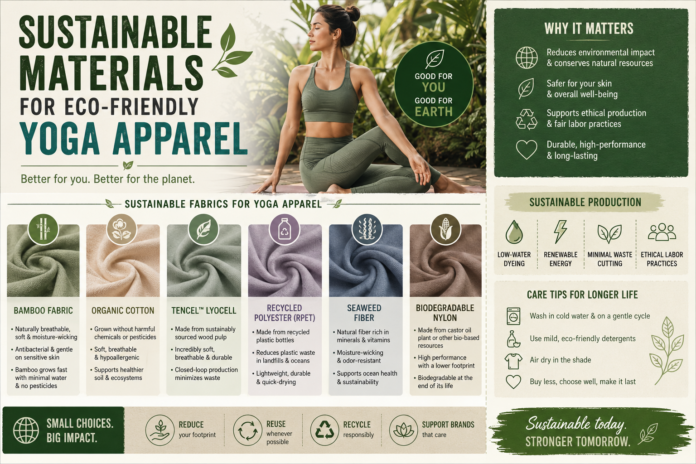
Recycled polyester
Recycled Polyester (rPET) is made of post-consumer waste plastic, usually recycled bottles. It is almost identical to virgin polyester when it comes to stretch recovery, moisture wicking and durability. Its production is much more energy-efficient and diverts waste plastic from landfill.
Recycled polyester blended with spandex is a great choice for yoga wear. It offers excellent stretch in all directions and retains its shape.
The demand for GRS-certified recycled poly with full traceability documentation is increasing among retailers and consumers.
Organic Cotton
Organic cotton uses less water and no synthetic pesticides. Organic cotton is ideal for yoga wear that’s designed to be worn in lower-impact situations, such as restorative or meditation yoga, or casual studio clothing. It has a natural, soft handfeel, which many yoga practitioners prefer.
Performance is the limitation. The organic cotton takes longer to dry and does not wick moisture like synthetic blends. It has less stretch compared to polyester-spandex blends, which makes it less suitable for styles such as power yoga and hot yoga.
Organic cotton is best used in casual yoga clothing, such as wide-leg pants, oversized tops and pieces that can be worn from the studio to the street. Comfort and natural feel are more important than technical performance.
Bamboo Fabric
Bamboo is one the fastest growing plants on Earth. It requires no pesticides and minimal water. After harvest, it regenerates quickly. Bamboo fabric is soft and breathable. It also has antibacterial properties. This makes it ideal for activewear.
Most bamboo fabrics on the market are processed through a chemcial process, which can be energy intensive and polluting. For a truly sustainable option, look for bamboo lyocell, which is produced using a closed-loop system that reuses and recaptures the solvents.
Blends of bamboo are ideal for workout apparel, where breathability and comfort next to the skin are important. These blends are ideal for lighter yoga styles, and they’re popular in lifestyle collections.
Recycled nylon
Recycled nylon, which is derived from fabric scraps and industrial plastics waste, offers the same performance as virgin nylon, but at a fraction the cost. It is lightweight, durable and offers excellent recovery and stretch.
Recycled nylon is a great choice for yoga wear that requires a premium, smooth handfeel. This includes compression leggings or sports bras with fitted cups. It retains its shape well even after repeated stretching and washing. This makes it one of most durable and sustainable options.
A compressionwear manufacturer with experience in recycled nylon can provide advice on the best blend ratios and fabricweights for different garment styles and compression levels.
Image placement: after this section Image : Recycled fishing net material with smooth, premium texture Alt text: recycled material for premium activewear and compression yoga wear
How to choose the right sustainable material for your collection
Your brand’s sustainability position, the intended use of your collection, and customer expectations will determine which sustainable materials you should choose for your yoga clothing.
Here’s a simple guide to help you make your decision.
- Dynamic Yoga Styles — recycled nylon or recycled polyester blended with spandex
- Casual or restorative yoga — organic bamboo or cotton blends
- Compression Pieces — recycled Nylon for shape retention and durability
- Premium Lifestyle Collection — Bamboo lyocell for softness, natural credentials and superior qualities
- Sustainable option for the budget-conscious — recycled Polyester rPET
This decision is made much easier when you work with an activewear designer that has relationships with certified sustainable fabrics suppliers. You can be assured your chosen fabric will come with the documentation and certification your customers and retail partner expect.
What to look for in Sustainable Fabrics Certification
Not all fabric claims about sustainability are the same. Look for independent third-party certifications before approving any fabric for production.
Most sustainable yoga clothing is certified by GRS (Global Recycled Standard), GOTS (Global Organic Textile Standard), and OEKOTEX Standard 100, which ensures fabric safety and chemical compliance.
A manufacturer who has experience in sustainable sourcing will be able provide certified fabrics and full documentation, giving your brand an authentic, verifiable story of sustainability to share with customers.
Conclusion
The use of sustainable materials in yoga clothing has never been more popular. The performance gap between eco friendly and conventional fabrics is largely closed, meaning that brands don’t have to choose between quality and sustainability.
It is important to choose the right fabric for each garment, independently verifying the certifications, and working with a producer who understands the technical and sustainable requirements of your collection.
Explore the range of Activewear Manufacturing options to find the best partner for your project.
FAQs
What is the most sustainable fabric for yoga wear?
Recycled polyester and recycled nylon are among the most practical sustainable choices — they match conventional performance fabrics while significantly reducing environmental impact.
Is organic cotton good for yoga wear?
It works well for casual and restorative yoga styles but lacks the stretch and moisture management of synthetic blends for dynamic or hot yoga practices.
What certifications should I look for in sustainable yoga fabrics?
GRS for recycled content, GOTS for organic fibres, and OEKO-TEX Standard 100 for chemical safety are the most widely recognised and respected certifications.
Is bamboo fabric genuinely sustainable?
It depends on how it is processed. Bamboo lyocell — produced through a closed-loop process — is the most sustainable option. Standard bamboo viscose involves more chemical processing.