Custom leggings became activewears’ top sellers. Leggings are worn while they work out in a gym, do yoga, go for a run, travel, or just used for casual or at leisure. The demand caused brands to prioritize quality and performance in their production.
Knowing how to construct custom leggings helps businesses manufacture products that integrate style and comfort. Each stage is integral to the production process, from sourcing to fabric to stitching.
Today, many activewear brands work with experienced Leggings Manufacturer services to create high-quality leggings designed for both performance and lifestyle wear.
Planning and Designing the Leggings
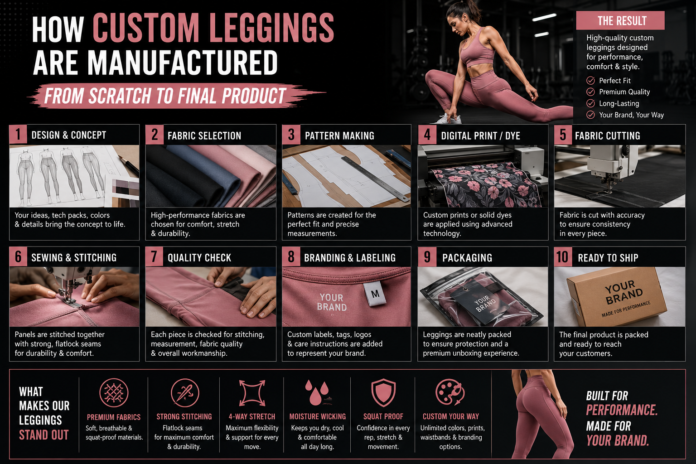
The first step in manufacturing is product planning and design. Brands determine the product purpose. This may vary from leggings made for working out at the gym to leggings made for practicing yoga or running. Some brands may even make leggings for casual activewear.
Companies also need to make decisions on the style of the waistband, type of stitching, level of compression, fabric weight, and sizing at this particular stage.
Many growing brands also work with professional Activewear Manufacturer services because they help simplify the activewear development process while improving product consistency.
Good planning creates a stronger foundation for successful production.
How Custom Leggings Are Manufactured With Performance Fabrics
Leggings manufacturing almost always needs the best quality fabrics to make the best leggings possible. The comfort and durability of leggings can be determined by the fabric used to make them.
Leggings are made of fabrics that allow for more movement while remaining form-fitting after extended use.
They also tend to feature:
- Moisture-wicking technology
- Four-way stretch flexibility
- Breathable fabric construction
- Lightweight comfort
- Long-lasting durability
Selecting the appropriate material enhances product quality and increases customer satisfaction.
Many brands also partner with experienced Fitness Apparel Manufacturer services to ensure fabrics meet modern activewear performance standards.
Cutting and Pattern Development
Pattern creation and fabric cutting follow selection of fabrics. Creating accurate patterns directly impacts fit at different body locations as well as comfort and range of motion.
To standardize sizing, production teams measure each panel accurately before cutting fabric.
Robust patterns contribute to the proper fit of leggings and enhance flexibility for physical activities.
Effective cutting also minimizes waste of the product and improves efficiency in production.
Stitching and Garment Construction
Once cut, leggings enter the stitching and assembly process. This stage combines all fabric panels into a completed garment using specialized stitching techniques for activewear.
This stitching has to be strong, as leggings will be subjected to movement and stretching during workouts.
Many activewear brands also work with professional Compression Wear Manufacturer services to create leggings with performance enhancement features that strengthen muscles, support them, and improve their flexibility.
Quality stitching enhances durability and retention of garment shape over extended wear.
How Custom Leggings Are Manufactured for Different Activewear Categories
Leggings have expanded far beyond the gym, with brands making leggings for yoga, athleisure fashion, travel, and performance sports.
Many activewear collections now combine leggings with products from experienced Yoga Wear Manufacturer services to create coordinated fitness and wellness apparel collections.
Some brands also pair leggings with products from professional Tank Tops Manufacturer and Gym T-Shirts Manufacturer services for complete workout outfits.
This product diversity helps brands attract a wider customer audience.
Quality Control and Product Inspection
In leggings manufacturing, quality control is crucial. Customers wantHow Custom Leggings Are Manufactured to balance comfort, flexibility, and durability.
Before the final packaging, manufacturers inspect leggings for stitching quality, consistency of fabric, accurate sizing, and performance of the garment.
Quality control establishes strong systems that help customers’ complaints, return of products, and defects.
Many activewear brands also combineHow Custom Leggings Are Manufactured with products from experienced Shorts Manufacturer and Joggers Manufacturer services to build larger activewear collections with consistent quality standards.
Branding, Packaging, and Final Finishing
After finishing inspection, How Custom Leggings Are Manufactured are sent to branding and finishing. Manufacturers will add labels, logos, and packaging. The final touches are added for the final presentation.
How Custom Leggings Are Manufactured will appear more premium and professional with the added branding. This increases customer trust.
Many brands also expand their activewear collections with products from experienced Hoodies Manufacturer services to create complete lifestyle and fitness apparel collections.
An aesthetically pleasing package and quality finish enhance the customer experience and improve product value.
Conclusion
Breathable fabric options, stitching methods, and quality control techniques are some of the aspects of production processes that determine the final quality of a product, and knowledge of all this allows brands to design leggings that integrate style, comfort, and durability with athletic functionality.
Today’s consumers wish to find leggings that deliver all day comfort while supporting a full range of motion. How Custom Leggings Are Manufactured built to last build trust with consumers and bolster a company’s long-term growth.
By partnering with a quality leggings manufacturer, companies can design and develop leggings that meet the demands of modern consumers and solidify the success of the brand.
FAQs
What fabrics are commonly used in custom leggings?
Most custom leggings use stretchable, moisture-wicking, and breathable performance fabrics.
Why is stitching important in leggings manufacturing?
Strong stitching improves durability, flexibility, and long-term garment performance.
What does a leggings manufacturer do?
A leggings manufacturer handles fabric sourcing, cutting, stitching, quality control, and final production.
Are leggings only made for gym workouts?
No, modern leggings are also designed for yoga, athleisure, travel, and casual everyday wear.
Why is quality control important in activewear manufacturing?
Quality control helps maintain product consistency, durability, and customer satisfaction.