
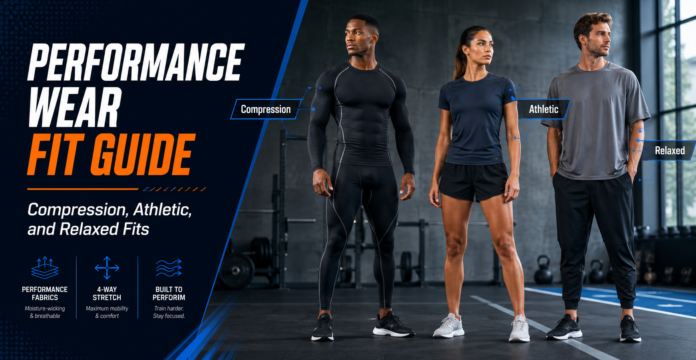
Choosing the right fit is one of the most important parts of buying workout clothing. A good fit can help you move better, stay comfortable, and feel more confident during exercise. A poor fit can feel tight, loose, heavy, or distracting. This performance wear fit guide explains compression fit, athletic fit, and relaxed fit in simple words so you can choose the best option for your training style. Compression fits are tight and supportive. Athletic fits are shaped but still flexible. Relaxed fits give more room and comfort. The best choice depends on your body, workout type, movement, weather, and personal comfort. This performance wear fit guide is made for beginners, athletes, gym users, runners, and anyone who wants fitness clothing that feels right without making the choice confusing.
Performance Wear Fit Guide: What Does Fit Really Mean?
In fitness clothing, fit means how close or loose the garment feels on your body while you move. It is not only about size. Two shirts can both be medium, but one may feel tight and the other may feel loose. A proper fit should support your body without stopping natural movement. This performance wear fit guide helps you understand how each fit works during real activity. For example, a compression top sits close to the skin, while a relaxed sweatshirt gives more space around the chest and arms. If you are building a complete workout wardrobe, you can compare different fabric and fit styles through Eco Jersey’s performance wear collection and choose pieces based on comfort, use, and activity level instead of only looks.
Compression Fit: Tight, Supportive, and Body-Hugging
Compression fit is the tightest type of performance wear. It stays close to your skin and gives a firm feel around the body. Many people wear compression clothing for running, gym training, base layers, sports practice, and high-movement workouts. The main purpose of compression fit is to reduce extra fabric movement and give a supported feel. A compression T-shirt should feel snug, but it should not make breathing difficult. Compression leggings should stay in place without cutting into the waist or knees. This performance wear fit guide recommends compression fit for people who like a locked-in feel during training. It is also useful when you want a smooth layer under jackets, hoodies, or uniforms. If you want a fitted upper-body option, Eco Jersey’s compression T-shirts are a relevant example of close-fitting workout apparel.
Athletic Fit: Shaped, Flexible, and Easy to Move In
Athletic fit is a middle option between compression and relaxed fit. It is not too tight and not too loose. It usually follows the natural shape of the body, with more room around areas like shoulders, chest, thighs, or arms. This fit is popular because it looks clean but still allows movement. In this performance wear fit guide, athletic fit is the most balanced choice for many people. It works well for gym sessions, walking, light running, stretching, warm-ups, and daily active use. A good athletic-fit shirt should not hang too loose around the body, but it should also not pull when you lift your arms. Athletic-fit joggers or pants should allow bending, squatting, and walking without feeling baggy. This fit is often best for people who want performance clothing that can also look neat outside the gym.
Relaxed Fit: Roomy, Comfortable, and Casual
Relaxed fit gives more space around the body. It is made for comfort, easy movement, and a casual feel. Relaxed-fit performance wear is good for warm-ups, cool-downs, walking, travel, stretching, layering, and light activity. It is also useful for people who do not like tight clothing. This performance wear fit guide explains relaxed fit as the best choice when comfort is more important than a locked-in athletic feel. A relaxed sweatshirt, tank top, or training top should feel roomy but not oversized to the point where it gets in the way. The fabric should move with the body and not feel heavy. Relaxed fit is also helpful in colder weather because it leaves space for layering. However, for fast running or intense workouts, too much loose fabric may move around and feel distracting.
Compression vs Athletic vs Relaxed Fit: The Simple Difference
The easiest way to understand the three fits is by thinking about body space. Compression fit has very little space between the fabric and skin. Athletic fit has a small amount of space, so it feels shaped but flexible. Relaxed fit has more space, so it feels comfortable and easy. This performance wear fit guide makes the difference simple: compression is best for support, athletic is best for balance, and relaxed is best for comfort. Compression clothing is often chosen for performance and layering. Athletic clothing is chosen for everyday training and a clean look. Relaxed clothing is chosen for comfort, warm-ups, and casual activewear. None of these fits is better for everyone. The better option depends on what you are doing, how your body moves, and what feels natural to you during exercise.
Best Fit for Different Workout Types
Different workouts need different fits because the body moves in different ways. For running, cycling, and high-speed training, compression or athletic fit often works better because there is less loose fabric. For gym lifting, athletic fit is usually a smart choice because it allows movement without feeling baggy. For yoga, stretching, and mobility work, the fabric must move easily, so athletic fit or soft relaxed fit can work well. This performance wear fit guide also recommends thinking about temperature. In cold weather, fitted base layers can help you dress comfortably under outerwear. A product like a ski base layer is a useful example of close-fitting performance clothing made for layering, warmth, and movement without extra bulk. For rest days, walking, or travel, relaxed fit is often the most comfortable choice.
How to Know If Your Fit Is Wrong
A wrong fit usually gives clear signs. If compression clothing feels painful, leaves deep marks, or makes breathing hard, it is too tight. If athletic-fit clothing pulls at the shoulders, chest, knees, or waist, the size or cut may be wrong. If relaxed-fit clothing keeps sliding, bunching, or blocking movement, it may be too loose. This performance wear fit guide suggests checking fit while moving, not only while standing still. Raise your arms, bend forward, squat, walk, stretch, and twist. Good performance wear should stay comfortable during all these movements. The waistband should stay in place without rolling. Sleeves should not pull too much. Shoulder seams should sit properly. Leggings or pants should not become see-through when stretched. A correct fit should make exercise easier, not harder.
Quick Fit Checklist Before You Buy
Use this simple checklist from this performance wear fit guide before choosing your next workout clothing:
- Choose compression fit if you want firm support and close contact with the body.
- Choose athletic fit if you want shape, comfort, and freedom to move.
- Choose relaxed fit if you want more room for casual training, warm-ups, or daily wear.
- Check the fabric stretch before buying because stretch affects comfort.
- Move your arms, legs, shoulders, and waist to test real workout comfort.
- Avoid clothing that feels painful, itchy, too loose, or too tight.
- Pick lighter fabrics for hot workouts and warmer layers for cold weather.
- Choose fit based on activity first, then style second.
Fabric and Fit Work Together
Fit is important, but fabric also matters. A tight garment made from poor fabric can feel uncomfortable. A relaxed garment made from heavy fabric can feel bulky. The best performance wear uses fabric that stretches, breathes, and handles sweat well. This performance wear fit guide explains that compression clothing usually needs strong stretch and recovery, so it returns to shape after movement. Athletic-fit clothing needs a good mix of structure and flexibility. Relaxed-fit clothing should feel soft, light, and easy to wear. If you train in hot weather, moisture-wicking fabric can help you feel drier. If you train in cold weather, layered performance fabric can help manage warmth. For active daily outfits, Eco Jersey’s activewear category can be used to explore general training styles that match different comfort and movement needs.
Conclusion
The best fit is the one that matches your workout, body comfort, and movement style. Compression fit is better when you want a tight, supportive feel. Athletic fit is better when you want a clean shape with easy movement. Relaxed fit is better when you want comfort, space, and casual wear. This performance wear fit guide shows that no single fit is perfect for every person or every workout. A smart wardrobe may include all three fits. You may wear compression for running, athletic fit for gym training, and relaxed fit for warm-ups or rest days. Before buying, always think about how the clothing feels while moving. When performance wear fits well, it supports your workout, improves comfort, and helps you focus on training instead of adjusting your clothes.
FAQs
What is the best fit for performance wear?
The best fit depends on your workout. Compression fit is good for support, athletic fit is good for balanced movement, and relaxed fit is good for comfort.
Is compression fit better than athletic fit?
Compression fit is better for a tight and supportive feel, but athletic fit is better for people who want more movement and everyday comfort.
Can relaxed fit be used for workouts?
Yes, relaxed fit can be used for walking, warm-ups, stretching, travel, and light training. It may not be best for fast or high-intensity workouts.
How tight should compression performance wear be?
Compression performance wear should feel snug and supportive, but it should not feel painful, restrict breathing, or stop normal movement.


