
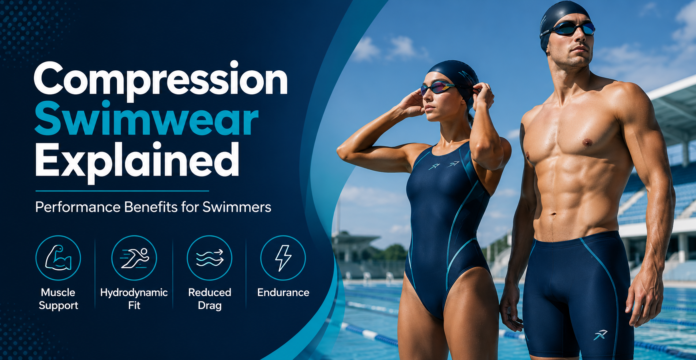
Compression swimwear is special swim clothing made to fit close to the body and give gentle support while swimming. It is not the same as loose swimwear because it holds the muscles, reduces extra fabric movement, and helps the swimmer feel more stable in the water. Many swimmers wear compression swimwear during training, racing, water workouts, and long practice sessions because it can improve comfort and body control. It does not magically make someone a champion, but it can support better movement, reduce drag, and make swimming feel smoother. For beginners, compression swimwear can also feel secure because it stays in place while moving, kicking, diving, or turning in the pool. This guide explains compression swimwear in simple words so anyone can understand its benefits, uses, fit, fabric, and buying points.
What Is Compression Swimwear?
Compression swimwear is swim clothing designed with stretch fabric that fits tightly but comfortably around the body. The main purpose is to give light pressure to muscles while still allowing free movement in the water. Unlike normal loose swim shorts or casual swimsuits, compression swimwear stays close to the skin, which helps reduce water resistance. This type of swimwear is often made from fabrics like polyester, nylon, elastane, or spandex blends because these materials stretch, recover shape, and dry faster than heavy cotton clothing. When swimmers choose the right fit, compression swimwear can support the legs, hips, waist, shoulders, or core area without feeling painful or too tight. It is useful for swimmers who want better control, less fabric drag, and a cleaner swimming shape in the water.
Why Compression Swimwear Matters for Swimmers
Compression swimwear matters because swimming is all about smooth movement, body position, and less resistance in water. When clothing is loose, it can fill with water, move around, and slow the swimmer down. A close fit helps the body cut through water more easily, especially during freestyle, butterfly, backstroke, and breaststroke. Many swimmers also like compression swimwear because it gives a supported feeling during hard training. This support can help the body feel steady when doing repeated laps, quick turns, and strong kicks. For brands, teams, and active swimmers, choosing the right swimwear is part of building better performance clothing, and many buyers compare options through general activewear collections when they want sport-focused apparel for different activities. Good compression swimwear should feel firm, flexible, and smooth without blocking natural motion.
Compression Swimwear Benefits for Performance
The biggest performance benefit of compression swimwear is that it helps reduce drag, which means there is less loose fabric slowing the swimmer down. It also helps the swimmer feel more connected to body movement because the fabric stays close and stable. When the swimsuit does not shift, bunch, or sag, the swimmer can focus more on breathing, stroke timing, kicking, and turning. Compression swimwear may also help keep muscles warm during training because the close fit holds the body better than loose clothing. Some swimmers feel that this support helps them train longer with more confidence. However, the benefit depends on fit, fabric quality, body type, and swimming style. A good suit should not feel like a burden. It should support performance by making the swimmer feel lighter, cleaner, and more controlled in the water.
Compression Swimwear and Body Support
Compression swimwear gives body support by applying gentle pressure around important muscle areas. For men, this may support the thighs, hips, and waist during strong kicks. For women, compression swimwear may support the core, chest, hips, and legs depending on the design. This support is helpful because swimming uses the whole body, not only the arms or legs. When the fabric sits firmly, the swimmer may feel more balanced during strokes and faster during turns. Compression does not replace training, warm-ups, or good technique, but it can improve the feeling of stability. It is also helpful for water fitness, aqua training, and lap swimming because the suit stays in place during repeated movement. For people who want different swim styles, dedicated swimwear options can help compare performance cuts, coverage levels, and fabric types inside one category.
Compression Swimwear for Training Sessions
Compression swimwear is very useful during training because practice often includes long sets, drills, sprints, and repeated turns. During these sessions, swimmers need clothing that can handle movement without stretching out too quickly. A weak swimsuit may become loose after many uses, but quality compression swimwear should return to its shape after stretching. This makes it better for regular swimmers who train several times a week. Training swimwear should also be chlorine-resistant because pool water can damage cheap fabric over time. When a swimmer trains often, comfort becomes very important. A suit that rubs, pulls, or feels too tight can become annoying during long practice. The best compression swimwear for training should give support, stay smooth, dry quickly, and allow full movement without creating pressure marks on the skin.
Compression Swimwear for Racing
Compression swimwear can help racing swimmers feel faster and more prepared because race suits are usually designed to fit tighter than normal training suits. In racing, even small details matter. A clean body shape, smooth fabric surface, and secure fit can help reduce water drag. Some racing suits also use special seam placement and panel design to support body alignment. Still, swimmers should not wear a new compression suit for the first time on race day because it may feel different. It is better to test the suit during practice first. The right compression swimwear should feel firm but not painful. If it blocks breathing, restricts shoulder rotation, or makes kicking uncomfortable, it is not the right fit. Racing suits are made for speed, but comfort and movement still matter.
Compression Swimwear Fabric Quality
Fabric quality is one of the most important parts of compression swimwear. A good fabric should stretch well, recover its shape, resist chlorine, and feel smooth against the skin. Polyester blends are often used because they are durable and resist pool damage better than many soft natural fabrics. Nylon blends can feel smooth and comfortable, while elastane or spandex gives stretch and compression. The balance of these fibers affects how the suit feels. Too much stretch without recovery can make the suit loose. Too much tightness without flexibility can make the suit hard to move in. Good compression swimwear should also have strong stitching because weak seams may open after regular use. For buyers comparing fitted water clothing and close-body styles, products such as modest swimwear can show how coverage, stretch, and movement can work together in a swim garment.
Compression Swimwear Fit Guide
Compression swimwear should fit close to the body, but it should never feel painful. A correct fit feels firm, smooth, and secure. The swimmer should be able to move arms, legs, hips, and shoulders without fighting the fabric. If the suit rolls down, cuts into the skin, or causes breathing trouble, it is too tight. If it creates wrinkles, fills with water, or moves around while swimming, it is too loose. The best way to check fit is to move like a swimmer before entering the pool. Raise your arms, bend your knees, twist your torso, and check if the suit stays in place. Compression swimwear should feel supportive in movement, not only when standing still. Since bodies are different, size charts are helpful, but real comfort should guide the final choice.
Key Features of Good Compression Swimwear
Good compression swimwear should have a close fit that supports the body without blocking movement.
It should use stretch fabric that returns to shape after every swim.
It should reduce drag by staying smooth against the body.
It should have chlorine-resistant fabric for longer pool life.
It should dry faster than heavy or loose swim clothing.
It should have strong seams that do not rub the skin.
It should stay in place during dives, turns, kicks, and strokes.
It should feel comfortable during both short races and long training sessions.
It should match the swimmer’s activity, whether training, racing, water fitness, or casual lap swimming.
It should give confidence because a swimmer performs better when clothing feels secure and easy to wear.
Stretch Fitness Apparel vs Compression Swimwear
Stretch fitness apparel and compression swimwear are related, but they are not the same. Stretch fitness apparel is made for gym workouts, running, yoga, and daily exercise, while compression swimwear is made for water movement. Fitness apparel may stretch well, but it may not resist chlorine, dry properly after swimming, or reduce drag in the pool. Compression swimwear is built to handle water, body movement, and close contact with the skin during swimming. This is why a regular gym legging or compression shirt should not always be used as swimwear unless the fabric is designed for pool or water use. The keyword compression swimwear is important here because the garment must be judged by swimming needs, not only by stretch. A good swim garment needs support, water comfort, fabric recovery, and low drag together.
Who Should Wear Compression Swimwear?
Compression swimwear can be helpful for many types of swimmers. Competitive swimmers use it for speed, body support, and a race-ready feeling. Training swimmers use it because it stays in place during long practice. Fitness swimmers use it because it feels secure during water workouts. Beginners can also wear compression swimwear if they want a close fit and more body confidence in the pool. It is also useful for people who dislike loose fabric moving around in water. However, compression swimwear is not only for professionals. Anyone who swims often can benefit from a well-made, comfortable, supportive suit. The main point is choosing the right level of compression. Light compression is better for comfort and regular swimming, while stronger compression may be better for serious training or racing.
Common Mistakes When Buying Compression Swimwear
One common mistake is buying compression swimwear that is too small because the buyer thinks tighter always means better. This is not true. If the suit is too tight, it can reduce comfort and movement. Another mistake is choosing fabric only by looks instead of checking stretch, recovery, and chlorine resistance. Some people also buy normal activewear and use it in the pool, but not all activewear is made for water. A third mistake is ignoring seams. Bad seams can rub the skin during long swims and cause discomfort. Another mistake is not checking coverage needs. Some swimmers prefer short styles, while others need more coverage for comfort, modesty, or training. The best compression swimwear is not just tight. It is balanced, durable, supportive, and designed for swimming.
Care Tips for Compression Swimwear
Compression swimwear lasts longer when it is cared for properly. After swimming, rinse it with clean cold water to remove chlorine, salt, sweat, and pool chemicals. Do not twist the fabric too hard because this can damage stretch fibers. Gently press out extra water and let it air dry in shade. Avoid direct strong sunlight for long periods because heat can weaken elastic fibers. Do not use bleach, harsh detergent, or a hot dryer. Also, avoid sitting on rough pool edges because rough surfaces can damage the fabric. If you swim often, it is smart to rotate between two suits so each one has time to recover. Proper care helps compression swimwear keep its fit, support, and smooth feel for a longer time.
Conclusion
Compression swimwear is a smart choice for swimmers who want better support, less drag, and more comfort in the water. It helps the body feel stable during training, racing, and water fitness, but it must fit correctly to work well. The best compression swimwear should feel firm, flexible, smooth, and easy to move in. It should not be too tight, too loose, or made from weak fabric. Whether someone is a beginner, regular swimmer, or competitive athlete, compression swimwear can improve confidence and make swimming feel cleaner and more controlled. In the end, the better choice is the suit that supports your body, matches your swim purpose, and stays comfortable from the first lap to the last lap.
FAQs
What is compression swimwear?
Compression swimwear is close-fitting swim clothing that gives gentle body support and helps reduce loose fabric movement in water. It is made for swimming, training, racing, and water fitness.
Is compression swimwear good for beginners?
Yes, compression swimwear can be good for beginners because it stays in place and feels secure. Beginners should choose light or medium compression instead of very tight race-style suits.
Does compression swimwear make you swim faster?
Compression swimwear may help reduce drag and improve body feel in water, but it does not replace skill, training, or good technique. It supports performance, but the swimmer still does the work.
How tight should compression swimwear be?
Compression swimwear should feel firm and supportive, but not painful. You should be able to breathe, kick, turn, and move your shoulders comfortably while wearing it.


