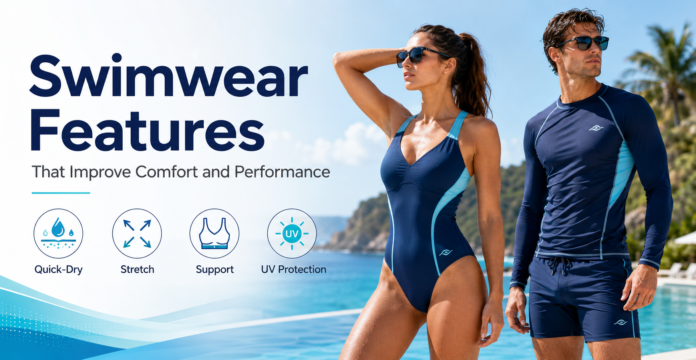
Swimwear is not just clothing for the beach or pool. Good swimwear should help the body move freely, stay comfortable, dry faster, and feel secure in water. The right swimwear features can make a big difference for swimming, beach sports, training, holidays, and everyday water activities. Poor swimwear may feel heavy, loose, tight, rough, or uncomfortable after a short time. Better swimwear is designed with smart fabric, strong stitching, proper fit, stretch, lining, and support. These details help people enjoy water activities without constantly adjusting their outfit. When swimwear feels good, the wearer can focus on swimming, relaxing, or moving instead of worrying about comfort. That is why understanding swimwear features is important before choosing any style. Whether someone wears modest swimwear, tankinis, skirted swimwear, athletic swimwear, or basic beachwear, the goal is the same: comfort, confidence, and better performance in and around water.
What Are Swimwear Features?
Swimwear features are the design and fabric details that make swimwear more comfortable, useful, and long-lasting. These features include stretch fabric, quick-dry material, soft lining, secure waistbands, UV protection, chlorine resistance, breathable panels, body support, and smooth seams. The best swimwear features work together instead of depending on one thing only. For example, stretch helps movement, but stretch without recovery can make swimwear loose after use. Quick-dry fabric is helpful, but it should also feel smooth on the skin. A supportive design is useful, but it should not feel too tight or restrictive. People who want more options can explore different swimwear categories through Eco Jersey swimwear, where styles can be matched with different comfort and performance needs. In simple words, swimwear features decide how the garment feels before swimming, during swimming, and after leaving the water.
Fabric Stretch for Easy Movement
Stretch is one of the most important swimwear features because the body moves in many directions during swimming and beach activities. Good swimwear should stretch when the wearer bends, kicks, reaches, sits, walks, or dives. Fabric with proper stretch helps the garment stay close to the body without feeling stiff. This is especially useful for active swimmers because tight or non-stretch swimwear can limit arm and leg movement. Stretch fabric also helps swimwear return to its original shape after use. This is called recovery. Without good recovery, swimwear may become loose, saggy, or uncomfortable after a few wears. Stretch also improves comfort for different body types because it allows the garment to adjust naturally. However, stretch should feel controlled, not weak. The best swimwear features include flexible fabric that moves with the body while still holding its shape. This balance improves both comfort and performance.
Quick-Dry Fabric for Better Comfort
Quick-dry fabric is one of the most useful swimwear features for comfort after swimming. When swimwear holds too much water, it can feel heavy, cold, and uncomfortable. Wet fabric can also rub against the skin and cause irritation. Quick-dry material helps water leave the fabric faster, so the wearer feels lighter and more comfortable after getting out of the pool or sea. This feature is helpful for beach trips, swimming classes, resort wear, and travel because the garment dries faster between uses. Quick-dry swimwear is also easier to pack because it does not stay wet for too long. A good quick-dry fabric should not feel rough or plastic-like. It should stay soft while still releasing moisture quickly. These swimwear features are especially important for people who spend many hours near water, because comfort after swimming matters as much as comfort during swimming.
Secure Fit and Body Support
Fit is one of the swimwear features that people notice immediately. A good fit should feel secure but not painful. Swimwear should stay in place during swimming, walking, diving, and sitting. If it is too loose, it may shift in water. If it is too tight, it may dig into the skin and reduce comfort. Secure fit depends on smart pattern design, elastic quality, stretch recovery, and body support. Some styles need more support around the bust, waist, hips, or thighs. For example, many women prefer styles that offer more coverage and support, such as tankinis women’s swimwear, because they can provide a balanced mix of comfort, movement, and confidence. The best swimwear features support the body naturally without making the garment feel heavy or restrictive. A secure fit helps the wearer move freely and feel confident in water.
Soft Lining and Smooth Seams
Soft lining and smooth seams are swimwear features that improve comfort against the skin. Since swimwear is worn close to the body, rough fabric or hard stitching can quickly cause discomfort. A soft inner lining gives better coverage, reduces irritation, and makes the garment feel more finished. Smooth seams help prevent rubbing during swimming, walking, or sitting. This is very important because wet skin can become more sensitive, and rough seams can create redness or chafing. High-quality swimwear should feel clean from the inside as well as the outside. Stitching should be strong but not bulky. Elastic edges should hold the garment in place without cutting into the body. These small swimwear features may not look very exciting at first, but they make a big difference during real use. Comfortable lining and smooth seams help swimwear feel better for longer periods.
UV Protection and Coverage
UV protection is one of the most practical swimwear features for outdoor swimming and beach use. Sun exposure can affect the skin, especially when people spend long hours near water. Swimwear with better coverage can help reduce direct sun exposure on covered areas. Some fabrics are also designed with UPF protection, which means they are made to block more ultraviolet rays. Coverage does not always mean the swimwear has to look boring or heavy. Many modern styles are designed to provide protection while still looking clean and stylish. Modest designs are a good example because they can offer more body coverage while still supporting movement in water. People who need extra coverage can consider modest swimwear for beach, pool, travel, or active water use. These swimwear features improve comfort, confidence, and practical protection.
Chlorine and Saltwater Resistance
Chlorine and saltwater resistance are swimwear features that help the garment last longer. Pool water contains chlorine, and sea water contains salt. Both can affect fabric color, stretch, and softness over time. Low-quality swimwear may fade, lose shape, or become rough after repeated use. Better swimwear fabric is made to handle water exposure more effectively. Chlorine-resistant swimwear is especially useful for regular swimmers, swimming schools, fitness swimmers, and pool users. Saltwater resistance is useful for beachwear and travel swimwear. Even with strong fabric, proper care is still important. Rinsing swimwear with clean water after use can help remove chlorine, salt, sand, and sunscreen. These swimwear features protect the garment from early damage and help it stay useful for longer. Durable swimwear may cost more at first, but it can save money because it does not need quick replacement.
Breathability and Lightweight Feel
Breathability and lightweight fabric are swimwear features that improve comfort before and after swimming. Swimwear should not feel too hot, heavy, or sticky when worn outside the water. Lightweight fabric helps the wearer move easily and reduces the heavy feeling caused by wet garments. Breathable construction can also help the body feel more comfortable during beach games, walking, lounging, or water sports. A heavy swimsuit may feel strong, but if it traps too much heat or water, it becomes uncomfortable. Good swimwear should feel light without becoming transparent or weak. This balance depends on fabric weight, lining quality, knit structure, and design. Lightweight swimwear features are especially useful for travel because the garment is easier to carry, wash, and dry. When swimwear feels breathable and light, it becomes more practical for long summer days and active water use.
Key Swimwear Features to Check Before Buying
Before buying swimwear, it helps to check the most important swimwear features one by one so the garment works well in real life.
- Choose stretch fabric that moves with the body and returns to shape.
- Look for quick-dry material so the swimwear does not stay heavy after swimming.
- Check the lining because soft lining improves coverage and skin comfort.
- Make sure seams feel smooth because rough seams can rub wet skin.
- Pick a secure fit that stays in place without feeling too tight.
- Consider UV protection or extra coverage for outdoor swimming.
- Choose chlorine-resistant fabric if the swimwear will be used often in pools.
- Select lightweight fabric for travel, beach days, and long wear.
- Check elastic quality because weak elastic can make swimwear loose quickly.
- Choose a style that matches the activity, body comfort, and confidence level.
Style Choice and Real-Life Use
Different swimwear styles are made for different needs, and this is why swimwear features should match real-life use. A person who swims for fitness may need better support, strong stretch, and chlorine resistance. A person going on holiday may care more about comfort, quick drying, and style. Someone who wants more coverage may choose modest swimwear, while someone who wants flexible beachwear may prefer tankinis or skirted styles. The best choice depends on activity, body comfort, movement, and personal preference. Swimwear should not only look good in pictures. It should also feel good when wet, stay secure during movement, and dry comfortably after use. Good swimwear features make the garment more useful in daily situations. When the right style and the right features come together, swimwear becomes easier to wear, easier to trust, and better for performance.
Conclusion
The best swimwear is comfortable, secure, flexible, quick-drying, and suitable for the wearer’s activity. Swimwear features such as stretch, soft lining, smooth seams, UV protection, chlorine resistance, lightweight fabric, and body support all play an important role. No single feature makes swimwear perfect on its own. The best result comes from a balanced design that supports movement, comfort, durability, and confidence. Before buying swimwear, people should think about how they will use it. Pool swimmers may need chlorine resistance. Beach users may need quick-dry fabric and UV coverage. Active users may need stretch and secure support. The right swimwear features help the garment feel better, perform better, and last longer. In the end, good swimwear should let the wearer enjoy water activities without discomfort, distraction, or constant adjustment.
FAQs
What are the most important swimwear features?
The most important swimwear features are stretch, quick-dry fabric, soft lining, smooth seams, secure fit, UV protection, chlorine resistance, and lightweight comfort. These features help swimwear feel better and perform well in water.
Why is quick-dry fabric important in swimwear?
Quick-dry fabric is important because it helps swimwear release water faster. This makes the garment feel lighter, reduces discomfort, and helps the wearer stay comfortable after swimming.
Is stretch important for swimwear performance?
Yes, stretch is very important for swimwear performance. It helps the body move freely during swimming, walking, diving, and beach activities while keeping the garment close to the body.
How do I choose comfortable swimwear?
Choose swimwear with soft fabric, good stretch, smooth seams, proper lining, and a secure fit. Also consider your activity, body coverage needs, and whether you will use it in pools, beaches, or water sports.