
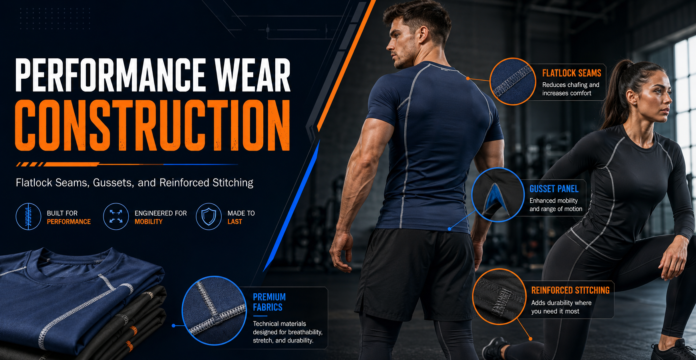
Performance wear is not only about stretchy fabric or stylish gym clothing. The real quality of a garment often comes from how it is built. When someone trains, runs, lifts, stretches, or works out for a long time, their clothing has to move with the body instead of pulling against it. This is where performance wear construction becomes very important. Good construction helps the garment feel smooth on the skin, stay strong during movement, and last longer after many washes. Flatlock seams, gussets, and reinforced stitching may sound like small details, but they can change the whole experience of wearing fitness clothing. A basic T-shirt may be fine for casual use, but active clothing needs better support, better shape, and better comfort. Performance wear construction helps reduce rubbing, prevent tearing, and improve flexibility. When these details are done well, the clothing feels lighter, cleaner, and easier to wear during exercise.
What Performance Wear Construction Means
Performance wear construction means the way a sports garment is cut, stitched, joined, and finished. It is not only about the fabric; it is also about how each fabric panel is connected. A good design makes movement easier, while a poor design can cause discomfort, tightness, or early damage. For example, a workout top should not pull under the arms when you raise your hands. Leggings should not feel tight in the wrong places when you squat or stretch. A base layer should sit close to the body without irritating the skin. This is why many people choose better-built clothing from performance-focused categories like performance wear, because the construction is usually made for movement, sweat, and regular training. Performance wear construction is about building clothes that support the body during activity instead of acting like ordinary fashion garments.
Performance Wear Construction and Daily Training Comfort
The keyword performance wear construction matters because comfort during training depends on much more than size. A garment can be the right size but still feel uncomfortable if the seams are thick, the stitching is rough, or the panels are placed badly. When you walk, run, cycle, or lift weights, your body repeats the same movements again and again. If a seam rubs the skin in one place, that small irritation can become very annoying. Good performance wear construction places seams in smarter areas, uses smoother joining methods, and gives more room where the body bends. This helps the wearer move freely without constantly adjusting the clothing. For daily gym users, this can make a big difference. The best workout clothing should feel almost invisible during exercise. It should not distract you, scratch your skin, or limit your movement. That is why construction details matter so much.
Flatlock Seams Explained
Flatlock seams are one of the most useful features in performance wear construction. A normal seam can create a raised line inside the garment, and that raised line may rub against the skin during exercise. A flatlock seam is different because it joins fabric edges in a flatter and smoother way. This makes the inside of the garment feel cleaner and softer. Flatlock seams are common in base layers, compression tops, leggings, cycling wear, and running clothes because these garments sit close to the body. For example, a product like a ski base layer needs smooth seams because it is often worn for long hours under other clothing. If the seams are bulky, the wearer may feel rubbing under jackets, pants, or protective layers. Flatlock seams help reduce that problem. In simple words, flatlock seams make active clothing more comfortable for long use.
Why Flatlock Seams Reduce Rubbing
Flatlock seams reduce rubbing because they do not create the same thick edge as many regular seams. During training, the fabric moves with the body. If a seam is rough, it can scrape the skin again and again. This is especially common under the arms, around the shoulders, near the waistband, and inside the legs. Good performance wear construction uses flatlock seams in these high-movement areas to protect the skin. This is useful for runners, athletes, gym users, and workers who wear active-style clothing for many hours. Flat seams are also helpful when clothing is tight or close-fitting, because close contact with the skin increases the chance of irritation. A smooth seam can make the garment feel more premium even if the fabric itself is simple. So, flatlock stitching is not only a design detail. It is a comfort feature that helps the garment perform better in real use.
Gussets and Better Movement
A gusset is an extra fabric panel added to a garment to improve movement and reduce stress on seams. In performance wear construction, gussets are often placed under the arms, in the crotch area of leggings or pants, and sometimes around shoulders or side panels. The purpose is simple: give the body more space to move naturally. Without a gusset, fabric may pull tightly when you stretch, squat, climb, or raise your arms. This pulling can make the garment uncomfortable and can also weaken the seams over time. A gusset spreads pressure across a wider area, so the fabric does not tear easily. This is why gussets are important in leggings, compression wear, training tops, and flexible activewear. A small gusset can make a big difference because it allows the garment to follow the body’s movement instead of fighting against it.
Reinforced Stitching for Strength
Reinforced stitching means extra-strong sewing in areas that face more pressure. In performance wear construction, this is used where the garment is likely to stretch, pull, or carry stress. Common areas include shoulders, side seams, waistbands, cuffs, armholes, pockets, and crotch seams. Reinforced stitching helps prevent loose threads, seam splitting, and early garment failure. This is especially important for training clothing because exercise movements put repeated stress on the fabric. A compression top, for example, must stretch and recover many times without the seams opening. That is why better stitching is useful in products such as compression T-shirts, where the garment sits close to the body and must handle tension during movement. Strong stitching does not always mean thick or heavy stitching. In good performance wear construction, the stitching should be strong but still smooth and comfortable.
Key Construction Features to Check
Before buying or producing fitness clothing, it helps to check a few simple construction details. Good performance wear construction should include smooth seams that do not scratch the skin. It should have strong stitching in pressure points like shoulders, waistbands, and side seams. It should use gussets where the body needs extra movement, especially under the arms and in leggings or training pants. It should avoid bulky seams in areas that rub during running or stretching. It should keep the garment shape stable after washing. It should allow the fabric to stretch without making the stitching break. It should feel comfortable when you bend, squat, lift, or run. It should not twist around the body during activity. It should support the user without feeling stiff. These small checks make it easier to choose clothing that works well in real training.
Fabric and Construction Must Work Together
Even the best fabric can fail if the construction is poor. A stretchy fabric needs stitching that can stretch with it. A lightweight fabric needs clean seams that do not feel heavy. A moisture-wicking fabric needs a garment shape that helps airflow and movement. This is why performance wear construction and fabric selection must work together. If the fabric is flexible but the seam is stiff, the garment may feel tight or uncomfortable. If the fabric is strong but the stitching is weak, the garment may still tear. If the fabric is breathable but the design traps heat, the wearer may still feel sweaty. Good construction supports the fabric’s natural benefits. This is especially important in activewear, where comfort, stretch, sweat control, and durability all matter at the same time. A well-made garment is a complete system, not just a piece of fabric.
Common Construction Problems in Low-Quality Fitness Apparel
Low-quality fitness apparel often looks fine at first, but problems appear after a few workouts. The seams may start opening, the threads may come loose, or the garment may twist after washing. Sometimes the stitching feels rough on the skin, especially during running or stretching. Poor performance wear construction can also make clothing lose shape quickly. Leggings may sag at the knees, tops may pull under the arms, and waistbands may roll down during movement. Another common issue is poor seam placement. If seams are placed directly in high-friction areas, they can cause discomfort. Cheap construction may also skip reinforcement in important pressure areas. This can make the garment weaker even if the fabric looks good. For brands and buyers, these issues can lead to returns, complaints, and lower trust. Strong construction helps avoid these problems.
Why Performance Wear Construction Is Better for Serious Use
Performance wear construction is better for serious use because it focuses on how the body moves. Regular clothing is often made for style and basic comfort, but performance clothing must handle sweat, stretch, friction, and repeated movement. A person wearing gym clothing may squat, run, bend, jump, lift, stretch, and wash the garment many times. Each action tests the seams and stitching. When flatlock seams, gussets, and reinforced stitching are used correctly, the garment becomes more useful and more durable. This does not mean every piece of fitness apparel must be heavy or complicated. It means the garment should be built with purpose. A simple tank top, T-shirt, hoodie, or base layer can perform much better when the construction is planned properly. That is the main difference between ordinary active clothing and well-made performance wear.
Conclusion
Performance wear construction is one of the most important parts of quality fitness clothing. Flatlock seams help reduce rubbing and make garments feel smoother. Gussets improve movement by giving the body more space where it bends and stretches. Reinforced stitching adds strength to areas that face pressure during training. Together, these features make workout clothing more comfortable, more flexible, and more durable. For buyers, brands, and athletes, these details are worth checking before choosing any garment. Good fabric is important, but fabric alone is not enough. The garment must also be stitched, shaped, and finished in the right way. When performance wear construction is done properly, the clothing supports movement instead of limiting it. That is what makes fitness apparel feel better, last longer, and perform well in real daily use.
FAQs
What is performance wear construction?
Performance wear construction is the way fitness clothing is cut, stitched, joined, and finished to improve movement, comfort, and durability.
Are flatlock seams better for workout clothing?
Yes. Flatlock seams are better for many workout garments because they feel smoother and help reduce rubbing during movement.
Why are gussets used in performance wear?
Gussets are used to add extra movement space in areas like underarms and crotch seams, so the garment stretches more naturally.
What does reinforced stitching do?
Reinforced stitching strengthens high-stress areas of a garment, helping prevent seam damage, loose threads, and early tearing.


