
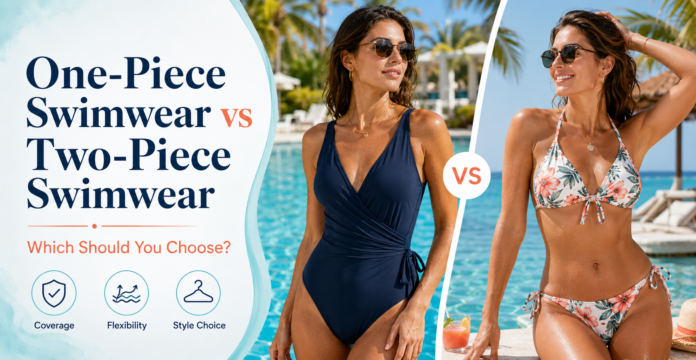
Choosing swimwear can feel confusing because both one-piece and two-piece styles can look good, feel comfortable, and work for different body types. The real answer depends on how much coverage you want, how active you will be, how confident you feel, and where you plan to wear it. One-piece swimwear usually gives more coverage and a secure fit, while two-piece swimwear gives more freedom, easier size matching, and more styling options. When people compare one-piece swimwear vs two-piece swimwear, they often think only about fashion, but the better choice is about comfort first. A swimsuit should not pull, slip, dig into the skin, or make you feel worried while moving. If you want a simple, secure, and easy option, a one-piece may suit you better. If you want flexibility, mix-and-match styling, or easier bathroom use, a two-piece may be better. This guide explains one-piece swimwear vs two-piece swimwear in a clear way so you can choose with confidence.
One-Piece Swimwear vs Two-Piece Swimwear: Quick Answer
The quick answer is simple: choose one-piece swimwear if you want more coverage, more hold, and a smoother single-body fit. Choose two-piece swimwear if you want more styling freedom, easier size matching, and a lighter feel. In the one-piece swimwear vs two-piece swimwear decision, one-piece styles are often better for swimming laps, water parks, family beach days, and people who do not want to adjust their swimwear again and again. Two-piece styles are often better for sunbathing, casual beach outfits, mixing sizes, and people who like separate tops and bottoms. Both can be modest or bold, depending on the cut. Both can be comfortable when the fabric, stitching, straps, and waist fit properly. So, the better swimsuit is not the one everyone else likes. The better swimsuit is the one that lets you move, sit, swim, and relax without feeling uncomfortable.
Coverage Matters More Than Trend
Coverage is one of the biggest differences when comparing one-piece swimwear vs two-piece swimwear. A one-piece normally covers the stomach and gives a more connected fit from shoulder to hip. This can feel better for people who want a secure swimsuit for swimming, walking near the pool, or playing with children at the beach. Two-piece swimwear shows more skin, but it can still offer good coverage if the top has strong support and the bottom has a high waist. Some people also choose modest styles when they want more body coverage without losing comfort, and options like modest swimwear can help shoppers understand how coverage and style can work together. Coverage should never feel like a rule. It should feel like a personal comfort choice. If you feel relaxed in your swimwear, you will enjoy the water more.
Comfort and Movement in the Water
Comfort is not only about softness. It is also about how the swimsuit behaves when wet. A good swimsuit should stay in place after swimming, bending, jumping, or walking. In one-piece swimwear vs two-piece swimwear, one-piece styles often feel more secure because the suit is connected. This reduces the chance of the top or bottom shifting separately. That is helpful for active swimming, water games, or beach sports. Two-piece swimwear can also be comfortable, especially when the top has adjustable straps and the bottom does not roll down. However, a two-piece may need more adjusting if the fit is too loose or the fabric stretches too much in water. If you are planning an active beach day, you may also want to compare swimwear comfort with movement-focused clothing like activewear, because both need stretch, recovery, and support. The best swimwear lets you move without thinking about it.
Fit Is Different for Every Body
Fit is where many people struggle, because bodies are not always the same size on top and bottom. A one-piece can look smooth, but it must fit the torso correctly. If the torso is too short, it may pull at the shoulders. If it is too long, it may wrinkle or feel loose. This is why one-piece swimwear is great when it matches your body length, but uncomfortable when it does not. In the one-piece swimwear vs two-piece swimwear comparison, two-piece styles can be easier for people who need one size for the top and another size for the bottom. For example, someone may need a medium top and a large bottom, or the opposite. Two-piece swimwear gives more control over sizing. A high-waisted bottom can also give a secure feeling while still keeping the two-piece design. The main rule is simple: swimwear should fit your body, not force your body to fit the swimwear.
Style and Confidence Come First
Style is personal. Some people feel more confident in a clean and classic one-piece. Others feel more confident in a two-piece because it feels lighter, younger, or more flexible. When comparing one-piece swimwear vs two-piece swimwear, do not choose only because of body shape rules. Many old fashion rules say certain bodies should wear certain swimsuits, but comfort and confidence matter more. A one-piece can look elegant, sporty, modest, or bold depending on neckline, back style, color, and leg cut. A two-piece can look casual, sporty, feminine, simple, or fashion-forward depending on the top and bottom combination. The best choice is the swimsuit that makes you stand naturally, not the one that makes you keep pulling or hiding. Confidence grows when the swimsuit supports your body, matches your taste, and lets you enjoy the beach without overthinking.
Best Choice for Beach, Pool, and Travel
Your plan also affects the better choice. For pool swimming, training, and water activities, one-piece swimwear is often easier because it holds the body better and reduces movement problems. For beach trips, vacations, and relaxing near the water, two-piece swimwear may feel easier because it dries faster, gives more styling choices, and can be paired with skirts, shorts, or cover-ups. In the one-piece swimwear vs two-piece swimwear debate, travel is a special point. A two-piece can be useful because you can pack one top with two different bottoms, or one bottom with different tops. A one-piece is simple because you only need one item and the outfit is complete. Shoppers who want to compare different cuts, coverage levels, and swimwear categories can explore general swimwear options to see which style fits their real use. Choose based on your day, not just the photo.
One Quick Checklist Before Buying
Before choosing between one-piece swimwear vs two-piece swimwear, use this simple checklist so you do not buy only because of color or trend.
- Choose one-piece swimwear if you want more coverage and a secure full-body fit.
- Choose two-piece swimwear if you need separate sizes for top and bottom.
- Pick adjustable straps if your shoulders often feel tight or loose in swimsuits.
- Choose high-waisted bottoms if you want more stomach coverage in a two-piece.
- Pick thicker fabric if you want better support and less transparency when wet.
- Avoid swimwear that digs into the waist, bust, hips, or shoulders.
- Test movement by sitting, stretching, and raising your arms before buying.
- Choose the swimsuit that makes you feel relaxed, not only the one that looks trendy.
This checklist keeps the one-piece swimwear vs two-piece swimwear choice practical. It also helps you focus on real comfort instead of only online pictures.
Fabric, Stretch, and Support
Fabric quality can change the whole experience. A swimsuit may look nice when dry, but it must also perform in water. Good swimwear fabric should stretch, recover its shape, and feel smooth on the skin. If the fabric stretches out after a short time, the swimsuit may become loose and uncomfortable. In one-piece swimwear vs two-piece swimwear, support is especially important. A one-piece often needs good stretch across the torso, bust, waist, and hips. If it is too tight, it can feel restrictive. If it is too loose, it can sag in water. A two-piece needs strong support in the top and stable hold in the bottom. Lining also matters because it adds comfort and reduces see-through issues. Seams should feel smooth, not rough. A swimsuit with poor stitching can rub the skin, especially when wet. The best fabric is soft, stretchy, supportive, and strong enough for repeated swimming.
When a One-Piece Is Better
A one-piece is usually better when you want a simple, secure swimsuit that feels complete. It works well for swimming, water parks, family beach days, hotel pools, and people who want more body coverage. In the one-piece swimwear vs two-piece swimwear choice, one-piece styles are also helpful for people who do not want to worry about matching tops and bottoms. You put it on, and the outfit is ready. A one-piece can also give a smoother look under cover-ups, shorts, or beach pants. Some designs include tummy control panels, shelf bras, wider straps, or sporty backs, which can improve support. The downside is that bathroom use can be less convenient, and sizing can be harder if your torso length does not match the suit. Still, if your main goal is security, coverage, and easy styling, a one-piece is often the safer choice.
When a Two-Piece Is Better
A two-piece is usually better when you want flexibility. It lets you mix sizes, colors, cuts, and coverage levels. This is useful because many people do not have the same size on the top and bottom. In one-piece swimwear vs two-piece swimwear, this is one of the strongest benefits of two-piece swimwear. You can choose a supportive top with a high-waisted bottom, a tankini top with shorts, or a simple bikini style if you like lighter coverage. Two-piece swimwear can also dry a little faster because there is less fabric around the body. It is often easier for bathroom use and changing during travel. The downside is that some two-piece styles may move more in strong waves or active swimming. That is why fit matters so much. If the top stays secure and the bottom does not roll or slip, a two-piece can be just as practical as stylish.
Conclusion
The best choice in one-piece swimwear vs two-piece swimwear depends on your comfort, coverage needs, body fit, and activity level. A one-piece is better if you want more coverage, a secure feel, and a simple all-in-one swimsuit. A two-piece is better if you want flexible sizing, easier styling, and more freedom to mix tops and bottoms. Neither style is automatically better for every person. The right swimsuit is the one that stays in place, feels good when wet, supports your body, and matches the way you plan to use it. Do not choose swimwear only because it is popular. Choose it because it helps you feel comfortable, confident, and free to enjoy the water. In the end, one-piece swimwear vs two-piece swimwear is not about rules. It is about what makes you feel your best.
FAQs
Is one-piece swimwear more comfortable than two-piece swimwear?
One-piece swimwear can feel more comfortable for active swimming because it stays connected and secure. However, two-piece swimwear can be more comfortable for people who need different sizes for the top and bottom. The better option depends on your body shape, movement, and personal comfort.
Is two-piece swimwear only for slim bodies?
No, two-piece swimwear is not only for slim bodies. Anyone can wear a two-piece if the fit, support, and coverage feel right. High-waisted bottoms, tankini tops, and supportive swim tops can make two-piece swimwear comfortable for many body types.
Which is better for swimming laps?
A one-piece is usually better for swimming laps because it gives a secure full-body fit and reduces the chance of shifting in water. Sporty two-piece styles can also work, but they must have strong straps, good support, and a bottom that stays in place.
Which swimsuit is better for travel?
Two-piece swimwear can be better for travel because you can mix tops and bottoms and pack fewer items for more outfit options. A one-piece is also useful because it is simple, easy to style with cover-ups, and works well for pools, beaches, and water


