
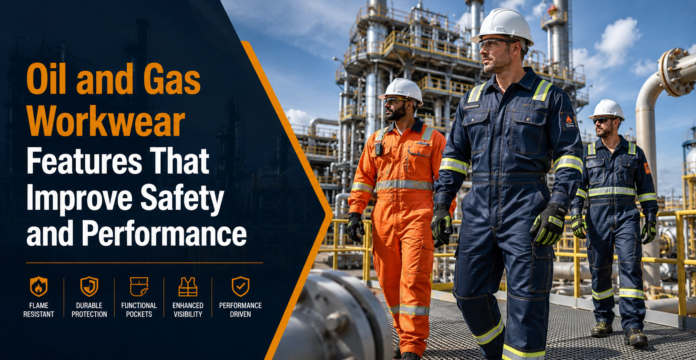
Oil and gas jobs are not like normal outdoor jobs. Workers may face heat, sparks, mud, sharp tools, heavy machines, rain, wind, chemicals, and long shifts. That is why clothing in this field must do more than look professional. It must protect the body, support movement, and help workers stay focused. The best oil and gas workwear features are made for real jobsite risks. They help reduce injuries, improve comfort, and support better performance during drilling, refining, maintenance, pipeline work, and field inspections. Good workwear should feel strong but not too heavy. It should allow walking, bending, climbing, kneeling, and lifting without making the worker feel trapped. When safety clothing is designed well, workers can do their tasks with more confidence. This guide explains the most important oil and gas workwear features in simple words so even a seventh-grade student can understand them clearly.
Why Oil and Gas Workwear Features Matter
The main reason oil and gas workwear features matter is simple: the worksite can be dangerous. A worker may be near fuel, gas, electrical tools, welding areas, rough metal, moving vehicles, or slippery ground. Normal clothing cannot handle these risks. It may tear quickly, catch sparks, soak in oil, or make the worker hard to see. Proper workwear gives a safer layer between the worker and the hazard. It also helps teams look organized and easy to identify. When companies choose proper oil and gas workwear, they are not only buying uniforms. They are investing in safer work habits, better team control, and stronger daily performance. Good workwear can also reduce downtime because workers are less distracted by discomfort. In short, oil and gas workwear features protect people while helping them work better.
Oil and Gas Workwear Features for Flame Resistance
One of the most important oil and gas workwear features is flame resistance. Oil and gas sites can have sparks, flash fire risks, and heat exposure. Flame-resistant clothing is designed to resist ignition and slow the spread of flames. This does not mean the clothing makes a person fireproof. It means the fabric gives workers extra time to move away from danger. That extra time can make a big difference. Flame-resistant coveralls, jackets, and pants are often used in high-risk zones because they cover more skin than normal clothing. The fabric should stay protective even after many washes, if it is cared for correctly. Workers should also wear the correct size because loose clothing can snag, while tight clothing can limit movement. Strong flame-resistant oil and gas workwear features help protect the body while still allowing field workers to move naturally during hard tasks.
High Visibility for Safer Movement
Another key part of oil and gas workwear features is high visibility. Oil and gas worksites often have trucks, cranes, loaders, forklifts, and moving equipment. Workers may also work early in the morning, late at night, or during dusty weather. High-visibility colors like orange, yellow, and lime help workers stand out. Reflective tape helps the body become easier to see when light hits it. This is very useful near roads, loading areas, and outdoor plants. A safety vest or jacket with reflective strips can help drivers and machine operators notice workers faster. Good visibility is not only about bright color. It is also about placement. Reflective strips should be placed around the chest, arms, legs, and back so workers can be seen from different angles. These oil and gas workwear features reduce the chance of accidents caused by poor visibility.
Coveralls for Full-Body Protection
Coveralls are common in oil and gas work because they protect the upper and lower body together. They reduce gaps between shirts and pants, which helps protect against dust, dirt, oil splashes, and light sparks. Good oil and gas safety coveralls should have strong seams, secure closures, useful pockets, and enough room for movement. Coveralls are also helpful because workers can put them on over base layers when needed. For hot weather, breathable fabric is important. For cold weather, layering space becomes important. The best oil and gas workwear features in coveralls include reinforced stress points, covered zippers, adjustable cuffs, and fabric that can handle repeated washing. Coveralls should not feel baggy around machines, but they should not be too tight either. A good fit helps workers climb, bend, and stretch safely during long work hours.
Jackets and Pants for Weather Protection
Oil and gas workers often deal with outdoor weather. Rain, wind, cold air, and strong sun can affect comfort and focus. That is why weather protection is one of the most useful oil and gas workwear features. A good safety jacket should block wind, handle light rain, and allow body heat to escape. If a jacket traps too much heat, the worker may sweat and feel tired faster. Good oil and gas safety jackets should balance protection with comfort. Pants also matter because workers kneel, walk, climb, and carry tools. Strong work pants should resist tearing and protect the legs from rough surfaces. Water-resistant or quick-dry fabric can help in wet places. Together, jackets and pants create a flexible workwear system that can be adjusted for different jobsite weather and task needs.
Comfort, Fit, and Easy Movement
Comfort is not a small thing in oil and gas work. A worker may wear the same clothing for many hours. If the clothing is stiff, heavy, itchy, or too tight, the worker may feel tired quickly. Good oil and gas workwear features should support the body instead of fighting against it. A proper fit gives space in the shoulders, knees, elbows, and seat area. Stretch panels can help workers bend and climb more easily. Adjustable cuffs and waistbands help workers control the fit. Breathable fabric also helps reduce sweat build-up. Comfort improves safety because uncomfortable workers may adjust clothing again and again, which can distract them from the job. When workers feel comfortable, they can focus on tools, machines, signals, and team communication. This is why comfort is one of the most practical oil and gas workwear features for daily performance.
Fabric Strength and Tear Resistance
Oil and gas clothing must be tough because the work environment is rough. Workers may brush against metal edges, pipes, concrete, platforms, and tools. Weak fabric can rip quickly, which can expose the skin and reduce protection. Strong fabric is one of the basic oil and gas workwear features every buyer should check. Ripstop fabric, reinforced panels, double stitching, and bar-tacked stress points can help clothing last longer. Knees, elbows, shoulders, pockets, and crotch areas often need extra strength because these areas face more pressure. Durable fabric also saves money over time because the clothing does not need to be replaced too often. However, fabric should not be so thick that it becomes too hot or heavy. The best oil and gas workwear features balance strength, comfort, and long-term use without making workers feel overloaded.
Useful Pockets and Practical Design
Workwear should make the job easier, not harder. Practical design is one of the oil and gas workwear features that workers notice every day. Pockets should be placed where they are easy to reach but not in the way. Chest pockets, tool pockets, cargo pockets, and secure zipper pockets can help workers carry small tools, gloves, pens, phones, radios, or safety cards. Closures should be strong and easy to use with gloves. Covered zippers and storm flaps can help protect against dirt and sparks. Collar design, cuff design, and pocket angles also matter because small details affect daily comfort. A good design lets workers move fast and safely without searching for basic items. When oil and gas workwear features are practical, workers can stay organized and complete tasks with less stress.
Important Features to Check Before Buying
Before buying oil and gas clothing, it is smart to check the features one by one because not every product gives the same level of safety and comfort. The most useful oil and gas workwear features should match the actual job, not just the product photo.
- Check flame-resistant fabric if workers face sparks, heat, or flash fire risks.
- Choose high-visibility colors and reflective tape for vehicle-heavy areas.
- Pick breathable fabric for hot sites and layering space for cold sites.
- Look for reinforced knees, elbows, seams, and pocket areas.
- Make sure zippers, buttons, and closures are secure and easy to use.
- Choose the correct size so workers can bend, climb, and lift safely.
- Check washing care because poor care can reduce fabric life.
- Avoid cheap clothing that looks safe but tears or fades too quickly.
How Oil and Gas Workwear Features Improve Performance
Safety is the first goal, but performance is also important. The right oil and gas workwear features help workers move faster, stay cooler, carry tools better, and feel less tired. When clothing fits well, workers do not waste energy pulling sleeves, fixing pants, or adjusting collars. When fabric breathes well, workers can stay more comfortable during hot shifts. When pockets are useful, tools are easier to reach. When clothing is strong, workers can focus on the job instead of worrying about tears. These small improvements can make a big difference during long workdays. Performance is not only about speed. It is also about working carefully, staying alert, and completing tasks with fewer mistakes. That is why oil and gas workwear features should be chosen with both safety and daily comfort in mind.
Conclusion
Oil and gas workwear features are important because they protect workers from real risks while helping them work with comfort and confidence. The best clothing should include flame resistance, high visibility, strong fabric, practical pockets, weather protection, and a proper fit. It should also be easy to move in because oil and gas workers bend, climb, lift, kneel, and walk across tough sites every day. Good workwear is not just a uniform. It is safety equipment that supports the whole working day. Companies should choose clothing based on the jobsite, weather, hazard level, and worker comfort. When the right oil and gas workwear features are selected, teams can stay safer, perform better, and work with more trust in their gear.
FAQs
What are the most important oil and gas workwear features?
The most important oil and gas workwear features are flame-resistant fabric, high visibility, durable stitching, weather protection, practical pockets, and a comfortable fit. These features help protect workers and support better movement during long shifts.
Why is flame-resistant clothing important in oil and gas work?
Flame-resistant clothing is important because oil and gas sites may have sparks, heat, or flash fire risks. This clothing helps slow flame spread and gives workers more time to move away from danger.
Should oil and gas workwear be loose or tight?
Oil and gas workwear should not be too loose or too tight. It should allow easy movement without creating extra fabric that can snag on tools, pipes, or machines. A balanced fit is safer and more comfortable.
How does high-visibility workwear improve safety?
High-visibility workwear makes workers easier to see near vehicles, machines, and low-light areas. Bright colors and reflective tape help drivers and equipment operators notice workers faster.


