
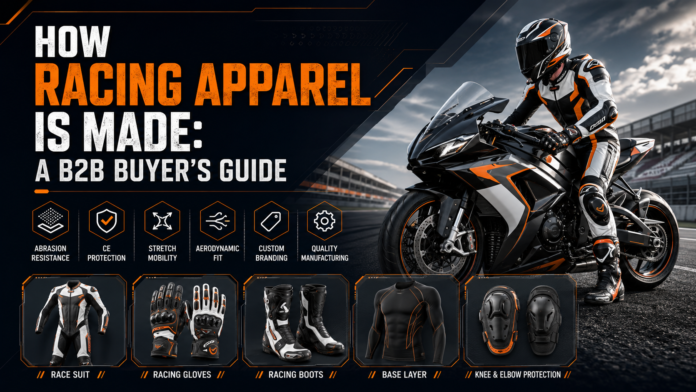
The racing apparel industry is one of the most demanding in terms of technical requirements, as each garment must simultaneously balance the demands of high-speed impact protection with thermal management, brand identity, and aerodynamic performance. Understanding how racing apparel is manufactured will help B2B buyers who are sourcing apparel for teams or distributors to ask the right questions and evaluate suppliers accurately. They can also specify products that meet real performance and safety needs. This guide will explain the entire manufacturing process of racing apparel from raw material selection to final quality assurance, allowing buyers to make informed decisions.
Why understanding how racing apparel is made matters for B2B buyers
B2B buyers that understand the manufacturing process can better evaluate claims made by suppliers, identify shortcuts in quality during the sourcing phase, and specify details of construction which directly impact rider or drivers safety. Racing apparel buyers that understand the manufacturing process will be able to have more productive discussions with manufacturers. This reduces the risk of miscommunications, which can lead to products not meeting safety or performance expectations. This knowledge provides buyers with a significant advantage when it comes to comparing suppliers, negotiating specs, and managing production over multiple seasons.
Raw Materials: The Beginning of Racing Apparel Manufacturing
The raw materials used to make racing clothing determine the garment’s comfort, protection, weight and durability.
Abrasion-Resistant Outer Shell Materials
Since the outer shell of racing attire must endure abrasion at high speeds during a slide or fall, materials with high tensile strength and surface durability rank highest among outer shell materials. Racing motorcycle apparel and racing suits almost exclusively use full-grain leather as a shell material, as the fiber structure of full-grain leather offers superior abrasion resistance to competing synthetic materials. In addition to full-grain leather, racing motorcycle apparel and multi-discipline apparel use high-tenacity textile fabrics like Cordura nylon and ballistic polyester. These fabrics have excellent abrasion resistance and are lightweight and weather-resistant.
CE-Rated Protective Armor
CE-rated armor inserts are a crucial component to understanding how racing apparels are made. Their placement, integration and certification level directly affect the protective performance of the garment. The manufacturers source their armor from suppliers who have tested impact absorption in specific load scenarios. This certification must then be maintained on the garment by precise pocket positioning and secure retainer systems. Different racing categories have different armor requirements. Buyers must also confirm the CE level that applies to their market before finalizing their construction specifications with their manufacturers.
Fire-Resistant Material
Formula 1 racing apparel and circuit car racing garments must be made from materials that are inherently flame-resistant, such as Nomex, or aramid fiber blends. These materials do not melt under direct fire exposure. Formula 1 apparel is required to meet strict FIA standards for homologation. Therefore, sourcing fire resistant materials from certified suppliers is a must-have in this product category. B2B buyers of motorsport apparel must verify material homologation, and provide compliance documentation prior to placing bulk orders.
Performance Linings and Base Layer Fabrics
The materials used in racing garments can have a significant impact on comfort, especially during long racing sessions. This is because riders and drivers produce significant heat when wearing protective outer shells that are close-fitting. motorcycle base layer and moisture-wicking polyester linings help reduce sweat and the feeling of wearing heavy protective apparel for extended periods. Stretch lining panels are also used at key movement areas to improve comfort and prevent the outer shell from losing its structural integrity.
Pattern Development and Ergonomic Engineering
To understand how racing apparel is manufactured, it’s important to recognize that the pattern development of racing garments is fundamentally different from sportswear. This is because riding and driving positions place unique ergonomic demands on finished garments.
Riding Position Patterns Adjustment
The motorcycle racing suit is cut to fit a crouching, forward-leaning riding position. This is different from the standard standing position that is used in the construction of garments. The back panel is lengthened, the sleeves are angled forward and the chest is narrowed compared to the standard jacket pattern. This creates a garment which fits well in the riding position, even though it feels strange when standing up. Custom Motorbike Pants also require similar adapted patterns to account for the bent knee riding position and seat area without causing discomfort or restriction during gear changes and brakes.
Armor Pocket Integration
In order to integrate armor pockets into racing clothing correctly, they must be placed in a way that is aligned with the primary impact zones of the body regardless of whether you are riding or driving. As armor that moves out of place during a crash does not provide reliable protection, pockets must be constructed to hold inserts firmly through stitching or velcro. The armor pocket is one of the most technical aspects of racing apparel.
Stretch Panel Installation
Stretch panels are strategically placed on the knees, the elbows, the underarms and the shoulder blades of racing suits to allow for dynamic movement without creating weak spots in the protective shell. Stretch zones are made of materials that retain their elasticity even under repeated stress, while still meeting the outer shell requirements for abrasion resistance and tear resistance. Stretch panel design is a delicate balance between protection and mobility.
Construction Techniques for Racing Apparel Manufacturing
The construction of racing apparel determines its ability to remain intact during a crash, and maintain its protective integrity throughout a racing season.
Double and triple stitching at Stress Points
Single-stitched seams do not have the strength needed for racing clothing that needs to stay intact in high-speed slides or impacts. Quality racing garments have double or triple stitching on every seam. Additional bartack reinforcement is added at armor pockets, zipper attachments and panel joins. Seam construction is one of the most important indicators of garment quality from a B2B perspective.
Technology of Bonded and Welded Seams
In premium racing suits, bonded or welded technology is increasingly used to eliminate needle holes, resulting in a stronger, smoother seam that resists impact forces as well as moisture penetration. The manufacturing process is more expensive and requires special equipment, but the improved seam performance under high-speed impact situations makes it worth the cost. Bonded seams also create a smoother internal finish, which reduces the development of pressure points during long race sessions.
Zipper and Closure Systems
Zippers for racing apparel need to balance a secure fastening and quick release capabilities for emergency situations. Manufacturers source heavy-duty, YKK grade or equivalent zippers rated specifically for racing garment construction. Also, wrist, ankle and collar closures are made with stretch binding, Velcro or snap systems to seal the garment at high speeds against wind blast while being easy to use even when wearing gloves. The B2B sourcing process should include a careful assessment of the quality and selection of closure systems.
The importance of B2B considerations when sourcing racing apparel
The following factors will help B2B buyers to identify reliable manufacturers from those who are likely to disappoint during critical moments.
- Documentation for material certification: Verify that suppliers are able to provide certifications of leather grades, CE armor ratings and fire-resistant materials, where applicable.
- Ergonomic Pattern Testing: Inquire whether the patterns were designed on real riders or drivers, in realistic positions as opposed to being adapted from standard sportswear template.
- Standard for seam construction: Double or triple stitching is required at all stress points. Request inspection documentation to confirm compliance.
- Sample test protocol: Confirm that samples are tested on real riders, not just static fittings.
- Checkpoints for quality control: Document inspection stages during bulk production, covering armor placement and seam integrity.
- Support for certification compliance: Verify that the manufacturer is able to provide you with the documentation required by your target market, racing category or homologation.
B2B buyers who review these factors can identify manufacturers that consistently deliver racing apparel that meets safety and performance standards.
Most common B2B buyers for Racing Apparel categories
B2B buyers in the racing apparel industry typically focus on a few core categories to meet the needs of the most diverse customers. motorbike suits are designed for track day riders or road racers that want a comprehensive two-piece suit. custom motorcycle pants is a good option for buyers who like separates but still need the same level of protection. leather jackets are a strong category that brands target both lifestyle and performance buyers. textile jackets are a popular choice for buyers who want weather versatility along with protective performance.
motorbike glove is a popular accessory category, as riders tend to replace them more often than their main garments. motorcycle vests, and riding jackets are popular with buyers who target urban and casual riding segments. Full race-spec protection may not be the primary purchasing driver. Reviewing the entire motorcycle clothing range will help B2B buyers find sourcing opportunities for all motorcycle apparel categories.
Join forces with a trusted manufacturer of racing apparel
B2B buyers can source racing apparel that meets safety, performance and brand standards by understanding how it is made. Working with an experienced manufacturer will ensure that every detail of the product meets your target market’s needs, whether you are looking for race-spec suits or protective gear to be sold in retail, or a brand-named off road motorcycle apparel for specialist retailers.
We are a manufacturer of custom motorbike clothing. As such, we assist B2B buyers in sourcing racing apparel that meets safety and performance standards for all riding categories. Contact our team if you are ready to discuss your requirements. We can help you explore the material options, construction specs, certification support and production timelines that best suit your business.
Final Thoughts
Understanding the manufacturing process of racing apparel gives B2B buyers a technical foundation that allows them to evaluate suppliers accurately and specify construction details with confidence. They can also source products which meet real safety and performance standards. Every stage of the manufacturing processes contributes to the finished garment, which protects drivers and riders when it counts most. This includes abrasion resistant outer shells, CE-rated armor, ergonomic pattern development, reinforced stitch construction, and fire-resistant materials. Combining this manufacturing expertise with a structured evaluation process of suppliers, B2B buyers are able to build relationships that provide consistent quality and reliable timelines for their products, which they can trust throughout each racing season.
FAQs
What materials are used to manufacture racing apparel?
For racing apparel, full-grain leather and high-tenacity fabrics are used for the outer shell. CE-rated armor inserts provide impact protection. Moisture-wicking linings ensure rider comfort. Nomex is required for all car racing categories, which must meet FIA standards.
Why is pattern development so important in racing clothing?
The patterns for racing clothing must take into account the riding or driving posture rather than the standard standing position, as garments that are not fitted correctly in position can restrict movement or reveal protection gaps during critical moments. The finished garments are safer and more comfortable when the patterns have been designed ergonomically.
What are the construction techniques that indicate high-quality racing clothing?
Quality racing apparel is characterized by double or triple stitching on all stress points. It also includes reinforced armor pockets, bonded or welded seams, and other technologies. These details have a direct impact on how the garment will hold together in a crash.


