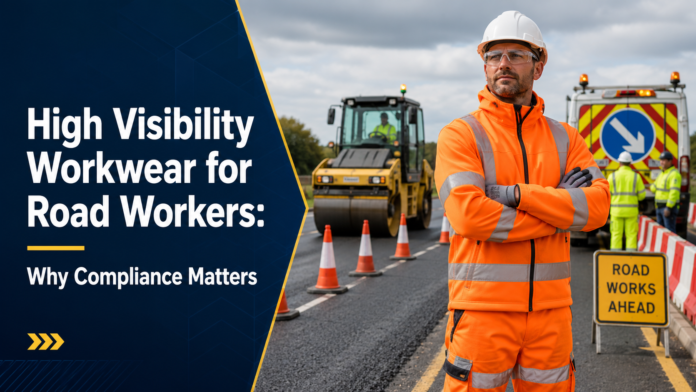
Road workers do their jobs close to moving cars, trucks, machines, dust, noise, and changing weather. Drivers may pass a work zone at high speed, and even a small delay in seeing a worker can create a serious risk. This is why high visibility workwear for road workers is not just a uniform choice. It is a safety tool that helps workers stand out in daylight, low light, rain, fog, and night work. Bright fabric catches attention during the day, while reflective tape helps return light from vehicle headlights at night. Good clothing makes the worker easier to notice from more angles and from a safer distance. High visibility workwear for road workers also helps supervisors keep track of crews when several people are working around cones, barriers, signs, trucks, and heavy equipment. In simple words, workers cannot be protected if drivers and machine operators cannot see them early enough.
What Compliance Means in Road Workwear
Compliance means the clothing follows the safety rules, project requirements, and risk level of the job. It does not mean wearing any bright yellow or orange shirt. True high visibility workwear for road workers must have the right color, enough visible area, correct reflective tape, proper garment class, and safe design for the work zone. The FHWA’s MUTCD worker safety guidance says workers exposed to traffic or work vehicles in temporary traffic control zones must wear high-visibility safety apparel that meets Performance Class 2 or 3 requirements, or equivalent revisions. This shows why compliance matters. It gives buyers and safety teams a clear way to choose clothing instead of guessing. Road crews should follow local law, contract rules, and site safety plans because requirements can change by country, road type, traffic speed, and job duty. High visibility workwear for road workers becomes more effective when it is selected by risk, not only by price or appearance.
high visibility workwear for road workers
High visibility workwear for road workers includes safety vests, jackets, rainwear, trousers, shirts, gloves, and layered garments made to improve worker visibility. These items are used by road repair teams, flaggers, utility crews, construction workers, traffic controllers, survey teams, and maintenance staff. A basic vest may be enough for some daytime work, but a jacket or full clothing system may be better for cold, rainy, or high-risk areas. Buyers can start with Eco Jersey’s hi-vis workwear collection when planning a range for road crews, utility teams, or site workers. The best choice depends on the job. A flagger near live traffic needs strong visibility from the front and back. A worker near machinery needs clothing that can be seen by operators. A night crew needs reflective details that perform under headlights. High visibility workwear for road workers should always support the worker’s real task, not just meet a basic color requirement.
Why Bright Colors and Reflective Tape Work Together
Bright colors and reflective tape do different jobs, so both matter. Fluorescent yellow, lime, and orange colors help workers stand out during the day because they look brighter than normal fabric. Reflective tape helps at night because it bounces light back toward the source, such as a car headlight. This is why high visibility workwear for road workers should not depend on bright fabric alone. A worker wearing only a bright shirt may still be hard to see during rain, sunset, night work, or shadowed areas. Reflective tape should be placed on key body areas so drivers can notice a human shape, not just a small shining strip. Jackets, vests, and trousers should show movement when the worker walks, bends, or turns. A road site is full of signs, cones, machines, and lights, so clothing must create clear human visibility. High visibility workwear for road workers works best when color, reflective material, and garment coverage support each other.
Choosing the Right Vest, Jacket, or Rainwear
The right garment depends on the weather, shift time, and exposure level. Safety vests are easy to wear and useful for warm conditions, short inspections, and basic visibility needs. Jackets are better when workers need warmth, wind protection, or stronger coverage. Rainwear is important because wet weather can reduce driver vision and make workers harder to see. For teams that need a simple layer over regular work clothing, a custom safety vest can be a practical choice when the design, color, reflective layout, and branding are planned correctly. However, high visibility workwear for road workers should not be selected only because it looks professional. It must also stay visible after movement, washing, rain, and daily use. A vest that twists, opens, or gets covered by tools may not perform well. A jacket that is too bulky may slow the worker. The best garment gives visibility, comfort, movement, and protection together.
Fit and Comfort Help Workers Stay Protected
Even compliant clothing can fail in real life if workers do not wear it correctly. If a vest is too loose, it may flap in the wind, catch on tools, or move out of place. If a jacket is too tight, the worker may leave it open or remove it during the shift. High visibility workwear for road workers should allow easy bending, lifting, signaling, and walking. Road workers often carry tools, hold signs, climb in and out of vehicles, and move around barriers. Their clothing should not block arm movement or hide reflective areas. Comfort also matters in hot weather. Breathable fabric can reduce sweat and help workers keep the garment on for the full shift. In cold weather, the fit should allow safe layering without covering reflective tape. High visibility workwear for road workers is more useful when workers can wear it all day without feeling trapped, overheated, or restricted.
Key Features to Check Before Buying
Before ordering high visibility workwear for road workers, check these important points:
- Choose the right visibility class for the job risk.
- Select bright fluorescent colors for daytime visibility.
- Use reflective tape for night and low-light work.
- Make sure the garment is visible from front, back, and sides.
- Choose breathable fabric for hot road sites.
- Pick waterproof or water-resistant layers for rainy work.
- Check pocket placement so tools do not cover reflective tape.
- Make sure the fit allows lifting, bending, and signaling.
- Avoid loose parts that may catch on machinery.
- Check wash care instructions before bulk ordering.
- Test samples with real workers before final production.
- Replace faded, torn, dirty, or damaged garments on time.
Weather Protection Is Also a Safety Issue
Road work does not stop only because the weather changes. Crews may work in rain, cold wind, heat, dust, and low light. That is why high visibility workwear for road workers should be chosen for the full environment, not only for dry daytime use. Rain can make drivers’ windshields unclear and reduce stopping time, so workers need garments that stay bright and reflective when wet. Cold weather can make workers add extra layers, but those layers should not hide the hi-vis garment. Hot weather can cause workers to remove clothing if it feels heavy or sweaty. For wet conditions, Eco Jersey’s rainwear can be used as a relevant category when planning weather-ready work clothing for outdoor crews. A good safety program thinks about visibility, comfort, and weather together. High visibility workwear for road workers must keep the worker visible even when the site becomes darker, wetter, colder, or harder to manage.
Compliance Reduces Confusion on the Job Site
When every worker wears the right compliant clothing, the site becomes easier to manage. Supervisors can quickly see who belongs inside the work zone. Drivers can separate workers from equipment, signs, and background objects. Machine operators can notice people around loaders, trucks, rollers, and repair vehicles. High visibility workwear for road workers also supports a cleaner safety culture because everyone follows the same basic rule: stay visible before entering the active area. Without a clear policy, one worker may wear a bright vest, another may wear a faded jacket, and another may wear a normal dark hoodie. That creates confusion and weakens safety. Compliance helps remove that guessing. It sets a common standard for garment color, reflective design, condition, and use. The current FHWA MUTCD page notes that the 11th Edition with Revision 1 is dated December 2025, which shows that agencies and buyers should always check the current edition and local rules before finalizing road safety policies.
Common Mistakes Buyers Should Avoid
One big mistake is buying cheap bright clothing without checking if it meets the required visibility level. Another mistake is using one garment type for every road job. A parking-area worker, highway flagger, night crew, and rain repair team may not need the same clothing setup. High visibility workwear for road workers should match traffic speed, lighting, weather, task, and distance from moving vehicles. Buyers should also avoid designs where logos, pockets, dark panels, or tool belts cover the reflective tape. They should not choose fabric that fades quickly or becomes uncomfortable after a few washes. Workers should not cover hi-vis clothing with normal jackets, backpacks, or dark hoodies. Another common problem is keeping old garments in use for too long. A faded vest may look acceptable in the locker room but perform poorly near moving traffic. High visibility workwear for road workers should be inspected often, cleaned correctly, and replaced when it no longer gives clear visibility.
Conclusion
Choosing high visibility workwear for road workers is about protecting real people in real traffic conditions. Road workers face changing light, careless drivers, loud machines, bad weather, and fast-moving vehicles. A strong workwear plan helps them stay visible from more directions and in more conditions. The best garments are bright, reflective, comfortable, durable, and matched to the job risk. Vests, jackets, rainwear, trousers, and gloves can all support safety when they are chosen with care. Compliance matters because it gives teams a clear standard to follow and helps reduce unsafe guesswork. Buyers should check local rules, test garment samples, choose the right visibility level, and train workers to wear the clothing correctly. In the end, high visibility workwear for road workers is not only about passing an inspection. It is about helping every worker return home safely after the shift.
FAQs
What is high visibility workwear for road workers?
High visibility workwear for road workers is clothing made with bright colors and reflective tape. It helps drivers and machine operators see workers more clearly. It is used on roads, construction zones, utility sites, and traffic control areas.
Why does compliance matter in hi-vis road workwear?
Compliance matters because it helps workers wear clothing that matches safety rules and job risks. It also gives buyers a clear standard for choosing garments. Without compliance, workers may wear clothing that looks bright but does not give enough protection.
Which garments are best for road workers?
Safety vests are useful for basic visibility, while jackets and rainwear are better for cold or wet conditions. Trousers and full-body layers can improve visibility when workers move near traffic. The best choice depends on weather, lighting, and job risk.
When should hi-vis workwear be replaced?
Hi-vis workwear should be replaced when it is faded, torn, dirty, damaged, or no longer reflective. It should also be replaced if labels are missing or the garment no longer fits safely. Regular checks help keep workers visible on site.