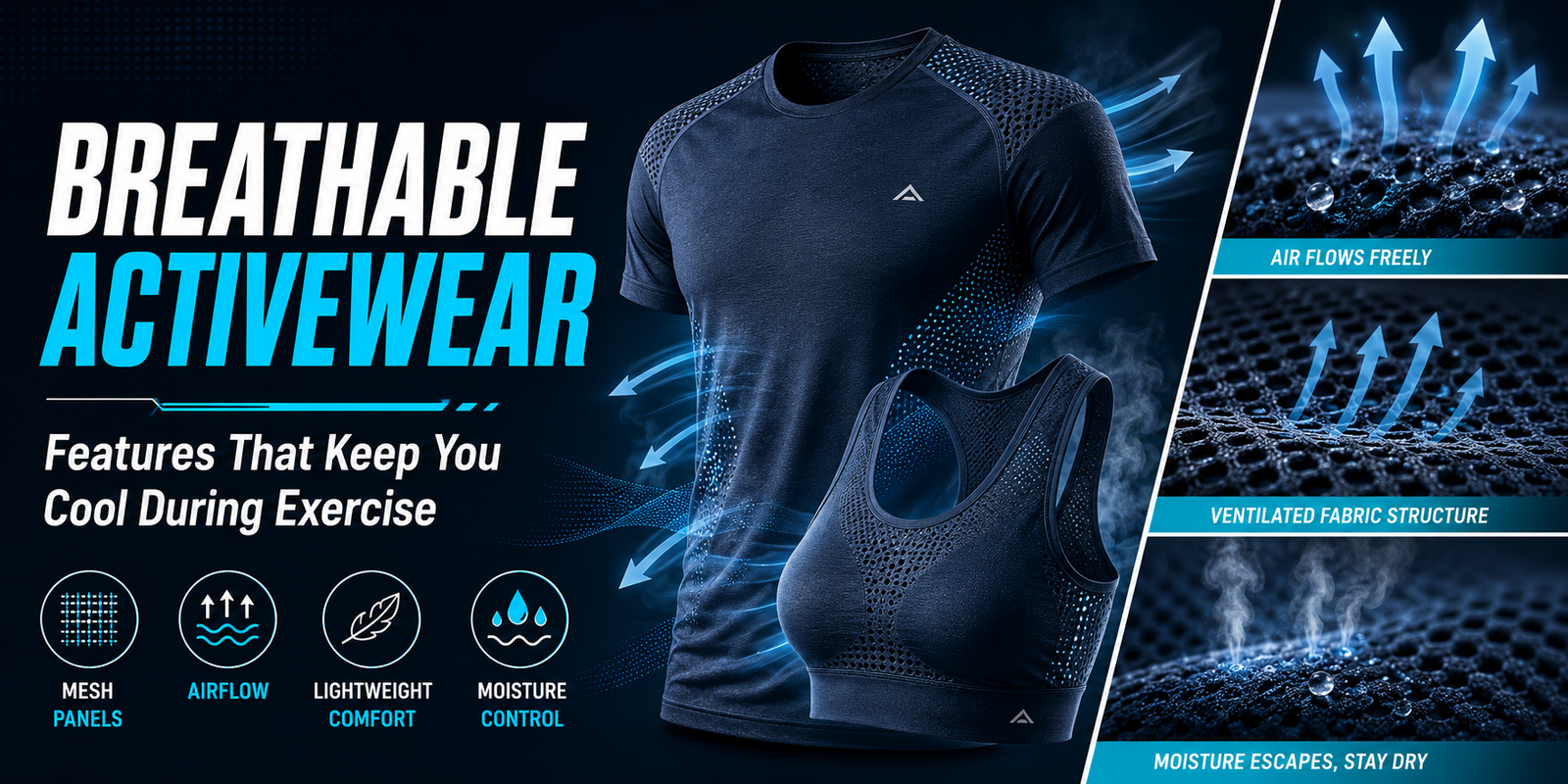
The right gym wear fabrics can make training feel easier, cooler, and more comfortable. A good fabric moves with your body, manages sweat, and does not become heavy during exercise. Poor material may trap heat, rub the skin, or lose its shape after a few washes. This is why gym wear fabrics should be chosen according to the workout, climate, and level of movement. Clothing for weight training needs stretch and strength, while running clothes need low weight and fast drying. You can compare different styles in the activewear collection before deciding which material and garment design suit your needs.
What Makes Good Gym Wear Fabrics?
Good fabrics handle the balance between moisture control, stretch, and both soft and durable. Breathability and some stretch let fabric move when you do and stays durable. Good gym fabrics should stay soft and keep their shape after consistent use. Smooth fabric helps brining friction to these areas less of an irritation. Weight of the fabric should also be consistent. Lighter weight fabrics tend to be cooler but a medium weight fabric can help with support and coverage. No one fabric can do it all.
Polyester for Fast-Drying Performance
Polyester is one of the most common gym wear fabrics because it is strong, light, and quick to dry. It does not absorb large amounts of water, so sweat can spread across the surface and dry faster when the fabric is properly made. Polyester also holds color well and works with printing methods used for branded workout clothing. However, quality can vary. Cheap polyester may feel rough, trap odor, or become too warm. Better gym wear fabrics use fine yarns, breathable knitting, mesh zones, or moisture-management finishes. The gym wear range shows how polyester-based materials can be used across tanks, shorts, joggers, and compression tops.
Nylon for Softness and Strength
Nylon is a common choice for gym clothing because of its softness and stretch, and is a great fabric for leggings, fitted tops, sports bras, shorts, and premium tops. Compared to basic polyester, nylon feels softer and has a better close-fit appearance and dry texture. It also can better accommodate movement which makes it great for cycling, yoga, and even strength based and high intensity classes. Nylon can still trap odor and warm with higher density knits. The best fabrics made of nylon for gym clothing feel soft and have good control of moisture and coverage.
Spandex and Elastane for Flexible Movement
Spandex, also called elastane, gives gym wear fabrics their stretch. It is rarely used alone. Instead, a small percentage is blended with polyester, nylon, or cotton. This blend helps leggings stay fitted, waistbands remain secure, and compression tops move with the body. More elastane does not always mean better performance. Too much can make gym wear fabrics feel tight, warm, or less breathable. The correct amount depends on the garment. A loose tank needs little stretch, while fitted shorts or a base layer needs more. For example, a women’s compression shirt uses a polyester-and-spandex structure to support four-way movement and a close athletic fit.
Cotton for Light and Low-Intensity Training
Cotton is another fabric that is still present in most gym wear and is familiar and comfortable. It is great for light gym sessions, warmups, or stretching. It is also great for personal sensitive skin because it can be used to make garments with smooth seams. However, cotton has a notorious reputation for poor sweat management. For this reason, pure cotton gym fabrics aren’t great for cardio or intensive workouts. A combination of cotton and polyester can keep softness, and increase workout durability and moisture management.
Blended Fabrics Often Give the Best Balance
Delivering every desired feature with a single fiber isn’t always possible, so blends have become a primary construction method for high-performing gym wear fabrics. For example, polyester/spandex blends dry quickly and add stretch. Nylon/elastane blends provide greater support and a smoother feel. Comfort, combined with an active shape that allows the wearer freedom of movement, is provided by cotton/polyester blends. Blended fabrics for gym wear serve beyond the percentages of the fibers. The performance of a blended fabric is the result of the type of yarn, knit structure, finish, weight, and the construction of the garment. The best blends are the result of balance.
Best Gym Wear Fabrics at a Glance
- Polyester works well for running, cardio, team training, and fast-drying tops.
- Nylon suits leggings, fitted shorts, sports bras, and smooth premium activewear.
- Spandex adds stretch, recovery, support, and freedom of movement.
- Cotton is comfortable for walking, stretching, warm-ups, and light workouts.
- Cotton-polyester blends combine softness with improved drying and durability.
- Polyester-spandex blends suit compression tops, shorts, leggings, and joggers.
- Nylon-spandex blends provide soft stretch, good coverage, and a close fit.
- Mesh fabric improves airflow in tanks, training shirts, and ventilation panels.
These gym wear fabrics perform best when their weight, knit, and stretch level match the garment.
Match the Material to Your Workout
Different demands are placed on the fabric of workout clothing by different workouts. Lightweight, quick-drying, and airy fabrics are what runners look for. Weightlifters look for durable, stretchy fabrics. If that fabric is thick enough to not become see-through, that’s a bonus. Yoga sessions and mobility workouts look for fabrics that are soft with four-way stretch and excellent recovery. Durable cycling fabrics with a low friction surface are great for indoor cycling. Outdoor workouts may require different fabrics to block the wind, or protect from the sun and provide warmth.
How to Check Fabric Quality Before Buying
There are a few simple methods to check the fabric used in workout clothing. Check to see if the fabric bounces back after being stretched. It should also be opaque when held up to light. The surface should be smooth and not prone to pilling. Check to see if the fabric feels sticky and is heavy when held against the skin. The care label shows the fiber content for the fabric. Good workout fabrics have even color, good seams and waistbands that do not sag or become see-through. During custom production, a sample should be used for a workout before production is approved.
Caring for Gym Wear Fabrics
Correct washing helps gym wear fabrics last longer. Don’t leave sweaty clothes in a sealed gym bag. Wash them as soon as you can. Use cool to warm water based on the care label, and be sure to use detergent sparingly. Fabric softener can leave a coating on some performance fibers which can make them less effective at managing moisture, so it’s best to avoid it. Wash printed or fitted clothing inside out. Elastic fibers do best when air dried. Don’t put stretchy gym wear fabrics in the dryer. Don’t iron them unless the care label says otherwise. With proper care, gym wear retains stretch, color, softness, and shape to perform through use and wear during training.
Conclusion
Gym wear fabrics need to cater to so many different things, whether it be the type of activity you are doing, the level of fit you need, the climate you are in, and the level of support you need. For quicker drying you can go with polyester, comfort can come from cotton, strength comes from nylon, and for flexible movement you can use spandex. Most of the time the best fabrics are blended fabrics because they combine all of those different fabrics into one. Making sure you pay attention to the level of stretch (and recovery), softness, coverage, breathability, and washing needs before purchasing is really important.
FAQs
Which Fabric Is Best for Sweaty Gym Workouts?
Polyester or nylon blended with spandex is usually a practical choice for sweaty workouts. These gym wear fabrics are lightweight, flexible, and dry more quickly than regular cotton.
Is Cotton a Bad Material for Gym Clothing?
Cotton is not bad, but it works better for light workouts, walking, stretching, and warm-ups. During intense exercise, cotton may absorb sweat and remain wet for longer.
What Material Is Best for Gym Leggings?
Nylon-spandex and polyester-spandex blends are commonly used for leggings. These gym wear fabrics provide stretch, coverage, support, and shape recovery during squats and other movements.