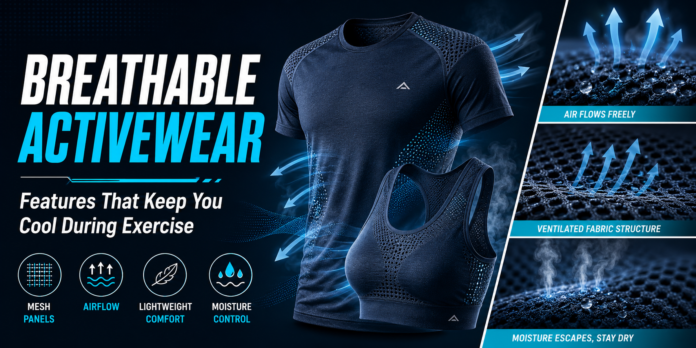
Breathable activewear is exercise clothing made to help your body stay cooler, drier, and more comfortable while you move. It does this by allowing air to pass through the fabric, moving sweat away from the skin, and drying faster than heavy everyday clothes. Good breathable activewear does not only feel light; it also helps reduce that sticky, wet, and overheated feeling that can stop you from enjoying a workout. Whether you are walking, running, training at the gym, stretching, cycling, or doing a home workout, the right fabric can make exercise feel easier. Breathable activewear is especially useful when your body temperature rises, because it supports airflow and sweat control at the same time. The best pieces are soft, flexible, quick-drying, and shaped in a way that does not block movement. In simple words, breathable activewear helps your clothes work with your body instead of against it.
Breathable Activewear Features That Matter Most
Breathable activewear should feel cool, light, and easy to wear during movement. The main feature is airflow, which means the fabric lets heat escape instead of trapping it against your body. Another important feature is moisture-wicking, which pulls sweat from your skin and moves it to the outer surface of the fabric so it can dry faster. A good fit also matters because clothing that is too tight can block airflow, while clothing that is too loose may rub or feel heavy when wet. Many people choose activewear because it is designed for movement, not just for looks. Breathable activewear should also have stretch, smooth seams, and fabric that stays comfortable after repeated washing. These small details make a big difference during long workouts. When these features work together, your body feels less trapped, your skin feels drier, and exercise feels more natural.
Why Fabric Weight Affects Cooling
Fabric weight is one of the biggest reasons some workout clothes feel cooler than others. Heavy fabric can feel strong and premium, but it may hold more heat during exercise. Lightweight fabric usually feels better for warm weather, indoor training, cardio, and high-sweat activities because it allows faster drying and better airflow. Breathable activewear often uses thinner yarns, open knit structures, or technical blends that help air move through the garment. This does not mean the fabric should be weak or transparent. Good breathable activewear balances lightness with coverage, stretch, and durability. A shirt, tank top, legging, or short should feel easy on the body while still giving enough support. If fabric feels thick, stiff, and slow to dry, it may not be the best option for intense workouts. For daily exercise, a medium-light fabric is often the safest choice because it gives comfort without feeling too delicate.
Moisture-Wicking Keeps Skin Drier
Sweat is normal during exercise, but wet clothes can make your workout uncomfortable. Moisture-wicking fabric helps by pulling sweat away from your skin. This keeps the inside of the garment from feeling soaked for too long. Breathable activewear with moisture-wicking performance is useful for gym sessions, running, yoga, hiking, cycling, and sports training. Cotton can feel soft at first, but it often holds sweat and becomes heavy when wet. Polyester, nylon, and performance blends usually dry faster, which is why they are common in breathable activewear. However, fabric quality still matters. A cheap synthetic fabric can feel hot if it has poor airflow. The best fabric should manage sweat and allow heat to escape at the same time. When your skin stays drier, you feel fresher, move better, and reduce the chance of rubbing caused by wet fabric.
Airflow Helps Release Body Heat
Airflow is the feature that makes breathable activewear feel truly cool. During exercise, your body creates heat, and your clothing must help that heat escape. If fabric traps warm air, you may feel tired faster, even during a short workout. Breathable activewear often uses mesh panels, tiny fabric openings, lightweight knits, or smart garment cuts to improve ventilation. This is why many performance wear pieces include breathable zones around the back, underarms, sides, or knees. These areas usually sweat more, so extra airflow there can improve comfort. Airflow does not mean the garment must be full of holes. It means the fabric and design are made to move heat away from the body. When airflow is good, your clothes feel less sticky, your skin feels less trapped, and your workout feels smoother.
Stretch Makes Movement Easier
Stretch is not only about comfort; it also helps breathable activewear work better during exercise. When fabric stretches with your body, it does not pull, bunch, or block your movement. This is important for squats, lunges, running, yoga poses, stretching, and fast gym movements. Breathable activewear often includes elastane or spandex because these fibers help the garment keep its shape. But too much stretch without enough breathability can make fabric feel tight and warm. The best option is a balanced blend that gives freedom without trapping heat. A good workout top should let your arms move easily, and workout bottoms should bend with your knees and hips. When stretch and airflow work together, the garment feels more natural. You should not have to keep fixing your clothes during exercise. Breathable activewear should support movement quietly, without becoming a distraction.
Quick Built-In Buying Checklist
Before buying breathable activewear, check these simple points so you choose clothing that is useful in real workouts, not just attractive on a hanger:
- Choose lightweight fabric for hot weather, cardio, and high-sweat workouts.
- Pick moisture-wicking material if you sweat quickly or train for long periods.
- Look for stretch if you do yoga, gym training, running, or sports drills.
- Check seams because rough stitching can cause rubbing during movement.
- Avoid fabric that feels plastic-like, stiff, or too thick for your activity.
- Choose mesh panels or ventilated areas if you need extra cooling.
- Make sure the fit is close enough to move with you but not so tight that it blocks airflow.
- Wash breathable activewear gently so the fabric keeps its cooling and sweat-control performance longer.
Fit Can Change How Cool You Feel
The fit of breathable activewear affects comfort more than many people think. If workout clothing is too tight, it can press against the skin and reduce airflow. If it is too loose, it may flap, twist, or hold sweat in folds. A proper fit should feel close to the body but still allow easy movement. For gym training, gym wear should let you lift, bend, and stretch without pulling at the shoulders, waist, or knees. Breathable activewear for running may need a more secure fit, while breathable activewear for yoga may need softer stretch and better coverage. The right fit also depends on your body shape and workout style. A fitted top can feel good for fast movement, while a relaxed top may feel better for walking or casual training. The goal is simple: the clothing should stay in place and help you move.
Breathable Activewear for Different Workouts
Different workouts need different types of breathable activewear. For running and cardio, quick-drying tops, light shorts, and sweat-wicking leggings are useful because the body heats up fast. For yoga and stretching, soft stretch fabric is more important because the clothes must move with the body. For strength training, breathable activewear should be strong enough to handle repeated movement, bench contact, and friction from equipment. For swimming or water-based training, fabric needs fast drying, shape recovery, and comfort when wet. For athleisure wear, breathability still matters because many people wear the same clothing for light activity, travel, errands, and casual daily use. Compression wear is different because it fits closer to the body, so it must balance support with airflow. The best breathable activewear is not one single style. It is the right fabric and fit for the activity you actually do.
Common Mistakes When Choosing Workout Clothes
One common mistake is choosing workout clothes only because they look stylish. Style matters, but comfort matters more during exercise. Another mistake is thinking all thin fabrics are breathable. Some thin fabrics still trap heat if the yarn and construction do not allow airflow. A third mistake is wearing regular cotton clothing for high-sweat workouts. Cotton can feel soft, but it often stays wet and heavy. Some people also choose clothing that is too tight because they think it gives better support. In reality, overly tight clothing can reduce comfort and make the body feel hotter. Breathable activewear should feel supportive, not restrictive. It should also recover its shape after movement and washing. When buying breathable activewear, check how the fabric feels on the skin, how it stretches, how quickly it dries, and whether it allows easy movement.
How to Care for Breathable Activewear
Breathable activewear lasts longer when it is washed carefully. Sweat, body oil, deodorant, and detergent buildup can block fabric performance over time. Wash workout clothes after heavy sweating, but avoid using too much detergent because extra detergent can stay inside the fibers. Fabric softener is also not a good choice for many performance fabrics because it can reduce moisture-wicking ability. Use cool or warm water according to the care label, and air-dry when possible. High dryer heat can damage stretch fibers and reduce garment life. Turn clothing inside out before washing to protect the outer surface. Do not leave sweaty clothes in a closed gym bag for too long because odor can become harder to remove. Good care helps breathable activewear stay fresh, flexible, and comfortable for many workouts.
Conclusion
Breathable activewear is worth choosing because it helps control heat, sweat, and movement during exercise. The best pieces are lightweight, moisture-wicking, quick-drying, stretchy, and designed with airflow in mind. They should feel soft on the skin, stay in place, and support your workout without making you feel trapped or overheated. Breathable activewear is useful for gym training, running, yoga, fitness classes, walking, sports, and everyday active routines. The key is to choose clothing based on fabric, fit, and activity, not only color or style. When you understand how airflow, fabric weight, sweat control, and stretch work together, buying the right workout clothes becomes much easier. In the end, breathable activewear helps you stay cooler, feel fresher, and focus more on your exercise instead of your clothing.
FAQs
What is breathable activewear?
Breathable activewear is workout clothing made with fabrics and designs that allow airflow, move sweat away from the skin, and help the body stay cooler during exercise.
Is breathable activewear good for gym workouts?
Yes, breathable activewear is good for gym workouts because it helps control sweat, supports movement, and reduces the heavy, sticky feeling caused by poor fabric.
Which fabric is best for breathable activewear?
Polyester blends, nylon blends, mesh fabrics, and moisture-wicking stretch fabrics are common choices because they dry faster and handle sweat better than regular cotton.
Can breathable activewear be worn daily?
Yes, breathable activewear can be worn daily, especially for walking, travel, errands, light exercise, and casual comfort, as long as the fabric feels soft and fits well.