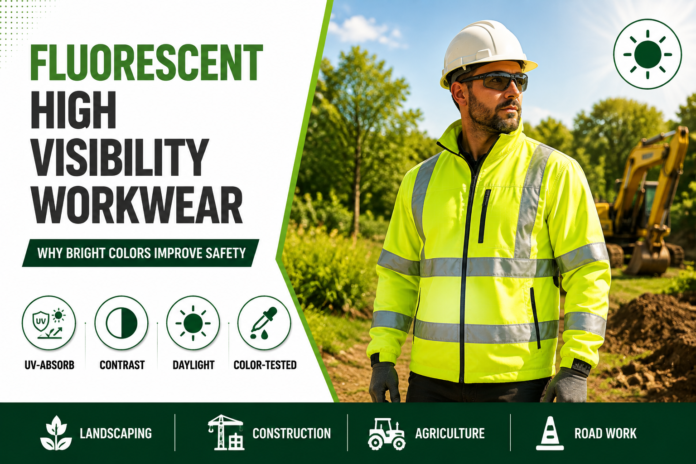
The reflective tape is great for nighttime, but fluorescent high-visibility workwear solves a different problem. The fabrics are designed to absorb UV light, and then re-emit the color as a brighter shade. This allows the wearer of these clothes to be more visible against a natural background than normal dyed clothing.
Understanding why and how fluorescent colors perform is just as important for clothing brands or retailers who are building safety apparel lines as it is to recognize the common orange, yellow and lime hues. The guide explains the science of fluorescent fabrics, their standards, and the things buyers need to confirm before purchasing high-visibility fluorescent workwear.
Why is Fluorescent Workwear High Visibility Different?
Standard dyes are used to make bright clothes. They reflect a small portion of visible light. The fluorescent high-visibility workwear is different, as its dye converts the energy of invisible ultraviolet light into visible light. This makes it appear brighter.
The effect of fluorescent fabrics is most pronounced in the direct sun, and this is why they perform so well outside during daylight hours. Fluorescent high visibility clothing is highly visible even when a background has cluttered elements like foliage or construction equipment. This is because the eye perceives extra light emitted as an unusually bright color.
Fluorescent Color Performance: The Science Behind It
This category is dominated by three colors: fluorescent oranges, yellow-greens, and red-oranges. Each performs differently depending upon the environment. The yellow-green color is most noticeable against green backgrounds. This can be seen in road construction, forestry and landscaping.
Contrastingly, orange is often more effective against grey industrial backgrounds such as asphalt, concrete and machinery. The color contrast in these environments is stronger. The manufacturers choose fluorescent shades according to this science of contrast, rather than on aesthetics alone. This is because the purpose of high-visibility fluorescent workwear is to maximize visual separation.
Fluorescent Fabric Testing and Certification
Colorimetric tests are used to measure the fluorescent performance. They quantify both the luminance of a color and its coordinates in relation to strict numerical thresholds. These thresholds are defined by standards such as ANSI/ISEA 107 or EN ISO 20471. Fabrics must meet a specific color range, brightness and other requirements to be certified as fluorescent materials.
The testing takes into account degradation as well, because fluorescent dyes fade with repeated washing and UV exposure over time. The manufacturers of fluorescent high-visibility workwear must typically demonstrate that their fabric maintains its brightness after a certain number of washing cycles and not only when it is new.
The Benefits of Fluorescent Workwear
The following are important factors to consider when sourcing from this sector:
- Certified Fluorescent Dye Meeting ANSI/ISEA 107 and EN ISO 20471 luminance thresholds
- UV stable pigments which resist fade under long-term sun exposure
- Tests of wash-durability Confirming brightness after a certain number of industrial washing cycles
- Select the appropriate color for your garment.
- Consistent lot quality is important, as fluorescent brightness may vary between batches.
- Combination of reflective elements. Certified garments combine fluorescent fabric and reflective tape, rather than depending on only color.
What are the risks of fading fluorescent fabric?
The fluorescent dye does not fade all at once. It degrades with every wash cycle, and each hour of exposure to UV light. This means that a garment may appear bright enough while still falling under its certification threshold. The gradual degradation of fluorescent dye can pose a real safety risk because workers may think their equipment still meets standards, but its visibility is actually lower.
The wash durability data should be considered essential, not optional when sourcing high-visibility fluorescent workwear. This is especially true for clothing that will last through multiple seasons. Brightness retention can be documented across multiple wash cycles, which is a far better protection for the manufacturer than a one-time test.
Fluorescent Fabrics Across Products Categories
The fluorescent requirements vary depending on the type of garment and intended use. A safety jacket uses a lightweight mesh fabric that can be layered over clothing. A hi vis jacket requires a heavier fabric that is bonded with insulated or waterproof layers.
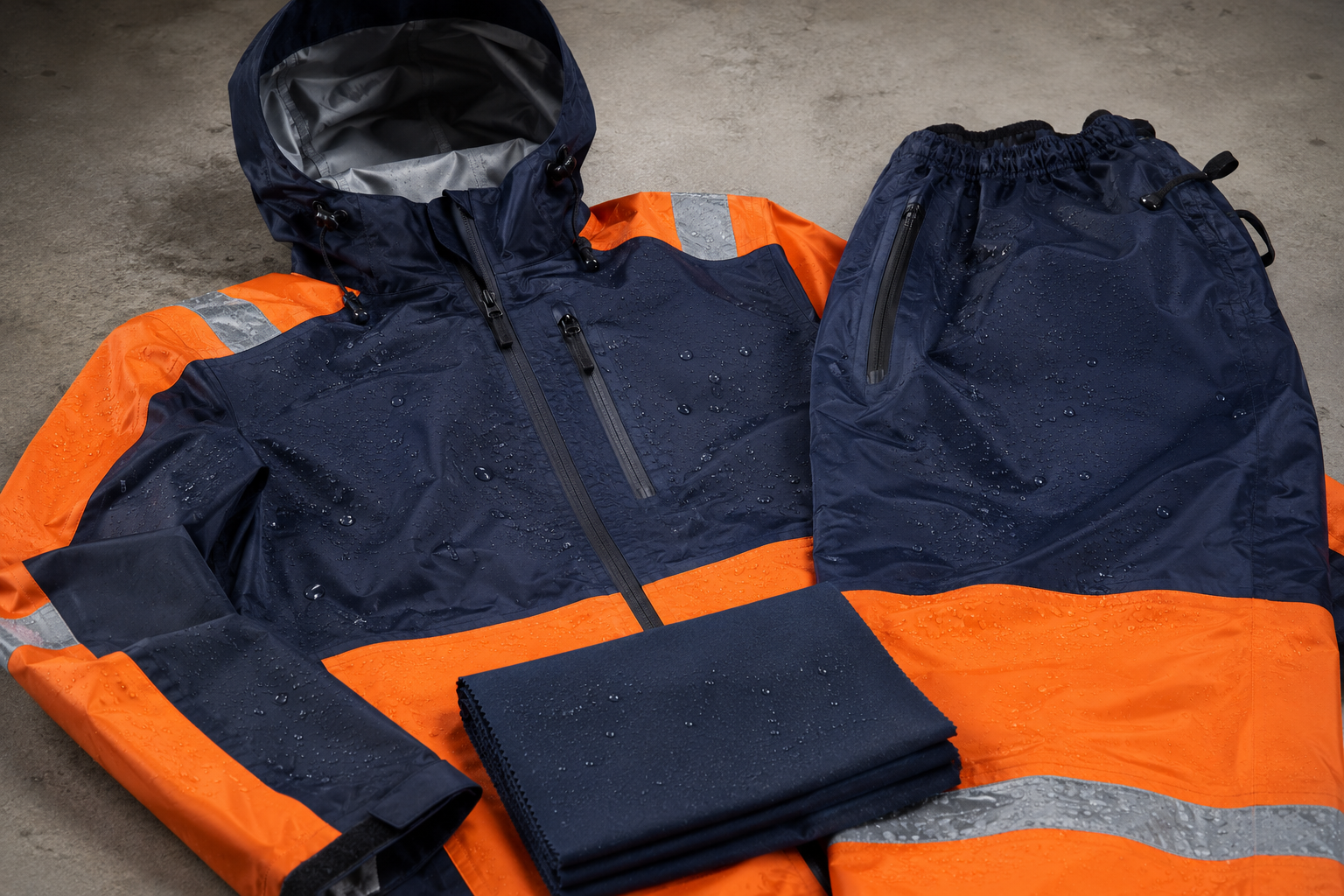
Rainwear is a special challenge. Since waterproofing can reduce the performance of fluorescent fabrics if it’s applied improperly, certified waterproof-rated fabric for this category is essential. The largest amount of fluorescent fabric is required for heavier garments like jackets or jackets designed for Class 3. Accessories such as gloves also incorporates fluorescent panels in order to increase hand visibility when working during the daylight hours.
Checklist for Buyers Before Sourcing
To confirm the performance of fluorescent bulbs, it is necessary to do more than just look at them under store lights. The actual test report should be requested by buyers, showing the luminance and colorimetric results against the standard and class specified.
Asking about the wash-durability and consistency of dye lots can also help you distinguish between reliable manufacturers and those who cut corners with fabric quality. The hi vis catalog and fluorescent test documentation of a manufacturer will give buyers an even better picture than just marketing copy.
Last Thoughts
This is because the fabric’s color can be measured, rather than just because it looks good on a rack. It matters a lot to brands who are sourcing responsibly for this type of workwear. Colorimetric data and wash durability are more important to buyers than visual inspection. They protect their reputation and that of their clients.
Eco-Jersey produces fluorescent high-visibility workwear that is tested to certified luminance standards and durability across all categories of vests, rainwear, and jackets. Browse the catalog for workwear or contact us to request a consultation so we can review your fabric testing documentation.
FAQs
Which colors are considered fluorescent high-visibility workwear?
The primary colors that have been certified as such include fluorescent orange, yellow-green and fluorescent red-orange. Each color was chosen based on its ability to contrast against specific backgrounds.
Will fluorescent fabrics lose their brightness with time?
UV exposure and repeated laundering gradually degrade fluorescent dye. This is why washing-durability tests are important when purchasing garments for daily wear.
Does fluorescent fabric alone qualify for certification?
Not at all. Certified high-visibility workwear must combine fluorescent fabric and reflective tape. Fluorescence is used to enhance visibility during the day, while reflective tape provides visibility in low light conditions.
What is the best way for a buyer to confirm that fluorescent fabric conforms to certification standards?
The buyers should ask for the colorimetric report referencing the luminance and chromaticity test results according the relevant ANSI/EN ISO standard rather than relying solely on a generic compliance claim.