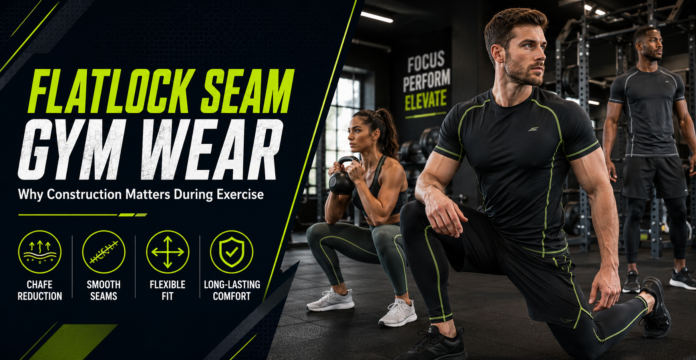
Flatlock seam gym wear matters because small stitching details can change how comfortable your workout clothes feel. When you exercise, your body moves, bends, stretches, sweats, and rubs against fabric again and again. If the seams are thick, rough, or poorly placed, they can scratch the skin, create pressure, or make the clothing feel annoying during training. Flatlock seams are made to lie flatter against the body, so they help reduce rubbing and make gym clothing feel smoother. This is important for running, lifting, stretching, cycling, yoga, and daily fitness routines. Good gym wear is not only about fabric, color, or style. It is also about construction. Flatlock seam gym wear gives the body more comfort because the stitching is designed for movement. For people who train often, this construction detail can make a clear difference in how the clothes feel during long sessions.
What Are Flatlock Seams?
Flatlock seams are seams that join two pieces of fabric in a flat and smooth way. In normal stitching, one piece of fabric may sit over another, which can create a raised seam inside the garment. That raised seam can rub against the skin when the body moves. Flatlock seam gym wear uses a different type of stitching that spreads the seam flatter across the fabric. This helps the clothing feel smoother from the inside. It is often used in activewear, gym tops, leggings, compression shirts, shorts, and base layers because these clothes stay close to the body. When fabric sits close to the skin, seam comfort becomes more important. Flatlock seam gym wear is helpful because it reduces bulky stitching in areas like shoulders, sides, underarms, thighs, and waistbands. These are places where the body moves a lot during exercise.
Why Construction Matters During Exercise
Construction matters because gym clothing has to handle movement, sweat, and repeated stretching. A good fabric can still feel bad if the garment is poorly stitched. When choosing training clothes, you can check the gym wear collection and look closely at how the seams are placed, because smooth seams can improve comfort during squats, running, stretching, and weight training. Flatlock seam gym wear helps the garment move with the body instead of fighting against it. During exercise, the arms swing, legs bend, back stretches, and shoulders rotate. If the seams are thick or stiff, they can pull against the skin. Better construction helps the clothing keep its shape and feel more natural. This is why professional fitness apparel often focuses on stitching, panel placement, and seam strength. Flatlock seam gym wear supports both comfort and durability during regular workouts.
Flatlock Seam Gym Wear for Better Comfort
Flatlock seam gym wear is mainly useful because it gives better comfort during movement. Comfort is not only about softness. It is also about how the clothing feels after 20, 40, or 60 minutes of exercise. A shirt may feel fine when you first wear it, but if the seams rub under the arms during training, it can become uncomfortable quickly. Flatlock seam gym wear helps reduce this problem because the seams sit flatter and smoother. This makes it a good choice for people who do high-repetition workouts, cardio sessions, bodyweight training, or gym classes. It is also useful for people with sensitive skin because rough seams can cause redness or irritation. When gym clothes are comfortable, the person can focus more on training and less on adjusting the outfit. This is one reason flatlock seam gym wear is often used in performance clothing.
How Flatlock Seams Reduce Rubbing
Rubbing happens when fabric or stitching moves again and again against the skin. This can happen under the arms, around the waist, between the thighs, across the shoulders, and near the neckline. For example, when wearing sleeveless training tops like gym tank tops, smoother seams around the shoulder and side areas can help reduce irritation while the arms move during lifting, rowing, or cardio. Flatlock seam gym wear reduces rubbing because the seam does not create a hard ridge inside the garment. This is very helpful during sweaty workouts because wet fabric can increase friction. When sweat builds up, rough stitching may feel even more uncomfortable. Flatlock seams help keep the inside surface cleaner and smoother against the body. This does not mean every flatlock seam is perfect, but good flatlock seam gym wear usually feels better than clothing with bulky seams.
Best Uses for Flatlock Seam Gym Wear
Flatlock seam gym wear is useful for many types of exercise, but it is especially helpful when clothing fits close to the body. It works well for compression tops, leggings, fitted T-shirts, gym shorts, cycling clothing, yoga wear, and running base layers. These garments touch the skin more closely, so seam quality becomes more noticeable. For fitted training layers, products like compression t-shirts are a good example of clothing where smooth seam construction can support comfort during movement and sweat. Flatlock seam gym wear is also useful for strength training because lifting often involves deep bends, shoulder movement, and repeated contact with benches or bars. In cardio workouts, it helps because the body moves fast and often sweats more. In yoga or stretching, it helps because seams need to move with the body without digging into the skin.
Flatlock Seams vs Regular Seams
Flatlock seams are usually flatter and smoother than regular seams, while regular seams can be thicker and more raised. This does not mean regular seams are always bad. Regular seams can work well in loose clothing, casual wear, and garments where the seam does not touch the skin much. But for tight or fitted gym clothing, flatlock seam gym wear often feels better. Regular seams may be easier and cheaper to produce, but they may create more friction during exercise. Flatlock seams are more performance-focused because they are made for movement and close contact with the body. A person doing light walking may not notice much difference. A person doing hard training, running, cycling, or long gym sessions may notice the difference more clearly. Flatlock seam gym wear is better when comfort, smoothness, and reduced rubbing are important parts of the workout experience.
Quick Checklist Before Buying
Before buying flatlock seam gym wear, check these simple points:
- The seams should feel flat when you touch the inside of the garment.
- The stitching should not feel sharp, rough, or raised against the skin.
- The seam lines should follow body movement areas like shoulders, sides, waist, and thighs.
- The fabric should stretch without making the seams pull too tightly.
- The garment should fit close enough for support but not so tight that it digs into the skin.
- The seams should look clean, even, and strong from both inside and outside.
- The clothing should feel comfortable when you bend, squat, stretch, and raise your arms.
- The best flatlock seam gym wear should feel smooth during both dry and sweaty movement.
Fit and Fabric Still Matter
Flatlock seam gym wear works best when the fit and fabric are also right. A flat seam cannot fix a garment that is too tight, too loose, too heavy, or made from poor fabric. If the clothing is too tight, even smooth seams can press into the skin. If the clothing is too loose, the fabric may fold and rub during movement. The best choice is a balanced fit that supports the body without limiting motion. Fabric also matters because gym wear needs stretch, breathability, and sweat control. A soft stretch fabric with flatlock seams can feel much better than a stiff fabric with the same stitching. This is why buyers should look at the full garment, not just one feature. Flatlock seam gym wear is a strong benefit, but it should work together with good fabric, smart pattern design, and proper sizing.
Durability and Washing Performance
Flatlock seam gym wear can also help with durability when the stitching is done well. Gym clothing is washed often because it absorbs sweat. Poor stitching can weaken after repeated washing, stretching, and drying. Good flatlock seams can help the garment hold together because the stitching spreads across the seam area in a balanced way. This can reduce stress on one single line of thread. However, durability also depends on thread quality, fabric strength, washing method, and how often the garment is used. To protect flatlock seam gym wear, wash it with similar fabrics, avoid harsh bleach, use mild detergent, and do not use high heat drying if the care label says to avoid it. Heat can damage stretch fibers and weaken performance fabrics. With better care, flatlock seam gym wear can stay smoother, stronger, and more comfortable for longer.
Conclusion
Flatlock seam gym wear is worth choosing if comfort, smooth movement, and reduced rubbing matter to you. It is especially helpful for fitted gym clothes, compression wear, leggings, training tops, and any workout clothing that stays close to the skin. It helps because the seams lie flatter, feel smoother, and reduce irritation during repeated movement. For light casual exercise, the difference may be small. For regular gym training, running, lifting, stretching, or long sessions, the difference can be much bigger. Flatlock seam gym wear is not the only feature to check, but it is one of the most useful construction details in performance clothing. The best choice is gym wear that combines flat seams, stretch fabric, breathable material, strong stitching, and a comfortable fit.
FAQs
What is flatlock seam gym wear?
Flatlock seam gym wear is workout clothing made with flat seams that sit smoothly against the skin. It helps reduce rubbing, pressure, and irritation during exercise.
Is flatlock seam gym wear better than regular seam gym wear?
Flatlock seam gym wear is usually better for fitted and high-movement workouts because it feels smoother. Regular seams may be fine for loose or casual gym clothing.
Does flatlock seam gym wear stop chafing completely?
Flatlock seam gym wear can reduce chafing, but it may not stop it completely. Fit, fabric, sweat level, body movement, and workout length also affect chafing.
Which clothes need flatlock seams most?
Flatlock seams are most useful in compression shirts, leggings, fitted gym tops, cycling wear, running clothing, yoga wear, and base layers that touch the skin closely.