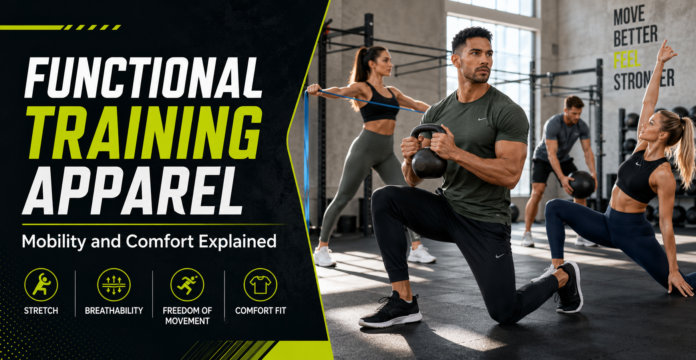
Functional training is different from a simple workout because it uses movements your body needs in real life. You may squat, push, pull, twist, jump, lunge, crawl, bend, or lift during one session. That is why fitness apparel for functional training must support your full body, not just look good in the gym. The right clothing should move with your body, stay comfortable during sweat, and help you focus on exercise instead of fixing your shirt, pants, or seams again and again. Good workout clothing does not need to be complicated. It should feel light, flexible, breathable, and secure. When you choose the right outfit, your body can move naturally, your skin can stay cooler, and your training feels smoother from warm-up to finish.
What Is Functional Training?
Functional training is a type of exercise that improves strength, balance, mobility, coordination, and body control for daily movement. Instead of training only one muscle at a time, it often uses full-body movements that copy real actions, such as lifting a box, climbing stairs, carrying weight, or changing direction quickly. Because these workouts include many angles and positions, normal casual clothing may feel tight or uncomfortable. Fitness apparel for functional training should allow the shoulders, hips, knees, and core to move freely. If the fabric pulls too much, the waistband rolls down, or the shirt blocks arm movement, your form can suffer. That is why clothing choice matters for this type of training.
Why Mobility Matters in Fitness Apparel for Functional Training
Mobility is the ability to move your joints through a full and safe range of motion. In functional workouts, mobility matters because your body does not stay in one straight position. You may go from a deep squat to a jump, from a plank to a push-up, or from a lunge to a rotation. Fitness apparel for functional training should stretch without losing shape. It should not stop your knees from bending, your arms from reaching, or your hips from opening. A flexible T-shirt, stretch leggings, breathable joggers, or a performance tank can make movement feel easier. Clothing that supports mobility helps you train with better confidence because you are not worried about fabric tearing, pulling, or becoming see-through during exercise.
Choosing the Right Category for Training Clothing
The best place to start is with clothing made for exercise, not regular casual wear. A proper fitness clothing category gives you better choices for tops, bottoms, stretch fabrics, and sweat-friendly designs. For example, the Eco Jersey fitness apparel collection can be used as a useful starting point when choosing pieces made for gym movement, comfort, and active performance. Fitness apparel for functional training should match the kind of workout you do most often. If your sessions include bodyweight moves, choose lightweight tops and flexible bottoms. If you lift weights, choose stronger fabric with secure coverage. If you sweat a lot, choose breathable materials that do not feel heavy after a few minutes.
Comfort Comes from Fabric, Fit, and Feel
Comfort is not only about softness. It comes from the full design of the garment. The fabric should feel smooth on the skin, the fit should stay in place, and the seams should not rub during repeated movement. Fitness apparel for functional training should also handle sweat better than everyday cotton clothing. Cotton can feel soft at first, but it may hold moisture and become heavy during intense workouts. Blended performance fabrics often dry faster and stretch better. A good training shirt should not cling badly when wet. Good pants or leggings should not slide down during squats or lunges. When clothing feels comfortable, your mind stays focused on form, breathing, and performance.
Tops for Functional Training
Tops are very important because your upper body moves in many directions during functional training. You may reach overhead, push from the floor, rotate your torso, or carry weight near your chest. A top that is too tight can limit shoulder movement, while a loose shirt may move too much during planks or burpees. For breathable upper-body training, items like graphics stringers can work well for athletes who want open arm movement and better airflow during hard sessions. Fitness apparel for functional training should allow the arms and shoulders to move without resistance. Choose tops with stretch, breathable fabric, and a fit that stays controlled without feeling restrictive.
Bottoms for Squats, Lunges, and Fast Movement
Bottoms must support the hardest movements in functional training because your legs and hips do most of the work. Squats, lunges, jumps, step-ups, deadlifts, sled pushes, and agility drills all need lower-body freedom. Fitness apparel for functional training should include pants, joggers, shorts, or leggings that bend easily and recover their shape after stretching. The waistband should stay stable without digging into the stomach. The fabric should not become too tight around the knees or thighs. If bottoms are too loose, they may disturb quick footwork. If they are too tight, they may reduce comfort and movement. The best option is a balanced fit that gives support, coverage, and flexibility at the same time.
Key Features to Look For
- Choose stretch fabric that moves with your body during squats, lunges, pushes, and pulls.
- Pick breathable material so heat can escape during long and sweaty training sessions.
- Use moisture-friendly clothing that does not feel heavy when your body starts sweating.
- Select flat or smooth seams to reduce rubbing during repeated movements.
- Wear a secure waistband that stays in place during jumping, bending, and floor work.
- Choose tops with enough shoulder freedom for overhead presses, push-ups, and rotations.
- Pick bottoms that give full coverage during deep squats and fast movement.
- Avoid clothing that is too loose, too stiff, too thick, or too tight for active training.
Stretch Fitness Apparel vs Compression Fitness Apparel
Stretch clothing and compression clothing are not the same, even though both can be useful. Stretch clothing focuses on free movement and comfort. Compression clothing gives a closer fit and gentle pressure around the body. In many workouts, stretch clothing is better for easy mobility, while compression clothing can feel better for support and muscle control. Products such as compression t-shirts are useful when someone wants a closer upper-body fit during gym sessions, but fitness apparel for functional training should not feel so tight that breathing or movement becomes difficult. The best choice depends on your workout style. For mixed training, many people use stretch bottoms with a fitted performance top or compression layer.
Breathability and Sweat Control
Breathability is one of the biggest comfort factors in functional training. When your body heats up, clothing should help air move and moisture escape. Fitness apparel for functional training should not trap too much heat, especially during circuits, HIIT, bodyweight training, or long gym sessions. Breathable fabric helps the skin feel cooler and reduces the sticky feeling that happens when sweat stays inside the garment. Lightweight polyester blends, elastane blends, mesh panels, and performance knits can all help improve airflow. However, the fabric should still be strong enough for repeated stretching and washing. A breathable garment is not only cooler; it also feels cleaner, lighter, and easier to wear during high-effort movement.
Fit Guide for Functional Training Clothing
The best fit is close enough to stay in place but relaxed enough to move naturally. Fitness apparel for functional training should not hang loosely around equipment, but it also should not squeeze the body in a way that limits movement. A good shirt should follow your body shape without pulling at the shoulders or chest. A good pair of leggings, shorts, or joggers should support the waist and allow a deep squat without sliding or stretching too thin. Before choosing a size, think about your main exercises. If you do more lifting, you may prefer a fitted style. If you do more cardio and mobility work, you may prefer a slightly lighter and freer fit.
Conclusion
Fitness apparel for functional training is better when it gives mobility, comfort, breathability, and support in one simple outfit. The best clothing helps your body move through squats, lunges, jumps, pushes, pulls, and rotations without distraction. Stretch fitness apparel is usually better for free movement, while compression fitness apparel can be useful when you want a closer and more supportive feel. The right choice depends on your workout, body type, comfort level, and training goal. Always choose clothing that lets you move safely, keeps sweat under control, and feels comfortable from the first exercise to the last. In the end, good workout clothing should help you train better, not make the workout harder.
FAQs
What is the best fitness apparel for functional training?
The best fitness apparel for functional training is clothing that stretches, breathes, and stays comfortable during full-body movement. It should support squats, lunges, jumps, push-ups, lifting, and stretching without pulling or slipping. A flexible top, secure waistband, and breathable bottoms are usually the best combination.
Is stretch fitness apparel better than compression fitness apparel?
Stretch fitness apparel is better for free movement, while compression fitness apparel is better for a closer and more supportive fit. For functional training, stretch clothing is often more comfortable because the body moves in many directions. Compression can still be useful if it does not feel too tight.
Why is breathability important in functional training clothing?
Breathability is important because functional training can make the body heat up quickly. Breathable clothing helps air move and allows sweat to dry faster. This keeps the body more comfortable during long, intense, or high-movement workouts.
Can I wear normal cotton clothes for functional training?
You can wear cotton clothes, but they may not be the best choice for hard training. Cotton can hold sweat and feel heavy during exercise. Fitness apparel for functional training usually works better because it is made to stretch, dry faster, and stay comfortable during movement.