
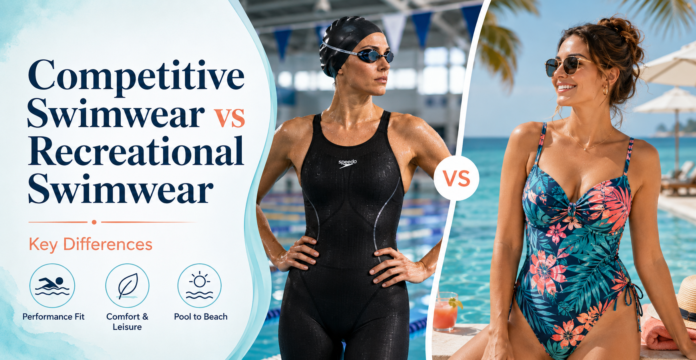
Competitive swimwear vs recreational swimwear is mainly about purpose, fit, fabric, comfort, and performance. Competitive swimwear is made for speed, body control, water flow, and serious swimming. Recreational swimwear is made for comfort, casual swimming, beach days, pool fun, and relaxed movement. Both types can look stylish, but they are not built the same way. A racing swimsuit usually feels tighter because it reduces drag in the water. A recreational swimsuit usually feels softer and easier because it is designed for longer casual wear. If you swim for training, races, or regular fitness, competitive swimwear may support your body better. If you swim for holidays, family pool time, or light water activity, recreational swimwear is usually the better choice. Understanding competitive swimwear vs recreational swimwear helps you buy the right piece instead of choosing only by color or style.
Competitive Swimwear vs Recreational Swimwear: Main Meaning
Competitive swimwear vs recreational swimwear starts with one simple difference: one is made for performance, and the other is made for comfort. Competitive swimwear is designed for swimmers who need better movement, less water resistance, and a secure fit during fast swimming. It often uses smooth stretch fabric, strong seams, and a close shape that stays in place during diving, turns, and hard strokes. Recreational swimwear is designed for people who want to enjoy the water without feeling restricted. It may include looser cuts, softer waistbands, adjustable straps, skirts, tankini tops, or more relaxed coverage. The goal is not always speed. The goal is comfort, confidence, and easy wear. When people compare competitive swimwear vs recreational swimwear, they should first ask how they will use it. A swimsuit for race practice should not feel like beachwear, and a swimsuit for a relaxing pool day does not need to feel like a racing suit.
Fabric and Stretch Differences
Fabric is one of the biggest points in competitive swimwear vs recreational swimwear. Competitive swimsuits usually use high-stretch materials that hold the body firmly and recover their shape after many movements. These fabrics are often smoother and tighter because they help reduce drag in the water. Recreational swimwear may also use stretch fabric, but it is often softer, more flexible, and more forgiving on the body. It may focus more on comfort than compression. When choosing casual options, shoppers often look through a broad swimwear collection to compare cuts, colors, coverage levels, and fabric feel before buying. This makes sense because recreational swimwear has many different style needs. Competitive swimwear vs recreational swimwear also differs in fabric thickness. Racing suits may feel firm and structured, while casual swimwear may feel lighter, softer, or easier to wear for many hours.
Fit and Body Support
Fit is where competitive swimwear vs recreational swimwear becomes very clear. Competitive swimwear is supposed to fit close to the body. It should not hang loose, shift during strokes, or collect extra water. A snug fit helps the swimmer move with less resistance. However, this tight fit can feel uncomfortable for people who only want relaxed swimming. Recreational swimwear gives more room for comfort. It may have adjustable straps, removable padding, elastic waistbands, or flexible panels. It is often easier to put on and take off. Competitive swimwear vs recreational swimwear also has a different feeling around the shoulders, chest, waist, and hips. A competitive suit may feel firm because it supports strong movement. A recreational suit may feel gentle because it supports easy movement. The best fit is not always the tightest one. The best fit is the one that matches your activity, body comfort, and confidence in the water.
Speed, Drag, and Water Movement
Speed is a major reason people compare competitive swimwear vs recreational swimwear. Competitive swimwear is made to help water move smoothly over the body. Loose fabric creates drag, and drag slows swimmers down. That is why racing suits are usually close-fitting and simple in shape. They avoid extra fabric, heavy decoration, and designs that catch water. Recreational swimwear does not need to follow the same rules. It may have skirts, loose tops, ties, pockets, fashion details, or more coverage. These features can be comfortable and stylish, but they may slow movement in serious swimming. For a beach day, that does not matter much. For a timed swim, it matters a lot. Competitive swimwear vs recreational swimwear is not about one being better for everyone. It is about matching design to purpose. If the goal is speed, competitive swimwear wins. If the goal is relaxed enjoyment, recreational swimwear is more practical.
Comfort for Long Wear
Comfort is another important part of competitive swimwear vs recreational swimwear. A competitive suit may support the body well during fast swimming, but it may not feel comfortable for sitting, walking around, eating, or spending a whole day near the pool. It can feel tight because it is made for movement in water, not for casual all-day wear. Recreational swimwear is usually better for long wear because it is softer, easier, and more relaxed. It may also offer more style choices for different body types. For example, people who want extra coverage for comfort, culture, or personal preference may choose modest swimwear because it supports relaxed swimming while giving more body coverage. This shows why competitive swimwear vs recreational swimwear should be judged by real use. A racing suit may feel powerful in the lane, but a recreational suit may feel better for family trips, vacations, and casual pool time.
Coverage and Style Choices
Style is a big difference in competitive swimwear vs recreational swimwear because competitive swimwear usually has fewer fashion details. Its main job is to support performance. It may come in simple shapes, strong colors, team designs, or training-friendly cuts. Recreational swimwear gives more freedom. It can include tankinis, skirted swimsuits, bikinis, rash tops, board shorts, full-coverage styles, or fashion-based cuts. For women who want more flexibility than a one-piece, tankinis women’s swimwear can be a comfortable recreational option because it separates top and bottom coverage while still feeling easy for swimming. Competitive swimwear vs recreational swimwear also differs in how it handles body confidence. Some swimmers feel best in a fitted racing suit because it stays secure. Others feel better in a casual style because it gives more coverage, shape choice, or comfort. The right style is the one that makes movement feel natural and secure.
Durability and Chlorine Use
Durability matters in competitive swimwear vs recreational swimwear because pool chemicals, saltwater, sun, and washing can damage fabric over time. Competitive swimmers often use their suits many times each week, so they need fabric that handles repeated stretching and pool exposure. Training suits are usually built for regular use, while racing suits may be saved for events because they can be more delicate and expensive. Recreational swimwear may last well when used occasionally, but some casual suits are not made for heavy training. Sun, sunscreen, rough pool edges, and hot tubs can also weaken elastic fibers. Competitive swimwear vs recreational swimwear should be cared for properly. Rinse the swimsuit in cool clean water after swimming. Avoid harsh twisting. Let it air-dry away from strong direct heat. A good swimsuit lasts longer when it is washed gently, dried naturally, and not left wet inside a gym bag for hours.
One Quick Buying Checklist
Before buying, use this simple guide for competitive swimwear vs recreational swimwear:
- Choose competitive swimwear if you train, race, or swim laps often.
- Choose recreational swimwear if you swim casually, travel, or relax at the beach.
- Pick a snug fit for speed, but avoid pain or breathing restriction.
- Pick a softer fit if comfort matters more than speed.
- Choose simple shapes for serious swimming.
- Choose more coverage or style details for casual use.
- Check fabric stretch, seam strength, and chlorine resistance.
- Avoid loose fabric if you need fast water movement.
- Choose adjustable straps or separate pieces if body comfort changes during the day.
- Rinse the suit after every swim to protect the fabric.
This checklist makes competitive swimwear vs recreational swimwear easier to understand because it focuses on use, not just appearance.
Which One Is Better for Fitness Swimming?
For fitness swimming, competitive swimwear vs recreational swimwear depends on how serious your swimming routine is. If you swim laps two or three times a week, a competitive or training-style swimsuit is usually better. It stays in place, supports the body, and does not slow you down. If you only swim lightly for health, recovery, or fun, recreational swimwear can still work well. The key is movement. Your swimsuit should not slip, drag, fill with water, or distract you. Competitive swimwear vs recreational swimwear also depends on your comfort level. Some people cannot focus when a suit feels too tight, while others dislike loose fabric in the pool. For fitness swimming, choose a middle option if needed: supportive, smooth, and secure, but not painfully tight. A good swimwear choice should help you enjoy the water and complete your routine without adjusting your outfit again and again.
Price and Value Difference
Price is often different in competitive swimwear vs recreational swimwear because performance design usually costs more. Competitive swimsuits may use stronger stretch fabric, special paneling, better shape control, and more technical stitching. Some racing suits can be expensive because they are built for serious events. Recreational swimsuits can be affordable or premium depending on style, brand, fabric, and coverage. A higher price does not always mean the suit is right for your use. If you only swim on holiday, an expensive racing suit may not give you much extra value. If you train every week, a cheap casual suit may stretch out too fast. Competitive swimwear vs recreational swimwear should be judged by cost per use. A suit worn many times for training should be durable and supportive. A suit worn for beach days should be comfortable, flattering, and easy to care for. Value means the swimsuit does its job well.
Conclusion
Competitive swimwear vs recreational swimwear has no single winner because both are made for different needs. Competitive swimwear is better for races, lap swimming, training, speed, and secure movement. Recreational swimwear is better for beach days, pool fun, holidays, relaxed swimming, comfort, and personal style. The smartest choice comes from your activity. If you need performance, choose a close and supportive suit. If you need comfort, choose a softer and easier suit. If you need both, look for swimwear that gives secure movement without feeling too tight. Competitive swimwear vs recreational swimwear is easier to understand when you stop asking which one looks better and start asking which one works better for your real swim routine.
FAQs
What is the main difference between competitive swimwear and recreational swimwear?
The main difference is purpose. Competitive swimwear is made for speed, support, and low drag. Recreational swimwear is made for comfort, style, and casual swimming.
Can I use recreational swimwear for lap swimming?
Yes, you can use recreational swimwear for light lap swimming, but it should fit securely. Loose fabric, heavy details, or shifting straps can make swimming harder.
Is competitive swimwear comfortable for beach use?
Competitive swimwear can be worn at the beach, but it may feel too tight for long relaxed wear. Recreational swimwear is usually more comfortable for beach days.
Which swimsuit lasts longer?
It depends on fabric quality and care. A strong training swimsuit may last longer in pools, while recreational swimwear can last well with occasional use and gentle washing.


