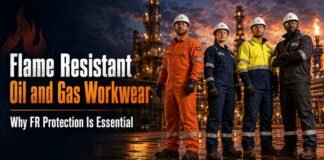
At oil and gas sites, there are hydrocarbon vapors and gases that can be sift, mist, and dust with other substances that can catch on fire. In day to day life a small spark may seem to be of no harm, however in places where there are flammable substances, a small spark may turn to be of great danger. Anti-static oil and gas workwear helps to control the build-up of electrostatic charge while in the workplace. It itself does not eliminate possible threats while at work but supports other systems that exist to ensure safety at the workplace. Therefore, anti-static oil and gas workwear should be selected through an appropriate risk assessment, together with appropriate footwear,
What Is Anti Static Oil and Gas Workwear?
Anti-static oil and gas workwear is made up of protective garments that have been designed to reduce the possibility of static buildup and the subsequent sudden release. The buildup of a static charge may occur through the rubbing of fabrics against each other or as they come into contact with the body, the garments with which the body is in contact with, the surrounding objects, seats, control and operating handles, and other nearby surfaces. Anti-static oil and gas workwear normally contains conductive fibers or special fabric structures that allow the movement of electrical charge away from the surface of the workwear in a controlled manner.
How Static Electricity Develops at Work
Static electricity can be caused by friction or contact between different types of material. Simply walking, removing a jacket, getting across a seat, or coming into contact with equipment, can produce an electrical charge. Under dry conditions, this charge may be able to stay on clothing for an extended period of time. When this stored charge is suddenly made to move, it is possible that it will produce a spark. Anti static oil and gas workwear is designed to control this static build up, but workers should not use this workwear as a substitute for a safe work system.
Why Oil and Gas Sites Face Greater Risks
Oil and gas operations involve flammable liquids, gases, and vapors. When these substances mix with air in the right proportion, an ignition source can start a fire or an explosion. Static discharge is one possible ignition source, which is why anti static oil and gas workwear can be vital in hazardous or controlled areas. Workers may also face heat, flame, poor visibility, harsh weather, sharp surfaces, and moving machinery. Therefore, anti static oil and gas workwear may require additional protection, such as flame resistance, reflective panels, weather protection, or strong reinforcement, depending on the job and workplace risk assessment.
How Anti-Static Fabric Controls Charge
Anti-static fabric used in oil and gas workwear may contain finely dispersed small fibers that provide a conductive pathway. This pathway diverts the electrical charge so that the charge does not concentrate in a particular region. However, fabric alone cannot provide complete protection. Seams, closures, pockets, reflective tape, trims, and added logos can take away from the performance intended by the garment.
Key Features to Check Before Buying
When selecting anti static oil and gas workwear, buyers should inspect the complete garment instead of looking only at its colour or price.
- Confirm that its anti-static performance matches the workplace risk assessment.
- Check whether flame-resistant protection is also required.
- Choose a fit that allows easy and safe movement.
- Avoid loose fabric that could catch on nearby equipment.
- Look for covered metal parts and secure closure systems.
- Check that pockets do not interfere with safety equipment.
- Ask for test reports, garment labels, and care instructions.
- Make sure reflective areas meet the site’s visibility needs.
These checks help buyers compare anti static oil and gas workwear properly and avoid selecting protective clothing based only on its appearance.
Full-Body Coverage for Higher-Risk Tasks
Some tasks require clothing that covers most of the body while leaving fewer gaps between separate garments. In these cases, oil and gas safety coveralls offer a useful example of full-body designs, practical pocket positions, reflective sections, and secure closure systems. Anti static oil and gas workwear in a coverall style should allow workers to bend, climb, kneel, and reach without pulling tightly across the body. It should also remain closed throughout the task. However, anti static oil and gas workwear must always be chosen for the actual hazard and not simply because a coverall looks more protective.
Jackets, Layers, and Changing Weather
Outdoor oil and gas work may continue through wind, cold, rain, and changing temperatures. Suitable oil and gas safety jackets can help buyers review features such as secure fronts, high-visibility panels, practical pockets, and weather-ready construction. Every clothing layer matters because an ordinary garment worn over anti static oil and gas workwear may affect the safety of the complete system. Workers should only use approved layers chosen for the hazard. Anti static oil and gas workwear should also remain comfortable because workers may loosen, remove, or misuse clothing that becomes too hot, heavy, restrictive, or uncomfortable.
Selecting a Complete Workwear System
A practical way to compare different options is to review a wider workwear range before narrowing the selection according to each job. Anti static oil and gas workwear should match the worker’s role, work zone, weather conditions, movement, and possible exposure. A supervisor near processing equipment may need a different garment system from a driver, visitor, maintenance worker, or warehouse employee. Anti static oil and gas workwear must also work safely with gloves, helmets, footwear, hearing protection, and other personal protective equipment. A tested and compatible clothing system is normally more reliable than a collection of unrelated safety items.
Washing, Inspection, and Daily Care
Good care is essential in keeping barriers such as anti static workwear, performing their intended function. Employees must wash, dry and store their anti static workwear according to the predetermined washing temperature, drying method, limit to exposure to washing chemicals, and approved repair instructions. Damaging anti static workwear barriers due to carelessness from exposing workwear barriers to washing chemicals, strong washing aids, extreme washing temperatures, extremely dirty workwear, and performing unauthorized repairs or modifying workwear barriers may significantly compromise protective workwear barriers, such as anti static workwear.
Conclusion
Anti-static oil and gas workwear is designed to minimize the chance that an electrical charge will build up in the clothing as it is worn and discharge as a spark. It is most helpful in situations where potentially explosive gases, vapors, liquids, or dust may be present, but it must never be used to replace other safety measures. Workwear designed to be anti-static for the oil and gas industry should be tested and selected to meet the employer’s risk assessment as well as inspected and maintained in a serviceable condition. Employers should equip employees with anti-static oil and gas workwear as a part of their personal protective equipment.
FAQs
What is anti static oil and gas workwear?
It is protective clothing designed to reduce the build-up of static electrical charge on a worker’s body and clothing. It is commonly used in areas where flammable gases, vapours, liquids, or dust may be present.
Does anti-static clothing prevent every spark?
No. Anti-static clothing helps reduce electrostatic build-up, but it cannot remove every ignition risk. It must be supported by suitable footwear, grounding, bonding, approved equipment, and proper workplace procedures.
Is anti-static workwear the same as flame-resistant workwear?
No. Anti-static protection controls electrical charge, while flame-resistant clothing helps limit burning or heat-related injuries. Some garments provide both properties, but buyers must check the garment specifications and test documents.