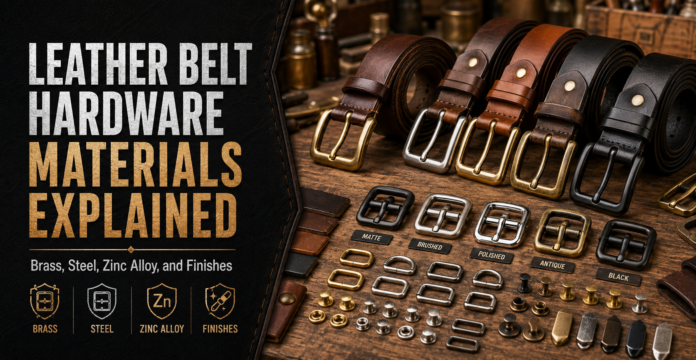
A leather belt may look simple, but many small parts work together to make it strong, useful, and comfortable. The buckle, prong, keeper, rivets, snaps, screws, and other metal parts all affect how the belt performs. This is why leather belt hardware materials deserve as much attention as the leather itself. A well-made belt can use excellent full-grain leather, but weak hardware can still bend, break, rust, or lose its finish after regular use.
The most common hardware materials are brass, stainless steel, carbon steel, and zinc alloy. Each material has its own strength, weight, price, look, and resistance to corrosion. Finishes such as nickel, antique brass, gunmetal, matte black, and polished chrome can also change both appearance and performance. Understanding leather belt hardware materials makes it easier to compare belts and choose the right construction for dress, casual, work, fashion, or outdoor use.
Understanding Leather Belt Hardware Materials
Leather belt hardware materials are the metals and metal-based materials used to make buckles, rivets, screws, snaps, rings, hooks, and decorative parts. The choice of hardware should match the belt’s purpose. A light fashion belt may not need the same heavy hardware as a work belt. In the same way, a formal belt usually needs smooth, neat hardware instead of a large industrial buckle.
The hardware should also work well with the leather. A thick full-grain leather belt normally benefits from strong hardware that can handle the weight and stiffness of the strap. Thinner leather may work better with lighter components. Good manufacturers therefore choose leather belt hardware materials together with leather thickness, belt width, stitching, edge finishing, and intended use instead of treating hardware as a separate detail.
Brass Hardware for Leather Belts
Brass is one of the most traditional leather belt hardware materials. It is mainly valued for its warm golden color, solid feel, and good resistance to corrosion. Solid brass buckles are often used on premium casual belts, heritage belts, western belts, work belts, and handmade leather goods. Brass can develop a natural patina as it ages, which gives the metal a darker and more individual appearance over time.
Not every gold-colored buckle is solid brass. Some low-cost buckles use steel or zinc alloy underneath and only receive a brass-colored surface finish. Solid brass is normally heavier and usually more expensive. It can be a strong choice for quality leather belts for men where durability and a classic look are important. Buyers should ask whether the buckle is solid brass, brass plated, or simply brass colored because these terms describe very different products.
Stainless Steel and Other Steel Hardware
Steel is another major option among leather belt hardware materials. Stainless steel is especially useful because it combines high strength with good resistance to moisture and corrosion. It is often chosen for modern casual belts, outdoor belts, work belts, and products that may face regular wear. Stainless steel can also be polished, brushed, satin finished, or coated to create different looks.
Standard carbon steel can also be used for belt hardware, but it usually needs a protective coating to reduce rust. For belts exposed to workshops, outdoor conditions, or physical work, strong steel parts can be very useful. A heavy leather tool belt may require stronger buckles, rivets, rings, and fasteners than a lightweight fashion belt. Steel hardware is normally valued more for strength and function than for the traditional appearance associated with brass.
Zinc Alloy Hardware for Everyday Belts
Zinc alloy is widely used because it can be shaped into detailed forms at a reasonable cost. Manufacturers can cast zinc alloy into many buckle designs, making it popular for casual, fashion, promotional, and mid-priced belts. This flexibility allows brands to create different shapes, logos, textures, and decorative surfaces without using expensive solid metal construction.
Among leather belt hardware materials, zinc alloy is usually less expensive than solid brass or premium stainless steel. However, quality can vary greatly. A well-made zinc alloy buckle with good plating can perform well for normal everyday use, while a poor-quality casting may crack, bend, or lose its finish earlier. Zinc alloy is therefore not automatically a bad choice. Buyers should consider casting quality, thickness, plating, surface preparation, and expected belt use before deciding whether it is suitable.
Common Belt Hardware Finishes
The base metal is only one part of the story because surface finishing changes how leather belt hardware materials look and behave. Nickel finishes provide a bright silver appearance, while brushed nickel creates a softer and less reflective surface. Antique brass gives new hardware an aged appearance. Gunmetal creates a darker grey finish, and matte black is commonly used for modern or tactical-looking belts.
Common hardware finish choices include:
- Polished brass — bright, warm, and traditional.
- Antique brass — darker and aged in appearance.
- Nickel — clean, bright, and silver colored.
- Brushed nickel — softer and less reflective than polished nickel.
- Gunmetal — dark grey with a modern appearance.
- Matte black — simple, modern, and low shine.
- Chrome — bright and highly reflective.
- Antique silver — aged silver appearance with darker details.
- PVD-style coatings — used when greater surface durability and color control are needed.
- Clear protective coating — helps protect some metal surfaces while keeping the original metal visible.
Plating, Coating, and Surface Durability
Many leather belt hardware materials receive plating or coating to improve their appearance. During plating, a thin layer of another metal is placed over the main material. For example, zinc alloy or steel may be nickel plated, brass plated, or finished in another decorative color. The final result depends heavily on how well the surface is prepared and how thick and even the coating is.
Poor plating may start to peel, fade, scratch, or expose the base metal after repeated friction. Belt buckles experience constant contact with fingers, clothing, leather, tables, and other surfaces, so finish quality matters. Manufacturers should check adhesion, color consistency, coating thickness, and surface defects. High-quality leather belt hardware materials are not only about choosing a strong metal. Proper finishing helps the product keep a clean appearance during normal use.
Buckles, Rivets, Screws, and Other Belt Components
A belt uses more hardware than just the buckle. Rivets may secure folded leather around the buckle, Chicago screws may allow removable construction, snaps may make buckle replacement easier, and metal keepers can help control the free end of the strap. Decorative studs, D-rings, loops, hooks, and plates may also be added depending on the belt design.
Each part should be selected according to the load it will carry. A small decorative rivet should not be expected to perform like a heavy structural fastener. The buckle frame, prong, pin, and attachment point also need enough strength to handle repeated tension. When comparing leather belt hardware materials, buyers should examine the complete hardware system rather than judging only the visible buckle. Strong components work best when their size, thickness, material, and fixing method are properly matched.
Choosing Hardware for Different Types of Leather Belts
The best hardware depends on how the belt will be used. Dress belts usually benefit from smaller, smooth buckles with polished or satin surfaces. Casual belts can use brass, steel, or zinc alloy in many shapes. Western belts often use larger decorative buckles and antique finishes. Work belts may need thicker metal, stronger fasteners, and finishes that can tolerate scratching and rough handling.
Women’s fashion belts may focus more on weight, shape, finish color, and decorative detail, while heavy work belts focus more on load and durability. There is no single best choice among leather belt hardware materials for every belt. Solid brass may suit a heritage belt, stainless steel may suit outdoor use, and zinc alloy may be practical for detailed fashion designs. The correct material should match the product’s price level, expected life, appearance, and daily conditions.
How to Check Belt Hardware Quality
Hardware quality can often be checked with a few simple observations. The buckle should open and close smoothly without unusual movement. The prong should line up correctly with the belt holes. Rivets and screws should sit firmly without loose edges. Metal surfaces should look even, with no bubbles, rough casting marks, sharp corners, deep scratches, or areas where the coating has already started to separate.
Manufacturers should also test leather belt hardware materials before large production runs. Useful checks can include repeated buckle movement, pull testing, corrosion testing, coating adhesion checks, color comparison, and visual inspection. Hardware should also be checked after it is installed because poor assembly can damage even good components. A strong buckle fitted badly can still cause trouble, so material selection and production quality control must work together.
Matching Hardware Color With Leather
Hardware color can change the complete style of a leather belt. Natural brown leather often works well with brass or antique brass because both create a warm traditional appearance. Black leather can pair with silver, gunmetal, matte black, or polished steel. Tan and vegetable-tanned leather often looks natural with brass, while dark brown leather can work with both antique and polished finishes.
Color matching is still mainly a design choice, not a strict rule. Brands should consider clothing style, target market, buckle shape, leather texture, and expected aging. Leather belt hardware materials should support the visual identity of the product without reducing function. A beautiful finish is useful only when it can handle normal wear. Designers should therefore balance color, surface finish, corrosion resistance, scratch resistance, strength, and cost when developing a belt.
Conclusion
Choosing leather belt hardware materials is an important part of building a reliable belt. Brass offers a classic look, steel provides strength, and zinc alloy gives designers more freedom at a practical cost. The right finish can improve appearance and surface protection, but good construction and quality control remain just as important.
A well-made belt should combine suitable leather, strong hardware, secure fasteners, and a finish designed for its intended use. When these parts work together, the belt can look better, feel stronger, and provide longer everyday service.
FAQs
What are the best leather belt hardware materials?
Solid brass and stainless steel are among the best choices for strength and long-term use. Zinc alloy is also suitable for many everyday and fashion belts when the casting and finish are made to a good standard.
Is brass better than steel for a leather belt buckle?
Neither is always better. Brass gives a traditional appearance and develops a natural patina, while stainless steel normally offers excellent strength and corrosion resistance. The better choice depends on the belt’s intended use.
Is zinc alloy good for leather belt buckles?
Yes. Good-quality zinc alloy can work well for casual and fashion belt buckles. It is especially useful for detailed cast shapes, but its durability depends on casting quality, thickness, plating, and construction.
Which belt hardware finish lasts the longest?
Finish life depends on the base metal, surface preparation, coating process, and amount of wear. Stainless steel can perform well without decorative plating, while high-quality plated or PVD-style finishes can also provide good durability.