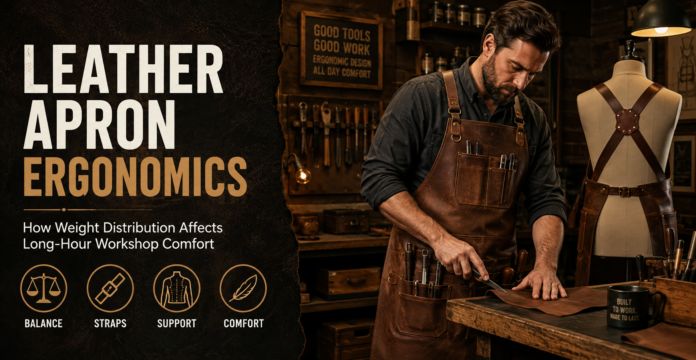
A leather apron may look simple, but wearing one for six, eight, or ten hours can place steady pressure on the neck, shoulders, back, and waist. The apron itself may not feel very heavy when you first put it on. However, after several hours of standing, bending, reaching, lifting tools, and walking around a workshop, even a small amount of poorly placed weight can become uncomfortable. Good leather apron ergonomics is therefore about much more than choosing soft leather. It is about how the whole apron sits on the body and how its weight is shared.
A well-designed apron should move with the worker instead of constantly pulling against the body. Strap position, leather thickness, apron length, pocket placement, hardware weight, and overall fit all affect comfort. Workers in woodworking, welding, metalworking, barbershops, kitchens, craft studios, and repair shops may wear protective aprons for long periods, so small design details become important. Better leather apron ergonomics can reduce pressure points, improve freedom of movement, and make the apron feel lighter even when the actual material weight stays the same.
Leather Apron Ergonomics Starts With Weight Distribution
Leather apron ergonomics is mainly based on one simple idea: the weight should not stay concentrated on one small part of the body. If a heavy apron hangs almost completely from a thin neck strap, the neck carries most of the load. The wearer may feel fine during the first hour, but pressure can slowly build around the back of the neck and upper shoulders. A balanced apron spreads this load across a wider area.
Weight distribution becomes even more important when the apron includes large pockets, metal buckles, loops, clips, or tools. An apron weighing one kilogram can feel much heavier if all its weight pulls from the neck. The same apron may feel noticeably easier to wear when shoulder straps and a waist system divide the load between the upper back, shoulders, and waist. This is why professional leather aprons should be evaluated by their complete wearing system rather than leather appearance alone.
Neck Straps Can Create Pressure During Long Shifts
Traditional bib aprons often use one strap around the neck and another around the waist. This layout is simple, familiar, and easy to adjust. It may work well for light aprons or short jobs. However, when thick leather, large coverage areas, or loaded pockets are involved, the neck strap can become the main support point. Continuous downward pressure may cause rubbing or make the apron feel heavier as the workday continues.
A carefully designed bib leather apron can reduce this problem through wider straps, better adjustment, sensible leather thickness, and correct apron proportions. The top section should sit flat against the chest rather than hanging forward. Leather apron ergonomics also improves when the bib is not unnecessarily wide or long. Extra material adds weight without always adding useful protection, so the apron should cover the required work area without using more leather than the job actually needs.
Cross-Back Straps Spread the Load Across the Shoulders
Cross-back or X-back straps are often useful for workers who wear an apron for many continuous hours. Instead of placing most of the apron weight around the neck, the straps pass over the shoulders and cross at the back. This allows more of the load to move toward the shoulders, upper back, and waist. The neck remains relatively free, which can improve comfort during longer shifts involving frequent movement.
However, cross-back construction must still be properly fitted. Straps that are too narrow can dig into the shoulders, while straps that are too loose can allow the apron to swing forward. The crossing point should remain stable without rubbing against the spine. Hardware should also be positioned where it will not press against the body when the wearer leans against a chair or workbench. Good leather apron ergonomics depends on all these small details working together rather than relying on one strap style alone.
Leather Thickness Changes Both Protection and Wearing Weight
Thicker leather normally provides more material between the worker and sparks, rough surfaces, dirt, or workshop debris. However, thickness also affects weight, stiffness, heat, and movement. A very thick apron may offer useful protection for demanding work, but using the heaviest leather available does not automatically create the best apron. The material should match the level of protection required by the actual task.
Material type matters as well. High-quality full-grain leather aprons can provide a strong balance of durability, structure, and long service life when designed correctly. Still, leather apron ergonomics should consider more than leather grade. The manufacturer must also think about thickness by panel, overall dimensions, strap design, reinforcement areas, and hardware. Keeping unnecessary weight away from low-risk areas can make the apron easier to wear without removing protection where it is genuinely needed.
Apron Length and Width Affect Freedom of Movement
Coverage has a direct effect on how an apron moves. A very long apron may protect more of the legs, but it can also press against the knees or thighs when the wearer walks, bends, sits, or climbs steps. A very wide apron can wrap heavily around the sides of the body and make turning less natural. For this reason, apron size should be selected according to both body dimensions and the movements involved in the job.
Leather apron ergonomics improves when the lower part of the apron has enough flexibility to move with the legs. Some designs use a suitable cut, softer lower panels, or carefully selected leather thickness to reduce resistance. The apron should also sit at a stable height. When it hangs too low, the extra leverage can increase pulling around the upper body. When it sits too high, important areas may lose protection. Correct sizing helps the apron remain balanced throughout the workday.
Strap Width, Adjustment, and Hardware Matter
Strap width can make a noticeable difference during long-hour use. A very thin strap places pressure on a smaller area, while a wider strap spreads the same force over more surface. This is especially useful across the shoulders and waist. At the same time, straps should not be so wide or stiff that they restrict arm movement. Soft edges and smooth finishing can also reduce rubbing around the neck, shoulders, and sides of the body.
Adjustment is another key part of leather apron ergonomics. Workers have different heights, shoulder widths, chest sizes, and preferred working positions. Adjustable straps allow the apron to sit closer to its ideal position. Buckles, D-rings, clips, and other fittings should provide secure adjustment without adding excessive weight. Heavy metal hardware may look strong, but unnecessary hardware can increase the load and create hard pressure points. Every component should have a useful purpose.
Pocket Placement Can Change the Apron’s Balance
Workshop aprons often carry pencils, rulers, knives, markers, pliers, small hammers, fasteners, phones, or other equipment. These tools may weigh more than the apron itself. If every pocket is placed on one side, the apron can start pulling sideways. The wearer may then adjust posture without noticing, especially during a long shift. Balanced pocket positioning helps keep the apron closer to the body’s natural center.
Upper chest pockets should usually hold lighter items because heavy objects placed high on the apron can pull the bib forward. Heavier tools are often more comfortable closer to the waist, where the body can support their weight more naturally. Pocket depth also matters. Tools that swing freely create movement and repeated pulling. Leather apron ergonomics therefore includes not only apron weight but also the weight workers are expected to carry during normal use.
Waist Aprons Can Be Better for Jobs That Need Less Coverage
Not every workshop job needs a full bib apron. When protection is mainly required around the waist and upper legs, a waist apron can remove weight from the chest, neck, and shoulders. This design may be useful for certain craftspeople, servers, barbers, tool handlers, and workshop employees who mainly need storage or lower-body surface protection. Reducing unnecessary material is one of the simplest ways to improve long-hour comfort.
A brown waist leather apron shows how a shorter apron format can focus coverage around the working area without surrounding the entire upper body. However, the waist strap must still distribute weight properly, especially when pockets are filled. A wide and correctly adjusted waistband usually feels more stable than a thin strap carrying several tools. Choosing between a bib apron and waist apron should therefore depend on protection needs, movement, tool load, and working time.
Practical Comfort Features to Check Before Choosing an Apron
Leather apron ergonomics becomes easier to understand when buyers look at several design features together instead of judging an apron only by appearance. For long-hour workshop use, important checks include:
- Choose a strap system that spreads weight across the shoulders or waist.
- Avoid unnecessary leather thickness in areas that do not need heavy protection.
- Check whether the apron length allows easy walking, bending, and sitting.
- Make sure shoulder or neck straps are wide enough to reduce pressure.
- Look for adjustable straps that fit different body sizes.
- Keep heavy tools near the waist rather than high on the chest.
- Distribute pockets across the apron instead of loading only one side.
- Avoid oversized metal fittings that add weight without a useful purpose.
- Check that buckles do not sit directly on major pressure points.
- Choose smooth strap edges to reduce rubbing during movement.
- Make sure the apron stays close to the body instead of swinging forward.
- Test the apron while reaching, bending, turning, and lifting.
- Consider a waist apron when full upper-body coverage is unnecessary.
- Check whether the leather becomes flexible enough for the required work.
- Test the apron with the tools normally carried during a full work shift.
These points become especially important when workers repeat the same movements hundreds of times each day. An apron that feels comfortable while standing still for two minutes may feel very different after hours of bending over a workbench. A useful comfort test should copy real working conditions as closely as possible.
Testing Leather Apron Ergonomics for a Full Working Day
The best way to judge leather apron ergonomics is to test the apron during normal movements rather than simply trying it on in front of a mirror. The wearer should raise both arms, bend forward, twist from side to side, sit down, walk, reach for tools, and work at normal bench height. The apron should stay reasonably stable without pulling hard against the neck or sliding continuously across the shoulders.
Workers should also test the apron with realistic pocket loads. An empty apron may feel perfectly balanced, while the same apron can become uncomfortable after tools are added. Pay attention to where pressure starts to appear after extended use. A neck strap that needs constant adjustment, a waistband that slips downward, or a heavy pocket that pulls to one side may indicate poor balance. Small adjustments to straps, pocket use, or apron sizing can often improve long-hour comfort significantly.
Conclusion
Leather apron ergonomics is mainly about keeping protection comfortable during real work. Good weight distribution, suitable leather thickness, balanced pockets, supportive straps, correct sizing, and sensible hardware can make a major difference during long workshop shifts. A well-designed apron should protect the worker without constantly pulling on the neck, shoulders, or waist. Choosing the right design for the job helps workers move naturally and stay comfortable for longer periods.
FAQs
What does leather apron ergonomics mean?
Leather apron ergonomics means designing and fitting an apron so its weight is distributed comfortably across the body. It includes strap position, apron size, leather thickness, pocket placement, hardware, and freedom of movement.
Are cross-back leather aprons more comfortable than neck-strap aprons?
Cross-back aprons can be more comfortable for long shifts because they move much of the load away from the neck and spread it across the shoulders and back. However, comfort still depends on proper sizing and adjustment.
Does thicker leather make an apron less comfortable?
Thicker leather can increase weight, stiffness, and heat. It may be useful for jobs needing greater protection, but using very thick leather everywhere can reduce comfort. The thickness should match the actual work risk.
Where should heavy tools be carried on a leather apron?
Heavier tools are generally easier to carry near the waist rather than high on the chest. Keeping tools balanced between both sides can also reduce sideways pulling and improve overall apron stability.