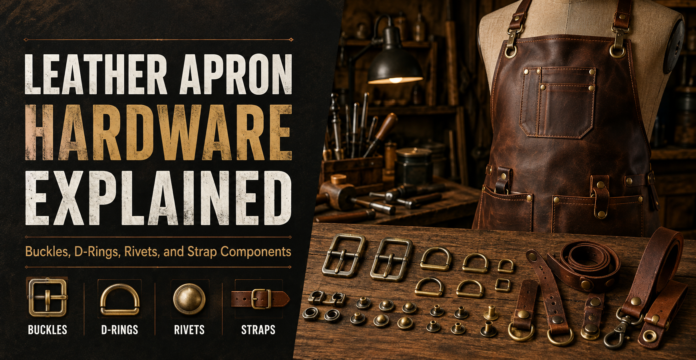
A leather apron may look simple at first. Most people notice the leather body, pockets, color, and overall shape before anything else. However, the small metal and strap parts can have a major effect on comfort, strength, fit, and working life. Buckles, D-rings, rivets, hooks, eyelets, snaps, and strap adjusters all have a job to do. Good leather apron hardware keeps the apron secure while allowing the wearer to move, bend, reach, and work without constantly fixing loose straps. Poor-quality parts can make even strong leather feel uncomfortable or unreliable.
The type of hardware also depends on how the apron will be used. A barber may want light and neat fittings, while a welder or workshop worker may prefer stronger parts that can handle regular pulling and rough use. Chefs, baristas, craftsmen, woodworkers, and other professionals may have different needs as well. Understanding each component makes it much easier to judge whether an apron is designed only to look attractive or is actually made for regular work.
What Is Leather Apron Hardware?
Leather apron hardware is the group of metal, plastic, and supporting components used to connect, adjust, reinforce, or secure different parts of an apron. These components normally include buckles, D-rings, rivets, snaps, eyelets, hooks, clips, strap sliders, and other small fittings. They connect shoulder straps, waist straps, pockets, tool loops, and removable accessories. On many professional leather aprons, these small parts work together with the leather instead of acting as simple decoration.
The quality of leather apron hardware matters because these pieces often sit at high-stress points. Every time a wearer tightens a waist strap, lifts a tool attached to a loop, or removes an apron, pressure moves through the hardware. Weak fittings may bend, loosen, rust, or pull through the leather. Strong hardware spreads the pressure more effectively and can help the apron keep its original shape for longer. The best choice is therefore based on function, not just shine, color, or appearance.
Leather Apron Hardware: Why Buckles Matter
Buckles are among the most visible pieces of leather apron hardware. Their main purpose is to secure and adjust straps. A buckle may be placed around the waist, across the back, or on shoulder straps. Traditional pin buckles have a center pin that passes through a punched hole in the leather strap. They provide a firm fit and are easy to understand. Slider-style buckles, on the other hand, allow faster adjustment because the strap can move through the fitting without using several fixed holes.
Buckles should match the weight and width of the strap. A very heavy buckle on a thin strap can feel uncomfortable, while a small lightweight buckle may not be strong enough for a thick work apron. The shape also matters. Rounded edges are usually more comfortable because they are less likely to cut into a strap or catch on clothing. On a structured bib leather apron, well-positioned buckles can help distribute weight across the upper body instead of allowing all the pressure to sit around the neck.
D-Rings Give Straps and Accessories More Flexibility
D-rings get their name from their shape. One side is straight while the other side forms a rounded curve, creating a shape similar to the letter D. They are commonly used to connect straps, support removable parts, or provide attachment points for tools and accessories. A strap can pass around or through the ring, while hooks and clips can also connect to it. Because of this simple design, D-rings are useful in many types of leather apron hardware systems.
The position of a D-ring affects how well it works. Rings used for shoulder or waist straps should be placed where the pulling force is spread across strong leather. Rings used for tools should not sit where heavy objects will swing into the wearer’s body. Thickness also matters. Thin rings may open under repeated pressure, while rings that are too large can add unnecessary weight. A good D-ring should feel solid, have smooth edges, and move freely without cutting or scratching the strap connected to it.
Rivets Strengthen High-Stress Areas
Rivets are small fasteners that permanently connect layers of leather or hold straps and pockets in place. Unlike ordinary stitching, a rivet creates a firm mechanical connection through the material. This makes rivets especially useful around pocket corners, strap ends, tool loops, and other areas that receive repeated pulling. A well-placed rivet works with the stitching instead of replacing it completely. Together, the two methods can create a stronger construction.
The leather itself must also be strong enough to support the rivet. This is especially important with thick materials such as those used for full-grain leather aprons, where suitable rivets can reinforce heavy-duty sections without making the design unnecessarily complicated. If a rivet is placed too close to the edge, the leather can eventually tear around it. If it is fitted too loosely, it may rotate or rattle. Properly installed rivets should sit flat, remain firm, and have smooth backs that do not rub against clothing or skin.
Strap Components Control Fit and Comfort
Straps may appear to be simple strips of leather or webbing, but they form one of the most important systems on an apron. Neck straps, cross-back straps, shoulder straps, and waist straps all control how the apron sits on the body. Their width, thickness, flexibility, length, and adjustment method can change the entire wearing experience. Wider straps usually spread pressure across a larger area, while narrow straps may feel lighter but can become uncomfortable when the apron carries several tools.
Leather apron hardware used with straps includes sliders, loops, keepers, buckles, rings, hooks, and adjustment plates. These parts should allow the wearer to change the fit without making the strap slip during work. A good adjustment system is especially important when one apron size is expected to fit several people. The strap should also lie flat after adjustment. Twisted straps and loose hanging ends can become distracting and may catch on surrounding objects while the wearer is moving.
Cross-Back and Neck-Strap Systems Work Differently
A traditional neck-strap apron hangs partly from the neck and is then secured around the waist. This design is simple and quick to wear. However, a heavy leather apron can create pressure around the neck after several hours, especially when tools are placed inside front pockets. Good leather apron hardware can improve the system by allowing better strap adjustment, but the basic weight still needs to be supported partly by the neck.
Cross-back systems move much of that pressure toward the shoulders and upper back. Two straps cross behind the wearer and connect to the apron at different points. D-rings, buckles, clips, or sliders are often used to control the fit. This design can feel more balanced during long working periods, although it may take slightly longer to put on. Neither system is automatically better for everyone. Lightweight aprons can work well with neck straps, while heavier professional designs often benefit from wider or cross-back support.
Snaps, Hooks, Clips, and Eyelets Add Useful Functions
Some aprons use several smaller leather apron hardware pieces to make daily use faster and easier. Snaps allow pockets, straps, or accessories to be opened without undoing a full buckle. Hooks and clips can create removable strap systems, while eyelets strengthen holes that receive repeated pressure. Tool attachments may use spring hooks or similar fittings so that workers can add or remove accessories depending on the task. Each part should have a clear reason for being included.
- Buckles adjust and secure leather or fabric straps.
- D-rings connect straps or create attachment points.
- Rivets reinforce pockets, loops, and other stress areas.
- Snaps create quick-opening connections.
- Eyelets protect holes from repeated wear.
- Hooks make straps or accessories easier to remove.
- Strap sliders allow faster length adjustment.
- Keepers hold loose strap ends close to the body.
- Clips can support removable tools or accessories.
- Reinforcement plates spread pressure across a wider area.
Hardware Materials and Finishes Affect Durability
Leather apron hardware can be produced from different metals, and the material affects weight, strength, corrosion resistance, and appearance. Brass is popular because it offers a traditional look and can develop an aged surface over time. Stainless steel is often chosen where corrosion resistance and strength are important. Zinc-alloy fittings are also common because they can be made in many shapes and finishes at a reasonable cost. Some lightweight aprons may even use selected plastic adjustment parts where heavy metal strength is not required.
The finish matters too. Antique brass, matte black, polished silver, gunmetal, and similar finishes can completely change the appearance of an apron. However, appearance should come after basic performance. A coating that chips quickly may expose the metal underneath and make the apron look worn before the leather itself has aged. Hardware should also be smooth. Sharp corners, unfinished casting marks, or rough surfaces can damage straps through repeated rubbing and may scratch nearby work surfaces.
Hardware Size Should Match the Leather and Intended Job
Bigger leather apron hardware is not always better. Every component should match the thickness of the leather, width of the strap, and amount of force it will receive. A lightweight hospitality apron does not need the same large fittings as an apron made for workshop tools. Oversized hardware adds weight and may make the apron feel stiff. Undersized hardware can bend, twist, or create a weak point in an otherwise strong product.
Placement is just as important as size. Buckles should be easy to reach without sitting directly under a pressure point. D-rings used for tools should be placed where attached items remain controlled during movement. Rivets should have enough leather around them to reduce the chance of tearing. Strap sliders should hold their position after adjustment. Good design means every fitting works naturally with the body. The wearer should not have to keep thinking about the leather apron hardware while working.
How to Check Leather Apron Hardware Before Buying
A quick inspection can tell you a great deal about the quality of an apron. Start by holding each buckle, ring, rivet, and clip. The parts should feel stable rather than loose. Pull gently on the straps where they connect with metal parts and look for unwanted movement around the holes. Check rivets from both sides to make sure they sit flat. Open and close clips or snaps several times. Smooth movement is useful, but the closure should still feel secure.
Next, look closely at areas where metal touches leather. There should be no sharp edges cutting into the strap. Check whether the strap width properly matches the buckle or slider. Also consider the job for which the apron will be used. A café worker, barber, welder, carpenter, mechanic, chef, and craft worker may place very different loads on the same hardware. Choosing an apron according to its real working conditions is more useful than choosing one simply because its metal fittings look heavy or expensive.
Conclusion
Leather apron hardware plays a much bigger role than its small size suggests. Buckles control fit, D-rings create useful connection points, rivets reinforce stressed areas, and strap components help keep the apron comfortable and secure. Good hardware should match the leather, work smoothly, resist daily wear, and sit in the right position. When these details are chosen carefully, a leather apron can feel easier to wear and remain dependable through regular professional use.
FAQs
What is the most important hardware on a leather apron?
There is no single most important part because each component has a different job. Buckles and strap adjusters control fit, while rivets reinforce stressed areas. D-rings, hooks, and clips can support straps or tools. The most important point is that all leather apron hardware should match the apron design and expected workload.
Are brass or stainless-steel fittings better for leather aprons?
Both can work well. Brass offers a traditional appearance and can develop an aged finish over time, while stainless steel is valued for strength and corrosion resistance. The better choice depends on the working environment, apron style, weight requirements, and desired appearance.
Why are rivets used on leather aprons?
Rivets reinforce areas that receive regular pulling, such as strap connections, pocket corners, and tool loops. They can support stitching and reduce stress on a small area of leather. Rivets should still be correctly sized and placed far enough from the leather edge.
Are cross-back straps better than neck straps?
Cross-back straps can spread the weight across the shoulders and upper back, which may feel more comfortable with a heavy apron. Neck straps are simpler and quicker to put on and can work well for lighter aprons. The best option depends on apron weight, working hours, and personal comfort.