In most cases, belts tend to be overlooked. However, getting the wrong belt can sabotage an ensemble as easily as picking the wrong footwear or neckwear. Different dressing codes feature belts that vary in terms of formality, material finish, and buckle style that differentiate a belt for a particular dressing code.
Leather belts for different dress codes can help clothing brands and retailers understand the barriers that consumers experience when shopping for accessories. This guide breaks down the dress code tropes that are relevant when designing belts and what should be considered when sourcing this category.
The Significance of Leather Belts for Different Dress Codes
While fashion has become less formal and less rigid over the last decade, there are accessories in which there are still tangible rules – belts being one of those accessories, particularly in the context of formal and professional settings. Leather belts for different dress codes are a testament to the importance that should be afforded to belts, as a belt can communicate formalness or informality, even if the rest of the outfit occupies the in-between zone.
For more details, please refer to the Submission template.
Some retailers will put all belts into one generic category. Often, customers will have different types of needs based upon the various activities in which they engage on a given day. As an example, imagine having to buy a belt for an interview, for running errands, and for work around the house. This customer would not be served by a single “universal” belt. The more retailers distinguish these categories, the more they will fulfill customer needs.
Formal and Business Belts
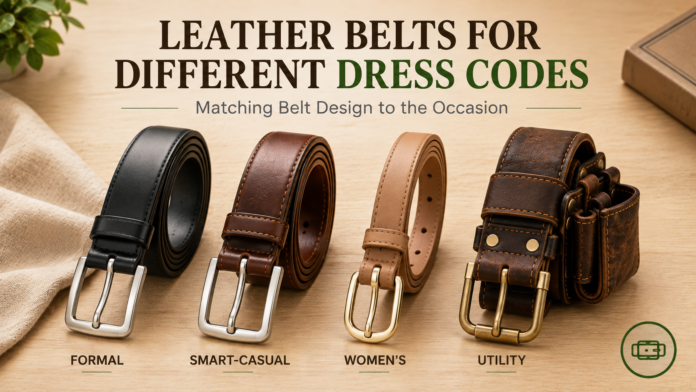
Close, clean lines are essential for slim formal belts. Hardware should be minimal and shouldn’t detract from a polished finish. Full grain leather belts are ideal as they age well from frequent use. Belts made from full grain leather will retain a semi-formal finish over their life.
When it comes to formal belts, the buckle should be made of brushed or matte silver or gold, and should not be large and/or branded. Mercantile retailers serving a predominantly formal clientele should carry belts of a width no larger than 1.5 inches in brown and black to complement most business wardrobes.
Smart-Casual and Everyday Belts
Smart casual bridges the other two categories. Men’s casual belts can have more features than formal belts, but should not completely move into casual territory. Wide belt choices offer brown with different colors for stitching and buckles. Added features should be done in a manner that is present and intentional but not utilitarian.
This category can be the largest category in a belt catalog because most people spend most of their time in settings that are smart casual over those that are formal or purely utilitarian. Stock variety here should include multiple types of leather and buckle styles because this category ranges from weekend casual to relaxed formal.
Belts Designed for Women’s Fashion and Sizing
The needs of women for belts and men’s belts, which are often resized, vary not only in preferred width but in design and integration with clothing. A belt design adapted to women’s fashion and clothing integration is more appropriate than a resized men’s design.
Different styles of fashion belts require more design detail to get the proportions right for belt width, hole spacing and buckle style and placement, than utility belts. Buckle style matters more with fashion belts. Belts in this category should be designed as their own category and not as an afterthought variation of the men’s design.
Belts for Manual Work and Tasks
Some belts are needed for work that involves manual activities. This category involves contradictory requirements, focused on the practicalities of belt design and work belts, compared to the requirements of formal belts. A belt especially made for this category, a leather work tool belt, incorporates reinforced construction with flexible pouch or loop designs intended for tool carry.
This category values heavy leather with tougher stitching. It’s more important to have that durability for products that will be put to actual physical use than for products to have a refined, slim look. Vendors that sell to tradesmen or similar customers should describe the construction of the belts in their product descriptions, as these buyers will be the most concerned with how the belt actually functions.
Key Features to Look for Across Every Dress Code Category
Brands that sell leather belts across the various types of dress codes should ensure that each of the following aspects are present across each product they sell:
- Leather quality and grain. Full grain leather will offer the most durability and give a better appearance over time.
- Buckles should be proportional and finished to the style of the belt.
- Belts should be appropriate in their width for the occasion. Formal wear calls for thinner belts, while casual and utility wear call for wider belts.
- Belts should be designed specifically for their gender. Women’s belts should not be resized men’s belts.
- Utility should be the focus of belt construction. This ensures that belts will not break during heavy use.
- Each formality level should have consistent brown and black color options to provide customers real wardrobe flexibility.
How to Build a Dress-Code Based Belt Catalog
Selling products that serve different kinds of functions should be the goal for any retailer. Lumping products into one category and selling it as one undifferentiated product should be approached as one single product. From a business standpoint, formal wear and smart casual should be the first belts offered, as these categories will serve the most people on a daily basis.
This collection includes women’s styling belts and work utility belts, providing options to meet demand from customers across the range of their dressing needs. Analyzing the complete leather belts catalog in conjunction with customer demand according to occasion helps buyers determine the most important positioning for each category.
Final Thoughts
While the rules around most aspects of dress have become more relaxed, dress codes including the types of belts required for various levels of dress still have a lot of significance. A belthandler must account for the various occasions their clientele may find themselves dressing for through the week. Brands and retailers who leverage buckle categories such as formal, smart-casual, women’s, and utility categories will serve their clientele much better than treating belts as a generic accessory.
Eco-Jersey manufactures belts across full grain, men’s, women’s, and utility categories designed for true versatility across dress codes. Check out the leather belts catalog or request a consultation to start your sourcing for the right belts for your clientele.
Frequently Asked Questions
What width belt is appropriate for formal occasions?
A formal belt should be less than 1.5 inches wide with simple, understated buckle design to give a clean and professional look.
Can the same belt work for both business and smart casual settings?
While some belts easily transition between business and smart casual, belts designed for formal and smart casual situations look the best in the appropriate environment.
Do women need different belts than men for the same dress code?
Yes, women’s belts differ in width, buckle size, and position as well as hole spacing to accommodate the silhouette of women’s fashion. Therefore, dedicated design is more appropriate than menswear belts that have only been resized.
What makes a tool belt different from a fashion belt?
Tool belts differ from fashion belts in their focus. Tool belts use heavier leather and stronger stitching with functional accessories designed to carry tools. Fashion belts focus on how the belt looks and the degree of formality of the accessories.