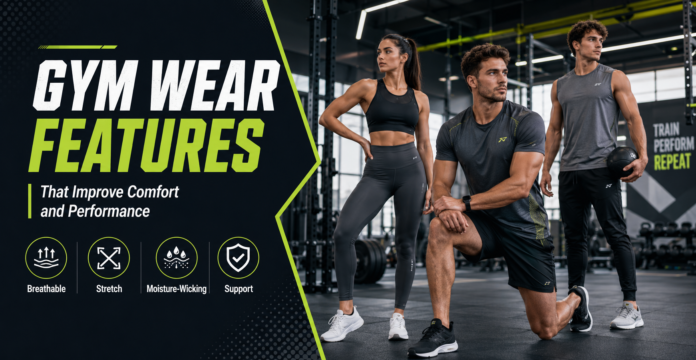
Gym clothing is not just about looking sporty. The right outfit can help your body move freely, stay cooler, and feel more comfortable during every exercise. When people talk about gym wear features, they usually mean the small design details that make training easier, such as stretch fabric, breathable panels, smooth seams, flexible waistbands, sweat control, and the right fit. These gym wear features matter because a workout can quickly feel harder when your clothes are too tight, too heavy, too hot, or too rough on the skin. A simple shirt that dries fast can make cardio feel cleaner. A pair of shorts with a secure waistband can make squats feel safer. A tank top with open arm movement can help shoulder exercises feel smoother. Good gym clothing does not do the workout for you, but it removes distractions so you can focus on lifting, running, stretching, or training with better confidence. This is why gym wear should be chosen like training equipment, not just normal clothing.
Gym Wear Features That Matter Most
The most important gym wear features are comfort, breathability, stretch, sweat control, durability, and support. Comfort means the clothing feels soft and easy on the skin, even when you move a lot. Breathability means air can pass through the fabric, so heat does not stay trapped around your body. Stretch means the clothing moves with your arms, legs, back, and shoulders instead of pulling against them. Sweat control means the fabric helps move moisture away from the skin, so you do not feel heavy or sticky too early. Durability means the stitching, fabric, and shape can handle repeated training and washing. Support means the clothing stays in place without squeezing too hard. These gym wear features work together, and the best gym outfit usually has a balance of all of them rather than only one strong feature. A shirt may be breathable but useless if it loses shape, while strong joggers may still feel bad if the waistband digs into your skin.
Fit: The First Feature That Affects Comfort
Fit is one of the first gym wear features you should check because even the best fabric can feel wrong if the size or shape is not right. A good gym fit should be close enough to stay in place but not so tight that it stops your movement. For lifting, a slightly fitted shirt can prevent loose fabric from getting in the way. For cardio, a lightweight fit can help air move better around the body. For stretching or mobility training, the shoulders, hips, and knees need enough room to bend without pulling. You can explore different training styles through the gym wear collection to see how fit changes between tops, shorts, joggers, and performance pieces for different exercises. The goal is simple: the clothing should follow your movement instead of fighting it, and it should stay comfortable from warm-up to cool-down. If you keep fixing your shirt, pulling up your shorts, or adjusting your waistband, the fit is not supporting your workout.
Breathable Fabric: Staying Cooler During Training
Breathable fabric is one of the most useful gym wear features because your body creates heat when you train. If your clothes trap that heat, you may feel tired, sweaty, and uncomfortable faster than normal. Breathable gym clothing allows air to pass through the fabric, which helps heat escape. This is helpful during running, cycling, HIIT, weight circuits, and summer workouts. Lightweight tops, open-knit fabrics, mesh zones, and sleeveless designs can all improve airflow. For example, gym tank tops are often useful for upper-body days because they reduce fabric around the arms while still covering the body in a clean training style. Breathability does not mean the fabric must be thin and weak. A good fabric can be light, strong, and airy at the same time when it is made for active use. When airflow is better, the body feels less trapped, and the workout feels easier to continue.
Moisture Control: Why Sweat Management Matters
Sweat is normal during exercise, but poor sweat control can make your clothing feel heavy, cold, or sticky. That is why moisture control is one of the gym wear features that can change how a workout feels. A moisture-wicking fabric pulls sweat away from the skin and spreads it across the surface of the garment, where it can dry faster. This helps reduce that wet, clingy feeling during long sessions. Cotton can feel soft at first, but it often holds sweat for longer, which can make it heavy during intense training. Performance fabrics are usually better for workouts because they are made to handle movement and moisture together. Good sweat control is especially useful for cardio, gym classes, outdoor training, and back-to-back exercises. It also helps reduce friction, because damp fabric rubbing against the skin can cause irritation. When gym wear features include quick-dry performance, the garment feels cleaner during the workout and fresher after the session.
Stretch and Recovery: Moving Without Restriction
Stretch is one of the gym wear features that helps your body move naturally. When you squat, lunge, press, row, or stretch, your clothes need to expand with your movement. If the fabric has poor stretch, it may pull at the shoulders, knees, thighs, or waist. This can make you adjust your outfit again and again, which breaks focus. Good stretch fabric usually moves in two directions or four directions. Four-way stretch is better for workouts because it stretches both across and lengthwise. Recovery is also important. This means the fabric returns to its original shape after stretching. Without recovery, leggings may bag at the knees, shirts may lose shape, and waistbands may become loose. Strong stretch and recovery help gym clothing stay useful for many sessions, not just the first few wears. These gym wear features are especially important for people who train legs, do yoga, perform functional movements, or use a full range of motion.
Compression Support: When a Closer Fit Helps
Compression clothing gives a closer, more supportive feel than regular gym wear. This does not mean it is always better for every workout, but it can help when you want a secure fit and reduced fabric movement. Compression tops can feel useful during running, lifting, or high-movement sessions because they stay close to the body. A piece like compression t-shirts can support training when you prefer a smooth base layer that does not flap, fold, or shift during exercise. Still, compression should not feel painful or block breathing. If it leaves deep marks, limits shoulder movement, or feels uncomfortable after a few minutes, the size or compression level may be wrong. Among gym wear features, support is best when it feels firm, not forced, and when it matches the activity. Compression can be a smart choice for performance, but relaxed or regular gym wear can be better for warm-ups, light workouts, or people who simply prefer more room.
Seams, Stitching, and Long-Term Durability
Seams may look like a small detail, but they are gym wear features that strongly affect both comfort and durability. Rough seams can rub the skin during running, cycling, lifting, or repeated arm movement. Smooth seams, flatlock stitching, and soft inner finishes help reduce irritation. This is especially important around the underarms, thighs, waistband, and shoulders because these areas move a lot during exercise. Good stitching also helps the garment survive stretching, washing, sweating, and regular use. A cheaper garment may look fine at first, but if it loses shape, pills, fades, or tears after a few washes, it is not a good training choice. Durable gym wear uses stronger yarns, stable stretch, and construction that can handle repeated movement. The best gym wear features should last beyond the first few workouts, so the clothing still feels smooth, supportive, and properly shaped after many training days.
Waistbands, Cuffs, and Secure Hold
A secure waistband is one of the gym wear features that can make lower-body training much easier. Shorts, joggers, and leggings should stay in place when you bend, squat, jump, or run. If the waistband rolls down or digs into the stomach, it becomes distracting. A good waistband spreads pressure evenly and holds the garment without feeling harsh. Drawcords can add adjustability, especially for joggers and shorts. Cuffs can also help keep pants in place during movement, but they should not feel too tight around the ankle. For gym tops, necklines and armholes should sit properly without pulling or hanging too low. Secure hold is not about making everything tight. It is about keeping clothing steady so the body can move freely and the mind can stay focused on the workout. When gym wear features include a stable waistband and clean finishing, the outfit feels more reliable during fast movement and heavy training.
Bullet Guide: Quick Gym Wear Features Checklist
- Choose breathable fabric if you sweat quickly or train in warm weather.
- Pick four-way stretch for squats, lunges, yoga, and full-body workouts.
- Use moisture-wicking clothing for cardio, HIIT, and long training sessions.
- Select smooth seams if your skin gets irritated during movement.
- Wear compression only when you want a firm and supportive feel.
- Choose secure waistbands for running, jumping, and leg training.
- Avoid heavy fabrics if your workout includes fast movement.
- Check fabric recovery so the garment keeps its shape after stretching.
- Pick the fit according to the workout, not only according to style.
- Wash gym wear gently so the performance features last longer.
Conclusion
The best gym wear features depend on your workout, but most people should look for breathable fabric, moisture control, stretch, soft seams, secure waistbands, durability, and the right fit. These gym wear features help you stay comfortable, move better, and train with fewer distractions. For cardio, choose lightweight and sweat-wicking clothing. For strength training, choose strong stretch, secure fit, and durable stitching. For mobility workouts, choose flexible fabric that does not pull at the hips, knees, or shoulders. Compression can be useful, but only when it feels supportive and not too tight. The simple rule is this: good gym wear should make exercise feel easier to start and easier to finish. When your clothing stays cool, dry, flexible, and comfortable, your body can focus on performance instead of fixing your outfit again and again. This is what makes the right gym wear features important for beginners, regular gym users, and serious athletes.
FAQs
What are the most important gym wear features?
The most important gym wear features are breathability, stretch, moisture control, soft seams, secure fit, and durability. These features help clothing feel comfortable during movement and sweat.
Is compression gym wear better than regular gym wear?
Compression gym wear is better when you want a firm and supportive fit, but regular gym wear may feel better for relaxed workouts. The best choice depends on comfort and activity.
Which fabric is best for gym wear?
Performance fabrics with moisture-wicking, stretch, and quick-dry ability are usually best for gym wear. They help manage sweat and allow easier movement than heavy casual fabrics.
How should gym wear fit?
Gym wear should fit close enough to stay in place but loose enough to move freely. It should not block breathing, pull at joints, or cause rubbing during exercise.