
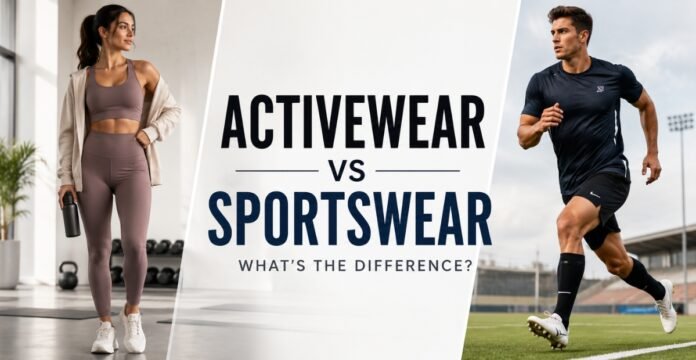
Activewear vs sportswear includes items such as leggings, sports bras, workout tops, joggers, and jackets. Like activewear, sportswear is made up of clothing worn to complete a specific sport. Football kits, tennis shirts, basketball uniforms, and running gear are all considered sportswear. Activewear can be used in everyday life, while sportswear is used for specific athletic tasks. Recognizing the difference between activewear and sportswear can help clothing brands, teams, and shoppers make better purchasing or designing choices.
The Main Purpose of Each Clothing Type
Activewear is designed to keep the user moving and comfortable at the same time. Because of this, it is very popular clothing for not only workouts but also casual everyday events. On the other hand, sportswear is designed for and with a specific sport in mind. Football shirts are designed to be comfortable while running as well as providing the identity of a sports team, while cycling jerseys are designed to be close in fit, and have pockets that are easy to stash away items. Sportswear also provides specific support for tasks. When wondering about the difference of Activewear and Sportswear, it is dependent on the frequency, where, and how the clothing will be used.
How Fit Changes Performance and Comfort
Fit plays a significant role when considering activewear vs sportswear. The fit of activewear can be slouched, relaxed, oversized, or snug, based on the style and the type of activity. Many people prefer activewear because it is more comfortable than sportswear and does not look like a team uniform. Sportswear fit is typically based on a specific sport. A rugby shirt needs a fit that supports strength, a running top needs a lightweight fit, and basketball shorts need a fit that allows for quick leg movement. When considering activewear vs sportswear, activewear provides a lot more lifestyle options than sportswear, which is based on performance.
Fabrics Used in Activewear and Sportswear
Fabric makes a clear difference in activewear vs sportswear. Both may use polyester, nylon, spandex, mesh, or blended materials, but the fabric setup can change by use. Activewear often needs stretch, softness, breathability, and a smooth feel for long wear. The activewear collection shows how tops, leggings, joggers, and related pieces can serve different activities within one category. Sportswear fabrics may need stronger abrasion resistance, team printing, ventilation zones, or weather control. In activewear vs sportswear, the best fabric is not simply the most expensive one; it is the fabric that matches movement, climate, washing, and durability needs.
Activewear Works Beyond the Workout
The convenience of wearing the same outfit during and after exercise has shown to be a driving force for the activewear trend. It is not uncommon to see somebody go for a morning walk in a pair of joggers, do their errands for the day in the joggers, and perhaps, do a workout in them later on. Sportswear lacks this versatility, and for good reason, panels or cuts that are specific to a sport can easily look out of place in other settings. This distinction between activewear and sportswear is also for those who prefer fewer outfit changes. More drastically, activewear and sportswear can be defined as clothing for versatile movement and clothing for a single sport, respectively.
Sportswear Is More Closely Connected to a Sport
By design, sportswear is more closely affiliated to a sport or position. A padded, team designed, and fit supportive of dives would differentiate a soccer goalkeeper’s jersey from a gym shirt. Sport specific needs in activewear and sportswear can also dictate further design and cuts. As the name suggests, activewear can be freely sported by anybody and unlike sportswear, does not need to show a sport or an event. The activewear and sportswear distinction is also clear when sport specific construction, sponsor logos, player numbers, and club colors are designed in a garment. In this case, the garment would clearly be sportswear.
Gym, Yoga, and Training Clothing Can Overlap
The activewear vs sportswear line is not always sharp. Gym clothing, yoga wear, compression pieces, and performance tops may fit into both groups. A fitted shirt can be activewear for a normal workout, but it may become sportswear when made for a team, race, or specific training program. The gym wear range includes items developed for exercise, but similar shapes can also be styled for casual use. This overlap is why activewear vs sportswear can confuse buyers. The easiest way to decide is to ask whether the garment is mainly flexible lifestyle clothing or equipment-like clothing for a defined sport.
Key Differences at a Glance
The activewear vs sportswear comparison becomes easier when the main points are placed side by side:
- Purpose: Activewear supports general movement; sportswear supports a specific sport.
- Use: Activewear can be worn daily; sportswear is often used for training or matches.
- Fit: Activewear offers more fashion-based fits; sportswear follows sport-based movement.
- Design: Activewear may look simple and casual; sportswear may include team colors and logos.
- Fabric: Activewear focuses on comfort and stretch; sportswear may require extra strength or protection.
- Buying choice: Choose activewear for flexible use and sportswear for a defined athletic need.
These activewear vs sportswear points help buyers compare products without using difficult technical language.
Which Option Is Better for Exercise?
In the debate of activewear vs sportswear, there is no clear winner. It largely depends on the type of exercise. Activewear is usually sufficient for gym workouts, home workouts, yoga, walking, or light running. Sportswear is better for activities that require special movements, safety, or a specific type of uniform or competition. A casual gym goer might be more concerned about the style and comfort of their outfit, whereas a football team needs a uniform that is safe and capable of withstanding repeated play. In the debate of activewear vs sportswear, the answer is determined by what task the clothing is intended to perform.
What Should Brands and Teams Choose?
Brands should study their customers before deciding between activewear vs sportswear. A lifestyle label may need leggings, hoodies, tanks, and joggers that customers can mix with daily outfits. A sports club may need uniforms with player names, numbers, strong stitching, and repeatable team colors. The performance wear collection also shows how clothing can sit between general activewear and highly specific sportswear. When planning activewear vs sportswear, brands should test fabric, fit, print quality, seam comfort, and size grading before bulk production. A clear target user leads to better products and fewer costly changes.
Conclusion
Differentiating activewear and sportswear involves identifying their primary purpose. Activewear is designed for comfort and flexibility while offering the option for everyday apparel. Sportswear is designed apparel for sport-specific activities, performance, or a specific role or position on the team. They can be constructed using similar modern materials that stretch as well as control moisture and some items can be categorized under both. However, the activewear vs. sportswear selection is simple as long as you consider your main activity. Select activewear for comfort, style, and versatile use. Sportswear is a better fit when the activity requires a specific sport-related or team construction or design.
FAQs
Is Activewear the Same as Sportswear?
No. Activewear is a broad group of clothing for exercise and active daily life. Sportswear is usually made for a particular sport, team, or athletic task. However, some garments can fit both categories, which is why the activewear vs sportswear comparison needs a closer look at purpose.
Can Activewear Be Worn Casually?
Yes. Many activewear pieces, such as joggers, leggings, hoodies, and simple workout tops, are designed to look suitable outside the gym. This everyday use is an important part of the activewear vs sportswear difference, especially for people who want one outfit for several parts of the day.
Is Sportswear Better for Professional Athletes?
Sportswear is usually more suitable when an athlete needs a team uniform, sport-specific fit, protective features, or competition-ready construction. General training sessions may still use activewear, so activewear vs sportswear should be judged by the athlete’s exact needs.


