
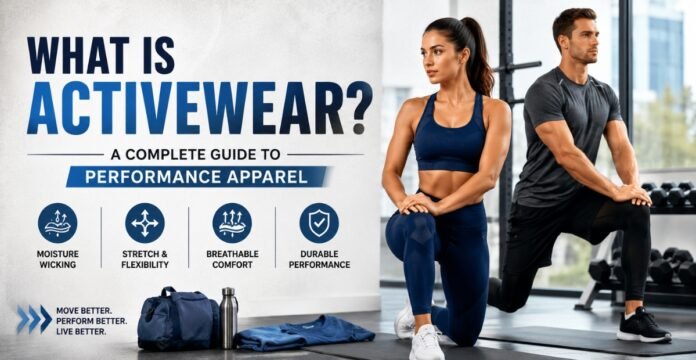
What is activewear are clothes specifically designed to support physically active lifestyles. Typical clothing lacks the consideration for stretch and support while managing the discomfort of restricted movement. When considering what is activewear typically includes, think of all variants of leggings and shorts or joggers, workout tees, sports bras, and jackets. Activewear encompasses all clothes designed for an active life, including clothes meant for yoga, running, lifting, cycling, swimming, hiking, and more. Activewear is best characterized by its philosophy — clothing that moves with the body.
Why Activewear Is Different from Normal Clothing
To fully understand what is activewear, it helps to compare it with regular clothing. A cotton T-shirt may feel soft, but it can become heavy when it holds sweat. Jeans may look good, but they usually do not stretch enough for deep movement. Activewear uses flexible fabric structures, supportive fits, and strong seams for physical activity. A well-made activewear collection may include clothing for different workout styles, body shapes, and weather conditions. So, what is activewear in practical terms? It is clothing built around motion, comfort, and repeated use rather than appearance alone.
How Performance Fabrics Help the Body
Part of the answer to defining activewear involves the understanding of performance fabrics. A lot of activewear fabrics use moisture management systems that transport moisture away from the skin and distribute it across a larger area so it can dry more quickly. Some fabrics use breathable knits that allow moisture vapor and heat to escape. Stretch fibers assist in allowing clothing to expand and contract back to its original size and shape after movement. Durable, smooth, and quick drying fabric is often a blend of polyester and nylon. So, what is activewear without functional fabrics? It is just clothing.
Main Features of Good Activewear
When shoppers ask what is activewear, they should also know which features matter most.
- Moisture control helps move sweat away from the skin.
- Four-way stretch supports movement in several directions.
- Breathable panels release heat during hard exercise.
- Flat or smooth seams can reduce rubbing.
- Strong waistbands and cuffs help clothing stay in place.
- Lightweight construction prevents a heavy feeling.
- Secure pockets hold keys, cards, or a phone.
- Quick-drying fabric makes repeated use easier.
These features explain what is activewear at a product level. Not every item needs every feature, but each feature should match the activity it is made for.
Types of Activewear for Different Activities
There is a wide variety of activewear to meet the needs of different activities. Runners, for example, need tops that are lightweight, shorts that provide support, and garments with secure pockets and reflective details. Weightlifters prefer fitted shirts and stretch shorts and leggings that don’t shift when they do squats. Cyclists need garments with stretch, and activewear made for swimming needs swimwear that is made for the water and made to be stretched (and, of course, will hold up to repeated stretches). Breathing tank tops, Joggers & shorts, and supportive tops may be the choice of those people who train indoors.
Activewear for Yoga and Low-Impact Movement
What is activewear for yoga? It is soft, flexible clothing that supports bending, twisting, balancing, and controlled movement. Yoga leggings should stretch without becoming see-through, while tops should remain in place during forward bends and raised-leg poses. Many people also prefer smooth waistbands, soft seams, and breathable fabrics. A yoga wear collection can include leggings, shorts, sports bras, crop tops, and relaxed pants for different practice styles. In this setting, what is activewear is closely linked with freedom, coverage, softness, and confidence rather than maximum speed or heavy support.
How Activewear Differs from Gym Wear and Athleisure
The question of what activewear is has been made more difficult due to the prevalence of similar terms in the marketing. Gym wear usually refers to clothing designed for working out indoors. Fitness apparel is a more general term for clothing designed to exercise in. Performance wear is a step further and usually contains some sort of feature such as stretch, moisture, temperature, or support. Comfort meets everyday fashion in athleisure, but doesn’t have to be made to withstand strenuous training. Activewear can include aspects of all these categories.
Compression and Support in Activewear
What is activewear with compression? Compression clothing uses a close, elastic fit to hold the garment near the body and create a secure feeling during movement. It may include shirts, leggings, shorts, sleeves, or socks. The pressure level and garment design should suit the intended activity because tighter does not always mean better. A compression wear range can help buyers compare body-hugging styles with regular activewear fits. In this category, what is activewear depends on balance: the garment should feel supportive without restricting breathing or natural movement.
How Activewear Should Fit
Activewear must be properly fitted to serve its function. Activewear should be designed for unhindered movement. Activewear should not be sliding down or rolling down. Activewear should not be pulling or snagging. Activewear should fit securely, but should not pinch and leave marks. Activewear should be fitted, but should not have excessive amounts of fabric to the point that is snagging. Potential buyers of activewear should test the fit the garments by performing various movements such as bending and reaching. Activewear addresses the question of how one is able to move if one is not able to move comfortably.
How to Choose and Care for Activewear
People who know what activewear is have the advantage of making informed purchases. Determine what activity the intended purchase is for, the expected weather, how long the workout will be, and how much support it will provide. Evaluate the construction of the activewear including seams and design features like pockets, and consider how the fabric will be affected. Do not base your purchase on fashionable colors. After the workout, allow the garments to dry as opposed to being sealed in a bag. Follow the care instructions and use a gentle cycle if appropriate.
Conclusion
There are many ways to define activewear. This term likely refers to clothing designed to enhance movement and comfort, while also improving support, sweat management, and self-confidence, for use during physical activity. Activewear contains many lines of clothing, including yoga, gym, and compression clothing, swimwear, running clothing, and even athleisure. The best activewear isn’t always going to be the most technical, most expensive, or most fitted. The best activewear will be clothing that fits your body, matches the activity being performed, and will be comfortable from the start to the finish of the movement.
FAQs
What is activewear used for?
Activewear is used for exercise, sports, gym training, yoga, running, swimming, walking, and other activities that require comfortable movement.
Is activewear the same as sportswear?
Not exactly. Sportswear can mean clothing for a specific sport, while activewear is a wider category that includes exercise, fitness, and movement-based clothing.
Can activewear be worn every day?
Yes. Many activewear pieces can be worn casually, especially joggers, leggings, hoodies, and simple performance shirts, as long as they suit the setting.


