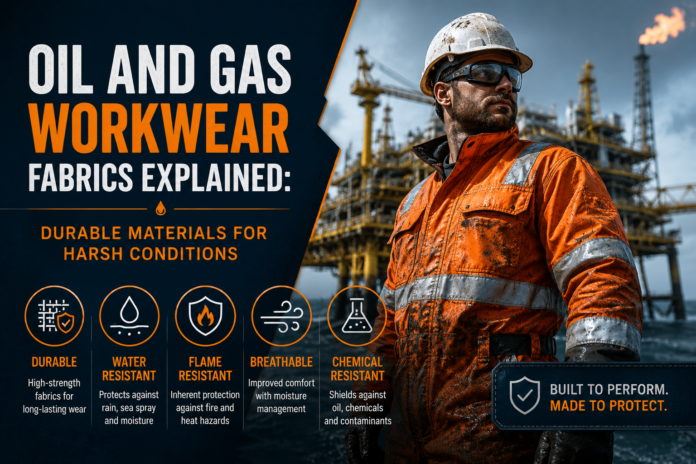
Oil and gas workwear fabrics are not normal clothing materials. They are made for people who work around heat, sparks, oil, dirt, wind, rain, rough surfaces, and long shifts. In this industry, fabric is not only about comfort or style. It is about safety, strength, and daily performance. A worker may climb metal stairs, bend near pipes, carry tools, walk through mud, or work in cold weather for many hours. If the fabric is weak, heavy, too hot, or not protective enough, the worker feels uncomfortable and may also face higher risk. Good oil and gas workwear fabrics help protect the body while still allowing movement. They should feel strong but not stiff, protective but not painful, and durable but still wearable all day. The best choice depends on the work area, weather, safety rules, and job type.
Oil and Gas Workwear Fabrics for Harsh Work Sites
Oil and gas workwear fabrics must handle tough places where normal uniforms can fail quickly. These fabrics are often used in drilling areas, refineries, offshore platforms, pipeline sites, fuel handling zones, and maintenance areas. Workers in these places need clothing that can resist tearing, rubbing, heat exposure, and outdoor weather. Many companies use specialized workwear collections because oil and gas clothing must be planned for both safety and real job movement. A fabric may look strong, but it also needs the right weave, weight, finish, and stitching support. For example, a tightly woven cotton blend can feel breathable, while a treated flame-resistant fabric can add safety in higher-risk zones. Oil and gas workwear fabrics should also keep their shape after many washes because work uniforms are cleaned often. A good fabric should not become weak, loose, or uncomfortable after only a short time.
Flame-Resistant Fabrics: The Most Important Safety Feature
Flame-resistant fabric is one of the most important types of oil and gas workwear fabrics. In oil and gas work, workers may be near heat, sparks, welding tasks, electrical hazards, or flammable materials. Flame-resistant fabric does not mean the clothing can never burn. It means the fabric is designed to slow flame spread and reduce injury risk. Some fabrics are made from naturally flame-resistant fibers, while others are treated with special finishes. Treated fabrics can work well when made properly, but they must be washed and cared for correctly so the protection lasts. The fabric should also cover the body properly because safety depends on both material and garment design. Loose openings, weak seams, or damaged fabric can reduce protection. For workers in high-risk areas, oil and gas workwear fabrics should be chosen according to the hazard level, not only by price or appearance.
Cotton-Rich Blends: Breathable Comfort for Long Shifts
Cotton-rich blends are common in oil and gas workwear fabrics because they feel softer and more breathable than many fully synthetic materials. Cotton helps air move better and can reduce the sticky feeling workers get during long hot shifts. However, pure cotton may shrink, wrinkle, and wear down faster if it is not blended or finished correctly. That is why many workwear fabrics use cotton with polyester, nylon, or special protective fibers. These blends can improve strength, drying speed, and shape retention. Cotton-rich oil and gas workwear fabrics are useful for coveralls, shirts, pants, and jackets where comfort matters as much as protection. For full-body coverage, many companies choose oil and gas safety coveralls because coveralls reduce gaps between upper and lower garments. This gives better coverage during bending, climbing, and working around equipment.
Polyester and Synthetic Blends: Strength, Shape, and Fast Drying
Polyester and other synthetic blends are used in oil and gas workwear fabrics when strength, fast drying, and easy care are important. Polyester can help a garment keep its shape after washing and reduce heavy moisture absorption. This can be useful in wet or humid work areas. However, standard polyester alone is not always the best choice for high-heat or flame-risk zones unless it is specially engineered for safety. That is why fabric selection must match the job risk. Synthetic blends can work well for outer layers, rainwear, high-visibility garments, and lower-risk support tasks. The best oil and gas workwear fabrics often combine comfort fibers with strength fibers so the clothing does not feel too rough. A good fabric should help the worker move, bend, lift, and stay active without feeling trapped. When synthetic fabrics are used, breathability and heat control should still be checked carefully.
Ripstop and Reinforced Fabrics for Tear Resistance
Ripstop fabric is helpful in oil and gas workwear fabrics because it is made to limit tearing. It often has a small grid pattern woven into the material, which helps stop a small tear from spreading quickly. This matters on sites where workers may rub against metal, tools, pipes, ladders, and rough surfaces. Reinforced fabric is also used in high-stress areas such as knees, elbows, shoulders, pockets, and seat panels. Jackets and pants often need extra strength because workers move in many directions and carry equipment. For cold, windy, or exposed work sites, oil and gas safety jackets can use stronger outer fabrics with protective lining or weather-resistant finishes. Oil and gas workwear fabrics should not only survive one hard day. They should stay reliable through repeated use, cleaning, and rough handling.
Waterproof and Weather-Resistant Fabrics for Outdoor Work
Many oil and gas workers face rain, wind, mud, cold air, and changing outdoor conditions. Waterproof and weather-resistant oil and gas workwear fabrics help keep workers dry and focused. Waterproof fabrics stop water from passing through, while water-resistant fabrics only slow water down for a limited time. Breathability is also important because a fully waterproof garment can feel hot if sweat cannot escape. In outdoor oil and gas jobs, wet clothing can make workers uncomfortable, cold, and distracted. Jackets, pants, and coveralls may need coated fabrics, laminated layers, taped seams, or water-repellent finishes. The right choice depends on the job site. Offshore workers may need stronger weather protection than workers in a dry inland area. Oil and gas workwear fabrics should protect from outside moisture while still allowing workers to move naturally.
High-Visibility Fabrics and Reflective Support
Visibility is another major part of oil and gas workwear fabrics, especially in areas with vehicles, machinery, low light, dust, rain, or night shifts. High-visibility fabrics are usually made in bright colors such as orange, yellow, or lime. Reflective tape is often added so workers can be seen when light hits the clothing. The fabric itself must hold bright color after washing because faded workwear becomes less useful over time. High-visibility safety is not only about color. Placement of reflective tape matters too. It should be visible from the front, back, and sides when workers move. Some garments combine flame resistance, weather protection, and high visibility in one design. Oil and gas workwear fabrics used for visibility should also be durable enough for rough work because bright color alone is not enough if the garment tears quickly.
Quick Fabric Checklist for Oil and Gas Workwear
- Choose flame-resistant fabric for heat, spark, or flash-fire risk zones.
- Pick breathable cotton-rich blends for hot weather and long shifts.
- Use ripstop or reinforced fabrics for rough surfaces and heavy movement.
- Select waterproof layers for rain, offshore work, and wet job sites.
- Add high-visibility colors and reflective tape for low-light areas.
- Check fabric weight so the clothing is strong but not too heavy.
- Make sure the fabric can survive frequent industrial washing.
- Avoid weak seams because strong fabric still fails with poor stitching.
- Match every fabric choice with the real hazard of the work area.
- Test comfort because safe clothing must also be wearable every day.
Fabric Weight, GSM, and Daily Comfort
Fabric weight is an important part of oil and gas workwear fabrics because it affects protection, comfort, and movement. GSM means grams per square meter, and it tells how heavy the fabric is. A higher GSM fabric is usually thicker and stronger, but it can also feel hotter. A lower GSM fabric can feel lighter and cooler, but it may not last as long in rough work. The best fabric weight depends on the season, job type, and safety level. Summer workwear may need breathable midweight fabric, while winter or offshore clothing may need heavier fabric with lining. Workers should not feel like the clothing is fighting against their body. If fabric is too heavy, workers may get tired faster. If it is too light, it may tear or fail protection needs. Good oil and gas workwear fabrics balance strength, safety, and comfort instead of focusing on only one thing.
Washing, Care, and Long-Term Fabric Life
Oil and gas workwear fabrics must be easy to care for because these garments get dirty quickly. Oil stains, dust, sweat, mud, and chemical smells can build up after long shifts. Washing must remove dirt without damaging the safety finish. Flame-resistant fabrics need special care because harsh bleach, strong chemicals, or wrong drying methods can reduce performance. Reflective tape can crack or peel if washed badly. Waterproof coatings can also weaken over time if the garment is cleaned with unsuitable detergents. Companies should give workers clear washing instructions so safety clothing lasts longer. Strong fabric is only useful when it is maintained properly. Regular inspection is also important. If a garment has holes, deep cuts, broken zippers, damaged tape, or weak seams, it should be repaired or replaced. Oil and gas workwear fabrics work best when fabric quality, garment care, and workplace checks all work together.
Choosing the Right Fabric for the Right Job
There is no single perfect fabric for every oil and gas worker. Different jobs need different oil and gas workwear fabrics. A welder may need stronger flame-resistant clothing. A pipeline worker may need tear-resistant pants and weather protection. A refinery worker may need coveralls with flame resistance and high visibility. A maintenance worker may need flexible fabric with reinforced knees and pockets. Buyers should first study the work environment, then choose the fabric. Price should not be the first decision because cheap fabric can become expensive if it wears out fast or does not protect well. Good oil and gas workwear fabrics should answer three simple questions: Is it safe for the hazard? Is it strong enough for the job? Is it comfortable enough for long hours? When the answer is yes to all three, the fabric is more likely to perform well in real work.
Conclusion
Oil and gas workwear fabrics are the foundation of safe and practical work clothing. The right fabric can protect workers from heat, sparks, rain, rough surfaces, low visibility, and daily wear. The wrong fabric can feel uncomfortable, wear out early, or fail in harsh conditions. A strong workwear program should include flame-resistant materials, breathable blends, tear-resistant weaves, weather protection, and good washing care. It should also match every garment to the real job site instead of using one fabric for every worker. In the end, oil and gas workwear fabrics should help workers feel protected, comfortable, and ready for long shifts in tough places. Durable materials are not just a clothing choice. They are part of workplace safety, better performance, and long-term value.
FAQs
What are oil and gas workwear fabrics?
Oil and gas workwear fabrics are strong safety materials used for coveralls, jackets, pants, vests, and uniforms in oil and gas jobs. They are made to handle heat, sparks, oil, dirt, rough surfaces, rain, wind, and long working hours.
Which fabric is best for oil and gas workwear?
The best fabric depends on the job risk. Flame-resistant cotton blends are good for heat-risk areas, ripstop fabrics are good for tear resistance, and waterproof fabrics are useful for wet outdoor work. Many garments use blended fabrics for better safety and comfort.
Why is flame-resistant fabric important in oil and gas workwear?
Flame-resistant fabric is important because oil and gas workers may face sparks, heat, flash-fire risk, or electrical hazards. FR fabric helps slow flame spread and can reduce injury risk when used correctly.
Are heavier oil and gas workwear fabrics always better?
No, heavier fabric is not always better. Heavy fabric may be stronger, but it can also feel hot and tiring. The best oil and gas workwear fabrics balance protection, comfort, breathability, and durability for the worker’s real job.