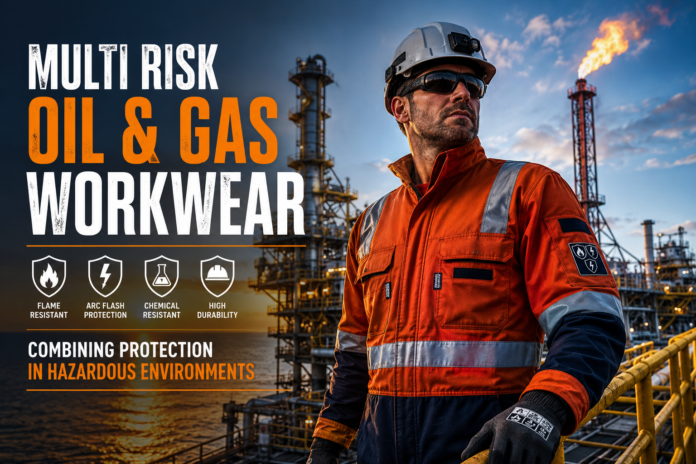
Oil and gas jobs are not simple, clean, or low-risk jobs. Workers may face heat, sparks, mud, rain, oil, chemicals, moving machines, sharp edges, and low-light areas in the same shift. This is why multi risk oil and gas workwear is important. It is not just normal clothing with a strong look. It is protective clothing made to help reduce several jobsite risks at once. A worker may need flame-resistant fabric, high visibility panels, weather protection, strong seams, practical pockets, and comfortable movement in one garment. Good multi risk oil and gas workwear should help the worker stay safer without making the job harder. It should also be selected after checking the real hazards of the site, because no single garment protects against every danger. OSHA explains that PPE should be used when other controls cannot fully protect workers, and employers must make sure it is used properly.
What Is Multi Risk Oil and Gas Workwear?
Multi risk oil and gas workwear means protective work clothing designed to handle more than one workplace hazard. In oil and gas work, one risk rarely comes alone. A worker may be near flammable vapors, wet surfaces, moving vehicles, rough metal, poor weather, and chemical splashes during the same day. That is why this clothing often combines flame resistance, high visibility, durable fabric, reinforced stitching, water resistance, oil resistance, and practical coverage. The goal is not only to protect the body but also to support movement, comfort, and daily job performance. For example, a coverall may protect the arms, legs, and torso, while reflective tape helps other workers see the person in darker areas. Good multi risk oil and gas workwear should feel strong but not too heavy, because tired workers may move slower and become less alert. For general product planning, companies often start by reviewing a wider workwear collection before choosing specific garments for oil, gas, refinery, or field operations.
Why Oil and Gas Sites Need Layered Protection
Oil and gas sites need layered protection because hazards can change quickly. A normal day can become dangerous when gas leaks, sparks, high pressure equipment, or sudden weather changes appear. OSHA notes that oil and gas workers can face fire and explosion risks from flammable vapors or gases, which is one reason flame-resistant clothing is often discussed for drilling, servicing, and production-related work. Multi risk oil and gas workwear helps because it does not focus on only one problem. Instead, it supports different safety needs at the same time. Fire protection matters near flash fire risks. High visibility matters around trucks and machines. Strong fabric matters around pipes, tools, and rough surfaces. Weather protection matters when crews work outside for long hours. Comfort also matters because workers may wear the same clothing for a full shift. If clothing is too hot, stiff, or poorly fitted, workers may unzip it, roll sleeves, or wear it incorrectly. That reduces protection. The best multi risk oil and gas workwear balances safety, comfort, and real job movement.
Main Hazards This Workwear Helps Manage
Multi risk oil and gas workwear is useful because oil and gas workers may face several hazards in one place. These hazards include flash fire, heat, sparks, light chemical contact, oil stains, rain, wind, low visibility, abrasion, and general site dirt. Some jobs also involve kneeling, climbing, bending, lifting, and working near sharp or rough surfaces. A simple uniform may look professional, but it may not give enough protection for hazardous work. A proper garment should cover the body well, stay secure while moving, and not create extra danger by catching on equipment. Flame-resistant clothing is important in certain oil and gas operations because flash fires can happen even when safety systems are in place; OSHA has stated that failure to provide and use flame-resistant clothing can be cited under PPE requirements in certain oil and gas operations. This is why multi risk oil and gas workwear should be selected carefully, not only by color or price. The clothing must match the job, the environment, and the level of exposure.
Coveralls for Full Body Protection
Coveralls are one of the most useful choices for oil and gas teams because they give full body coverage in one piece. A good coverall can protect the arms, legs, chest, and back while reducing gaps between the shirt and pants. This is helpful in dusty, oily, windy, or high-risk areas where loose layers may move out of place. Many companies prefer oil and gas safety coveralls for crews who need simple dressing, strong coverage, and a professional site look. Multi risk oil and gas workwear in coverall form should have secure closures, strong seams, comfortable cuffs, and enough room for bending and reaching. It should not be so loose that it catches on tools, and it should not be so tight that it pulls at the shoulders or knees. Coveralls are especially useful for workers who move between outdoor zones, workshop areas, and operational sites. When selected correctly, they can support safety and reduce the need for mismatched clothing layers.
Jackets and Outer Layers for Changing Weather
Oil and gas workers often face changing weather, especially on outdoor sites, drilling areas, yards, loading points, and field operations. A worker may start the morning in cold wind, face rain at midday, and deal with heat later in the day. This is why jackets and outer layers are important parts of multi risk oil and gas workwear. A protective jacket should help block wind, light rain, dirt, and surface wear while still allowing the worker to move freely. The outer layer should not hide important reflective tape or stop the flame-resistant function of inner garments when FR protection is needed. Companies may use oil and gas safety jackets when workers need added protection over shirts, coveralls, or base layers. A good jacket should have practical pockets, secure fasteners, strong fabric, and comfortable sleeves. It should also be easy to wear over other protective clothing without becoming bulky. The best outer layer supports protection without slowing the worker down.
Important Features to Check Before Buying
Multi risk oil and gas workwear should be checked feature by feature before buying, because small details can affect safety and comfort. The fabric should match the hazard level, the fit should allow movement, and the stitching should be strong enough for daily use. Reflective tape should be placed where workers can be seen from different angles. Closures should stay secure, but they should also be easy to use with gloves. Pockets should be useful, but they should not become bulky or unsafe around machinery. Labels and care instructions matter too, because protective clothing can lose performance if washed or repaired incorrectly. NIOSH says protective clothing should be used as part of a full PPE program that includes hazard assessment and training, not as a stand-alone safety answer. The best multi risk oil and gas workwear is not always the heaviest garment. It is the garment that gives the right protection, fits the real job, and can be worn correctly for long shifts.
One Quick Buying Checklist
Before choosing multi risk oil and gas workwear, check these points carefully:
- Match the clothing to the real job hazard, not only the job title.
- Choose flame-resistant clothing where flash fire risk is present.
- Use high visibility details where vehicles or machines are moving.
- Select strong fabric for rough surfaces, tools, and daily abrasion.
- Make sure the fit allows bending, climbing, lifting, and reaching.
- Check that sleeves, cuffs, zippers, and closures stay secure.
- Avoid clothing that is too tight, too loose, or too heavy.
- Read care instructions before washing or repairing protective garments.
- Train workers on how to wear the clothing correctly.
- Replace damaged garments before small tears become serious safety problems.
Comfort Matters More Than Many Buyers Think
Comfort is not a luxury in oil and gas workwear. It is part of safe daily use. If clothing feels too hot, stiff, rough, or heavy, workers may wear it incorrectly. They may leave the front open, remove layers, roll sleeves, or avoid using the garment for the full shift. That can reduce protection. Multi risk oil and gas workwear should allow workers to bend, climb, kneel, stretch, and walk without fighting the fabric. Breathable fabric, good pattern design, flexible panels, correct sizing, and smart pocket placement can make a big difference. A comfortable garment also helps workers stay focused during long hours. When workers are less distracted by discomfort, they can pay more attention to tools, signals, machines, and team communication. This is why buyers should test fit and movement before placing larger orders. The right multi risk oil and gas workwear protects the worker while still feeling practical enough for daily use.
Pants and Vests for Job-Specific Needs
Not every worker needs the same clothing setup. Some need full coveralls, while others need separate pants, jackets, or vests depending on the job. Pants are useful when workers need strong lower-body protection with flexible upper layers. Vests are helpful when visibility is the main need, especially for supervisors, visitors, or workers moving around traffic zones. However, vests should not replace proper protective clothing when fire, chemical, or abrasion risks are present. For example, oil and gas safety pants can support workers who need durable lower-body coverage while keeping their upper-layer options flexible. Multi risk oil and gas workwear should be chosen by task, not only by department. A welder, loader, inspector, mechanic, and field technician may all need different garment combinations. The best setup is the one that protects the worker’s real exposure while keeping the clothing easy to wear correctly.
Common Mistakes Buyers Should Avoid
One common mistake is buying oil and gas clothing only because it looks tough. Strong appearance does not always mean proper protection. Another mistake is using one garment for every job without checking the hazard level. Multi risk oil and gas workwear should be matched to fire risk, visibility needs, weather, chemical exposure, and movement requirements. Buyers should also avoid choosing the cheapest option without checking fabric quality, stitching, reflective placement, and care instructions. Poor sizing is another serious problem. If the clothing is too tight, it can restrict movement. If it is too loose, it may catch on tools or equipment. Another mistake is ignoring worker feedback. Workers know where fabric pulls, where pockets fail, and where garments become uncomfortable during long shifts. A smart buyer listens to that feedback before repeating an order. Good multi risk oil and gas workwear is not just bought once. It is reviewed, tested, improved, and replaced when needed.
Conclusion
Multi risk oil and gas workwear is important because oil and gas workers face more than one hazard during daily work. They may need protection from fire risk, low visibility, rough surfaces, weather, dirt, oil, and long working hours at the same time. The best clothing is not only strong; it is also practical, comfortable, well-fitted, and matched to the real job. Companies should choose garments after checking the worksite, the task, the weather, and the worker’s movement needs. Coveralls, jackets, pants, and vests can all be useful when selected for the right purpose. Multi risk oil and gas workwear should also be supported by training, correct care, and regular replacement of damaged garments. In the end, the right workwear helps workers stay protected, visible, and confident in hazardous environments.
FAQs
What is multi risk oil and gas workwear?
Multi risk oil and gas workwear is protective clothing made to help manage more than one hazard, such as flame risk, low visibility, rough surfaces, weather, and workplace dirt. It is used in oil and gas jobs where workers may face different risks during the same shift.
Is flame-resistant clothing always needed in oil and gas work?
Flame-resistant clothing is needed when there is a real flash fire or flame hazard. It should be chosen after a proper hazard assessment. Not every task has the same risk, so employers should match the clothing to the jobsite and task.
Are coveralls better than separate pants and jackets?
Coveralls are often better for full body coverage because they reduce gaps between clothing pieces. However, separate pants and jackets can be better when workers need flexible layering. The best choice depends on the job, weather, and hazard level.
How should companies choose the right oil and gas workwear?
Companies should check the site hazards, job tasks, weather, worker movement, fabric performance, fit, visibility, and care instructions. Good multi risk oil and gas workwear should protect workers while still being comfortable enough to wear correctly all day.