
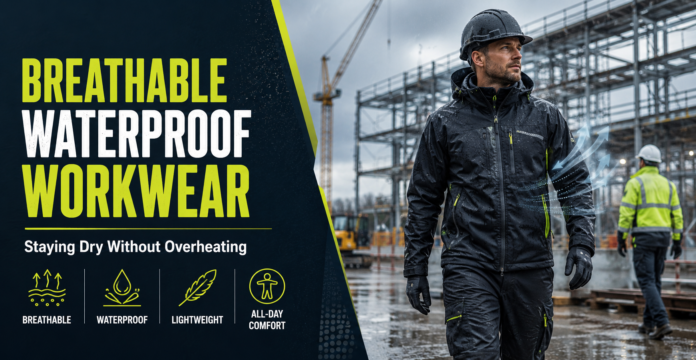
Breathable waterproof workwear is protective clothing designed to block rain, spray, and wet conditions while allowing body heat and sweat vapor to escape. This matters because many workers do not just stand in the rain; they bend, lift, walk, climb, carry tools, and work for long hours. If clothing keeps water out but traps heat inside, the worker may feel sweaty, tired, heavy, and uncomfortable. Good breathable waterproof workwear solves both problems at the same time. It helps the outer layer resist water while the inner side stays more comfortable during movement. This type of workwear is useful for construction teams, road workers, warehouse staff, outdoor maintenance crews, delivery workers, farming teams, and industrial workers who face changing weather. The main goal is simple: stay dry from outside rain without becoming wet from your own sweat inside the clothing.
What Is Breathable Waterproof Workwear?
Breathable waterproof workwear is made with fabrics, coatings, membranes, seams, and design features that protect against rain while reducing heat buildup. Waterproof means the clothing resists water from entering through the fabric. Breathable means moisture vapor from sweat can move away from the body instead of staying trapped under the jacket or pants. Both features must work together because a fully waterproof garment with poor breathability can feel like wearing a plastic bag during active work. Breathable waterproof workwear is often used in jackets, trousers, coveralls, high-visibility outerwear, and layered uniforms. It is especially helpful when workers move between outdoor rain, indoor spaces, vehicles, and heated work areas. The best option is not always the thickest garment. A good design should feel protective, flexible, and wearable for a full shift. Breathable waterproof workwear should support safety, comfort, and productivity instead of making the worker choose only one.
Why Normal Waterproof Clothing Can Cause Overheating
Normal waterproof clothing often focuses only on stopping rain, but it may not release body heat properly. When a worker wears a low-breathability raincoat during heavy activity, sweat collects inside the garment. After some time, the worker may feel damp even though rain has not entered from outside. This is why choosing professional workwear matters when clothing is needed for real job conditions instead of casual rain protection. Breathable waterproof workwear helps reduce this problem by allowing sweat vapor to move outward. Overheating is not just uncomfortable; it can reduce focus, slow movement, and make workers remove protective layers at the wrong time. When workers remove jackets because they feel too hot, they lose protection against rain, wind, and low visibility. A better garment helps them keep protection on for longer, which improves both comfort and safety during wet-weather tasks.
How Breathable Waterproof Fabric Works
Breathable waterproof workwear usually works through a smart fabric system. The outer face fabric helps shed rain, the middle layer or coating blocks liquid water, and the inner side helps manage sweat vapor. Water drops are larger than sweat vapor molecules, so certain membranes can stop rain while allowing vapor to escape. Some garments also use ventilation points, mesh linings, storm flaps, adjustable cuffs, and underarm vents to support airflow. Breathable waterproof workwear performs best when the whole garment is designed properly, not just the fabric. If seams are weak, zippers leak, or the fit is too tight, comfort and protection can suffer. The wearer also needs the right base layer under the garment. A cotton shirt may hold sweat, while a moisture-wicking shirt can help move dampness away from the skin. This is why fabric, garment construction, and layering all work together.
Where Breathable Waterproof Workwear Is Needed Most
Breathable waterproof workwear is most useful in jobs where rain, wind, movement, and long hours happen together. Road workers, construction teams, outdoor repair crews, delivery teams, security staff, and utility workers often need waterproof protection without heat stress. In these jobs, workers may start the morning in cold rain, become warm during physical tasks, and then cool down again during breaks. A strong waterproof category such as waterproof workwear is useful because it supports different clothing needs for jackets, pants, and weather-ready uniforms. Breathable waterproof workwear also helps workers who must stay visible in poor weather. Rain, fog, low light, and moving vehicles can make visibility harder, so waterproof and high-visibility features often work together. The right clothing should match the actual job environment, not just the weather forecast.
Jackets, Pants, and Layered Protection
A breathable waterproof workwear system usually includes more than one garment. A waterproof jacket protects the upper body, shoulders, arms, and core from rain. Waterproof pants protect the legs when workers kneel, walk through wet areas, or work around mud and spray. A complete system is stronger than a single rain jacket because water can still reach the lower body if pants are not protected. For upper-body protection, waterproof workwear jackets are often the first choice because they are easy to layer over uniforms and base layers. Breathable waterproof workwear should also allow movement around the shoulders, elbows, knees, and waist. If the clothing is too stiff, workers may avoid wearing it correctly. Good design includes practical pockets, adjustable hoods, storm cuffs, secure closures, and enough room for safe movement without looking loose or oversized.
Key Buying Points for Breathable Waterproof Workwear
When choosing breathable waterproof workwear, check the full garment instead of judging only by appearance.
- Choose fabric that blocks rain but still allows sweat vapor to escape.
- Look for sealed or taped seams because water can enter through stitch holes.
- Select adjustable cuffs, hems, and hoods to control rain entry and airflow.
- Choose the right fit so workers can move, bend, and layer comfortably.
- Pick high-visibility details when workers operate near traffic, machinery, or low-light areas.
- Check pocket placement because workwear should protect tools and support daily tasks.
- Avoid very heavy garments for high-movement jobs unless extra durability is required.
- Match the garment to the season, job role, and level of physical activity.
These points make breathable waterproof workwear easier to compare. The best choice is not always the most expensive one. The best choice is the garment that keeps workers dry, reduces overheating, supports movement, and fits the real work environment.
Fit, Visibility, and Daily Comfort
Fit plays a major role in how breathable waterproof workwear performs during a long shift. If the jacket is too tight, air cannot move well and the worker may feel hot quickly. If it is too loose, rain and wind may enter through gaps at the cuffs, hem, or neck. A balanced fit gives enough room for a base layer and movement without creating extra fabric that catches on tools or equipment. Workers in wet and low-light areas may also need visibility features, so a high visible waterproof jacket can be useful when safety and rain protection are both important. Breathable waterproof workwear should feel comfortable while standing, walking, lifting, driving, and bending. Comfort is not a luxury in work clothing. It helps workers stay focused, follow safety rules, and wear protective garments for the full working day.
Breathable Waterproof vs Heavy Rainwear
Heavy rainwear can be useful in extreme wet conditions, but it is not always the best choice for active workers. Thick, fully sealed rainwear may block heavy rain well, yet it can become hot and uncomfortable during movement. Breathable waterproof workwear is better for jobs where workers need both protection and body temperature control. For example, a worker walking around a site all day needs clothing that handles sweat better than a worker standing still for a short time. Breathable waterproof workwear offers a practical balance between dryness and comfort. However, the right choice depends on the risk level. For heavy storms, pressure washing, marine work, or long exposure to water, stronger waterproof protection may be needed. For mixed weather and active work, breathable waterproof workwear is usually easier to wear for longer without heat buildup.
Care and Maintenance for Longer Performance
Breathable waterproof workwear needs proper care to keep working well. Dirt, oil, dust, and sweat can block the fabric surface and reduce breathability over time. Workers should follow the care label because harsh washing, strong detergents, and high heat can damage coatings or membranes. If the outer fabric stops shedding water, the garment may feel heavier and less breathable because the surface becomes soaked. This is sometimes called wetting out. Cleaning the garment correctly and restoring water-repellent performance when needed can help extend its life. Breathable waterproof workwear should also be dried properly before storage. Storing it wet may cause odor, fabric damage, or reduced comfort. Teams should inspect seams, zippers, cuffs, and reflective details regularly. A garment that looks fine from far away may still have weak points that affect waterproof protection.
Common Mistakes When Choosing Workwear
One common mistake is buying waterproof workwear without checking breathability. Another mistake is choosing very thick clothing because it looks stronger, even when the job requires movement and airflow. Some buyers also choose one garment for every worker, but different roles may need different features. A person driving, lifting, climbing, or standing outside all day will not have the same comfort needs. Breathable waterproof workwear should match the job, weather, movement level, and safety needs. Another mistake is ignoring pants. Many workers protect the upper body but leave legs exposed to rain and mud. Poor layering is also a problem. If the layer under the jacket holds sweat, the worker may still feel wet. Good breathable waterproof workwear works best with moisture-managing base layers, proper fit, and practical garment design.
Conclusion
Breathable waterproof workwear is better for many active jobs because it protects workers from rain while helping reduce sweat buildup and overheating. It is not only about staying dry from the weather. It is also about staying comfortable from the inside during real work. The right garment should block rain, release body heat, allow movement, support visibility when needed, and last through daily use. Breathable waterproof workwear is especially useful for workers who move often, work long shifts, and face changing outdoor conditions. When choosing between simple rainwear and breathable waterproof workwear, think about the worker’s full day, not just the rain. If the clothing keeps people dry, cool, safe, and willing to wear it properly, it is the better long-term choice.
FAQs
What is breathable waterproof workwear?
Breathable waterproof workwear is protective clothing that blocks rain while allowing sweat vapor and body heat to escape. It helps workers stay dry, cooler, and more comfortable during active outdoor work.
Is breathable waterproof workwear better than normal rainwear?
Breathable waterproof workwear is usually better for active jobs because it reduces overheating. Normal rainwear may block rain well, but it can trap sweat during long or physical work.
Who needs breathable waterproof workwear?
Construction workers, road crews, delivery teams, maintenance workers, utility staff, and outdoor industrial workers often need breathable waterproof workwear for wet and changing weather conditions.
How do I choose the best breathable waterproof workwear?
Choose breathable waterproof workwear with sealed seams, water-resistant fabric, good ventilation, adjustable cuffs, a comfortable fit, and visibility features if the worker is exposed to traffic or low light.


