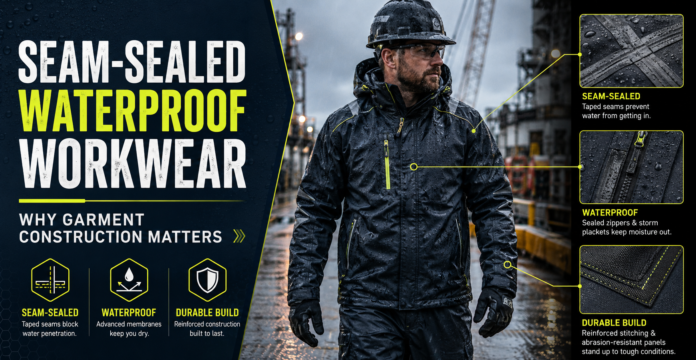
Waterproof clothing is not only about the outer fabric. A jacket or pant can use a strong waterproof material, but if the stitching holes are open, water can still enter. This is why seam-sealed waterproof workwear is important for people who work outdoors, on construction sites, in transport, in warehouses, or in wet industrial areas. When workers bend, lift, carry, or walk through rain, water often reaches the seams first because seams are the places where two fabric panels are joined together. If those seams are not sealed properly, the garment may leak even if the fabric looks strong. Seam-sealed waterproof workwear helps close those tiny needle holes so rain does not easily pass through. It gives workers better protection, more comfort, and more confidence during long wet shifts. For any business buying work clothing, garment construction matters as much as fabric quality because poor stitching, weak tape, or badly placed seams can reduce the real performance of waterproof apparel.
What Seam-Sealed Waterproof Workwear Means
Seam-sealed waterproof workwear means the stitched areas of the garment are covered or sealed with special waterproof tape or sealing technology. When a jacket, trouser, or coverall is sewn, the needle creates tiny holes in the fabric. These holes may look very small, but rainwater can pass through them, especially during heavy rain or long exposure. Seam sealing covers these holes from the inside, making the garment much better at blocking water. This is why seam-sealed waterproof workwear is different from basic water-resistant clothing. Water-resistant clothing may handle light rain for a short time, but seam-sealed waterproof workwear is designed for stronger protection when workers face wet weather for longer hours. The idea is simple: the fabric blocks water, and the sealed seams stop water from entering through the stitching. Both parts must work together. Without sealed seams, even a good waterproof fabric may fail in real working conditions.
Why Garment Construction Matters in Wet Work Conditions
Garment construction decides how well waterproof workwear performs after the fabric is cut, stitched, taped, and finished. A good design places seams carefully so water does not collect in weak areas. A poor design may put seams in places where rain hits directly, such as shoulders, knees, elbows, or seat areas. In wet work conditions, these high-stress areas need extra care. Seam-sealed waterproof workwear is built to protect workers where leaks usually happen first. For example, shoulder seams on jackets need strong sealing because rain runs down from the top. Knee seams on waterproof pants need strength because workers bend and kneel often. Businesses that buy general workwear should look beyond the outer look and check how the garment is made from the inside. Strong construction helps the clothing last longer, reduces discomfort, and supports daily movement. This is why seam-sealed waterproof workwear is not just a rainwear feature. It is a practical safety and comfort feature for workers.
Seam-Sealed Waterproof Workwear vs Normal Waterproof Clothing
Seam-sealed waterproof workwear gives better protection than normal waterproof clothing because it focuses on the weak points of the garment. Normal waterproof clothing may use a coated or laminated fabric, but the seams may not be fully protected. In light rain, this may not be a big problem. However, during heavy rain, long outdoor work, or repeated movement, water can push through the stitching lines. Seam-sealed waterproof workwear solves this problem by closing the seams with tape or sealing methods. This makes the garment more reliable for people who cannot stop working just because the weather changes. Normal waterproof clothing may be fine for short walks, casual use, or occasional rain. Seam-sealed waterproof workwear is better for workers who need steady protection during active tasks. It is also more useful when garments are worn with tools, helmets, gloves, boots, or other safety items. The better the construction, the better the worker can stay dry and focused.
Main Benefits of Seam-Sealed Waterproof Workwear
Seam-sealed waterproof workwear gives several clear benefits for outdoor and industrial workers.
- It helps stop rainwater from entering through stitched areas.
- It keeps workers more comfortable during long wet shifts.
- It protects inner clothing from getting soaked.
- It reduces the chance of cold discomfort caused by wet garments.
- It helps workers stay focused instead of worrying about leaks.
- It improves the real performance of waterproof jackets and pants.
- It supports better durability when seams are properly taped and finished.
- It gives businesses better value because the garment performs for real work use.
These benefits matter because wet clothing can make work harder, slower, and less comfortable. Seam-sealed waterproof workwear helps workers stay dry from the outside while still allowing the garment to support movement. It is especially useful for jobs where workers spend many hours in rain, damp air, mud, or spray. When the seams are sealed well, the whole garment works as one protective system instead of only depending on the outer fabric.
Where Seam Sealing Is Most Important on Jackets
In waterproof jackets, seam sealing is most important on the shoulders, hood, sleeves, chest, and side seams. These areas face direct rain and repeated movement. The shoulder area is especially important because rain naturally lands there first and then runs downward. If the shoulder seams are not sealed, water can slowly enter and make the inner clothing wet. Seam-sealed waterproof workwear jackets should also have sealed hood seams because the hood protects the head and neck area. Sleeve seams matter because workers lift, reach, and carry items throughout the day. When looking at waterproof workwear jackets, buyers should check whether the garment uses sealed seams in these important places. A jacket may look strong from the outside, but its inside construction tells the real story. Good seam sealing helps the jacket handle rain, wind-driven moisture, and daily work movement much better.
Why Waterproof Pants Also Need Sealed Seams
Waterproof pants need sealed seams because legs face mud, splashes, rain runoff, and repeated bending. Many workers think jackets need the most waterproof protection, but pants are also exposed to wet surfaces. Workers may kneel, squat, climb, or sit on damp ground. If the seams around the knees, seat, inner legs, or side panels are not sealed, water can enter quickly. Seam-sealed waterproof workwear pants are important for jobs where lower-body movement is constant. Poorly sealed pants may become uncomfortable after only a short time in wet weather. Good construction helps protect the worker’s legs while still allowing normal movement. Buyers checking waterproof workwear pants should look for practical design, strong seam areas, and construction made for active work. Seam-sealed waterproof workwear is more reliable when both the jacket and pants are built with the same level of protection. Full-body dryness depends on the whole outfit, not just one garment.
Breathability Still Matters in Waterproof Workwear
Seam-sealed waterproof workwear should protect against rain, but it should also feel comfortable during movement. If a garment blocks rain but traps too much body heat, workers may sweat heavily inside. This can make the clothing feel wet even when rain has not entered. Breathability helps moisture vapor move away from the body. This is why good waterproof workwear needs a balance between waterproof protection and comfort. Sealed seams improve water resistance, but the fabric, lining, vents, fit, and design also affect comfort. Workers doing hard physical jobs need clothing that protects them without making them feel trapped. Seam-sealed waterproof workwear should allow enough space for movement and layering. It should not be too tight, because tight clothing can limit airflow and pull stress onto seams. It should also not be too loose, because loose clothing can catch on tools or equipment. A balanced fit helps the garment work better in real conditions.
How to Check the Quality of Seam-Sealed Waterproof Workwear
A simple way to check seam-sealed waterproof workwear is to look inside the garment. The seam tape should sit flat over the stitching lines. It should not be peeling, wrinkled, cracked, or lifting at the edges. The tape should cover the seam properly without gaps. Good seam sealing feels neat and secure. Poor seam sealing often looks uneven or weak, especially around curved areas like hoods, underarms, elbows, knees, and crotch seams. Buyers should also check whether the garment uses full seam sealing or only critical seam sealing. Fully seam-sealed waterproof workwear covers all major seams, while critically seam-sealed garments protect only the most exposed areas. Both can be useful, but full seam sealing usually gives better rain protection. It is also important to check zippers, storm flaps, cuffs, hems, and pocket openings because water can enter from these areas too. A good waterproof garment is built carefully from top to bottom.
Best Uses for Seam-Sealed Waterproof Workwear
Seam-sealed waterproof workwear is useful for people who work in rain, wet ground, damp air, or spray-heavy conditions. It is suitable for construction workers, road workers, warehouse staff, outdoor maintenance teams, delivery workers, farming teams, logistics workers, and industrial employees. It is also helpful in low-light conditions when combined with high-visibility features. For example, a high visible waterproof jacket can support both rain protection and visibility when workers are near roads, vehicles, loading areas, or outdoor job sites. Seam-sealed waterproof workwear is especially valuable when the job cannot stop during bad weather. In these conditions, staying dry is not only about comfort. It can also help workers stay alert, move better, and complete tasks with fewer distractions. The right garment construction helps protect workers from rain while still supporting safety, movement, and professional appearance.
Conclusion
Seam-sealed waterproof workwear is better for wet job conditions because it protects the weakest parts of the garment: the seams. Waterproof fabric is important, but it cannot perform properly if water enters through stitching holes. Good construction, strong tape, smart seam placement, reliable zippers, and a practical fit all work together to keep workers dry. Seam-sealed waterproof workwear is especially useful for outdoor teams, construction sites, road work, logistics, maintenance, and any job where rain and moisture are common. For buyers, the best choice is not always the garment that looks the thickest or heaviest. The better choice is the garment that is built correctly from the inside and outside. When a company chooses seam-sealed waterproof workwear, it gives workers better comfort, better protection, and better confidence during wet working days.
FAQs
What is seam-sealed waterproof workwear?
Seam-sealed waterproof workwear is protective clothing where the stitched seams are covered with waterproof tape or sealing material. This helps stop rainwater from entering through tiny needle holes made during sewing.
Is seam-sealed waterproof workwear better than water-resistant workwear?
Yes, seam-sealed waterproof workwear is usually better for heavy rain and long wet shifts. Water-resistant workwear may handle light moisture, but it may leak faster when rain is strong or constant.
Do waterproof jackets and pants both need sealed seams?
Yes, both jackets and pants need sealed seams for better full-body protection. Jackets face direct rain from above, while pants face splashes, wet surfaces, kneeling, and lower-body movement.
How can I tell if waterproof workwear has good seam sealing?
Look inside the garment and check whether the seam tape is flat, smooth, and fully covering the stitching. Good tape should not peel, crack, wrinkle, or lift at the edges.