Every motorcyclist has had the unfortunate experience of being caught in a rainstorm. When the weather changes like this, high quality rain gear is a necessity. Protecting motorcyclists from the elements has come a long way in rain gear from simple plastic ponchos. Modern rain gear is comfortable, and safe, and will keep the rider dry.
Manufacturing rain gear for motorcyclists is a blend of complicated and advanced trapping science, construction, and of course testing. All of these aspects help gear perform in the most severe atmospheric conditions. Understanding the gear that helps you stay dry and the construction of that gear is essential. This guide will help the reader understand the technologies and the elements that go into the construction of modern rain gear for motorcyclists.
The Evolution of Motorcycle Rainwear Manufacturing
Motorcycle rain suits of the past offer little protection from the elements and are essentially just heavy bags of PVC. Early PVC rain suits were fully water proof but were not comfortable, and left the rider sweaty. Rain gear for modern motorcyclists solves these problems of the past.
The development of comfortable rain gear has been the result of the advancement of technology and the feedback of the users. Modern rain suits are significantly more comfortable than their predecessors and are easier to store. Modern construction techniques have enabled rain suits to become fully waterproof and fully breathable. The advancement of rain gear for motorcyclists shows no sign of slowing down. Modern techniques in construction have begun incorporating durable materials along with smart textiles and sustainable choices.
Key Materials Used to Manufacture Motorcycle Rainwear
To create quality rainwear, the right combination of materials must be utilized. Motorcycle rainwear must combine waterproof capability with breathability and durability.
Polyurethane (PU) Coated Fabrics: In the manufacturing of motorcycle rainwear, this layer is typically a thin coating of Polyurethane on a fabric of Nylon or polyester. This layer of cost-effective flexible fabric provides excellent water resistance.
Gore-Tex and Similar Membranes: Expanded polytetrafluoroethylene (ePTFE) air gap membranes, like Gore-Tex, are some of the best materials on the market. Membranes of this type allow breathability, and the passage of moisture vapor, while remaining waterproof. This material is one of the major advancements in motorcycle rainwear manufacturing because of this ability and advancement in technology.
Thermoplastic Polyurethane (TPU): This coating provides excellent abrasion resistance and durability which is a key component in motorcycle rainwear. Fabrics of this type are subjected to repeated folding and the effects of long exposure to the elements.
Nylon and Polyester Bases: Strength, weight, and drying time are all very important to the base fabric of rainwear. Nylon and polyester are the two industry standards, and the higher denier rating of these fabrics, the better.
DWR Coatings: DWR treatments are coating that aid in the beading effect of water on the surface. These treatments are important in motorcycle rainwear because they help maintain the integrity and lifespan of waterproof membranes.
Technologies for Waterproofing in the Manufacturing of Motorcycle Rainwear.
Rainwear for motorcycles uses different technologies to waterproof clothing. Each technology has its own uses.
Coated Fabrics: These fabrics have a waterproof coating at the surface of the fabric and are the most cost efficient in regards to manufacturing motorcycle rainwear. These fabrics work best for entry and mid range motorcycle rainwear.
Laminated Fabrics: These fabrics bond a waterproof membrane to the base fabric. Gore-Tex and eVent are high quality examples of waterproof membranes that are completely waterproof, and, are better in terms of breathability. Fabrics with membranes are more costly, but, are the best fabrics for rainwear.
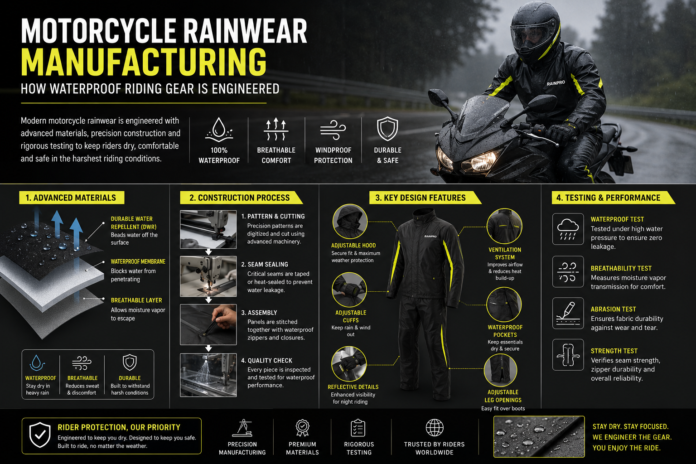
Seam Sealing: Seams are where the most water can penetrate a garment and the sealing of a seam is a critical aspect of rainwear manufacturing. Tape sealing, welded seams, and sealant of seams are all examples of ways to stop seepage of water. Quality rainwear will have seams and vents sealed along with zippers.
Waterproof Zippers: Zippers will make or break the waterproofing of a garment. Storm flapped zippers are sealed and AquaGuard zippers and those similar are sealed along the flaps. These are the best forms of waterproofing in a garment.
Breathability in Motorcycle Rainwear
Making motorcycle rainwear breathable is difficult and separates budget and premium options. When a rider heats up and sweats, that moisture needs to escape. If the rainwear isn’t breathable, the moisture builds up, and the discomfort is nearly the same as actually getting wet from the rain.
Manufacturers try to solve this problem in different ways. Some membranes are made to block liquid water while still letting water vapor transport. There is also motorcycle rainwear that has pit zips or back and chest vents so the rider can manually adjust how much airflow goes in.
The best motorcycle rainwear makes it possible for manufacturers to keep the rain out while allowing moisture to escape. This system takes a lot of engineering and a manufacturer can claim a product’s breathability and waterproofness by measuring the water column and the grams of moisture that can pass through in a day.
Durability in Motorcycle Rainwear
The durability of motorcycle rainwear is especially important due to the combination of elements and exposures motorcycle rainwear must endure. Certain critical design factors in rainwear manufacturing address durability.
Resistance to Abrasion: Surfaces exposed to maximum friction like the shoulder and knee are reinforced in motorcycle rainwear. High abrasion resistant fabrics are a must.
Resistance to UV Sunlight: Motorcycle rainwear must endure a prolonged exposure to sunlight which degrades the material of rainwear. The incorporation of UV stabilizers prevents the breakdown of material and extends the life of the rainwear.
Packing Durability: Motorcycle rainwear is typically packed into a small space and often folded and compressed. The materials used are those which retain their integrity after repeated folding and compression.
Durability of the Seam: Seams are the weakest link in the durability of motorcycle rainwear. The best rainwear is constructed with strong threads, reinforced stitching, and sealed seams to sustain the greatest amount of stress and movement.
Key Features of Premium Motorcycle Rainwear Manufacturing
When evaluating motorcycle rainwear manufacturing, these are the essential features that distinguish premium products from basic options:
- High waterproof rating (10,000mm+ water column) for extreme weather protection
- Excellent breathability (10,000g/m²/24hrs+) to prevent internal condensation
- Fully taped or welded seams for complete water-tight integrity
- Adjustable cuffs, collars, and hems for a customized, weather-sealed fit
- Reflective elements for enhanced visibility in low-light, wet conditions
These features represent the benchmark of professional motorcycle rainwear manufacturing, ensuring riders stay dry, comfortable, and safe in all weather conditions.
The Process of Manufacturing Motorcycle Rainwear
Having knowledge of the manufacturing process is advantageous for motorcycle riders. The first step is deciding on the materials. At this stage, the manufacturers decide which base fabrics, waterproof membranes or coatings, and fasteners to utilize. Manufacturing of motorcycle rainwear is heavily dependent on the materials selected.
The manufacturing process does not deviate from lining up the design patterns and cutting the materials necessary for the design. The motorcycle rainwear manufacturing process is particular with the sealing of seams and will incorporate tape sealing, welding, or sealants. Each of the garments is then tested to ensure it will keep the rain out and that the seams will hold. The garments are packed and ready for the riders to use.
Choosing the Right Motorcycle Rainwear Manufacturing Partner
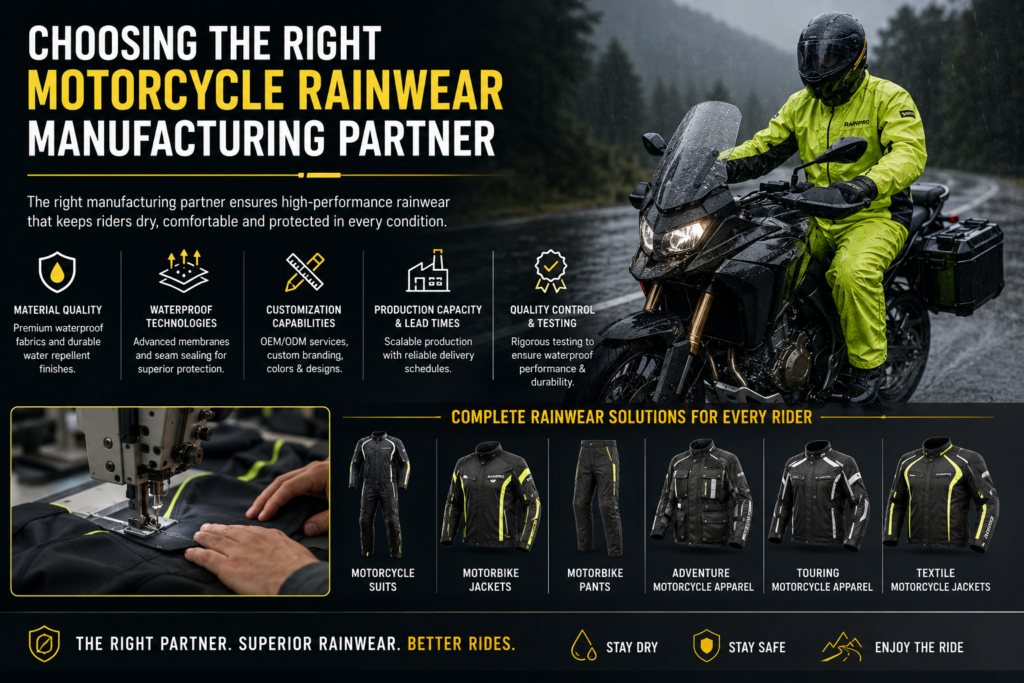
For brands and businesses seeking reliable motorcycle rainwear manufacturing, selecting the right partner is essential. Look for motorcycle apparel manufacturers with specific experience in rainwear production and a deep understanding of waterproofing technologies. Consider manufacturers who offer a range of solutions, from basic entry-level rainwear to premium Gore-Tex options.
Evaluate their material quality, waterproofing technologies, and customization capabilities. Request samples to test waterproof performance and overall craftsmanship. Check their production capacity and lead times to ensure they can meet your requirements.
Reputable motorcycle rainwear manufacturing partners often provide comprehensive solutions, including motorcycle suits, motorbike jackets, and custom motorbike pants. For complete riding gear, consider manufacturers specializing in adventure motorcycle apparel and touring motorcycle apparel. Even riders needing protective riding gear and textile motorcycle jackets can benefit from manufacturers who understand the unique demands of wet-weather riding.
Final Thoughts
The process of manufacturing motorcycle rainwear has changed drastically over the years. It is now an extremely refined and intricate process that regards the combination of new technology and construction of advanced materials. Motorcycle rainwear is now more comfortable for the user and protects them from harsh weather elements.
This information is designed to help you. On one hand, we have motorcycle rainwear brands for which you can manufacture high-quality products. On the other hand, we have riders who are now informed enough to recognize the quality of motorcycle rainwear. The optimal motorcycle rainwear protects riders when it matters, allowing them to continue travelling no matter the weather.
FAQs
What is motorcycle rainwear manufacturing?
It is the process of designing and producing waterproof riding gear using specialized materials, membranes, coatings, and construction techniques to keep riders dry and comfortable in wet conditions.
What materials are used in motorcycle rainwear manufacturing?
Common materials include PU-coated nylon and polyester, Gore-Tex and similar ePTFE membranes, TPU-coated fabrics, and DWR-treated base fabrics for enhanced water repellency.
How do manufacturers test waterproof performance?
Testing involves measuring water column pressure resistance (mm), conducting shower tests, checking seam integrity through pressurized water tests, and assessing breathability through moisture vapor transmission rate measurements.
How long does motorcycle rainwear manufacturing take?
Typically 4 to 10 weeks depending on order size, design complexity, and manufacturer workload. Complex designs with multiple features may require additional time.