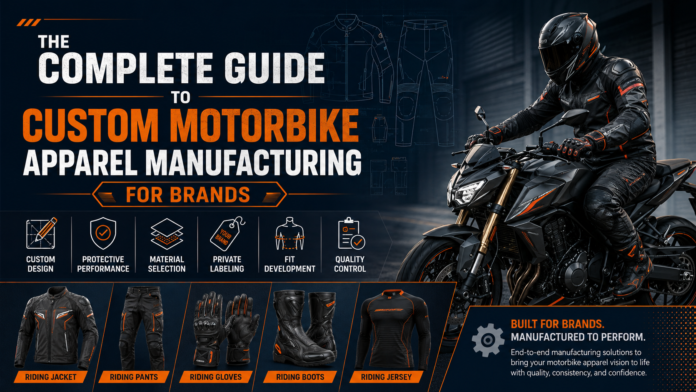
Custom motorbike apparel manufacturing is a highly specialized segment of the sportswear and outdoor industries. This space requires brands to navigate the diverse requirements of riders, construction standards and protective material standards. It also has a wide range of customers, including track racers and adventure tourers as well as urban commuters and off-road enthusiasts. This guide will explain every aspect of the custom motorbike clothing manufacturing process, helping brands to understand what it takes for a product that is safe, performs well on the road and creates lasting customer loyalty.
Why the Custom Motorbike Apparel Industry Requires Specialized Approach
The standard sportswear production techniques are not directly applicable to motorcycle clothing because the safety of riders introduces requirements for construction that go beyond moisture management and stretching performance. Motorbike clothing is shaped by protective panels, abrasion resistant outer materials and ergonomic riding positions. Brands must also balance comfort with style and protection, as modern riders expect gear that works well for long hours on a bike, without looking utilitarian when off the bike. Custom motorbike apparel requires a partner who has extensive experience in protective construction, rider-ergonomics, and performance materials.
Custom Motorbike Apparel Manufacturing: Key Materials
The choice of material is the basis for every decision made when designing custom motorbike clothing. This is because the outer shell and lining as well as the protective inserts are all important to the rider’s safety and comfort.
The Leather
Full-grain leather is ideal for racing motorcycle apparel, where maximum protection is a priority. Softer, more pliable leather grades are best for cruiser motorcycle apparel, which emphasizes comfort and classic aesthetic. Full-grain leather is ideal for racing apparel, where protection and durability are paramount. Softer, more flexible leather grades are best suited to cruiser apparel, where comfort all day long, classic aesthetics, as well as protection, matter. leather jackets are also a popular product category, as they appeal to riders who want both timeless style and safety.
Textile Fabrics
Textiles such as Cordura nylon and ballistic nylon offer brands an alternative to leather for custom motorbike clothing manufacturing. They are able to integrate waterproof membranes, removable insulation layers, and breathable liners into one garment. textile jackets are now the preferred choice of adventure motorcycle clothing, and tour motorcycle apparel when riders have to deal with a variety of weather conditions over long distances.
Protective Armor and Padding
CE-rated inserts are a must-have for serious custom motorcycle apparel manufacturers. They can be found in the shoulders, elbows and knees as well as on the hips and back. These inserts are typically made of foam, gel or hard-shell material that is designed to absorb and disperse impact energy in a crash. The placement of armor pockets must also be aligned with the impact zones on the body. Ergonomics are therefore as important as the material used to protect the rider. Brands developing protective gear need to work with manufacturers that understand the integration of armor and riding positions for each motorcycle category.
Membranes that are waterproof and resistant to the weather
Some motorcycle garments have waterproof membranes that breathe between the outer shell of the garment and its lining. This keeps riders dry in rainy weather while allowing moisture to escape when they exert themselves. The layered construction increases the complexity of the manufacturing process, but it also makes the garment more versatile. Membranes are used in motorcycle rainwear as well as multi-season jackets, where weather protection is essential.
Performance Base Layer Fabrics
Motorcycle base layer uses moisture-wicking blends of polyester and merino to regulate temperature under protective outer garments. Base layers are important for comfort on long rides because motorcycle suits and jackets can trap heat. Base layers specifically designed for motorcycling are often made with flatlock seams to prevent pressure areas from developing underneath armor panels.
Custom Motorbike Apparel Design Considerations
To translate a brand’s vision into functional motorcycle clothing, design decisions must balance aesthetics and riding-specific ergonomic requirements.
Riding Position Ergonomics
The forward-leaning position of the rider will stretch the back panel, shoulders and sleeves of the jacket. This is different from a standing posture. Pattern development for motorbike trousers and motorbike jackets must account for this forward-leaning riding position in order to avoid fabric bunching or restricted arm movements. The development of ergonomic patterns is one of the most challenging aspects of manufacturing custom motorbike clothing.
Ventilation System Design
To regulate rider temperatures in different climates or at different speeds, it is necessary to strategically place ventilation panels, zipper vents, and perforated sections of leather that allow airflow, without compromising the structural integrity or protection. When developing race suits, brands often place aerodynamics above ventilation. Adventure and touring garments usually incorporate extensive ventilation systems to ensure comfort over long distances in varying conditions.
Reflective and High Visibility Elements
Reflective piping, panels or logos are often included in motorcycle clothing as standard features. This is because visibility of the rider at night or under low light conditions is crucial for safety. Brands developing urban motorcycling apparel are increasingly balancing reflective safety elements and understated styling to suit city environments outside of the bike.
Custom Motorbike Apparel Product Categories
The custom motorbike apparel industry is a vast product category, with unique requirements for design and construction.
- Motorcycle suits Two-piece garments that offer comprehensive protection on the road and track. Available as full motorcycle suit or in dedicated racing configurations.
- Jackets Available as leather, textile or hybrid constructions in multiple riding styles ranging from motorbikes jackets designed for road riding, to motorcycle jackets made of textile designed for adventure touring.
- Pants & jeans: Includes motorbike riding pants with armor pockets integrated and motorcycle jeans which blend protective construction with everyday jeans aesthetics.
- Accessories: Motorcycle gloves are characterized by knuckle and palm protection, tactile sensitivity and palm reinforcement. They are a technical accessory category.
- Motorcycle vests riding jackets are lighter options to protect you when riding in mild weather conditions.
- Offroad clothing: Motorcycle apparel Prioritizes ventilation, flexibility and compatibility with external armor for motocross or enduro riding.
Custom Motorbike Apparel Manufacturing Process
From concept to final garment, the process of creating a motorcycle clothing line is a well-structured one. The stages vary slightly depending on product type but are common across all categories.
Brief Technical Specification and Development
A detailed technical brief is the first step in any successful project for custom motorbike clothing manufacturing. It includes protection requirements, riding categories, fabric specifications and placement of armor, as well as design direction. Motorcycle apparel is more complicated than sportswear and detailed specifications can reduce the chance of expensive revisions at later stages. Confirming any safety certification requirements helps manufacturers plan construction methods that comply with compliance standards.
Pattern Development and Ergonomic Design
The pattern development of motorcycle apparel takes into account the riding position, armor pocket placement and ventilation system integration, along with standard garment construction principles. Developing patterns on real riders, rather than standard dressforms, produces better ergonomic results. This is especially true for jackets and suits, where riding position has a significant impact on fit. The final product is consistently better when investing in ergonomic fitting for pattern development than adapting sportswear patterns to motorcycle application.
Samples and Protective Testing
Before committing to mass production, brands can evaluate construction quality, fit of the armor, ventilation performance and ergonomic accuracy through physical sampling. Wearing the garment in real riding conditions on a motorcycle provides more feedback during sampling than static fitting. Incorporating time for on-bike testing into the timeline of development will help ensure that the garment is performing correctly in the intended environment.
Bulk Production and Quality Control
Custom motorbike apparel quality control must include not only aesthetic consistency, but also functional safety features such as armor pocket integrity and waterproof membrane performance. Establishing clear quality control checkpoints and requesting documentation during production will help ensure that every garment in bulk order meets safety and construction standards as confirmed by sampling.
Partner with a trusted manufacturer for custom motorbike apparel
If you are developing a line of custom motorcycle apparel that provides genuine rider protection, it is important to find a manufacturer with experience in the wide range of materials, construction methods, and product categories required by this market. A reliable manufacturer will ensure that every product you develop meets the expectations of riders for safety, comfort and style.
We are a manufacturer of custom motorcycle apparel and we work with brands to develop complete apparel lines, from the initial briefing through bulk delivery. Contact our team to learn more about product specifications, fabric choices, protection needs, and production schedules that are tailored to the riding categories you want to target.
Final Thoughts
The custom motorbike apparel segment is one of the most demanding in the apparel market. It requires a high level of expertise, especially when it comes to protective materials, rider comfort, safety certification and performance construction. Leather and textile outershells, CE armor integration, waterproof and ventilation systems, and waterproof membranes all contribute to the design of products that protect riders and deliver genuine comfort over long hours on a bike. A structured development process and partnering with a manufacturer who has experience in the industry will help brands create a range of custom motorcycle apparel that will stand out and gain the trust and respect of riders.
FAQs
What are the materials used to make custom motorcycle apparel?
Depending on the protection level and product category, custom motorbike apparel is made from leather, Cordura nylon or ballistic polyester. Waterproof membranes and CE-rated armor are also used. Depending on the riding style and conditions, each material is designed to meet specific safety, comfort, or performance needs.
What is the importance of CE certification for motorcycle apparel?
CE-rated motorcycle armor inserts provide a crucial safety feature, as they have been independently tested and certified for their ability to absorb and disperse impact energy in a crash. The initial stage of developing protective riding gear is the time to confirm with your manufacturer whether CE certification is required.
What is the most critical design consideration when designing motorcycle jackets for women?
The ergonomics of the riding position is the most important consideration in motorcycle jacket design. Motorcycle jackets need to accommodate a forward leaning posture, without bunching or restricting arm movements, and they must also cover the lower back. This position is not taken into account by standard sportswear patterns and must be adapted specifically for motorcycle applications.