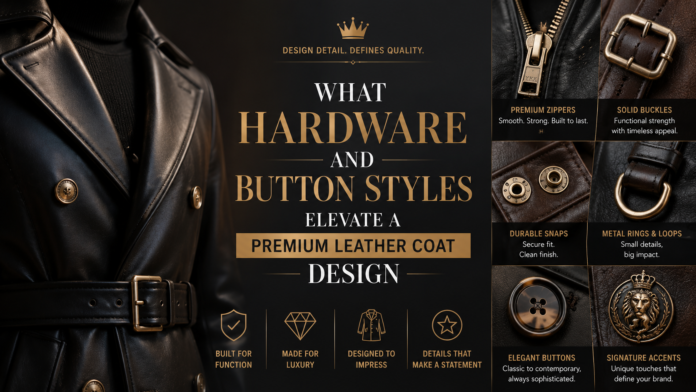
When you invest in a premium leather coat, every little detail matters — from the stitching to the lining, and especially the hardware. The buttons, zippers, buckles, and snaps on a leather coat are not just functional. They are the finishing touches that define whether a coat looks cheap or luxurious. If you are someone who cares about quality outerwear, understanding Hardware and Button Styles Leather Coat choices will completely change how you shop or design. Let’s walk through the key elements that take a leather coat from ordinary to exceptional.
Why Hardware and Button Styles Leather Coat Details Matter So Much
Most people focus on the leather itself when judging a coat’s quality. But experienced manufacturers and fashion buyers know that the hardware tells an equally important story. Poor-quality zippers can ruin an otherwise beautiful leather jacket. Cheap buttons that pop off after a few uses make even premium leather look bad. The right Hardware and Button Styles Leather Coat choices should feel solid in your hand, work smoothly every single time, and complement the overall aesthetic of the piece. Whether you prefer a minimalist clean look or a bold statement design, your hardware choices make all the difference.
Zipper Types That Define a Premium Leather Coat
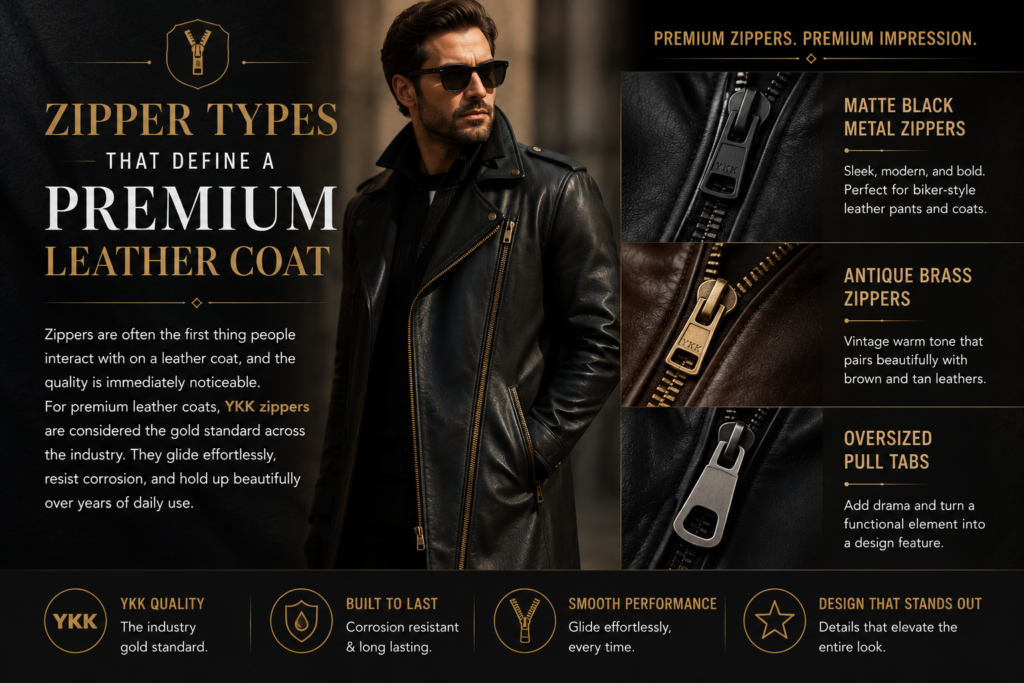
Zippers are often the first thing people interact with on a leather coat, and the quality is immediately noticeable. For premium leather coats, YKK zippers are considered the gold standard across the industry. They glide effortlessly, resist corrosion, and hold up beautifully over years of daily use. Matte black metal zippers give a sleek, modern edge that works perfectly on biker-style leather pants and coats alike. Antique brass zippers, on the other hand, bring a vintage warm tone that pairs wonderfully with brown and tan leathers. Oversized pull tabs add drama and make a functional element into a design feature. The Hardware and Button Styles Leather Coat conversation almost always begins with zipper selection because it sets the entire tone for the garment.
Button Styles That Signal Quality and Craftsmanship
Buttons on leather outerwear come in a surprisingly wide variety, and each style communicates something different about the garment’s character. Horn buttons carry a natural, earthy elegance that speaks to traditional craftsmanship. Metal buttons — especially those with engraved logos or textured finishes — feel bold and premium. Snap buttons are popular for casual designs and work brilliantly on leather vests where quick access is important. For Hardware and Button Styles Leather Coat applications, the shank button is often preferred because it sits above the leather surface, reducing stress on the material and extending the garment’s lifespan. A hidden button placket with leather-covered buttons is the ultimate mark of tailored sophistication.
Buckles, D-Rings, and Belted Details
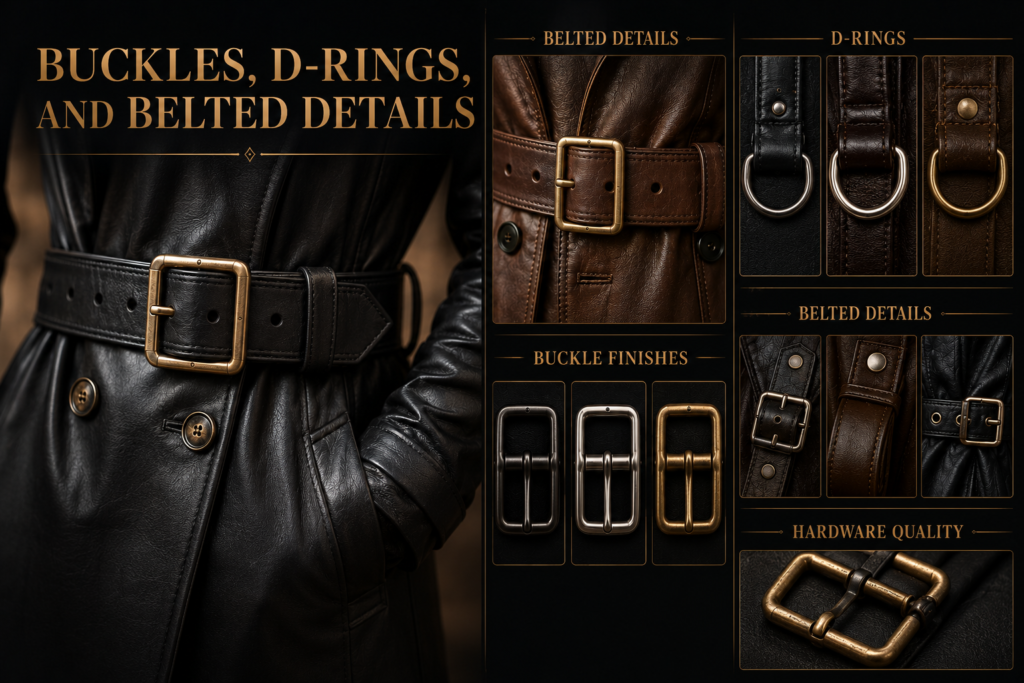
Buckles add a functional yet striking element to leather coats. A wide leather belt with a solid metal buckle cinches the waist and instantly transforms the silhouette. D-rings are popular on military-inspired designs, adding both utility and visual interest. Gun-metal, polished silver, and antique gold are the most common buckle finishes for premium leather outerwear. These details are just as important in a leather skirt context as they are in coats. When discussing Hardware and Button Styles Leather Coat options with a manufacturer, always ask about the weight and thickness of buckle hardware — heavier hardware almost always signals better quality.
Rivets and Stud Detailing for Edge and Personality
Rivets and metal studs are a signature of rock-inspired and moto-style leather outerwear. When used with restraint, they add personality without overwhelming the design. Pyramid studs along shoulders or down pocket flaps give a coat an assertive, edgy character. Flat rivets used at stress points — like pocket corners and strap attachments — are both practical and decorative. The key is balance. Too many rivets can look overdone, but the right placement makes Hardware and Button Styles Leather Coat designs genuinely memorable. If you’re looking at bespoke leather apparel, rivet placement should always be intentional and proportional.
Snap Closures and Press Studs — Functional and Stylish
Snap closures have made a strong comeback in modern leather outerwear because they offer the perfect blend of ease and clean aesthetics. A double-cap snap in a matching metal finish creates a seamless, refined look when closed. For utility-style leather coats with multiple pockets, snaps work better than buttons because they lie flat and don’t create bulk. You’ll see this hardware used heavily in leather aprons too, where both durability and accessibility are essential. In the Hardware and Button Styles Leather Coat world, high-quality snaps are often nickel-plated or solid brass to resist tarnishing and breaking.
Eyelet and Lace-Up Details for a Custom Fit Look
Lace-up panels with metal eyelets are a bold design choice that references equestrian and vintage military styles. They allow the wearer to adjust fit across the torso or sleeves, which is both practical and visually striking. Brass and nickel eyelets are the most durable and look the most refined. These details are often seen alongside matching hardware on leather belts that accompany the coat as part of a complete outfit. Hardware and Button Styles Leather Coat designs with lace-up elements need careful finishing around each eyelet to prevent the leather from tearing over time — a detail that separates skilled manufacturers from average ones.
Hardware Finishes — Matching or Mixing Metals
One question that comes up often is whether all hardware on a leather coat should match. The traditional answer is yes — a consistent hardware finish creates cohesion and signals careful design. Polished silver hardware has a contemporary clean feel. Antique brass evokes heritage and vintage character. Matte black is bold and modern. However, deliberately mixing finishes — like pairing antique brass buttons with black zipper pulls — can create intentional contrast that feels artful. This principle applies across leather accessories too, from leather bags to coats. Whatever approach you choose, consistency within that choice is what makes Hardware and Button Styles Leather Coat design look intentional rather than accidental.
Functional Pocket Hardware That Enhances Design
Pockets on a premium leather coat are rarely just pockets. The flap button, the zipper pull, the snap closure — each is an opportunity to reinforce the coat’s overall hardware story. Welt pockets with a hidden magnetic closure look incredibly sleek on modern minimalist coats. Cargo-style patch pockets with contrast buckle straps add utility and visual weight. Even the way a pocket’s hardware lines up with the coat’s main closures tells you something about the quality of design thinking behind the garment. For those who also invest in quality leather gloves, matching the glove’s snap hardware to the coat’s hardware is a small but powerful styling detail. Hardware and Button Styles Leather Coat pocket detailing is where many mass-market coats cut corners — and where premium garments shine.
Choosing the Right Hardware When Ordering Custom Leather Coats
If you are working with a manufacturer to create custom leather outerwear, hardware selection is one of the most important conversations you will have. Always request physical samples of zipper pulls, buttons, and buckles before finalizing a design. Ask about the metal gauge, the plating process, and how the hardware is attached to the leather. Riveted hardware is almost always stronger than sewn-on hardware for high-stress areas. The Hardware and Button Styles Leather Coat choices you make at this stage will determine how the finished garment ages and performs. A great manufacturer will guide you through options and help you understand the tradeoffs between aesthetics and durability. Explore the full range of premium leather coats to see how thoughtful hardware choices elevate every design.
Conclusion
Ultimately, the Hardware and Button Styles Leather Coat choices you make are a direct reflection of your standards. Whether you are a brand building a collection or an individual commissioning a one-of-a-kind piece, paying close attention to zippers, buttons, buckles, snaps, and rivets will ensure your leather coat stands apart. Quality hardware is not just about looks — it’s about how a coat functions, how long it lasts, and the confidence it gives you every time you put it on. Invest in the details, and the details will reward you for years to come.
FAQs
What is the best zipper brand for a premium leather coat?
YKK zippers are widely considered the best choice for premium leather coats. They are durable, smooth, and available in multiple finishes like matte black, antique brass, and polished silver to match any design style.
What Hardware and Button Styles Leather Coat designs are most popular right now?
Currently, matte black metal hardware with oversized zipper pulls is very popular for modern and biker-style coats. Antique brass buttons and buckles are trending for vintage-inspired designs. Clean, minimal snap closures are also widely chosen for contemporary minimalist styles.
Should all hardware on a leather coat be the same finish?
Traditionally yes — matching hardware finishes create a cohesive, polished look. However, intentionally mixing finishes, such as brass buttons with black zippers, can look artful when done carefully. The key is to make it look deliberate, not accidental.