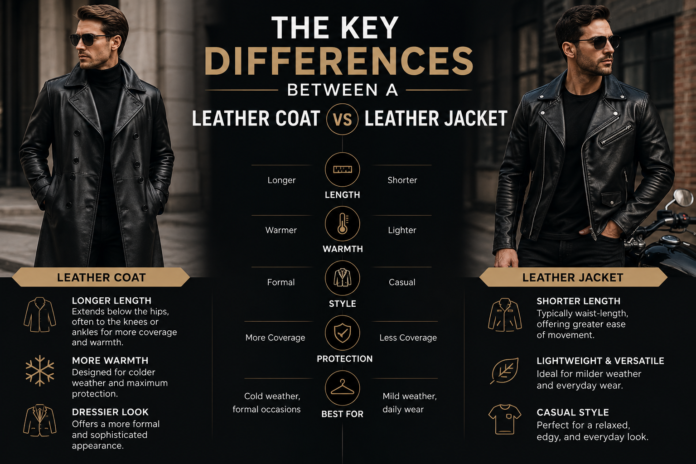
Most people use the terms interchangeably — leather coat, leather jacket, same thing, right? Actually, no. These are two distinct garments with different silhouettes, purposes, and styling rules. If you’re building a leather apparel brand or just trying to make the right purchase decision, understanding the differences between leather coat and leather jacket will save you from a lot of confusion. Let’s get into it — clearly and without the fluff. A good leather apparel manufacturer will always tell you upfront which category a garment falls into, because the construction, materials, and fit are handled very differently for each.
The Most Obvious Difference: Length
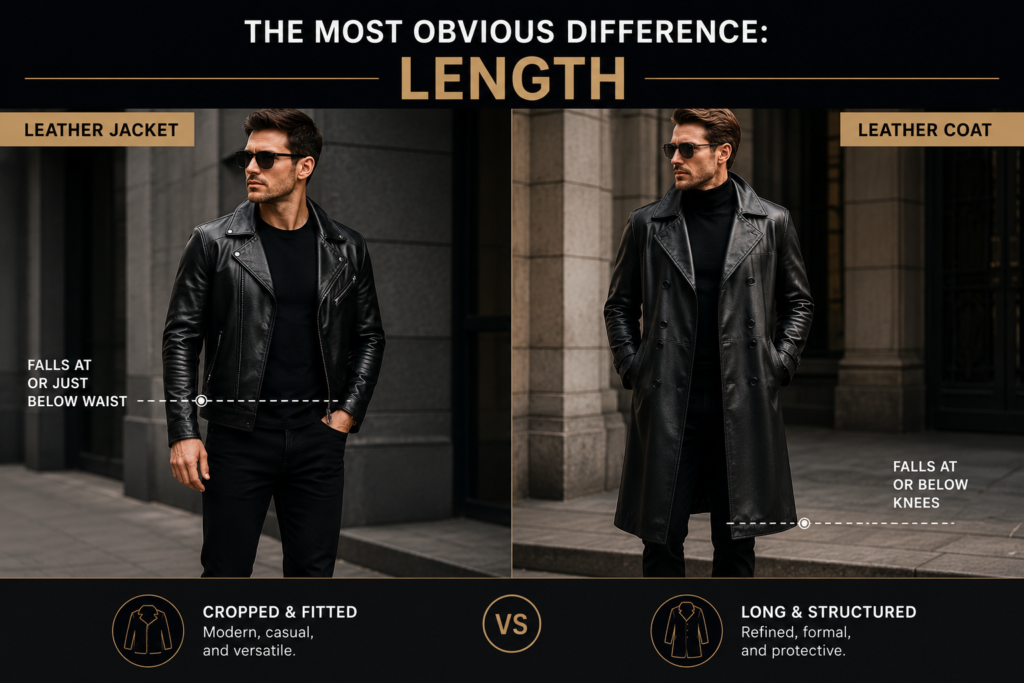
The biggest difference you can see between a coat and a jacket is length. Leather jackets finish at the waist (below or just at) whereas coats fall even longer, below the waist, commonly hitting at or below the knees. This length difference alters how a piece moves, how you can style it, and what the occasion for wearing it is.If you’ve ever browsed a leather jackets manufacturer’s catalog next to a coats catalog, the length difference is immediately obvious. One is cropped and fitted; the other is long and structured.
Warmth and Weather Protection
With a longer length comes extra coverage and protection from the elements, and a coat will always have more insulation than a leather jacket. Coats cover more of the body and use thicker materials and linings which help with the winter months, plus they’re built for the elements. Leather jackets, on the other hand, are more for transitioning seasons like spring and fall, and are best layered. The differences in leather coats and leather jackets get practical with this. A leather coat is genuinely outerwear. A leather jacket is more of a layering piece that happens to be made from leather.
Structure and Construction
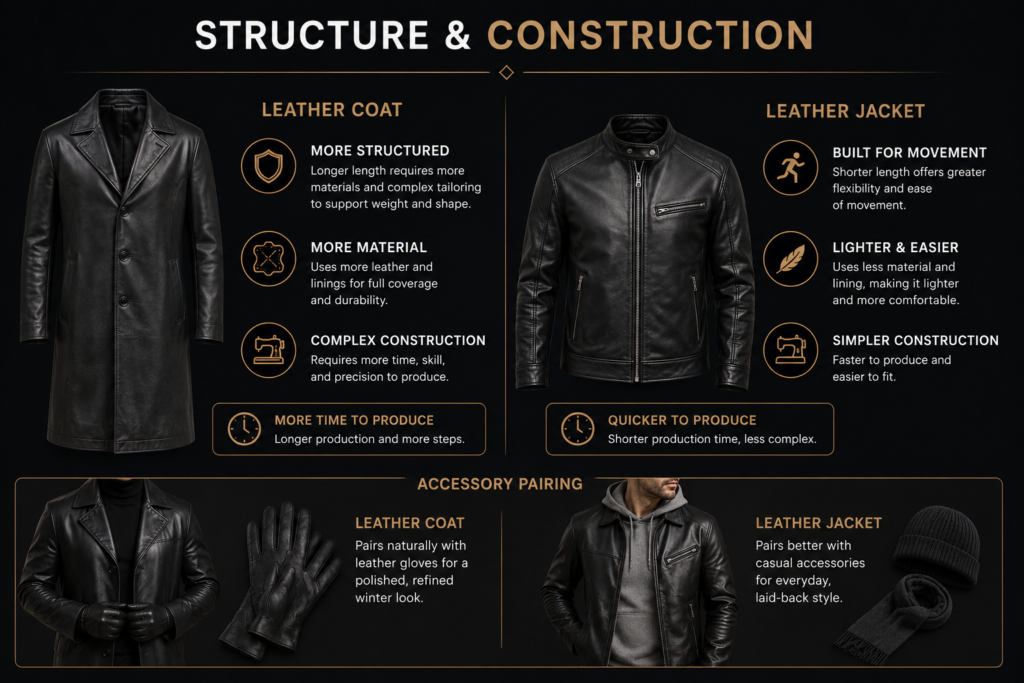
Leather coats are naturally more structured. Because they are longer, they require more materials and more complex tailoring to help them hang and support the weight. Jackets are more casual, built for flexibility and movement as a shorter piece. For manufacturers, the differences are also relevant. Jackets are more quickly produced and easier to fit compared to coats, which require more leather and linings.You’ll also notice this in accessories — a leather coat pairs naturally with leather gloves for a polished winter look, while a jacket pairs better with more casual accessories.
Style and Occasions
Leather coats and jackets differ these most during everyday use. By their very nature, leather jackets are casual. They pair with jeans, shoes, and basic tees. They have a certain edginess and attitude that are a part of the fashion culture of the ages. Leather coats are more formal or at least smart-casual. A long leather coat with tailored trousers looks intentional and neat. It is appropriate in places where a leather jacket would be underdressed. If your brand is building a full leather range, this is also why pairing leather pants with a coat creates a very different look than pairing them with a jacket — the coat elevates the whole outfit.
Who Wears What — And Why It Matters for Brands
Every brand has different ideas and each idea has a different style that targets a different audience. The main distinction between leather jackets and coats helps you better understand your audience. By nature, leather jackets are casual. A more universal appeal, they sell better and have a wider age range and style preferences. Leather coats are for more specific customers, people looking to make a more serious style statement or need serious outerwear that looks good etc. If you are a brand struggling to figure out what to make, jackets are typically the safer starting point, because of more universal appeal, but coats offer better margins and attract your high-paying customers. Brands that eventually offer both — along with complementary pieces like leather vests and leather skirts — build a much more complete and compelling collection.
Leather Type and Weight
The Differences Between Leather Coat and Leather Jacket also extend to the type of leather typically used. Jackets are often made from lighter, more supple leather — lambskin, nappa, or light cowhide — because flexibility and comfort during movement matter more. Coats use heavier, more structured leather that holds its shape over a longer silhouette. The weight of the leather contributes to the coat’s drape and structure. This is why a good manufacturer will recommend different hides for each garment type. It also affects accessories in your line — the leather used for leather belts or leather bags is often chosen to complement the main garment rather than match it exactly.
Functional Details That Set Them Apart
Examine both types of outerwear and you’ll find plenty of functional differentiators as well. Leather jackets have zips that are usually asymmetrical. They have trendy hardware, many exterior pockets, and have ribbed cuffs, all of which show their rugged origin. Ribbed cuffs show their rugged origin. Leather coats line up straighter and have fewer design elements, as well as more conventional fastenings like button rows or belt rows. The precise differences visible in leather jackets and coats are high in contrast and include things like a coat having a button collar or a coat having a collar with a wide lapel. One style is rebellious while the other is refined. Even care items like leather aprons used during production tell you something — the cutting and sewing process for a long structured coat is genuinely more involved than for a cropped jacket.
Final Thoughts
The differences between leather coat and leather jacket come down to four core things: length, formality, warmth, and construction. Neither is better — they just serve different purposes and different customers. A well-made leather jacket is a wardrobe staple. A well-made leather coat is a statement piece. If you’re a brand owner deciding what to build, or a buyer deciding what to order, getting clear on these differences helps you make a smarter, more confident decision. And if you’re working with a quality leather apparel manufacturer, they’ll help you navigate these choices from the very first sample — because getting the garment right starts with knowing exactly what you’re making.
FAQs
What is the main difference between a leather coat and a leather jacket?
The main difference is length. A leather jacket ends at or just below the waist, while a leather coat falls below the hips — often reaching the knee or lower. This length difference affects warmth, styling, formality, and how each garment is constructed.
Is a leather coat warmer than a leather jacket?
Yes, generally. A leather coat covers more of your body and is designed as proper outerwear for colder months. A leather jacket is better suited to transitional weather or layering. If you need serious warmth, a coat is the better choice.
Can a leather jacket be worn in formal settings?
It depends on the style and how it’s worn, but leather jackets are generally considered casual. A leather coat leans more formal or smart-casual and works better in settings where a jacket might look underdressed.