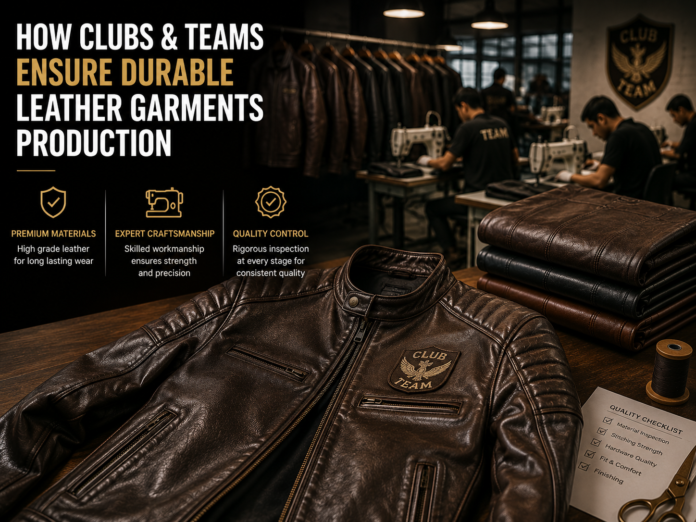
Especially for track and field clubs, or intense competitions like motorcycling, esports, or football, leather gear and clothing are worth the investment. Leather material can outlast most stitching, whether synthetic or not. Leather must withstand abrasions, stretching, and bodily fluids for multiple seasons. How do clubs or teams acquire durable leather garments without errors in production?
The answer starts with strict sampling, correct leather grades, and reinforced stitching. Let me walk you through the exact process we recommend to teams and clubs.
Start with the Right Leather Grade and Thickness
Not all leather works for team gear. For jackets, vests, or pants that players wear weekly, you need full-grain or top-grain leather. Avoid genuine leather blends – they crack under stress.
Check our Fabric Sourcing & Development page to see how we help clubs select the right materials – including leather alternatives and performance backings.
Evaluate a small batch immediately after sourcing. Cut sample swatches and subject them to rig stretching. Sliced grain or scabbing? Reject that batch.
Reinforced Stitching and High-Tensile Thread
Typically, polyester thread snaps when stitching leather. You need bonded nylon or Kevlar-reinforced thread (T70 or T90 weight). Also, specify a longer stitch length – 4 to 5 stitches per inch. Tearing will occur if there are short stitches.
For high-motion joints such as shoulders and elbows, do the following:
- Use double-needle chainstitch
- Back-tack (reverse stitch) at every stress point, advancing at least 1 inch
- Use leather reinfocement patches in elbow and knee zones
We handle these exact details under Cut and Sew Manufacturing Capability. Our team adjusts stitch type, thread weight, and reinforcement zones specifically for team leather orders.
Use a “Wear-Test” Sample Round for Every Team Order
Clubs perform wear-test sample rounds prior to garment mass production. Three to five members of the team must wear samples during full practices or wear them continuously for two weeks. Afterward, look for the following:
- Spaces forming between stitches (gapping)
- Snags in stitching caused by the zipper
- Leather stretching out of shape
- Snaps (also known as press studs) or other fasteners becoming dislodged or moving through the garment
Latex, leather, or zippers should all be reinforced. After the wear-test, most durability complaints (80%) should be expected to have been addressed.
Control Production Humidity and Dyeing
Leather takes up moisture unevenly. If the humidity in your factory varies a lot in the year, the final garments will shrink or warp. The best leather workshops have a relative humidity of 45%–55% during cutting and sewing.
In the same way, if you must dye leather after stitching (which we don’t advise for teams), use ** drum-dyeing** with fatliquor to keep the leather soft and flexible. Avoid spray dyes – they crack quickly.
We provide controlled Washing & Dyeing Services for fabric and selected leather trims. Although we specialize in Eco Jersey fabrics, we can suggest leather-dyeing partners if the leather meets your durability requirements.
Final QC Checklist for Clubs & Teams
Before accepting a bulk delivery, implement this four-point checklist:
| Check Point | What to Verify |
|---|---|
| Tensile strength | Pull on the seam with a 10 lb weight. It should neither stretch nor tear. |
| Hardware adhesion | Rivets should stay intact after 20 tugs. |
| Color rub test | Rub a dry cloth on the fabric 10 times. There should be no dye transfer. |
| Zipper slide | The zipper should slide smoothly open and closed for 50 cycles. |
Apply these criteria to our QC Standards as we employ the same standards for evaluating performance garments.
Professional Support for Durable Leather Production
If you’re managing a club/team and want durable leather garments for production without guesswork, we can help. Unlike many DIY options available, we can provide assistance from selection and sampling to managing the complete cut and sew process for production scale. We’d like to hear from you, whether you’re still testing your very first leather sample, or ready to proceed with the pilot run for your team. Get a Quote Now to start planning your production timeline, or Contact Us Now for personalized advice on sizing, grading, and leather durability standards.
FAQs
Can you produce 100% leather jackets for a motorcycle club?
We specialize in cut-and-sew jersey and performance fabrics. For projects involving leather, we can connect you with manufacturers to complete your production while we manage your textile garments. Explore our manufacturing solutions.
What is the minimum order quantity for team leather garments?
The minimum order quantity for specialty leather cut-and-sew is typically 50 to 100 garments. Please check our Low MOQ Clothing Manufacturer page; we use the same approach for leather as for all our partners.
How do i add team logos without compromising the leather?
Avoid sewing logos directly onto thin leather, as this can damage it. Heat-transfer labels or fabric patches (sewn separately and then attached) are better options. See our Custom Labeling & Branding Services for details.