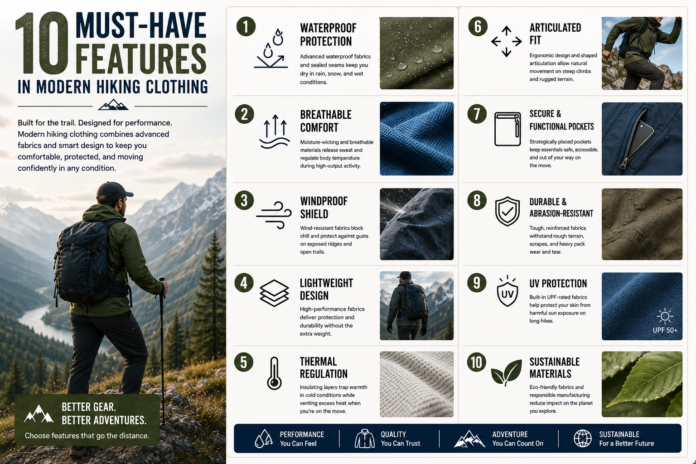
Modern hiking apparel has evolved beyond basic outdoor clothing. If you’re designing a collection of 10 must-have features in modern hiking clothing to build a brand that is trail-ready, knowing what features are important on the trail will help you create products that win customer loyalty. Here are 10 characteristics that make up today’s performance-ready clothing.
1. Moisture-Wicking Fabric Technology
The most important aspect of any hiking garment is sweat management. Modern clothing is made of moisture-wicking fabric that moves perspiration to the surface, where it can evaporate quickly. This feature is essential for hiking clothing. Without it, hikers will experience uncomfortable chafing and dangerous coldness when temperatures drop.
2. Lightweight construction without sacrificing durability
On a multiday trek, every gram counts. Hiking apparel of high quality strikes the perfect balance between weight and durability. It uses lightweight fabrics such as ripstop nylons or performance polyesters, which are easy to pack, light in weight, and resist trail abrasion. Fabric construction and weight optimization must be combined to optimize garments that are durable but light.
3. Breathability for sustained activity
Hiking generates sustained heat output across long hours. Outdoor T-shirts and hiking trousers are all in need of breathability. This allows warm air to escape, preventing heat buildup and fatigue. Mesh panels, ventilation zippers under the arm, and open-knitted back panels are all common construction details to enhance airflow.
4. Stretch and Freedom of Movement
The terrain of the trail requires a variety of movements — such as stepping over stones, scrambling in loose soil, and climbing steep slopes. Modern hiker pants, and clothing, incorporates four-way stretch fabric, articulated knee patterns, and gusseted construction for the crotch to move with your body. Clothing that restricts movement can cause fatigue and increase the risk of injury on technical terrain.
5. Weather Resistant for Changing Conditions
The mountain and trail conditions can change rapidly. The fabric should be treated with DWR to repel light rain or morning dew. Packable hardshell or waterproof coat provides storm protection on more exposed routes without having to carry a separate shell. Waterproof clothing is necessary for multi-day and high-alpine hiking routes.
6. Sun and UV Protection
Hikers who hike at high altitudes or in wide-open landscapes are exposed to more UV radiation. The UPF rating should be 30 or higher for quality outdoor tees, trail shirts and other clothing. This will block a large portion of the solar radiation. The lightweight UPF-rated fabric options for long sleeves protect your arms without the weight of heavy clothing. This is important when hiking in the desert, along coastal trails or on exposed ridgelines.
7. Practical Storage and Pocket Systems
Hikers must have easy access to their essentials, such as maps, snacks and phones, without having to stop to remove their packs. hiking pants that have zip-secured thigh pocket, outdoor pants which offer multiple storage options and jackets featuring inner chest pockets are all designed to make the trail more functional. The placement of pockets should be based on the actual reach and access position for a hiker, not just in a static display.
8. Layering System Compatibility
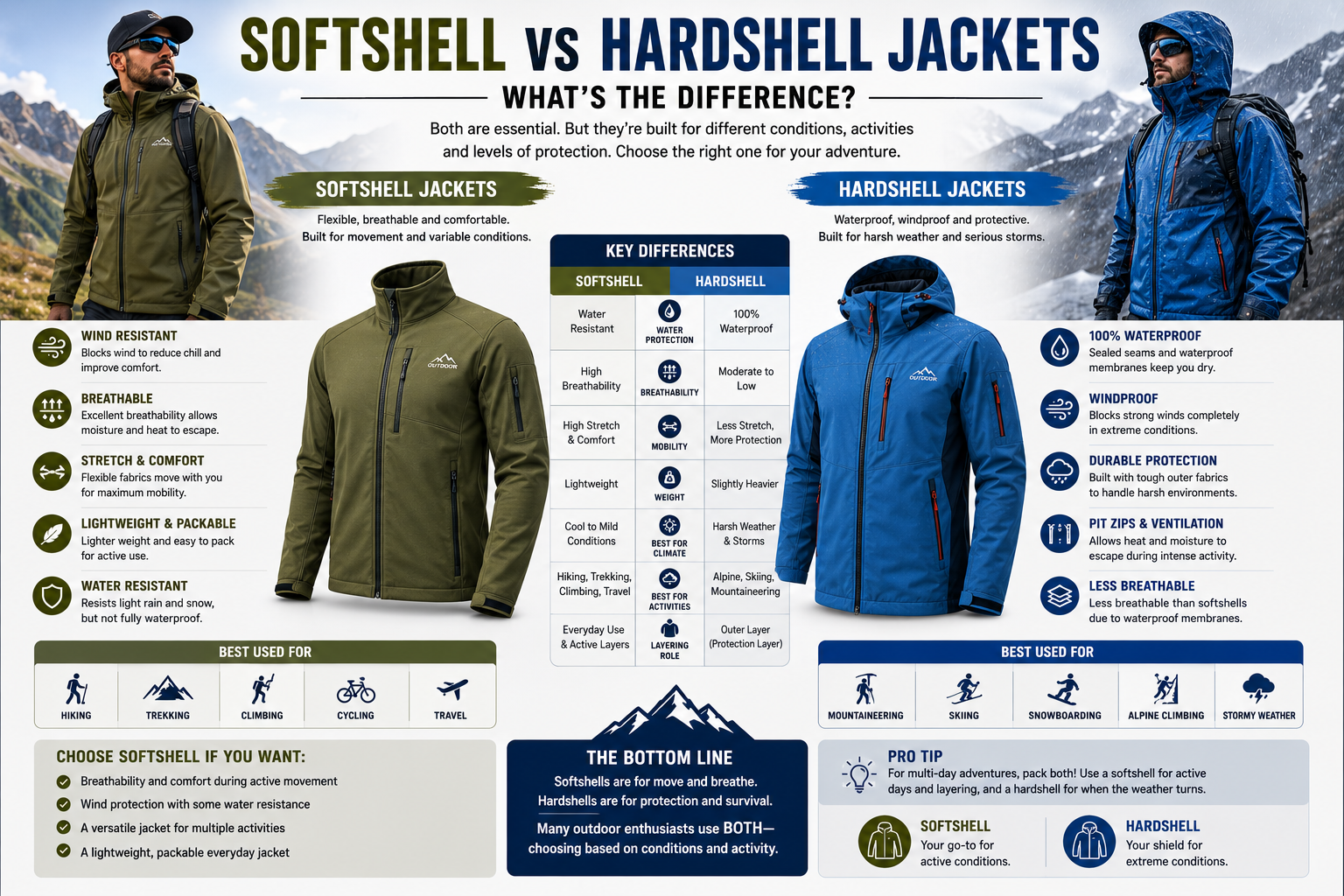
The modern hiking performance is based on the layering system, not just individual garments. A base layer that wicks moisture away from the skin is layered with an insulating middle-layer, such as a puffer or outdoor fleece jacket, to provide warmth. Finally, a softshell or outdoor jacket provides protection against wind and rain on top. Brands who design their collection in a coherent way, with compatible sizes and fits between layers, offer a lot more value than brands that sell isolated pieces.
9. Odor Control for Multi-Day Use
On multi-day and overnight hikes, odor control becomes a real comfort and hygiene issue. Anti-microbial fabrics, such as silver-ion finishes or treated synthetic blends, inhibit bacterial growth which causes odors. This extends the wearable lifespan of a garment. This feature is becoming more common in premium hiking collections, and it is a key differentiator among brands that target the serious trekking and exploration markets.
10. Compact storage and Packability
When not in use, the best hiking clothes can be stuffed into a backpack. Windbreaker Jackets and packable Outdoor Vests as well as compressible Rainwear can be stuffed into a small bag or pocket to provide hikers with weather protection. Packability is a feature that brands can use to their advantage when creating hiking collections. Customers who are making purchases at retail will notice and appreciate garments which compress.
Conclusion
Modern hiking clothing does not have a single best feature. It is determined by the way that multiple features work together to provide optimum performance over a multi-day or full day trail experience. The combination of moisture management, stretch, weather resistance, layering compatibility and packability determines whether a hiking item will be included in a regular customer’s kit. Brands developing hiking collections need to incorporate these features in every product, from base layer through hiking trousers, outer shells, and insulation layers. This is what differentiates a compelling range from a generic collection. We manufacture hiking clothing for brands and private label companies worldwide. Request a quote to start developing your hiking collection.
FAQs
What is the most versatile fabric for hiking apparel?
Lightweight blends of polyester and nylon with moisture-wicking properties and DWR treatment are the best fabrics. They are able to manage sweat, repel light rain, dry fast, and withstand trail abrasion.
Do I need waterproof hiking trousers or are water-resistant pants enough for most day hikes?
DWR-treated, water-resistant pants offer sufficient protection. For multi-day hikes, areas with high rainfall, and regions with high altitude terrain, it is important to have full waterproof clothing.
How important is UV protection in hiking clothing?
Very, especially for hiking in high altitudes, open ridges or desert environments, where UV intensity can be higher. The UPF rating of outdoor T-shirts or trail shirts can reduce solar exposure over a hiking day.