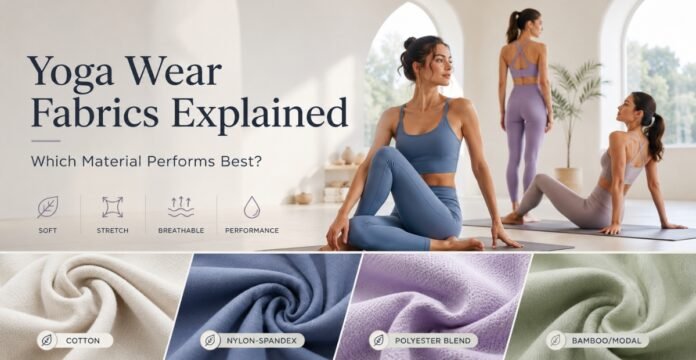
The best yoga wear fabrics feel soft, stretch with the body, and remain comfortable from the first pose to the last. A useful material should not pull at the knees, become see-through during bending, or trap too much heat. It should also return to its original shape after repeated movement. When shoppers explore Eco Jersey’s yoga wear collection, they can see that leggings, shorts, tops, and support garments do not need exactly the same material. Leggings need firm stretch and coverage, while loose tops need airflow and softness. No single fabric wins in every situation because yoga style, climate, fit, and support all affect the final choice.
How Yoga Wear Fabrics Affect Comfort and Movement
Yoga wear fabrics affect bending, twisting, sitting, and balancing. A fabric has poor recovery if it becomes loose at the knees or waist. A stiff material can also challenge bending. Hot, damp breathability can distract the wearer during a long session. The best yoga wear fabrics balance all of these different needs instead of stretching too far in one. A fabric can be worse at knitting and better at stitching, even if it has the same fibers. A buyer should look at the fabric instead of the fiber name.
Cotton for Softness and Gentle Practice
Cotton is soft, breathable, and natural making it an easily recognizable fabric for most yoga wear fabrics apparel. It is great for gentle yoga and meditation, warm up and relaxed studio wear. During more difficult yoga sessions, untreated cotton absorbs the sweat of the body and saturated cotton can become heavy. Cotton blends are often better when the fabric has a new type of finish for moisture management or stretch, or has additional elastane. Cotton has a natural ability to breathe and absorb, but along with that, technology can be applied to cotton for improved moisture management, as defined by Cotton Incorporated.
Polyester for Quick Drying and Durability
Polyester is widely used in yoga wear fabrics because it is strong, light, quick-drying, and easy to care for. It holds less moisture than untreated cotton, so it can feel more practical during power yoga, outdoor sessions, or warm-weather exercise. Polyester is commonly blended with elastane to create fitted leggings, tops, and supportive pieces such as running sports bras, while the knit structure helps decide how soft or breathable the finished garment feels. Recycled polyester can also be used when a brand wants to reduce its use of virgin polyester. These yoga wear fabrics are a strong choice when drying speed, shape retention, and regular washing matter most.
Nylon for a Smooth Premium Feel
Nylon is often used in premium yoga wear fabrics because it has a smooth, soft, and cool to the touch feel. Nylon is also strong and is great for fitted leggings, shorts, and seamless pieces. When blended with elastane, nylon has the potential to create a simple, clean body fit that is not rough in texture. As described by Textile Exchange, nylon is an activewear fabric and technical clothing fabric. The strength of a nylon blend also has the potential to be see-through and show sweat if the fabric is not designed properly. Higher quality nylon blends also give a fitted look and strong recovery with a polished final look for the customer.
Elastane for Stretch and Shape Recovery
Elastane, often called spandex, typically is not used by itself. A small percentage is blended into other fabrics for yoga wear fabrics to enhance recovery and stretch of the fabric. This is especially important along the waistbands and in sports bras and in fitted tops as well as leggings and shorts that must move without opening or losing fit. According to The LYCRA Company, elastane fibers enhance stretch and recovery in apparel. The right amount of elastane also gives a good hand feel and is important to ensure that it also not too warm to wear. The fabric design and the needed amount of compression and fit also determine the required amount of elastane.
Modal and Lyocell for Soft, Relaxed Clothing
Modal and lyocell are useful yoga wear fabrics for people who prefer softness, drape, and a smooth feel. These yoga wear fabrics are especially suitable for easy movement and relaxed styling. These fibers are often blended with cotton or elastane to make relaxed tops, light layers, lounge sets, and flowing bottoms such as wide-leg yoga pants, which need comfort and easy movement more than firm compression. Lenzing states that its TENCEL modal and lyocell fibers support softness and moisture control in activewear. These materials can feel pleasant during restorative yoga, stretching, travel, and everyday use. However, very soft blends may provide less support than dense nylon or polyester fabrics.
Quick Comparison of Popular Yoga Materials
The following yoga wear fabrics offer different benefits, so the best option depends on the garment and activity.
- Cotton: Soft and breathable, but it may stay wet after heavy sweating.
- Polyester: Quick-drying and durable for warm or active sessions.
- Nylon: Smooth, strong, and suitable for premium fitted clothing.
- Elastane blends: Stretchy and helpful for movement and shape recovery.
- Modal: Soft and flowing for gentle practice or relaxed fits.
- Lyocell: Comfortable and useful in moisture-managing blends.
- Recycled synthetics: Performance-focused options made with recycled feedstock.
Choosing Material for Different Yoga Styles
Different materials are required for different styles of yoga. Hot yoga requires lightweight materials that breathe and dry quickly. They’re also sweat resistant. Fast styles like Power yoga require materials with strong stretch and recovery, along with secure coverage. Slow styles like Hatha yoga open up more options. Modal blends, polyester, and nylon blends work nicely. Restorative yoga prefers loose and soft but warm clothing. Outdoor yoga requires more durable materials that can withstand the elements. Comfort is best achieved through activity and use rather than the styles and designs of the clothing.
Why Fabric Weight, Knit, and Finish Matter
The look, feel, and weight of knitted fabrics can vary tremendously, and functional fabrics perform best when they are weighted and finished appropriately. A single knitted jersey might feel lightweight and airy but won’t provide coverage. Better support and surface coverage with minimal transparency might be achieved with a double knitted or a brushed fabric. Brushed surfaces generally feel warmer and softer, while a more smooth surface finishes might be suited for hot conditions. A textile might provide some function like moisture wicking, but this should be tested for durability.
How Brands Should Test Fabric Before Production
Brands need to carefully assess yoga wear fabric before deciding to mass produce a line. Selecting a fabric based only on a small swatch in a lab setting is short sighted at best. A fabric sample must retain its integrity in a range of conditions: stretched, washed, exposed to bright lighting and tested by performing a range of motions. A line of yoga wear is a failure if it creates a rolling waistband. Brands must also assess fabric in terms of pilling, fading, sweating and drying. The ideal fabric for yoga apparel must satisfy the goals of the design and the consumer.
Conclusion
There is an obvious need for variety in the type of fabrics used for yoga apparel. Examples include: Blends of polyester and nylon fabrics are an excellent choice for yoga wear that must stand up to high levels of exertion. For less rigorous practice, consider cotton, modal or lyocell. These fabrics are both more comfortable and less constrictive. Fabrics also need to be blended with elastane to improve flexibility and recovery. Comfort and confidence during a yoga practice session, is best achieved by a well-balanced fabric. Structural integrity of the fabric is also an important factor. A yoga wear line that contains carefully selected fabrics can achieve the goals of the design.
FAQs
Which Fabric Is Best for Yoga Wear?
The best yoga wear fabrics usually combine polyester or nylon with elastane. These blends offer stretch, recovery, durability, and quicker drying. Cotton or modal blends can be better for gentle yoga and relaxed garments.
Is Cotton Good for Yoga Clothing?
Cotton feels soft and breathable, making it suitable for meditation and light practice. However, it can hold sweat and dry slowly. A cotton-elastane blend often performs better than pure cotton.
Is Nylon or Polyester Better for Yoga Leggings?
Nylon often feels softer and smoother, while polyester usually dries quickly and handles frequent use well. Both can make strong yoga wear fabrics when blended with elastane and knitted at the correct weight.