Good work clothing starts with the right material. Workwear fabrics must protect the body, stay comfortable, and handle long hours of movement. A material that works well in an office may not perform well on a building site, inside a warehouse, or during outdoor maintenance. Before selecting garments, buyers should consider heat, cold, rain, dirt, sharp surfaces, and the type of work being completed. The wider workwear collection shows how different jobs need different garment designs, and those designs depend greatly on suitable workwear fabrics. The best workwear fabrics create a fair balance between strength, comfort, weight, protection, and simple care.
Workwear Fabrics for Everyday Comfort
Comfort is important because workers may wear the same clothing for eight hours or longer. Soft workwear fabrics reduce rubbing, support easy movement, and help workers stay focused on their tasks. The material should not pull around the knees, shoulders, waist, or elbows when a person bends, lifts, walks, or climbs. Comfortable workwear fabrics should also manage body heat and sweat during active jobs. A fabric that feels comfortable for a few minutes may become heavy or irritating after several hours. For this reason, workwear fabrics should be tested during real movements instead of being selected only by touching a small fabric sample.
Cotton, Polyester, and Blended Workwear Fabrics
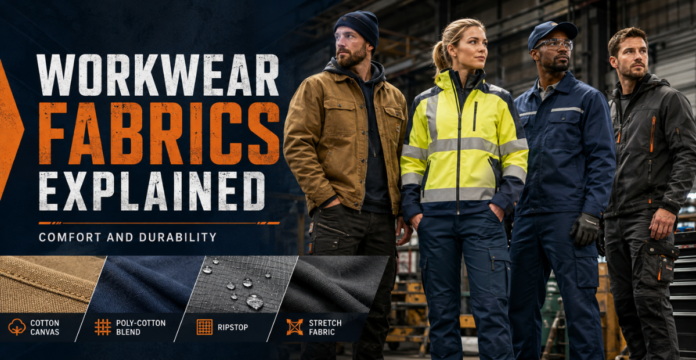
Cotton is one of the most common workwear fabrics because of its soft and comfortable nature against the skin. It can absorb moisture, but thick cotton doesn’t dry quickly. Polyester workwear fabrics normally dry quickly, and they hold their shape well and can weather repeated washings well. However, pure polyester may feel warmer in hot conditions. Cotton-polyester blends are popular because they combine features from both materials. A cotton-rich blend may feel softer, while a polyester-rich blend may offer faster drying, and better shape retention.
Choosing Workwear Fabrics for High Visibility Clothing
High visibility clothing needs more than a bright yellow or orange color. The base material must hold fluorescent color, support reflective tape, and stay strong after regular use and washing. Many hi-vis workwear garments use polyester or polyester-rich workwear fabrics because these materials can dry quickly and maintain a stable appearance. Lightweight workwear fabrics may be used for warm workplaces, while heavier fabrics can support workers in cold or windy conditions. The best workwear fabrics for visibility clothing must help the wearer remain noticeable without making the garment too stiff, heavy, or uncomfortable during movement.
Simple Checks Before Selecting a Fabric
Use these quick checks when comparing workwear fabrics:
- Check the job risks and working environment.
- Choose a fabric weight that suits the season.
- Test comfort during bending and lifting.
- Check resistance to tearing and rubbing.
- Ask how quickly the material dries.
- Confirm shrinkage after washing.
- Check colorfastness and surface appearance.
- Review the need for stretch or ventilation.
- Make sure trims match the fabric strength.
- Test a complete sample before bulk production.
These checks make workwear fabrics easier to compare without focusing only on price. A cheaper material may cost more later if garments shrink, tear, fade, hold bad smells, or become uncomfortable after a few washes.
Durable Workwear Fabrics for Demanding Jobs
Construction work has been used as an example, but other work that has a more physical dimension such as repair, logistics, farming, industrial work, and other manual labor all necessitate use of workwear fabrics that are more heavy duty. Canvas, duck cloth, ripstop, and other heavy twill and reinforced blends are workwear fabrics that are heavy duty. These workwear fabrics can withstand rubbing against tools, machinery, rough walls, boxes, and other surfaces that are typical for work. However, strong material does not always need to be extremely thick or heavy. A well-made ripstop fabric can help control small tears without making the complete garment bulky.
Workwear Fabrics for Rain and Wet Conditions
Workers who spend time outside need materials that manage rain without trapping too much body heat. Waterproof workwear fabrics often use coated or laminated outer layers that stop water from passing through the garment. Breathability is also important because sweat and heat can collect inside waterproof clothing. Some designs use mesh linings, ventilation openings, or layered construction to improve comfort. The waterproof workwear range includes garments made for wet and changing weather, where suitable workwear fabrics are especially important. Buyers should examine waterproof performance, seam sealing, flexibility, drying speed, and comfort before ordering these workwear fabrics.
Matching Workwear Fabrics to the Industry
Restaurant uniforms may need easier airflow, added stain resistance, or even easier washing. Warehouse clothing often needs flexibility and resistance to rubbing. Outdoor workers may need wind protection, warmth, and water resistance. Industrial teams may require specially tested workwear fabrics based on the testing and the testing requirements of their workplace. This is the reason that fabric selection begins with the jobs. When workwear fabrics match the working environment, employees receive better comfort, movement, protection, and reliability throughout the day.
Fabric Weight, Stretch, and Breathability
Fabric weight can affect the overall performance and perceived comfort of work clothing. Heavier fabrics used in work clothing may have a warming effect as compared to their lightweight counterparts. Lightweight fabrics are generally easier to move in and cooler to the touch. However, lightweight fabrics can afford less protection against rougher surfaces. The fabrics themselves can affect the level of discomfort the fabric may cause. Buyers should not look at one feature alone when choosing a fabric.
Care and Testing Before Bulk Production
Even the best fabrics for work clothing can present problems for consumers if they go through bulk production without adequate testing. Buyers should wash a sample of the fabric by following typical wash cycle instructions, and then evaluate shrinkage, fading, twisting, pilling, surface damage, and time to dry. The sample should also be fully evaluated after being worn for a reasonable period. It is also very important to wear the sample for evaluation of stress movements like work movements in the knees, shoulders, elbows, waist, and seat areas.
Conclusion
Selecting correct materials is a crucial step in creating reliable work clothes. The fabric used for workwear should be appropriate for the work, the weather, the movement of the work, the routine of washing, and the expected life of the garments. Cotton is a soft fiber. Polyester has the advantage of strength and quick drying, blends have an advantage over the single constituent fibers, and moisture regain and regain of strength fabrics of technical nature can stand up to and support demanding and wet working conditions. The best workwear fabrics are materials that meet the real requirements of the worker.
FAQs
What are the most common workwear fabrics?
Cotton, polyester, cotton-polyester blends, canvas, twill, ripstop, nylon, fleece, and coated waterproof materials are commonly used. The right choice depends on the workplace and weather.
Is cotton suitable for workwear?
Cotton can be suitable for workwear because it feels soft and comfortable. However, it may absorb water and take longer to dry than polyester or blended fabrics.
Which workwear fabric is the most durable?
Canvas, heavy twill, ripstop, and strong polyester blends are commonly chosen for demanding jobs. Durability also depends on stitching, reinforcement, garment design, and fabric weight.