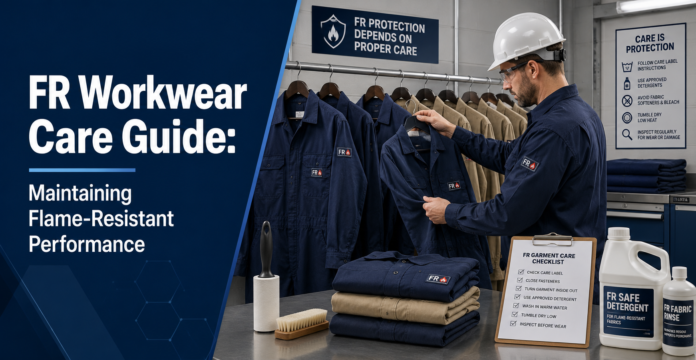
Flame-resistant clothing is made to help reduce burn injury when workers face flash fire, heat, sparks, or flame hazards. However, FR clothing only works well when it is cared for in the right way. This FR workwear care guide explains how to wash, dry, inspect, repair, and store flame-resistant garments in a simple way. FR workwear is not normal clothing. It may look like a shirt, jacket, pant, or coverall, but the fabric has a special job. It must resist ignition, reduce flame spread, and help protect the wearer for a short but important time. Dirt, oil, grease, bleach, wrong detergents, fabric softeners, and poor repairs can reduce this protection. That is why every worker, safety manager, and buyer should understand proper care. A good FR workwear care guide is not only about keeping clothes clean. It is also about keeping protection active for as long as possible. When FR garments are washed correctly, dried carefully, and checked often, they stay safer, more comfortable, and more useful on the job.
What Flame-Resistant Clothing Actually Does
Flame-resistant clothing is designed to resist catching fire and to self-extinguish when the flame source is removed. This does not mean the clothing makes a worker fireproof. It means the garment is made to reduce the chance of serious burn injury during a short hazard event. In many workplaces, FR clothing is used by electricians, welders, oil and gas workers, utility teams, construction workers, and industrial crews. A proper FR workwear care guide helps workers understand that protection depends on both fabric quality and daily handling. For example, a flame-resistant shirt can become less safe if it is covered in oil, because oil can burn. A flame-resistant jacket can lose performance if harsh chemicals damage the fibers. Even small mistakes, such as using chlorine bleach, can weaken the fabric. FR performance is not only built in at the factory; it must be protected during use. Workers who understand this are more likely to treat FR clothing as safety equipment, not just a uniform.
FR Workwear Care Guide: The Basic Rule Before Washing
The first rule in any FR workwear care guide is simple: always read the care label before washing. The label tells you what the fabric can handle, which water temperature is safer, whether tumble drying is allowed, and if special cleaning is needed. Different FR fabrics can have different care needs. Some garments are made from treated cotton, while others use inherently flame-resistant fibers. Treated fabrics need careful washing because the finish can be affected by harsh products. Inherent FR fabrics have protection built into the fiber, but they still need proper cleaning to remove flammable dirt and protect garment life. Before washing, close zippers, fasten buttons, empty pockets, and separate FR garments from normal dirty laundry. Do not wash FR clothing with oily rags, towels, or clothes covered in grease. If you are choosing garments for a team, it helps to check the full workwear range so care needs can match the job type. This paragraph includes the link naturally because garment selection and care should work together from the start.
How to Wash FR Workwear Safely
Washing FR clothing should be done with mild detergent, clean water, and a careful routine. Avoid chlorine bleach, oxygen bleach, fabric softeners, starch, and strong cleaning chemicals unless the garment maker clearly allows them. These products can leave coatings, weaken fibers, or reduce flame-resistant performance. This FR workwear care guide recommends washing FR garments separately when possible, especially if other clothes are very dirty or oily. Use warm water if allowed by the care label, because warm water can help remove sweat, dust, and light soil. However, very hot water may shrink or stress some fabrics, so the label should always guide the final choice. Heavy oil, paint, tar, resin, or chemical stains should be treated seriously. If the stain cannot be removed fully, the garment may need professional cleaning or replacement. A clean FR garment is safer than a dirty one because dirt and oil can act like fuel. Washing is not only about appearance; it is part of keeping FR protection ready for work.
Drying FR Workwear Without Damaging It
Drying is another important part of this FR workwear care guide because too much heat can damage some garments. If the label allows tumble drying, use a low or medium heat setting. Remove the clothing when it is dry instead of leaving it in the dryer for too long. Overdrying can cause shrinkage, fading, stiffness, and fabric stress. Air drying is often a safe choice, especially for jackets, pants, and heavier coveralls. Hang garments in a clean, shaded, and ventilated area. Do not dry FR clothing near open flames, heaters, welding areas, or dirty machinery. Direct high heat is not a good shortcut. It can harm fabric structure and reduce garment life. Also, avoid using dryer sheets because they may leave a coating on the fabric. If the clothing feels stiff after washing, do not solve the problem with fabric softener. Instead, check whether detergent residue is present and rinse again if needed. Proper drying keeps FR workwear comfortable, clean, and ready for long work shifts.
6. Stains, Oil, Grease, and Chemical Contamination
FR clothing must be kept free from flammable contaminants. This includes oil, grease, fuel, solvents, paint, adhesives, and certain chemicals. These substances can burn on the fabric surface, even when the garment itself is flame-resistant. That is why stain control is a major point in any FR workwear care guide. Light dirt and sweat are normal, but heavy oily contamination is different. If a flame-resistant coverall is soaked with fuel or oil, do not keep wearing it. Remove it safely, wash it according to the label, and inspect it after cleaning. If the smell, stain, or residue remains, the garment may no longer be safe. Workers using full-body protection should pay close attention to high-contact areas like sleeves, chest, thighs, knees, and cuffs. Garments such as flame-resistant coveralls need extra care because they protect large body areas and often collect more workplace dirt. Clean fabric is part of safe fabric, especially in jobs where heat and flame hazards are present.
One-Paragraph Bullet Checklist for Daily FR Workwear Care
- Read the care label before every new washing routine.
- Wash FR clothing separately from oily or heavily soiled laundry.
- Use mild detergent and avoid bleach, softener, starch, and dryer sheets.
- Remove oil, grease, fuel, and chemical stains before wearing the garment again.
- Dry on low heat or air dry when the care label allows it.
- Inspect seams, cuffs, collars, closures, and reflective parts after washing.
- Repair FR garments only with suitable FR thread, patches, and materials.
- Replace clothing that has holes, burns, heavy stains, chemical damage, or weak fabric.
- Store FR workwear in a clean, dry place away from sunlight, fuel, and chemicals.
- Treat every FR garment like safety equipment, not like normal casual clothing.
Inspecting FR Clothing After Washing
Inspection should be part of every FR workwear care guide because washing can reveal damage that was hidden by dirt. After cleaning and drying, check the whole garment before it goes back to work. Look for holes, burns, thin fabric, broken seams, damaged zippers, loose buttons, worn cuffs, and torn pockets. Also check areas that move a lot, such as elbows, knees, shoulders, and crotch seams. These areas often wear out first because they stretch, bend, and rub during work. If reflective tape is added to the garment, make sure it is still attached and visible. If labels are faded or missing, the garment may become harder to identify and manage. Inspection is not only for old clothing. New garments should also be checked after the first few washes to confirm fit, shrinkage, comfort, and stitching quality. This FR workwear care guide reminds buyers and workers that small damage can become a bigger safety problem if it is ignored. A small hole can spread. A weak seam can open. A damaged closure can expose the body during a hazard.
Repairing FR Workwear the Right Way
FR workwear repairs should never be done with normal thread, normal patches, or random fabric. A poor repair can create a weak point in the garment. For example, if a flame-resistant shirt is repaired with regular polyester thread, that thread may melt or burn differently from the original garment. This can reduce safety in the repaired area. A proper FR workwear care guide should always explain that repairs must use suitable FR materials. Small repairs may be possible if the fabric is still strong and the damage is limited. However, large burns, chemical damage, heavy oil stains, and weak fabric often mean replacement is safer than repair. Buttons, zippers, hook-and-loop parts, labels, and trims should also be compatible with the garment’s use. When building a full uniform set, items like flame-resistant shirts should be repaired and maintained with the same care as jackets, pants, and coveralls. FR protection works best when the whole outfit is safe, not just one garment.
Storage and Handling Between Shifts
Storage may sound simple, but it is still important in this FR workwear care guide. Flame-resistant garments should be stored in a clean, dry, and ventilated area. Do not leave them on dirty floors, near fuel cans, beside welding tools, inside damp lockers, or in direct sunlight for long periods. Moisture can cause odor, mildew, and fabric stress. Sunlight can fade fabric and weaken some materials over time. Chemical exposure during storage can also create hidden risk. Workers should avoid storing FR clothing with oily gloves, dirty boots, solvents, batteries, sharp tools, or wet rain gear. If garments are used by a team, each worker should have enough pieces to allow proper rotation. Wearing the same dirty garment every day without washing can increase odor, skin discomfort, and contamination. A rotation system also helps clothing last longer because garments get time to dry and recover between shifts. Good storage is part of good safety culture. It shows that FR clothing is treated as protective equipment, not as throwaway work clothes.
Conclusion
The best care habits are simple but consistent. Wash FR clothing before dirt and oil build up. Avoid bleach, fabric softeners, starch, dryer sheets, and harsh chemicals. Dry garments with controlled heat or air drying when allowed. Inspect after washing, repair only with proper FR materials, and replace unsafe garments on time. This FR workwear care guide should be used as a daily reminder that flame-resistant performance depends on both product quality and user care. A clean and well-maintained garment can support better protection, better comfort, and better confidence at work. Poor care can reduce garment life and may create safety risks. Workers should not wait until clothing looks destroyed before taking action. If a garment smells like fuel, has deep stains, has holes, or feels weak, it should be checked before use. In the end, the goal is not just to make FR workwear last longer. The goal is to keep people safer while they do difficult jobs in dangerous places.
Frequently Asked Questions
What is the most important rule in an FR workwear care guide?
The most important rule is to read the garment care label and follow it every time. Avoid bleach, fabric softeners, starch, and harsh chemicals unless the label clearly allows them.
Can I wash FR workwear with normal clothes?
It is better to wash FR workwear separately, especially if other clothes are oily, greasy, or heavily dirty. This helps prevent flammable dirt from moving onto FR garments.
When should FR clothing be replaced?
FR clothing should be replaced when it has holes, burns, heavy stains, chemical damage, weak fabric, or repairs that cannot be made safely with FR materials.
Does flame-resistant clothing last forever?
No, FR clothing does not last forever. Its life depends on fabric type, washing method, job conditions, stains, damage, and how well the garment is inspected and stored.