Many individuals think workwear and uniforms are interchangeable. The word choices for workwear vs uniforms are a good starter for understanding the design and daily use concerns along with their safety issues. Research shows that, in a workwear situation, something designed as workwear may also be used as uniform, along with regular (and potentially unsafe) workwear. This is especially the case with jobs where there are many tasks that may require equipment that is not safe to use as workwear.
Workwear vs Uniforms
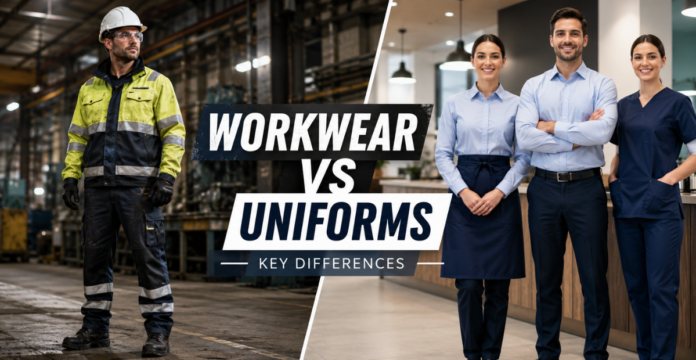
The basic difference in workwear vs uniforms is the main reason the clothing is worn. Workwear is built around job performance. It may protect the body from heat, rain, dirt, sharp tools, chemicals, or rough surfaces. Uniforms are built around identity and appearance. They help customers know who works for a company and make the whole team look organized. A company can select practical workwear for workers who need freedom of movement, strength, and protection during long shifts. Workwear vs uniforms should therefore be compared by asking one simple question: is the clothing mainly made for the job, or mainly made to represent the company?
Safety Is the Main Goal of Workwear
Workwear comes with safety as the main goal.Workwear can have features such as reinforced knees, fabric that resists the effects of flame, fabric layers that are waterproof, reflective tape, strong seams, or extra pockets that are used to hold tools. These features not only protect a person during the performance of a job, but they make the performance of the job easier. When it comes to employees of construction companies, electric utility companies, or gas utility companies, workwear becomes crucial to making the employees of the companies protected when performing a job, and keeping the employees of the companies organized.
Uniforms Build a Professional Company Image
Uniforms are important because they create trust and make a business look professional. In the workwear vs uniforms comparison, uniforms focus more on brand colors, logos, neat shapes, and a consistent look. Hotel staff, shop workers, receptionists, cleaners, and office teams often wear uniforms so customers can identify them quickly. A well-designed uniform can also make workers feel that they are part of one team. Many companies choose corporate uniforms that look smart while still giving staff enough comfort for a full working day. Workwear vs uniforms is therefore also a choice between practical job protection and clear company identity. However, branding can be added to both, so workwear vs uniforms can still support one strong and consistent company image.
Fabric and Construction Are Often Different
The selection of fabric is also key in workwear vs uniforms. Many service team members wear workwear because of the types of services they render that exposes them to contact with the services. The materials used for work fabrics are industrial cottons, polyester blends, ripstop fabrics, canvas, twill, and waterproof coated fabrics. The fabrics used for service team members’ uniforms are often lighter fabric types because the uniforms for service team members often have their identity logos. Good protective uniforms for service team members, however, still need strong stitching and colorfast fabrics, so they still maintain their good identity after multiple protective uniform washes.
Main Differences at a Glance
The easiest way to remember workwear vs uniforms is to compare their main features one by one:
- Workwear protects workers during physical or risky tasks.
- Uniforms create a matching and professional team image.
- Workwear often uses stronger and heavier fabrics.
- Uniforms often use brand colors, logos, and clean styling.
- Workwear may include reflective tape, padding, or waterproof layers.
- Uniforms may focus more on comfort, fit, and customer recognition.
- Workwear is chosen according to job hazards.
- Uniforms are chosen according to company identity and service needs.
These simple points show that workwear vs uniforms is mainly about function, safety, and appearance.
Different Jobs Need Different Clothing
The correct choice of workwear vs uniforms largely depends on the job. A mechanic must have clothing that can withstand dirt, grease, and movement. A delivery driver may need a strong & proper trousers, jacket, and branded polo. A nurse requires a professional looking and clean uniform that supports movement and hygiene. A factory worker must have properly fitting clothing that is made of a protective material and is designed for the needs of heat, flames, or machinery. Businesses should select industry-specific clothing when normal garments cannot meet the needs of a task.
Visibility and Weather Protection Matter
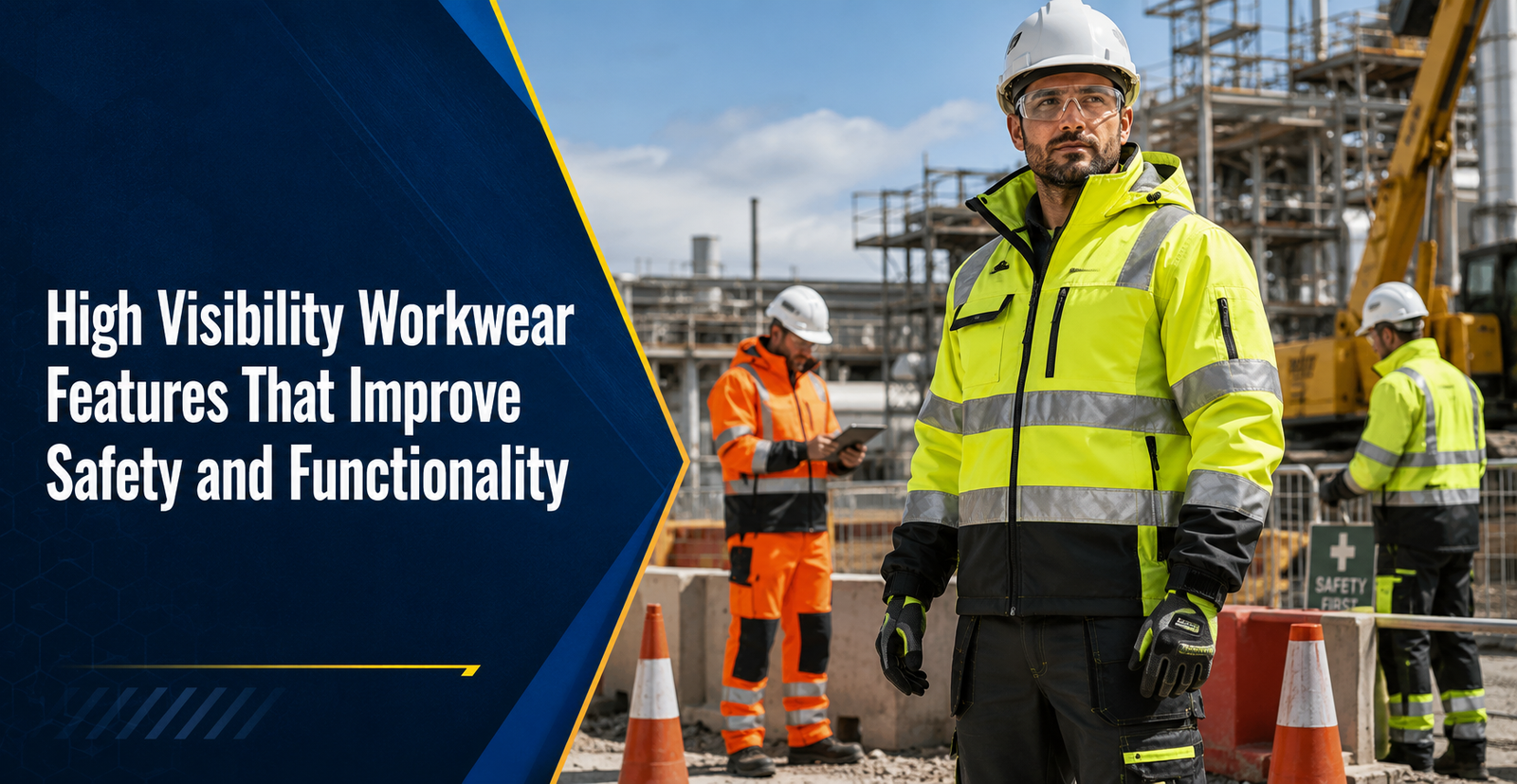
Outdoor workers often need more than a simple uniform. The workwear vs uniforms difference becomes clear when workers face traffic, rain, wind, darkness, or changing temperatures. Proper hi-vis workwear helps workers stand out in low light, while waterproof clothing keeps the body dry and helps prevent cold discomfort. A logo can still be added, but safety must come first. Workwear vs uniforms can also overlap here because a high-visibility jacket may use company colors and branding while still meeting a practical need. Employers should think about the real working environment before choosing clothing, including the season, shift time, weather, and level of physical activity.
Comfort, Fit, and Movement Affect Performance
Comfort becomes important for both workwear and uniforms, but the type of comfort may be different. Workwear should allow for bending, lifting, kneeling, climbing, and carrying tools. Uniforms should help staff to look neat while sitting, walking, serving customers, or standing for long hours. Poor fit can make workers feel tired, restricted, or distracted. Good designs use the right size range, flexible panels, breathable fabric, adjustable areas, and useful pocket placement. When planning workwear vs uniforms, a company should test samples with real workers before placing a large order. Employee feedback can reveal problems that are easy to miss in a product photo, making the final workwear vs uniforms choice more practical.
Cost, Care, and Replacement Planning
The least expensive choice is not always the most suitable option when dealing with workwear vs uniforms. Expenses on low-cost garments can be a waste due to color loss, shrinkage, tears, and the garments becoming uncomfortable after a couple of washes. Workwear costs more as it is made of stronger fabric with protective features and special construction. Projection costs are reflected in the pricing of uniforms, as most businesses must purchase uniforms for entire staffs. Companies need to consider the cost of care when making a workwear vs uniforms decision.
Conclusion
The experience gained when dealing with workwear vs uniforms suggests that each separate type of protective wear has a specific purpose. When workwear provides protection, uniforms provide a clear and professional business identity. In many workplaces, the answer is not workwear vs uniforms, but a combination of both, that provides the best form of protection. A branded jacket has a purpose of corporate protection. A company shirt with corporate branding is both corporate and protective. Before ordering any corporate protective wear, a business needs to consider a variety of factors including the corporate image and protection of the brand as well as costs associated with care.
FAQs
Are Workwear and Uniforms the Same?
No, they are not always the same. Workwear is mainly designed for safety and job performance, while uniforms are mainly designed to create a matching and professional company image.
Can Workwear Also Be Used as a Uniform?
Yes. Branded workwear can protect employees while also giving the whole team a consistent look. This is common in construction, delivery, factory, and maintenance businesses.
Is Workwear More Expensive Than a Uniform?
Workwear can cost more because it may use stronger fabrics, reinforced stitching, reflective tape, waterproof layers, or protective materials. However, the final price depends on design, quantity, and customization.