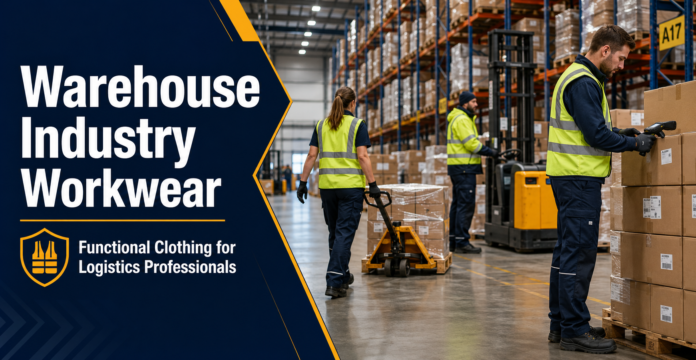
Warehouse jobs look simple from the outside, but the work is physical, fast, and full of movement. Workers walk long aisles, lift cartons, load trucks, scan products, climb steps, push pallets, and stand for many hours. Because of this, warehouse industry workwear must support the body without slowing the worker down. Good clothing helps staff move safely, stay comfortable, and look professional during the full shift. Poor clothing can cause sweating, rubbing, loose fabric problems, low visibility, or discomfort. In a busy logistics space, even small clothing issues can affect focus and safety. That is why warehouse industry workwear should never be treated like normal casual wear. It should be practical, durable, easy to wash, and suitable for the work area. The right workwear also helps teams look organized, especially when visitors, drivers, suppliers, or customers enter the facility. A smart clothing plan supports safety, comfort, and brand image at the same time.
2. Warehouse Industry Workwear
Warehouse industry workwear is functional clothing made for logistics workers, packing teams, stock handlers, forklift operators, dispatch staff, and warehouse supervisors. It usually includes work pants, polo shirts, T-shirts, jackets, safety vests, gloves, rainwear, and high-visibility layers. The main purpose is not fashion. The purpose is to help workers complete daily tasks with comfort, movement, and protection. In a warehouse, clothing should not be too tight, too loose, too heavy, or too hot. It should allow bending, reaching, lifting, and walking without pulling at the shoulders, knees, or waist. Good warehouse industry workwear also depends on the workplace. A cold storage warehouse may need insulated layers, while a hot packing area may need breathable fabrics. A loading dock may need high-visibility clothing, while a clean packing zone may need neat uniforms. The best choice comes from understanding the job, not just picking one standard outfit for everyone.
Start With the Real Warehouse Job
Before choosing warehouse industry workwear, buyers should first study what workers actually do during a normal shift. A picker may walk thousands of steps, so lightweight clothing and comfortable pants matter. A loader may need stronger fabric because cartons, pallets, and equipment can rub against clothing. A forklift operator may need clothing that stays neat while sitting, turning, and stepping in and out of the vehicle. A supervisor may need a smarter uniform that still works on the floor. Companies can start with a general workwear collection when planning basic clothing for different warehouse roles. This helps buyers compare jackets, pants, safety layers, and daily work clothing in one place. However, every garment should still match the task. Warehouse industry workwear works best when each role gets clothing that fits its real movement, risk, and working conditions.
Comfort Helps Workers Stay Productive
Comfort is not a small detail in warehouse clothing. It affects speed, focus, and worker mood. If a shirt traps heat, the worker may feel tired faster. If pants are too stiff, bending and lifting become harder. If seams rub against the skin, long shifts become uncomfortable. Good warehouse industry workwear should feel easy to wear from the first hour to the last hour of the shift. Breathable fabrics are useful in hot packing areas, while flexible panels can help workers bend and reach more easily. Waistbands should stay secure without digging into the body. Sleeves should allow arm movement without pulling across the shoulders. Clothing should also be simple to wash because warehouse uniforms often collect dust, sweat, and dirt. When warehouse industry workwear is comfortable, workers are less likely to roll up sleeves, remove safety layers, or wear random personal clothing that does not match workplace rules.
Visibility Is Important Around Moving Equipment
Warehouses often have forklifts, pallet trucks, carts, delivery vehicles, and workers moving in the same space. This makes visibility very important, especially in loading docks, parking areas, storage aisles, and low-light zones. Warehouse industry workwear should include high-visibility layers when workers need to be seen clearly. Bright colors and reflective details can help drivers and machine operators notice people faster. This is especially useful during early morning loading, night shifts, rainy weather, or crowded dispatch times. For teams that need clear visibility, hi-vis workwear can be a practical option for safety vests, jackets, and visible outer layers. Still, visibility should match the job. A visitor vest may be enough for short site access, but daily dock workers may need stronger, longer-lasting garments. Good warehouse industry workwear makes workers easier to identify, easier to see, and easier to manage in busy areas.
Fabric Strength and Movement Must Work Together
Warehouse clothing must be strong, but it should not feel like hard armor. Workers need fabric that can handle rubbing, lifting, kneeling, stretching, and daily washing. At the same time, clothing should stay flexible enough for real movement. The best warehouse industry workwear balances durability with comfort. Heavy-duty fabric can be useful for pants, jackets, and outer layers, while lighter breathable fabric may be better for shirts worn close to the skin. Stretch panels can help workers move without tearing seams, especially around the knees, shoulders, and waist. Strong stitching also matters because weak seams can fail when workers lift, crouch, or reach. Zippers, buttons, and pockets should be secure but not bulky. A warehouse uniform should also keep its shape after washing. When warehouse industry workwear loses shape too quickly, it can look unprofessional and become uncomfortable. Strong fabric, flexible design, and good construction should always work together.
One-Paragraph Buyer Checklist
Use this simple checklist before ordering warehouse industry workwear for a logistics team:
- Choose clothing that matches each warehouse role.
- Pick breathable fabric for hot indoor areas.
- Use stronger fabric for loading and handling jobs.
- Add high-visibility layers where vehicles move.
- Select flexible fits for bending and lifting.
- Avoid loose fabric near moving equipment.
- Choose pockets that are useful but not bulky.
- Check seams, zippers, cuffs, and waistbands.
- Make sure jackets fit over inner layers.
- Choose gloves when grip and hand protection matter.
- Test sample sizes before bulk ordering.
- Keep branding clean, simple, and professional.
- Make washing and replacement rules clear.
- Replace torn, faded, or unsafe garments quickly.
Weather and Loading Dock Conditions Matter
Many warehouse workers do not stay inside all day. Some move between storage areas, trucks, yards, and loading docks. This means warehouse industry workwear should also consider weather. Rain, wind, cold air, and wet floors can make the job harder. A worker who loads trucks during rain needs clothing that helps keep the body dry without becoming too heavy. In cooler weather, jackets should provide warmth but still allow lifting and reaching. In rainy dock areas, practical rainwear can help teams stay dry during loading, unloading, and outdoor movement. However, rainwear should still fit properly over normal work clothing. If it is too loose, it may catch on equipment. If it is too tight, it can restrict movement. Good warehouse industry workwear protects workers from changing conditions while still supporting speed, safety, and comfort.
Fit Should Be Safe, Not Just Stylish
Fit is one of the most important parts of warehouse industry workwear. Clothing that looks good but does not move well can become a problem during work. Shirts should not pull up when workers reach overhead shelves. Pants should not become tight when workers squat, bend, or climb steps. Jackets should close easily over layers without making the worker feel trapped. At the same time, clothing should not be too loose. Loose sleeves, hanging drawcords, or oversized jackets can create safety issues around conveyors, forklifts, pallet trucks, and storage racks. The goal is a clean, safe, comfortable fit. Size testing is helpful before placing a large order because warehouse teams often include many body types. Warehouse industry workwear should support real people doing real jobs, not just look good on a product photo. A proper fit helps workers move naturally and keeps the uniform looking professional.
Branding and Professional Appearance
Warehouse clothing should also support company image. A clean uniform helps workers look organized and easy to identify. This is useful for team leaders, visitors, delivery drivers, and new employees. Warehouse industry workwear can include simple logo placement, department colors, name labels, or role-based color coding. For example, supervisors, pickers, packers, and loading staff may wear slightly different colors or vest styles. This makes the floor easier to manage. However, branding should not make the clothing uncomfortable. Large prints, thick patches, or badly placed embroidery can irritate the skin or reduce flexibility. The best branding is clear, neat, and practical. It should support the company without getting in the way of work. Good warehouse industry workwear makes a logistics team look professional while still giving workers the movement, comfort, and durability they need for a long shift.
Conclusion
The best warehouse industry workwear is clothing that helps logistics professionals work safely, comfortably, and confidently. It should match the job, support movement, handle daily wear, and keep workers visible where needed. Buyers should think about fabric, fit, weather, visibility, durability, washing, and team branding before placing an order. A good warehouse uniform is not just a shirt and pants. It is part of the work system. When clothing is chosen carefully, workers can move better, stay more comfortable, and look more professional throughout the day. Warehouse industry workwear should always be practical first because warehouse jobs need clothing that can handle real movement, real pressure, and real working conditions.
FAQs
What is warehouse industry workwear?
Warehouse industry workwear is functional clothing made for warehouse, logistics, packing, loading, and dispatch workers. It includes shirts, pants, jackets, vests, gloves, and weather layers. The goal is comfort, safety, movement, and durability.
Why is high-visibility clothing important in warehouses?
High-visibility clothing helps workers stay easier to see around forklifts, pallet trucks, delivery vehicles, and loading docks. It is especially useful in low-light areas, night shifts, and busy movement zones.
What fabric is best for warehouse workwear?
The best fabric depends on the job. Breathable fabric is good for hot indoor work, while stronger fabric is better for loading and handling. Many teams need a balance of comfort, strength, and easy washing.
How should warehouse workwear fit?
Warehouse workwear should allow bending, lifting, walking, and reaching without feeling tight. It should also avoid loose fabric that may catch on equipment. A safe fit is comfortable, neat, and practical.