Staying dry and protected against the elements are essential when it comes to outdoor sports. Today, there are many different types of waterproof jackets. Each one is designed for a particular purpose, activity, or environment. The right waterproof jacket is essential for comfort, safety, and performance. Understanding the differences in each style will help you make an informed buying decision and allow brands to build product lines that truly serve their target customers.
Waterproof jackets are not all the same
Most people believe that any jacket labeled waterproof will perform in the same manner regardless of the situation. This assumption can lead to disappointment quickly. Moreover, the design, construction, and fabric technology of each jacket type differs significantly depending on its intended use.
Waterproofing Technology
Three core technologies are used to create waterproof jackets. Waterproof membranes are a thin layer that is bonded to outer fabrics. They block liquid water but allow water vapour escape. Second, a durable water-repellent finish (commonly known as DWR) causes water to bead up and run off of the surface. The third option is a combination, which gives the jacket multiple layers of protection from heavy rain and prolonged rainfall.
The construction of the seams is also important. Seams that are fully taped prevent water from leaking through the needle holes. The main seams are only covered by the critical taped seams. This is a lighter, more affordable option in moderate weather conditions.
What does Breathability Mean in Waterproof Jackets?
The jacket’s breathability refers to its ability to let body heat and moisture vapour escape, while keeping out external water. A waterproof jacket that is not breathable will trap sweat, making it just as wet as rain. For high-intensity activities such as trail running or climbing, breathability is as important as waterproofing.
What are the different types of waterproof jackets?
Brands and buyers can match the jacket with the activity by understanding the types. It also ensures that each garment in a range has a distinct and clear purpose.
Hardshell Jackets
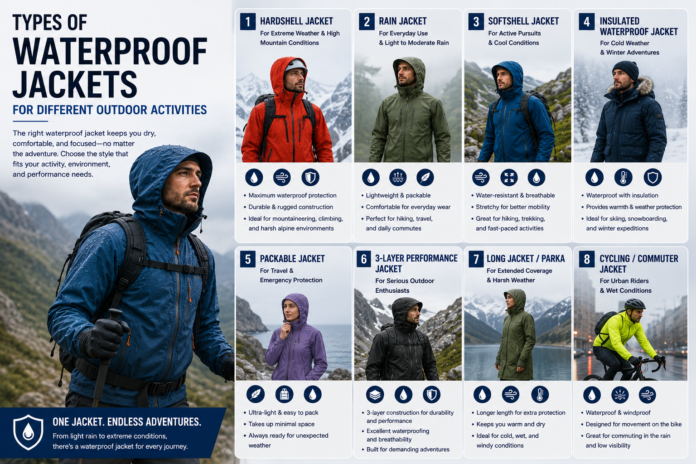
Hardshell jackets offer the highest level of waterproofing. These jackets are designed for extreme weather — heavy rain, strong wind, sleet and snow. They are therefore the preferred choice of mountaineers and backcountry skiers.
The construction of a hardshell jacket typically uses a two-layer, two-and-a-half-layer, or three-layer waterproof membrane system. The most durable and high-performing jackets are made with a three-layer construction, where the membrane is attached to both the outer fabric as well as an inner lining. Hardshell jackets also feature hoods compatible with helmets, ventilation zips under the arms, and reinforced panels in high-wear areas.
Explore our hardshell Jackets Manufacturing and contact our team today.
Softshell Jackets
Softshell jackets are a good compromise between a fleece and an entirely waterproof shell. These jackets are made of stretch-woven composite fabric bonded with a fleece or a jersey inner. They provide wind resistance, rain protection and breathability all in one layer.
Softshell jackets work best for high-output sports like trail running, skiing, and hiking at a fast pace. In these activities, sustained movement creates heat, so breathability is more important than weather protection. Softshell jackets, however, are not designed for prolonged heavy rain. These jackets are intended for conditions that range from cool and dry to slightly wet, where performance is a priority.
Are you ready to create softshell jackets as part of your outdoor collection? Start your production journey by visiting our Softshell Jackets Manufacturing page.
Waterproof Windbreaker Jackets
Windbreaker jackets offer lightweight protection from the wind and light rain. These jackets are made from lightweight nylon or polyester fabric with a DWR finish, making them lighter and easier to pack than other hardshell or softshell options.
Windbreakers are also ideal for activities that place a high priority on weight and pack size, such as trail running, biking, and traveling. The windbreakers are small enough to fit in a pocket and add little weight to your daypack. They can be deployed instantly when the weather changes. They are not intended for heavy rain that lasts a long time. Their water resistance will be compromised in such conditions.
Discover our manufacturing choices and create a range of lightweight outerwear that your customers will love.
Waterproof Insulated Jackets
These jackets are waterproof and insulated, combining weather protection and thermal insulation into one garment. They eliminate the need for an additional mid-layer when it is cold or wet. These jackets are popular for cold weather activities such as skiing, winter hiking and camping.
The insulation inside these jackets is available in two types: down and synthetic. The best insulation for warmth to weight ratio is down, but it loses its insulating properties when wet. Synthetic filling retains its warmth when damp, making it a better choice for environments that are consistently wet.
Our puffer Jackets Manufacturing team is here to help you find the right fabric, fill and construction for any product that your brand may be developing.
Rainwear Jackets
Rainwear jackets have been designed to provide protection from wet weather for a long time. They place a higher priority on waterproofing, coverage and technical performance than breathability. These jackets are usually lighter and cheaper than hardshell jackets, making them a good choice for activities that require weather protection but not high output.
Rainwear jackets can be used for camping, fishing, outdoor recreation in general, and even urban commutes in humid climates. These jackets are more popular with a wider range of customers than hardshell technical jackets, which is why they make a great product for brands that target a lifestyle or general outdoor market.
Today, you can start manufacturing rainwear to promote your brand. Contact our team by visiting our rainwear production page.
Snow and Ski Jackets
Ski jackets are designed to be used on the mountain in cold and snowy conditions. These jackets combine waterproofing and wind resistance with insulation and ski-specific features, such as powder skirts that prevent snow from entering, helmet-compatible sleeves, goggle pockets and pass pockets.
Ski jackets also work well as part of an outerwear layering system, usually over a base-layer and a mid-layer fleece. This means that the fit must accommodate the layers without restricting the movement on the slopes. Ski jackets have some of the highest construction standards in the category of waterproof outerwear.
Our skiwear manufacturing capability covers full ski jackets and pants production — from fabric source to finished garment. Please contact us to discuss the requirements for your ski collection.
Waterproof Jackets For Hiking And Camping
Hiking and camping jackets that are waterproof balance weather protection, packability and versatility. These jackets are lighter than ski or mountaineering gear and can be easily carried in a backpack. They can also be used to adapt to changing conditions on the trail.
These jackets also work as an outer shell for the hiking layering systems — they sit over a moisture wicking base-layer and insulating middle-layer, completing a complete weather protection system. The hood, hem, and pocket placement have been optimized for use on the trail or in camp, rather than skiing and technical climbing.
Waterproof Jackets: What to look for
No matter which type of jacket is best for your sport, there are certain features that separate a good product from one that’s disappointing. Here’s what you should look for:
- Waterproof Rating — measured by millimetres in water column. 10,000mm is suitable for general outdoor use. 20,000mm or more suits demanding conditions.
- Breathability Rating — measured by grams of moisture transmitted per square metre in 24 hours. Higher numbers indicate better breathing
- Seam Construction — Fully taped seams for maximum safety, moderately taped seams
- Hood design — compatible with helmets for technical use and adjustable for outdoor activities
- Packability — Lightweight jackets that compact into their own pockets are more versatile when traveling and hiking.
- DWR Refresh — The outer DWR finish degrades with time, and requires periodic refreshing in order to maintain its water repellency.
Waterproof Jackets For Outdoor Brands – Where To Start?
The quality and commercial success will be determined by the decisions made early on in the process if you plan to add waterproof jackets into your outdoor apparel range. Before sampling can begin, fabric selection, membrane technology and seam construction must be specified.
Working with a manufacturer that specializes in waterproof clothing, rather than an all-purpose factory claiming they can handle outerwear for technical purposes, will give your brand the technical expertise as well as production quality needed to produce waterproof jackets.
If you’re developing an outdoor outerwear line alongside your waterproof jackets then explore the jacket manufacturing options available to you. This will help you build a cohesive collection from a trusted production partner.
Are you ready to begin your waterproof jacket manufacturing? Let us help you create your outdoor outerwear collection. Contact our team now.
Conclusion
There are many different types of waterproof jackets for outdoor activities. They range from lightweight windbreakers that can be packed into a backpack to hardshell mountaineering coats with advanced technology. Each style is designed for a particular activity, customer and weather conditions.
Understanding these differences will help you build an outdoor product line that truly serves your customers — and make smart purchasing decisions when weather is the only variable you can’t control.
If you’re a brand looking to develop your next outdoor collection, or a customer choosing the best jacket for your next trip, you should know which waterproof jacket is right for you.
FAQs
What’s the difference between hardshell and softshell jackets?
Hardshell jackets use a waterproof membrane with taped seams to provide full weather protection under extreme conditions. A softshell is a stretchy composite fabric that offers wind resistance, light rain protection and better breathability. It’s ideal for high-output sports in moderate weather conditions.
Is windbreaker clothing waterproof?
No, windbreakers are not waterproof. They can handle rain and wind but they will get wet if the rain is heavy. These jackets are ideal for activities that require a lightweight and compact design.
What is the waterproof rating on a jacket about?
The rating measures how much pressure water can exert before the fabric leaks, expressed in millimetres. A rating of 10,000mm suits general outdoor use. A rating of 20,000mm or more is suitable for demanding alpine skiing and conditions.
What does DWR stand for and will it wear off?
DWR is Durable Water Repellent, a coating that is applied to outer fabrics to cause water to bead up and run away. It wears out over time, but it can be revived with specialist spray treatments and tumble drying.