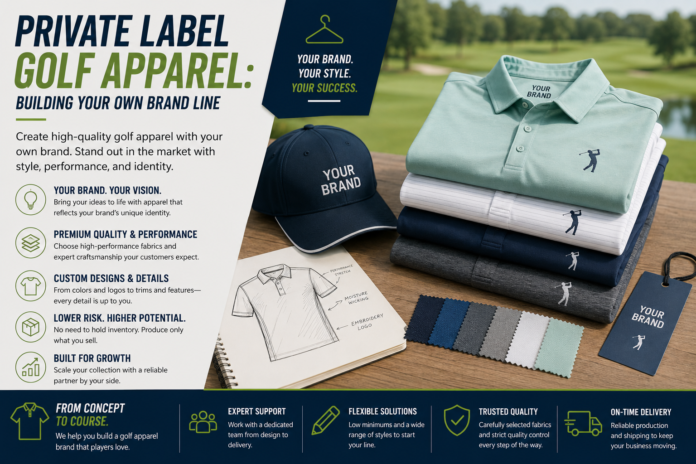
Golf apparel is an expanding market as more golfers desire clothing with style and performance on and off the golf course. Private label golf apparel gives brands, retailers, and entrepreneurs the opportunity to begin selling golf apparel with their own brand as opposed to a third-party label. This guide will help you understand private label golf apparel, how to begin the development process, and the main components that will help you build your brand line from concept to market.
What Is Private Label Golf Apparel?
Private label golf apparel is the designing, branding, and selling of golf apparel in your brand name, while the production is done by a third-party manufacturer. With this model, brands have the opportunity to design the apparel and set their own standards for quality and pricing with no investment on their end for production. Compared to resale of brands in the market, private label options also provide the most flexibility. Because of this, private label golf apparel is a great option for both market entrepreneurs and established brands.
Why Private Label Golf Apparel Makes Business Sense
In contrast to reselling established brands of golf apparel or buying and selling golf apparel from wholsalers, creating a private label golf apparel line has many benefits.
Greater Brand Control
Private label golf apparel allows brands the most control of their product as they have direct influence on the fabric, silhouettes, colors, and even the label design.
So, what does this customized golf apparel line mean for your customers? Understanding your customers and designing a line that meets their needs is critical for engaging premium club members, casual weekend golfers, and even the consumers who tennis wear fashionable, golf-inspired apparel off the course. A private label golf apparel line creates more brand loyalty than retailing sports apparel that is easily accessible.
Better Margin Opportunities
Private label golf apparel lines create greater profit margins than selling exterior golf clothing brands. Every private label line eliminates the wholesale markup. If you partner with a manufacturer, pricing is variable based on your order and the fabric you choose. Compared to other golf apparel lines, private label golf apparel offers a sustainable margin.
Design and Development Flexibility
Once a private label contract is signed, golf apparel brands are more easily able to adapt designs to satisfy customer requests and industry trends. These adaptations are much more difficult, if not impossible, to make within the confines of a pre-designed collection. If customers are expressing a preference for a particular color or fabric, you can easily adjust production.
Private Label Golf Apparel: A Step-By-Step Guide
Private label golf apparel is a multi-dimensional process. Each phase is critical to the quality and positioning of the line.
Step One: Identify Your Brand and the Customers You Serve
Before you begin catering to your clientele by selecting fabrics or drafting sketches, establish your brand identity so that you can align the other decisions with your brand’s vision.
Reflect on your target customer, including their anticipated price point and their expected level of performance and/or style from your offering. Analyzing other golf apparel brands will also help unearth opportunities in the marketplace that your line can capitalize on. Taking this step will help your private label golf apparel line launch with a clear, distinct focus.
Step Two: Choose Your Garment Categories
Most private label golf apparel lines launch with a selected few categories of garments, as opposed to a fully comprehensive collection, and golf polos, quarter zip pullovers, golf jackets, and shorts are the building blocks of a golf focused line. This helps brands with a limited line stay focused and helps them manage time and resources.
Step Three: Choose Your Fabrics
The fabrics you use for your line will communicate the level of seriousness your brand has to your customer. A line that has cotton blenz as their base offering will have a more casual positioning, while a line that has a more performance offering will have a serious and premium offering. Typical draw fabrics for base layers are polyester and polyester + spandex blends for wovens. A golf market that is increasing in clientele with eco-conscious values will appreciate a line that has sustainable options like recycled polyester. Be sure to review your options carefully and request the necessary information regarding your line’s performance prior to your commitment.
Step Four: Refine Your Designs and Branding
Once you have settled your fabrics and garment categories, you will move to the design stage of drawing your Soccer apparel and specifying your brand with details such as label placements, embroidered logos, and hangtags.
Bold designs with full coverage benefit most from sublimation printing. Meanwhile, embroidery leaves a better quality finish. Choosing the right methods in tandem with the right fabrics will ensure your products hold up to your brand’s standards and price tier.
Step Five: Sampling and Revision
Sampling is the only way to check the design, fabric, and construction in bulk. Be sure you request samples in all sizes to check that the fit is consistent across sizes. Brands can suffer significantly due to ungraded fit samples and returns will only make the situation worse. Though it adds time initially, Sampling prevents negative impacts to the brand from bulk errors. Be sure your feedback is constructive and your samples are checked.
Step Six: Bulk Production and Quality Control
When all samples are approved, the bulk order will be completed with quality checks at each step. Good manufacturers will check their own work at each step and provide your brand confidence with documents and pictures. Confirm your packaging and labeling with the manufacturer well in advance to avoid unnecessary delays in shipping.
Key Considerations When Choosing a Manufacturing Partner
Choosing the right supplier will be one of the most important parts of launching your private label golf apparel line. The most important are:
- Golf-specific experience: Choose a manufacturer familiar with golf apparel construction and performance fabric requirements.
- MOQ flexibility: Check that minim order quantities suit your budget and your delivery and launch plans.
- Sample quality and turnaround: How quickly and accurately does the manufacturer produce samples?
- Fabric sourcing capabilities: Can the manufacturer source performance fabrics that meet golf’s specific requirements?
- Customization range: Does the manufacturer have the embroidery, sublimation, and labeling options that your brand needs?
- Communication reliability: Look at their communication responsiveness and clarity in the early phases. These traits carry through to the rest of the partnership.
Taking these aspects into consideration can help a brand develop a trustworthy manufacturing partnership to aid in developing product lines for more than one season.
Taking Your Private Label Golf Apparel Beyond A Single Line
Once your first line is successful, adding other related lines bolsters your brand’s position in the golf apparel market. Examining the entire golf apparel collection can help you visualize options for complimentary product lines that mesh with the offering you currently sell, such as outerwear, footwear, and performance layers. Additionally, brands that span multiple sports can look at the other sportswear offerings to keep the quality and performance standards the brand has established outside of golf.
Golf Apparel Private Label Partners You Can Count On
Launching a private label golf apparel line requires a strategic partner who understands not only the performance needs of golf apparel, but the branding aspects of a new line.
Whether introducing a premium golf club brand, a retail golf apparel collection, or golf-related lifestyle products, engaging a skilled manufacturer will help you accurately realize your idea.
As a manufacturer of custom apparel, we offer a solution to brands for their private label golf apparel by combining our expertise in design and development of golf apparel with our understanding of the market. If you want to develop a golf apparel collection, feel free to contact us for more information on your options in fabrics, design, and time frames for your project.
Conclusion
Private label golf apparel provides a great opportunity for all players interested in entering the golf market and providing their own products. With the right design and performance fabrics paired with dependable manufacturing, brands can create a product line that resonates with golfers. Providing ample samples and practicing quality assurance when checking the apparel’s design and sizing helps ensures the line caters to the brand’s quality expectations. Private label golf apparel has the potential to form a strong and successful basis for any brand with the right partners.
FAQs
What is the difference between private label and white label golf apparel?
Private label golf apparel is developed specifically for your brand, often with custom design input, while white label products are pre-made garments that multiple brands can purchase and rebrand. Private label typically offers more design flexibility and a stronger brand identity.
How many pieces do I need to start a private label golf apparel line?
Most manufacturers require a minimum order per style, which varies depending on customization complexity. Starting with a focused range of three to five core garments helps manage initial investment while testing market response.
How long does it take to develop a private label golf apparel line?
The full development process, from initial design to final delivery, typically takes several months when accounting for sampling, revisions, bulk production, and shipping. Planning well in advance of your intended launch date helps avoid timing pressure.
Do I need to create original designs for private label golf apparel?
Yes, creating original designs distinguishes your private label line from generic products and strengthens brand identity. Working with a designer or providing detailed direction to your manufacturer helps ensure the finished garments accurately reflect your brand vision.