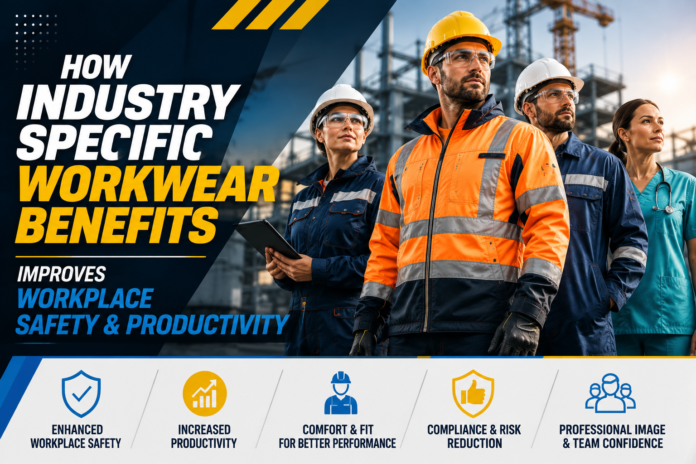
How Industry specific workwear benefits to businesses because it allows workers to wear clothing that suits their actual job and not just the company name. The daily working conditions of a warehouse worker, an outdoor worker, an oil and gas worker or a delivery driver are all different. The workwear they wear should be appropriate for the conditions.
Workwear that is comfortable, functional, and stylish can enhance safety, performance, and appearance. The right workwear can help workers remain visible, protected against weather, prepared for tasks and confident throughout long shifts. To compare the clothing options available for different workplace roles and industries, businesses can browse through the collection.
What does industry-specific workwear mean?
Clothing designed specifically for a particular profession, workplace or job role is called industry-specific workwear. There is no uniform that fits everyone. The uniform is selected according to the tasks of each worker, their risks, exposure to weather, mobility, and customer needs.
For example, warehouse workers may require high-visibility clothing. Outdoor workers may need waterproof layers. Oil and gas teams might need stronger garments. Corporate staff may need polished uniforms. This makes workwear more useful and practical.
Benefits of specific industry workwear for safety and productivity
Industry-specific workwear is beneficial for safety and productivity, as it provides workers with clothing that suits the way they work. Workers can be more productive if they are comfortable and can move around easily.
Poor workwear can make workers slower. Poor outerwear, tight clothing, or weak fabrics can cause workers to feel uncomfortable. Improved workwear can help reduce these issues before they impact daily operations.
Improved Visibility at Busy Workplaces
In warehouses, logistic yards, construction sites, transport zones, and loading areas, visibility is a safety requirement that cannot be ignored. Forklifts and trucks need to be visible to workers.
Hi-vis workwear collection can be used by teams who need bright colors with reflective details. High-visibility clothing can help workers stand out, which in turn promotes safer movement and better organization on the site.
Weather Protection
Workers in the outdoors are often faced with rain, wind and other weather conditions. Workers who are uncomfortable or wet may lose their focus and slow down. Wearing clothing that is appropriate for the weather helps workers stay prepared.
Waterproof Workwear can be useful for delivery crews, outdoor maintenance staff, construction crews and loading staff. Waterproof garments that are designed to keep workers dry should also allow them to bend, lift, walk, and drive.
Strengthening clothing for industrial teams
Clothing for industrial workers needs to be durable enough to withstand harsh environments. Heavy-duty roles in oil and gas, manufacturing and maintenance may include rough surfaces, dirt and heat, as well as equipment contact and long active hours.
Oil & Gas Workwear is selected based on fabric strength, durability and comfort. Clothing that is stronger can help workers in workplaces with high demands stay better prepared.
Corporate Teams should maintain a professional appearance
Workwear benefits are not always about protection. Uniforms can improve the brand image of a workplace, boost customer trust and increase staff recognition. Clothing that is clean and professional should be worn by corporate teams, retail staff, receptionists, and service workers.
Corporate Uniforms create a consistent image for the company. Shirts and blouses should be well-fitting, stylish, and comfortable. Blazers and other branded items are also a good choice.
Role-based Workwear Improves Efficiency
Role-based planning is one of the most important benefits for industry-specific workwear. Instead of providing the same clothing to all employees, businesses can select clothing according to their real needs.
‘s collection of industry-specific workwear allows businesses to compare workwear by sector and job role. It is easier to select the appropriate clothing for warehouse staff, outdoor workers, industrial workers and office employees.
Comfort helps workers perform better
Comfort has a direct impact on productivity. Comfort is important for workers. Clothing should be comfortable enough to allow workers to bend and lift, walk, drive or climb, scan, pack and stand for long periods.
Workwear must be comfortable, have the right fabric weight, breathe well, and allow for movement. When workers are comfortable, they will focus on their tasks and not on changing their clothes.
A Better Fit Reduces Work Issues
Workwear must fit well. Clothing that is too tight restricts movement. Clothing that is too loose may cause discomfort, look messy or catch on equipment.
The correct sizing allows workers to wear their clothing correctly. Workwear programs should offer different sizes and fits to ensure that every employee is comfortable and safe. Fitting problems can be avoided by testing samples before bulk ordering.
Durability reduces replacement costs
Durable workwear increases productivity, as workers don’t have to worry about ripped seams, broken zips, faded colours, or weak fabrics. Poor quality garments might look good at first but often fall apart after daily washing.
The life of a garment can be extended by using strong stitching, high-quality fabric, secured closures, reinforced stress areas, and pockets. Workwear that lasts longer saves money, and it keeps the team looking professional.
Team Identity is Supported by Workwear
Workwear can also help workers feel part of a group. Clothing that is uniform can help departments to be more easily identified and improve communication at busy workplaces. Customers, team members, and supervisors can easily identify who is in which role.
Branding should be simple and functional. Small logos, color trims, or embroidery, along with role labels, can help to support the identity of a garment without overwhelming it. While keeping workers comfortable, good branding can improve recognition.
Safer Movement Around Equipment
Workers often move around equipment, vehicles and racks. They may also be near tools, machinery, or other items. Clothing that is too loose, not fitted properly, or does not make you visible can cause problems. By matching the clothing to the workplace, industry-specific garments can reduce these problems.
Hi-vis clothing can help with visibility. Fitted jackets will reduce the amount of loose fabric. Strong trousers will support your movement. These small details make work easier and safer.
Productivity through Practical Features
Practical features can increase productivity. Pockets that are useful, adjustable cuffs and breathable panels with waterproof layers, reflective tapes, reinforced seams, and secure closures can all improve productivity.
Workwear with random features can be bulky. But workwear with useful features will save you time. Weather protection may be needed by a delivery worker, visibility may be required by a warehouse worker, and a supervisor might need a professional, clean layer. Task-specific features are selected.
Checklist of Industry Specific Workwear Benefits
Check out this checklist to see what benefits workwear can offer your industry before you buy.
- Clothing should be chosen according to the actual job role of the worker.
- Wear hi-vis clothing where visibility is important.
- Select waterproof clothing to protect you from rain and other wet conditions.
- Choose stronger fabrics for industrial use.
- Corporate uniforms are a great way to show your team’s professionalism.
- Before ordering, check the fit, comfort and movement.
- Select durable zippers, pockets and closures.
- Keep your branding professional and clean.
- Wear appropriate clothing for the weather and workplace hazards.
- Samples are available for testing before bulk orders.
Avoid these common mistakes when running a business
Giving every employee the same uniform is a common mistake. It may seem simple, but this can decrease comfort and productivity if different teams are faced with different tasks. Clothing for a warehouse worker and a office employee is usually different.
A second mistake is to choose workwear based solely on price. After a few wears, cheap garments can shrink, fade, tear or become uncomfortable. Workwear that is better quality and lasts longer will often have a higher value over time.
Conclusion
Employers and employees benefit from industry-specific workwear by matching the clothing to real job requirements. It makes employees safer, more comfortable and more visible.
Workwear programs should be tailored to the specific needs of each workplace, and not universally applicable. Choose hi-vis clothing to increase visibility, waterproof garments in wet weather, oil and Gas workwear on demanding sites, corporate uniforms and apparel specific to the industry for workplaces with mixed needs. Clothing that fits the job allows workers to perform better and employers to create a more productive, safer workplace.
FAQs
What are the benefits of wearing workwear?
This product improves safety through its support of visibility, weather protection and correct fit. It also provides protection for specific jobs.
What are the benefits of wearing workwear?
Workwear that is comfortable and practical helps workers to move more easily, remain focused and complete tasks faster.
Does every department have to wear the same uniform?
Different departments will need different clothing depending on the safety risks, the weather, how they move, and whether or not customers are involved.