Choosing the right workwear for your business types of industry specific workwear clothing. The daily tasks of a warehouse worker, an outdoor worker, an oil and gas worker and a office employee are all different. Therefore, they need to wear different clothing.
Workwear must support comfort, mobility, durability, safety and weather protection. It should also look professional. Businesses can compare the collection of workwear for practical clothing options to suit different job roles and industries.
What are the different types of workwear for industry?
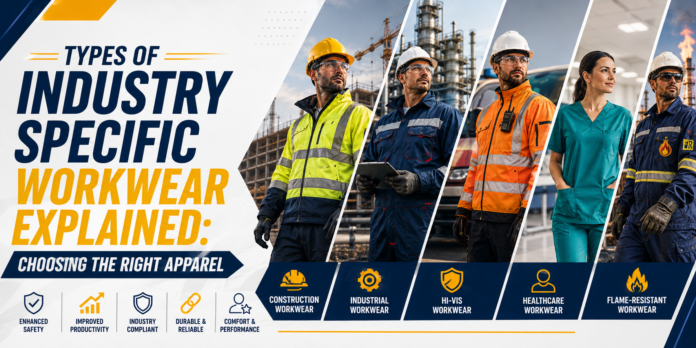
Workwear for specific industries includes high-visibility clothing, waterproof clothing, oil and gasoline workwear and corporate uniforms. Each type is designed for a specific work environment or worker need.
It is not intended to use one uniform for all teams. Workwear that is appropriate for the job allows workers to move more comfortably, look more professional, and stay more comfortable. The right clothing also helps businesses to reduce garment damage early and poor uniform choice.
Why different industries need different workwear
Risks and tasks vary by industry. For example, a warehouse team might need clothing that is bright to be visible. A team that works outdoors may require waterproof jackets. An industrial team may need stronger fabric. For a corporate team, polished uniforms may be needed for work with customers.
The wrong clothing can lead to comfort issues, safety problems and a poor appearance for the team. Employers can choose workwear based on the actual job conditions, rather than guessing.
High Visibility Workwear
Workers who must be visible around vehicles, loading docks and machinery, as well as roadwork zones and busy sites, will benefit from high-visibility clothing. The bright colors, such as orange, yellow, and lime, are usually paired with reflective details.
Hi-visibility Workwear Collection can be used for outdoor activities, warehousing and logistics, as well as construction, transportation, and transport. Depending on the workplace, hi-vis clothing can include vests and jackets as well as trousers, shirts and safety layers.
Waterproof Workwear
Workers who are exposed to rain, wet grounds, outdoor delivery, maintenance, or damp work sites will benefit from waterproof workwear. This helps workers to stay comfortable and dry during bad weather conditions.
Workwear must be tested for strength of seams, closures, hood designs, breathability and freedom to move. A good waterproof garment will protect you from rain without being too heavy or rigid.
Oil and Gas Workwear
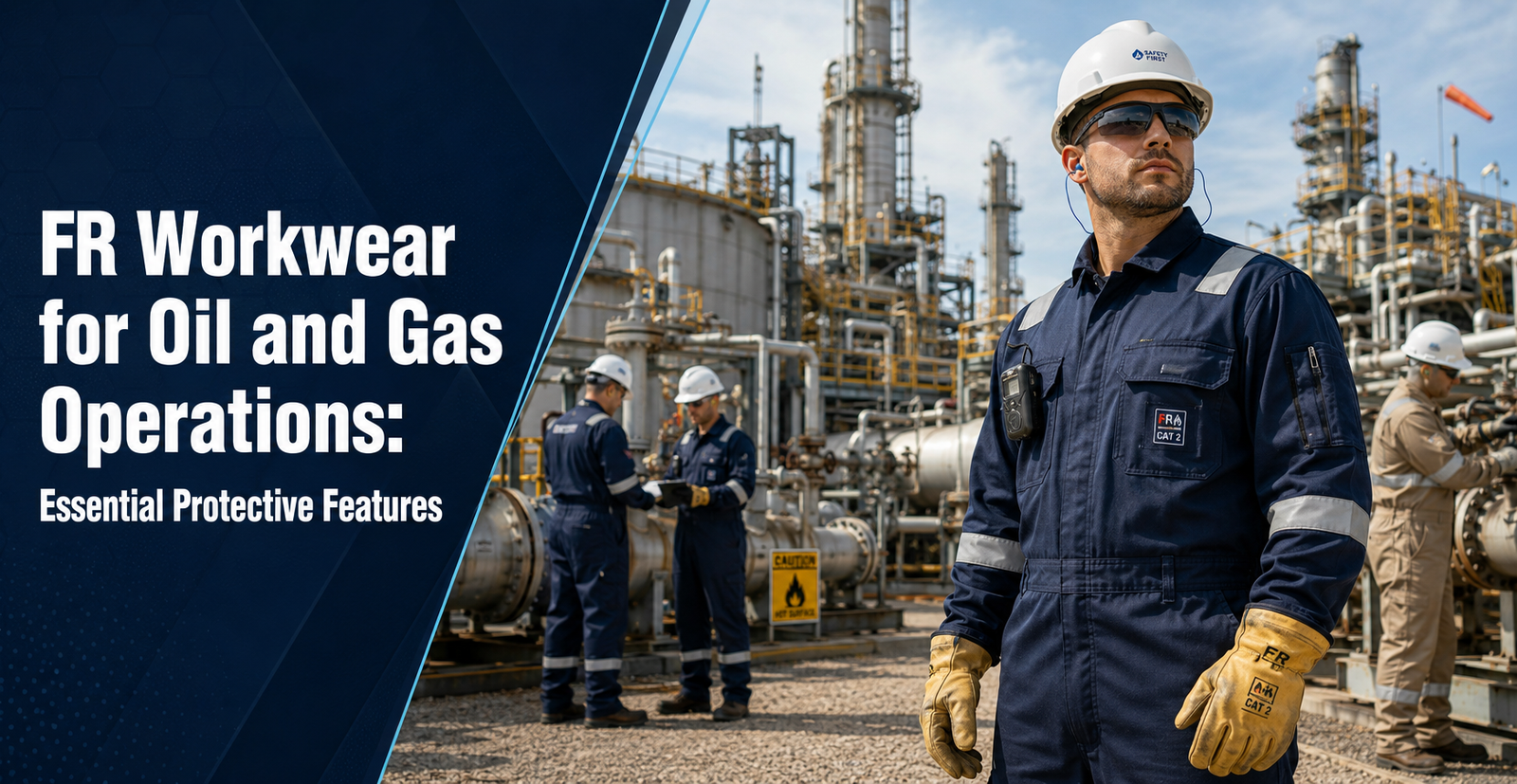
Workwear for oil and gas is designed to meet the demands of industrial environments. These workers may be exposed to rough surfaces, dust, heat, machines, harsh site conditions, and outdoor exposure. These workplaces are not conducive to basic uniforms.
Oil and Gas Workwear should primarily be chosen based on fabric strength, garment durability and fit. This category is characterized by strong stitching, functional pockets, and durable fabrics.
Corporate Uniforms
Office teams, retail staff, sales teams and showrooms all use corporate uniforms. The uniforms are designed to emphasize brand image, cleanliness, employee recognition, and comfort.
Corporate Uniforms can include shirts and blouses as well as trousers, blazers or dresses. They may also have branded items. A corporate uniform must look professional, while still allowing employees to walk, sit, talk with customers and work comfortably.
Industry-Focused General Workwear
Some businesses require practical workwear which is not highly specialized, but stronger than normal clothing. These can include jackets, trousers shirts vests and other durable layers to be worn for everyday tasks.
‘s industry-specific collection allows businesses to choose garments based on job roles, departments, and work environments. It is easier to choose clothing that matches the actual tasks, rather than choosing one style of apparel for each worker.
Workwear for Warehouse and Logistics
Workers in warehouses and logistics need clothing that allows them to lift, scan, pack, load, and move around equipment. It is important to be visible, as these workers will often share space with pallet trucks, forklifts and delivery vehicles.
These teams can benefit from lightweight hi-vis vests and safety jackets. They also need durable trousers and tops that are breathable. Clothing should be durable and comfortable for long shifts.
Workwear for Outdoor Teams
Clothing for outdoor workers must be able to adapt to changing weather conditions. Comfort and performance can be affected by rain, wind, dampness, and cold. Outdoor teams need to wear clothing that protects the body, but still allows for movement.
Depending on the task, waterproof jackets, rain pants, visible outerwear and warm layers may be useful. It is important to keep workers comfortable, dry and visible during their shift.
Workwear for Industrial Teams
Clothing for industrial teams must be able to withstand tougher conditions. Workers will bend, lift and climb, kneel down, carry equipment, move around demanding sites, work with tools, and use heavy equipment. In these environments, weak garments are prone to tearing.
Workwear for industrial use should be made of durable fabric with reinforced stitching and pockets. It should not be too loose, as loose clothing can get caught on equipment. The garment should not be too tight, as workers need to move freely.
Workwear for Customer-Facing Teams
Customers-facing teams require clothing that builds trust and ensures brand consistency. They should wear clean, polished clothing that is appropriate for their business image. Retail, offices, showrooms, reception areas and service counters should all be clean, polished, and in line with the business image.
Common choices include shirts, blouses and branded tops. Fabrics should remain neat even after frequent washing and fit should be comfortable for customer service workers.
Understanding the types of workwear specific to each industry
Employers can avoid making poor uniform decisions by understanding the types of workwear specific to each industry and role. Businesses should not ask about what is fashionable, but rather what the worker needs in order to be comfortable and safe.
It is possible that a warehouse picker needs to be able to move and see. Weather protection may be needed by a delivery driver. Corporate employees may require a uniform that is polished. A worker in an industrial setting may require durable fabric or stronger construction.
Fabric Choice for Each Workwear Style
Fabrics should be chosen according to the task. Fabrics that breathe are ideal for active and indoor work. Fabrics that are waterproof can be used in wet conditions. Industrial jobs require strong woven fabrics. Corporate teams can benefit from smooth wrinkle-resistant fabrics.
Wrong fabrics can cause workers to feel uncomfortable or shorten the life of their garments. A thin fabric can tear easily, while a heavier fabric might feel too warm. A good fabric for workwear should balance comfort with durability and performance at the workplace.
Fit and Movement
Workwear should be comfortable and allow for natural movement. Workwear should allow workers to move naturally. Clothing that restricts motion can reduce comfort and productivity.
The fit should be comfortable, not tight or loose. Before bulk orders, employers should offer different sizes and test samples for workers with different body types. The right fit allows workers to wear their clothing correctly throughout the entire shift.
Durability and washing life
Workwear is frequently used and is washed. Clothing of poor quality can shrink, fade, tear or lose shape in a short period. This can lead to higher replacement costs, and teams will look less professional.
Workwear that is suitable for the workplace should have strong stitching, durable fabric, reliable zippers, and a clean finish. When washing garments according to instructions, they should retain their color and shape.
Branding and Professional Appearance
Workwear can be used to support branding by using colors, logos and embroidery. Name badges and role labels are also available. Branding allows customers and supervisors to identify workers more quickly.
Branding should be simple and functional. Too many colors or logos in large sizes can make clothing look cluttered. Small logos or labels that clearly define the role of the garment look more professional. They are also easier to wear.
Checklist of specific types of workwear for each industry
Checklist for specific industry workwear before selecting apparel
- Select hi-vis clothing for your visibility needs.
- Select waterproof workwear to protect you from rain and other wet conditions.
- Choose oil and Gas Workwear for the most demanding industrial sites.
- Select corporate uniforms for your office staff and front-facing team.
- Fabrics should be chosen to match the actual work environment.
- Before ordering in bulk, check comfort and movement.
- Select durable closures and pockets.
- Keep your branding professional and simple.
- To prolong the life of your garments, follow the care instructions on the label.
- When the function of your workwear is diminished, replace it.
Avoid these Common Mistakes
The same uniform is worn by all employees. One uniform may not be suitable for all workers, as they have different tasks to perform.
A second mistake is to choose clothing solely on the basis of price. Cheap workwear might seem acceptable at first glance, but can quickly fade, shrink or tear. Workwear should not be judged on the basis of initial cost, but rather its long-term value.
Conclusion
Workwear tailored to specific industries helps companies choose clothing that is appropriate for the job. Workwear that is waterproof and hi-vis helps with visibility. Oil and gas workwear and corporate uniforms help to present a professional image.
It is better to select workwear based on the role of each worker, rather than using the same outfit in every department. Clothing that matches the job makes employees more comfortable and professional. It also increases garment value.
FAQs
What is industry-specific workwear?
Industry-specific workwear is clothing designed for a certain job, profession, workplace, or industry need.
What types of workwear are there?
There are many types of clothing, including hi-vis, waterproof, corporate uniforms and industrial workwear.
What is the importance of hi-visibility workwear?
Wearing hi-visibility workwear makes it easier for workers to be seen around machines, vehicles, loading zones, and busy jobsites.