Home Blog Page 5

What Makes High-Performance Sportswear: Materials and Construction Guide

Understanding what makes high performance sportswear effective can help brands and consumers make more informed choices. Fabric technology, construction methods, and ergonomic design are what separates the ordinary athletic wear and gear that enhances comfort and movement. This guide will help you understand the construction and materials behind high-performance athletic wear, so that you can design products or identify quality gear.

Why material and construction quality matters

Every component of high-performance sportswear must be able to work together in order to provide the best support for athletes. Strong construction and quality materials prevent seams from failing when you are doing intense exercise. Poorly made sportswear may restrict movement, cause odors, or quickly wear out. Understanding what makes sportswear high-performance helps you distinguish between products designed for serious performance and those that just look athletic.

Core materials used in high-performance sportswear

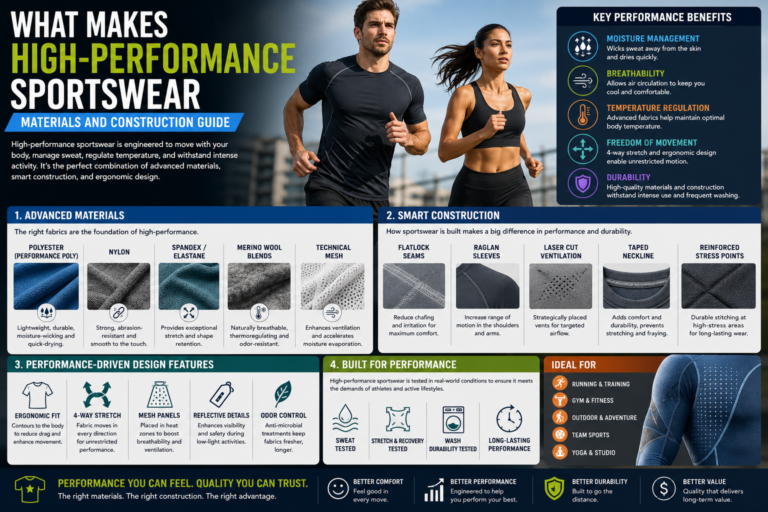
Fabric technologies are the basis of high-performance athletic wear. Each one is designed to meet a particular performance requirement.

Moisture-Wicking Synthetic Fabrics

High-performance sportswear is dominated by polyester and nylon blends because they draw sweat away from your skin and spread it over the fabric surface to evaporate quickly. Many of these fabrics also feature microfiber constructions, which increase surface area and enhance moisture transport. Moisture-wicking fabrics help athletes stay drier and comfortable when they exert themselves for long periods of time.

Compression fabrics

Compression fabrics are made by combining spandex, elastane and polyester or nylon into a fabric which supports the muscles gently during movement. Compression sportswear is used by many athletes because it can help to reduce muscle fatigue during intense activity. The tight fit can also improve comfort when running, cycling or lifting weights.

Breathable Mesh Panels

Mesh panels allow air to flow through areas that generate heat, like the back, sides, and underarms. Strategic mesh placement is important because these zones produce significant heat when exercising. This helps regulate the body temperature without compromising garment structure. Many high-performance sportswear models incorporate mesh panels to provide targeted cooling.

Four-Way Stretch Fabrics

Fabrics with four-way stretch can move in many directions. This allows athletes to bend, twist and reach without feeling any fabric restrictions. This technology is especially useful in sports that require dynamic movements, like basketball, soccer or martial arts. Four-way stretch fabrics are known to recover their original shape quickly. This helps garments maintain their fit even after repeated wear.

Antimicrobial Treatments

The antimicrobial finish helps control bacteria that cause odors. This is especially important for sportswear used during high-intensity, sweaty activities. Many manufacturers reapply the antimicrobial treatments during fabric production, even though their effectiveness can be reduced slightly by repeated washing. Sportswear treated with antimicrobial agents often remains fresher after multiple uses.

Sportswear Construction Techniques that Define High Performance

Construction methods have a significant impact on the performance of sportswear under real-life conditions.

Flatlock Seams

Flatlock seams are designed to reduce friction and bulk at the stitch points. This helps prevent chafing when performing repetitive movements. Flatlock seams are used in compression gear, running shirts and leggings because traditional seams rub against the skin when worn. This technique improves comfort for long-duration exercises.

Ergonomic Paneling

The ergonomic paneling follows the natural movement patterns of the body, instead of relying on the basic flat pattern. This construction method reduces fabric bunching, which improves range-of-motion, especially in the shoulders, knees and hips. Ergonomic paneling is a key factor in the comfort of sportswear during dynamic activities.

Reinforced Stress points

Sportswear designed for high performance often has reinforced stitching in areas of stress, such as the underarms and pockets. These areas are subjected to repeated tension when moving, so reinforcement is important in preventing premature tearing and seam failure. Checking for reinforced stress areas is a good indicator of the overall durability of a garment.

Bonded Seam Technology

Instead of using traditional stitching methods, bonded seams are made with heat or adhesives. This eliminates any needle holes which can allow moisture to enter or cause irritation. This method is ideal for base layers and compression wear that are designed to be next-to-skin comfortable. Bonded seams are more comfortable and smoother than other types of seams. They require special equipment to create.

High-Performance sportswear: What to look for?

Consider the following characteristics when determining whether or not a garment is high-performance sportswear:

  • Moisture Management: Verify that the fabric is able to wick sweat and dries rapidly after exercise.
  • Stretching and Recovery: Determine whether the fabric moves along with the body, and then returns to its original form.
  • Seam Construction: Choose flatlock or bonded sews to minimize chafing when moving.
  • Breathability Check for mesh or breathable fabric zones on high-heat parts of the body.
  • Durability Check reinforced stress points on the garment to make sure it can withstand repeated and intense use.
  • Odor Control: Check for antimicrobial treatment if you will wear the garment during frequent or long training sessions.

You can find sportswear with real performance benefits by comparing these features, rather than just relying solely on marketing claims.

Sportswear with High-Performance Materials

Understanding your category will help you choose the best materials. Brands developing Soccer apparel, for example, often use lightweight, breathable fabric with four-way stretching to allow constant movement in all directions. basketball clothing often incorporates moisture-wicking panels to control heat during fast-paced games.

American football apparel and Rugby apparel, which involve sports with repeated impacts, rely on durable fabric blends and reinforced stress points to resist physical contact. ice-hockey apparel is often made up of compression base layers and moisture-wicking fabrics to accommodate cold environments.

Combat sports brands that produce MMA clothing choose fabrics with four-way stretch and flatlock seams in order to support grappling movements. tennis clothing , badminton clothing, and basketball apparel also prioritize lightweight, breathable fabrics for quick lateral movements and directional changes. golf clothing is often made of moisture-wicking fabrics that are sun-protective and designed for long outdoor hours. baseball clothingvolleyball attire, balance durability with flexibility to accommodate sport-specific movements.

Specialized categories require unique solutions. Formula 1 Racing apparel demands fire-resistant fabrics combined with moisture wicking base layers to provide driver comfort in extreme conditions. The sportswear range showcases designs that are performance-driven for almost every sport.

Partner with a trusted manufacturer of high-performance sportswear

When developing a customized product line, it is important to understand what makes high performance sportswear effective. Working with an experienced manufacturer will ensure that your gear is built to meet real performance standards, rather than just looking good.

We help brands choose materials and construction methods that are aligned with their sport, athlete’s needs, and performance objectives. Contact our team to learn more about fabric options, production timelines, and construction details.

Conclusion

High-performance sportswear is made up of a combination of high-tech materials and well-thought out construction techniques. Flatlock seams and ergonomic panels, as well as moisture-wicking fabrics and compression technology that regulate temperature, ensure comfort and fit. Moreover, by matching these features with specific sports, the gear will perform as intended in real-world situations. Understanding these principles of materials and construction will help brands and athletes identify sportswear with real performance benefits.

FAQs

What is the most common fabric used for high-performance sportswear today?

High-performance sportswear is dominated by polyester and nylon blends because they dry quickly and wick away moisture. These fabrics often include spandex to provide added stretch and recovery.

Why is flatlock stitching important for sportswear?

Flatlock seams reduce friction and bulk at the stitch points to help prevent chafing when moving repetitively. This construction method is now standard for running shirts and leggings as well as compression gear.

Does compression sportswear improve performance?

Although individual results may vary, many athletes report less muscle fatigue and better circulation after wearing compression sportswear. Many athletes find that the tight fit reduces fabric movements, making them more comfortable when performing high-intensity activities.

How can I tell if my sportswear is breathable?

In areas where you sweat a lot, such as the back and underarms, look for mesh panels or zones of breathable fabric. Also, lighter, loosely-woven fabrics allow for better airflow as compared to dense, heavy materials.
Wholesale Sportswear for Brands: Sizing, MOQs, and Customization Options

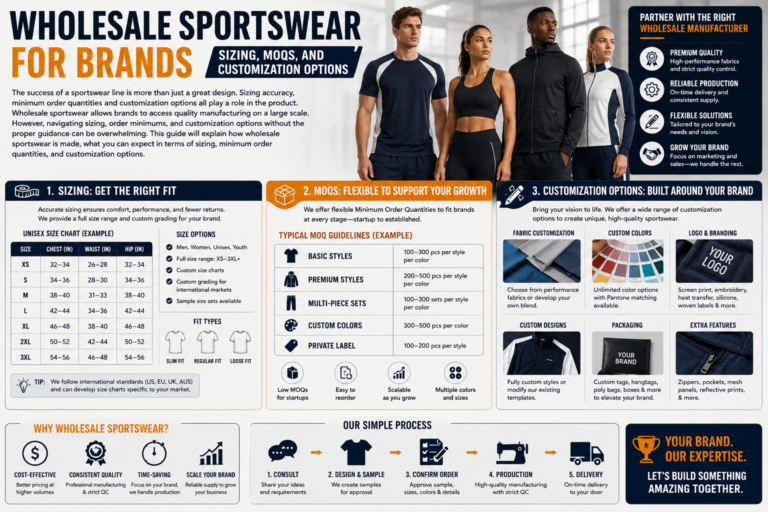
The success of a sportswear line is more than just a great design. Sizing accuracy, minimum order quantities and customization options all play a role in the product. Wholesale sportswear allows brands to access quality manufacturing on a large scale. However, navigating sizing, order minimums, and customization options without the proper guidance can be overwhelming. This guide will explain how wholesale sportswear is made, what you can expect in terms of sizing, minimum order quantities, and customization options.

What is wholesale sportswear?

Wholesale sportswear is athletic apparel that is produced in large quantities, but not for individual consumers. Wholesale sportswear is often offered at lower per-unit prices by manufacturers when businesses order large quantities. This makes it a practical option for businesses that want to scale up. Wholesale partnerships also include customization services that allow brands to customize standard apparel templates with logos, colors and unique designs. Wholesale sportswear is the foundation of many established and emerging athletic brands.

Understand Sizing Standards for Wholesale Sportswear

The consistency of sizing is crucial to customer satisfaction when you sell sportswear online, without an in-person fit. The manufacturers usually follow standardized charts that are based on the chest, waist and length measurements. However, these charts may vary between regions and manufacturers. Requesting detailed size specifications as well as sample garments prior to placing bulk orders can help prevent costly sizing problems in the future.

Many manufacturers also offer size-grading services that adjust the pattern proportions to fit a range of sizes. This is especially true for sportswear that has been fitted, like compression shirts and athletic leggings. Even small sizing mistakes can have a negative impact on performance. Working closely with your manufacturer to determine sizing early on in the process will reduce the likelihood of unhappy customers and returns.

Minimum Order Quantities (MOQs) Explained

The minimum order quantity, or MOQ, is the lowest number of units that a manufacturer can produce for a given order. MOQs can vary greatly depending on the fabric, manufacturer and level of customization. Understanding this factor will help brands plan their budgets and stock accordingly.

Why Minimum Order Quantities Exist

The manufacturers set MOQs in order to maintain cost-effective production, as smaller orders require the same amount of setup time and resources. Due to economies of scale, small orders may become more expensive per unit. Understanding why MOQs are in place helps brands to negotiate order sizes that balance inventory risk and cost.

How to work within MOQ Requirements

If you have a limited budget, you can still meet the MOQ requirements if you choose manufacturers who offer lower minimums. For example, if they allow for simpler customizations such as logo printing in one color rather than sublimation designs. Some manufacturers also allow brands to mix multiple styles into a single minimum order quantity, giving them more flexibility when testing different product lines. Discussing MOQ flexibility with potential manufacturers upfront often uncovers options that fit within smaller budgets.

Wholesale Sportswear Customization Options

Customization allows you to transform standard wholesale sportswear in branded apparel that represents your brand. There are several customization methods, and each offers different benefits depending on the design needs and your budget.

  • Screen Printing: Ideal for simple logos, designs and limited color count.
  • Embroidery Provides a durable, premium finish for logos and text. It is ideal for polos and jackets.
  • Sublimation Printing: All-over full-color designs are possible, and this is ideal for jerseys or performance wear that has complex patterns.
  • Heat Transfer: Offers an economical option for small and medium orders that require detailed graphics.
  • Custom Fabric Development: Allows brands to create unique textures or colors, or performance characteristics tailored to their product lines.

Brands can effectively balance costs, design complexity and production timelines by selecting the right customization methods.

Selecting the right wholesale sportswear categories for your brand

Understanding your target market will help you select the best wholesale sportswear categories. Brands entering the Soccer apparel industry often prioritize lightweight fabrics and breathable materials that allow for high-intensity movements. basketball clothing also requires stretch fabrics to allow for a full range motion during play.

Brands that target golf clothing focus on fabrics with moisture-wicking and sun-protective properties, which are ideal for long days on the course. American football apparel and Rugby apparel are contact sports that require durable fabrics. ice-hockey apparel also requires base layers that are compatible with padding and specialized designs to accommodate cold rink environments.

MMA clothing is a popular choice for combat sports, but tennis wearbadminton wear, and HTML3_ basketball apparel HTML3_ are also great options for brands that focus on fast, lateral movements. baseball clothingvolleyball clothing, and other manufacturers cater to team sports that have specific uniform requirements. Formula 1 Racing apparel, for example, requires fire-resistant fabrics and precise branding placement to ensure sponsorship visibility. Browse the entire sportswear collection to get a full overview of the available categories. This will help brands find the right fit for their audience.

How to Build a Successful Wholesale Sportswear Partnership

A solid manufacturing partnership is more than just placing orders. A smooth production process is facilitated by clear communication regarding sizing expectations. Realistic MOQ negotiations and a shared understanding about customization capabilities. A sample request before committing to full production allows brands to confirm quality, fit and color accuracy in advance. This early groundwork reduces costly errors and creates a more reliable partnership.

Join forces with a trusted wholesale sportswear manufacturer

When you work with a wholesale sportswear manufacturer, it is much easier to navigate sizing standards and MOQs. Customization options are also made more accessible. A reliable manufacturer can help you scale production and maintain quality, whether you are launching a soccer kit line, expanding to golf apparel or creating custom MMA fightwear.

We help brands with sizing, minimum order quantities (MOQs), and customization in nearly all sportswear categories. Contact our team if you are ready to discuss the project. We can help with fabric choices, sizing assistance, and flexible manufacturing solutions that fit your brand.

Conclusion

Wholesale sportswear is a great way for brands to scale production and maintain quality while still maintaining consistency. Understanding the sizing standard helps brands avoid costly fit issues. Learning how MOQs function allows brands to negotiate realistic order sizes and plan their budgets. Choosing the right customization technique will ensure that your brand is clearly visible on every garment. Wholesale sportswear can help your brand build a reliable and scalable clothing line that is tailored to your sport and target audience.

FAQs

What is the typical minimum order quantity for wholesale sportswear products?

The minimum order quantity (MOQ) varies by manufacturer and customization. However, most wholesale orders of sportswear start at 50 to 300 units per style. Often, however, lower minimums are possible with simpler customization methods.

How can I be sure that my wholesale orders of sportswear are accurate in terms of sizing?

Before placing bulk orders, request detailed size charts as well as sample garments. This will allow you to confirm fit and measurements. Working with manufacturers who offer size grading helps you maintain consistency throughout your entire size range.

What is the best customization method for sportswear?

Screen printing is a cost-effective option for large orders with simple designs. Sublimation printing is ideal for full-color designs on jerseys and performance clothing.

Can I order wholesale sporting goods for more than one sport category at once?

Many manufacturers will allow brands to mix multiple sportswear categories in a single order. This allows brands to launch several product lines at the same time. This can help brands meet MOQ requirements for combined orders more easily.

Tennis Clothing Fabric: Range of Motion and Cooling Explained

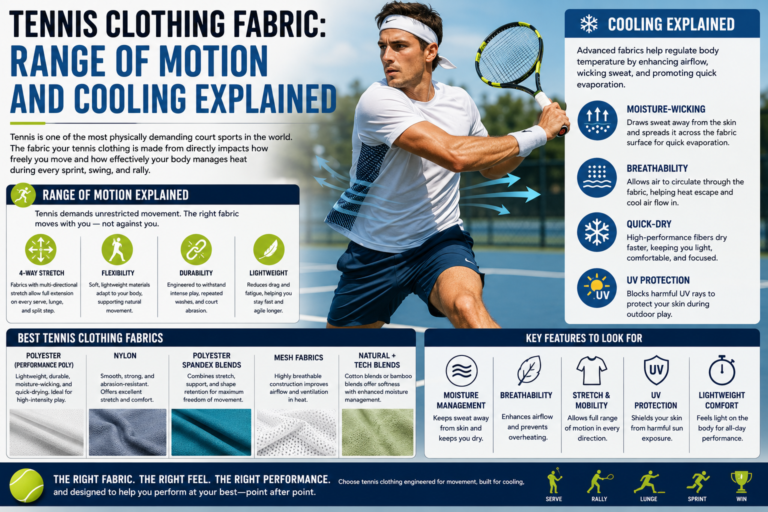
Tennis is one of the most physically demanding court sports in the world. Explosive lateral movement, overhead serving, rapid direction changes, and sustained rallies across multiple sets — all in direct sunlight on hard, clay, or grass surfaces. The fabric your tennis clothing is made from directly impacts how freely you move and how effectively your body manages heat during all of it. Understanding tennis clothing fabric helps brands build performance collections that serious players genuinely notice — and helps players make informed choices about the gear they compete in.

Why Fabric Choice Matters Specifically in Tennis

Tennis places two simultaneous demands on clothing that few other sports combine so intensely — complete freedom of movement in every direction alongside aggressive cooling during sustained high-intensity effort in outdoor heat.

A serve requires full shoulder rotation and overhead extension. A wide forehand demands complete hip and torso rotation. A split-step recovery demands unrestricted leg movement in multiple directions simultaneously. All of these movements happen repeatedly across matches lasting anywhere from one hour to five — and throughout that time body temperature rises continuously if clothing doesn’t manage heat effectively.

Fabrics that restrict movement reduce stroke mechanics quality and injury risk simultaneously. Fabrics that trap heat accelerate fatigue and reduce decision-making quality during critical match moments. The right tennis clothing fabric serves both demands simultaneously — and that combination requirement is what makes tennis apparel genuinely different from casual sportswear that looks similar but performs inadequately under competitive conditions.

Polyester Moisture-Wicking Fabrics — The Performance Foundation

Moisture-wicking polyester forms the foundation of virtually every serious tennis garment manufactured today. Engineered fiber cross-sections create capillary action that pulls perspiration from skin contact surfaces toward the outer fabric face — where airflow and evaporation remove moisture rapidly and continuously throughout intense match play.

This active moisture management keeps skin drier than passive absorption fabrics — reducing the heat retention that sweat accumulation causes and maintaining the lighter garment weight that soaked fabric would otherwise create during sustained physical effort.

High-performance polyester constructions used in professional tennis apparel incorporate advanced fiber geometries — cross-shaped, Y-shaped, and multi-channel fiber cross-sections — that significantly increase surface area per fiber weight, creating faster and more efficient moisture transfer than standard round-cross-section polyester fibers achieve.

Elastane and Spandex Blends — Movement Freedom

Pure polyester fabrics provide limited stretch — adequate for casual movement but insufficient for the explosive multi-directional athletic demands that competitive tennis imposes across every point. Adding elastane — typically 8% to 20% of total fabric composition — transforms polyester performance fabrics into stretch materials that move freely with athletic body positions.

Four-way stretch constructions allow simultaneous stretch in horizontal and vertical directions — critical for the multi-directional movement that tennis requires constantly. The elastic recovery of quality elastane blends ensures garments return to their original shape after each movement — maintaining correct fit and appearance throughout three or five-set matches rather than progressively losing shape as stretch fabrics without recovery properties do under sustained athletic stress.

Stretch fabric performance particularly matters at the shoulder seams of tennis shirts and at the hip and thigh areas of tennis shorts and skirts — the specific anatomical areas where movement restriction directly impacts stroke mechanics and court movement quality during competitive play.

Mesh Panels and Ventilation Zones — Targeted Cooling

Strategic mesh panel placement addresses the limitation that even the most breathable solid performance fabrics encounter during intense tennis play — the highest body heat generation zones require airflow rates that fabric breathability alone cannot achieve during sustained maximum-intensity effort.

Underarm mesh panels allow direct airflow into the highest perspiration zones during serving and overhead stroke movements. Back ventilation panels release accumulated heat from the largest continuous body surface area during baseline rallying. Side panels allow lateral airflow across the torso during the rapid direction changes that net play and baseline movement create.

Quality sportswear manufacturers position mesh panels based on physiological heat mapping — placing ventilation precisely where cooling benefit is highest rather than distributing mesh arbitrarily across garments for aesthetic effect without performance justification.

UV Protection Fabrics — Sun Safety for Outdoor Play

Outdoor tennis exposes players to significant UV radiation across match and practice duration — particularly on hard courts where surface reflection adds UV exposure to direct overhead radiation. UPF-rated tennis fabrics provide verified sun protection that standard performance fabrics without specific UV treatment cannot guarantee regardless of their technical performance in other areas.

UPF 30 blocks approximately 96.7% of UV radiation — adequate for moderate sun exposure during shorter practice sessions. UPF 50+ blocks 98%+ — recommended for competitive match play and extended practice sessions in high-UV environments where cumulative sun exposure across a tennis season creates meaningful long-term skin health risk.

Tightly woven performance fabrics combined with UV-absorbing fiber treatments create UPF-rated constructions that maintain protection performance across regular washing and extended garment use — unlike sunscreen that requires constant reapplication during physical activity.

Lightweight and Quick-Dry Properties — Match-Long Comfort

Tennis matches extend across unpredictable durations — a three-set match can last anywhere from 90 minutes to over three hours depending on conditions and competition level. Fabrics that maintain comfortable dry weight across this extended duration perform significantly better than alternatives that become heavy with accumulated moisture as match duration extends.

Quick-dry polyester constructions recover from thorough wetting within minutes under outdoor conditions — maintaining comfortable garment weight even when perspiration rates are highest during decisive match sets where physical and mental intensity reaches its peak simultaneously.

Lightweight fabric constructions — typically 120 to 160 gsm for tennis shirts and 130 to 180 gsm for tennis shorts — minimize the total weight burden that clothing adds to athletic movement — allowing players to focus entirely on ball and court rather than managing the discomfort that heavier, moisture-laden garments create during extended competitive play.

Fabric Technology Across Different Tennis Garments

Different tennis garment types apply these fabric principles with specific construction emphasis matching each piece’s movement and performance requirements.

Tennis shirts prioritize moisture management, stretch through the shoulder and back, and ventilation through strategic mesh placement — serving the upper body cooling and freedom demands that serving and groundstroke mechanics create continuously throughout match play.

Tennis shorts prioritize four-way stretch through the hip and thigh, lightweight construction that doesn’t restrict split-step movement, and secure pocket construction for ball storage that doesn’t interfere with lateral movement patterns during active points.

Tennis skirts and dresses combine these requirements with modesty considerations — built-in compression shorts beneath outer skirt layers providing coverage security during the athletic movements that competitive female tennis play creates across all court surfaces and match formats.

Badminton apparel applies similar fabric principles — the fast-twitch explosive movement demands of badminton create comparable stretch and cooling requirements that quality racket sport performance fabric construction addresses with equivalent technical sophistication.

Choosing the Right Fabric for Your Tennis Collection

Building a successful tennis apparel collection requires matching fabric specifications to performance demands at each price tier — and communicating performance credentials clearly enough that serious players recognize the quality difference between technical performance construction and casual sportswear aesthetics without genuine performance substance.

Working with a professional sportswear manufacturer who sources verified performance fabrics — with moisture management testing data, stretch recovery specifications, and UV protection ratings — ensures your tennis collection delivers the performance promises that serious players evaluate through actual court use rather than simply marketing claims.

Conclusion

Tennis clothing fabric directly impacts stroke mechanics, court movement quality, heat management, and match-long comfort in ways that casual sportswear never genuinely delivers. Moisture-wicking polyester manages perspiration. Elastane blends enable movement freedom. Strategic mesh panels provide targeted cooling. UV protection keeps players healthy. Lightweight quick-dry constructions maintain comfort across long matches. Understanding how each fabric property serves tennis performance specifically helps brands build collections that serious players trust — and helps players choose gear that genuinely supports their best tennis across every competitive situation.

FAQs

What fabric percentage of elastane works best for tennis clothing?

Most quality tennis garments use 8% to 15% elastane content — providing meaningful four-way stretch and recovery without compromising the moisture management performance that higher elastane percentages can reduce in some fabric constructions.

Does fabric weight affect tennis performance significantly?

Yes. Lighter fabrics between 120 and 160 gsm for shirts reduce the weight burden of accumulated moisture during extended match play — maintaining comfortable garment weight through long matches where heavier constructions become noticeably burdensome as perspiration accumulates.

Is UV protection important in tennis clothing fabrics?

Absolutely. Outdoor tennis creates significant cumulative UV exposure across practice and match play — UPF 50+ rated fabrics provide meaningful long-term skin health protection that regular performance fabrics without specific UV treatment cannot guarantee reliably.

Can tennis apparel collections be produced under a private label?

Yes. Professional sportswear manufacturers offer complete private label tennis apparel production with verified performance fabrics, custom designs, colors, labels, and packaging — giving sports brands full creative and commercial control over their tennis collection.

How to Choose the Right Camouflage Balaclava

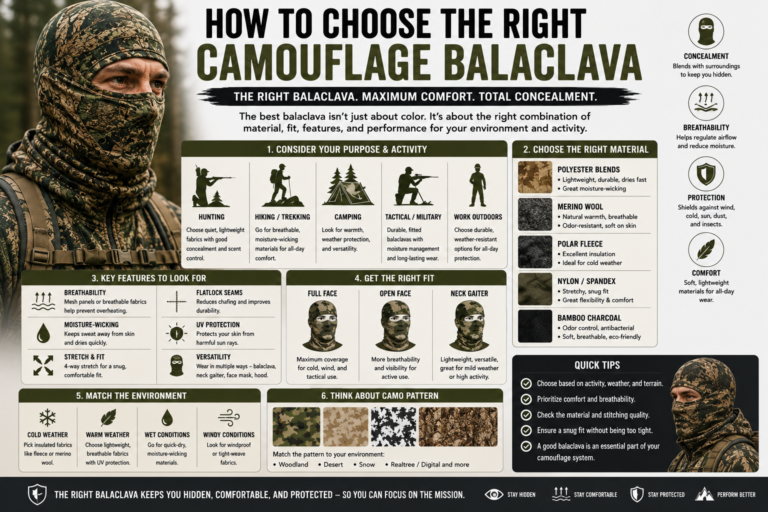
When people want to Choose the Right Camouflage Balaclava, they likely put most of their attention on the color first. While the color is important, the best balaclavas also put an emphasis on comfort and breathability, suitable for the environment where they will be used. Using the right balaclava can help you achieve an optimum level of comfort and protection, while also allowing you to do work outdoors either as part of your job or as a hobby. Many people who love hunting, hiking, camping, or who do work outdoors, love to combine their face cover as part of a complete camouflage system.

Choose the Right Camouflage Balaclava for Your Activity

To Choose the Right Camouflage Balaclava, you first need to consider how you will use it. For example, maximum concealment is likely the most important thing for hunters. That is likely the least important thing for comfort and breathability for hikers and campers. Tactical users will likely want light balaclavas because they will need equipment that is likely compatible with helmets. Many outdoor users combine their face protection with specialized apparel from a Tactical Outdoor Apparel Manufacturer to achieve better performance in challenging environments.

Based on Fabric

Choose the Right Camouflage Balaclava is also determined by the fabric. Soft and breathable fabrics help reduce the amount of balaclava that is sweaty. Lightweight fabrics are ideal for warm days, whereas insulated fabrics are ideal for cold days. It’s important that balaclavas are comfortable and are breathable as well. Many outdoor garments use similar performance fabrics found in products from a Base Layer Clothing Manufacturer because moisture management is important for all outdoor clothing.

Weather Conditions

When Choose the Right Camouflage Balaclava, consider the weather. Balaclavas with a water-resistant coating are most comfortable in the rain. In the wind, a design that minimizes exposure improves warmth. If you spend a lot of time outdoors in varying conditions, pay attention to a Waterproof Clothing Manufacturer can provide additional protection from the elements.

Match the Camouflage Pattern Correctly

Choose the Right Camouflage Balaclava also takes into account the camouflage pattern. In wooded areas, a forest pattern works best. In dry areas, a light pattern may be more effective. In snow, a completely different design is required. Outdoor enthusiasts who spend time in winter conditions often use products from from a Ski Wear Manufacturer to ensure their gear blends well with snowy landscapes.

Comfort Features to Look For

When Choose the Right Camouflage Balaclava, remember that comfort is important. Look for flat seams, stretchy fabrics, and designs that are fitted, but not at the expense of comfort. Adequate ventilation helps prevent overheating in the balance. These features are most commonly found in by an Outdoor Fleece Manufacturer because warmth and comfort often go hand in hand.

Key Things to Remember

If you want to Choose the Right Camouflage Balaclava, keep these important points in mind:

  • Select a camouflage pattern that matches your environment.
  • Choose breathable fabric for better comfort.
  • Consider weather conditions before buying.
  • Look for a flexible and secure fit.
  • Prioritize moisture management and ventilation.
  • Match your balaclava with suitable outdoor clothing from an Outdoor Jackets Manufacturer for complete protection.

Conclusion

Choose the Right Camouflage Balaclava is important in all the right areas when participating in outdoor activities. Comfort and performance can be impacted when considering the fit and material and level of weather protection, as well as the camouflage pattern. The Right Camouflage Balaclava can help facilitate all of this for outdoor enthusiasts or workers when hunting, hiking, camping, or working in the outdoors. The Right Camouflage Balaclava can help facilitate all of this for outdoor enthusiasts or workers. Some outdoor enthusiasts combine their balaclavas with gear from a Hunting Apparel Manufacturer to complete their outdoor gear.

FAQs

Why is it important to Choose the Right Camouflage Balaclava?

Choosing the correct balaclava improves comfort, protection, concealment, and overall outdoor performance.

What material is best for a camouflage balaclava?

Breathable and moisture-wicking fabrics are generally the best choice for most outdoor activities.

Can I use a camouflage balaclava in winter?

Yes, insulated models are designed to provide warmth and protection during cold weather.

Best Materials Used in Camouflage Balaclavas

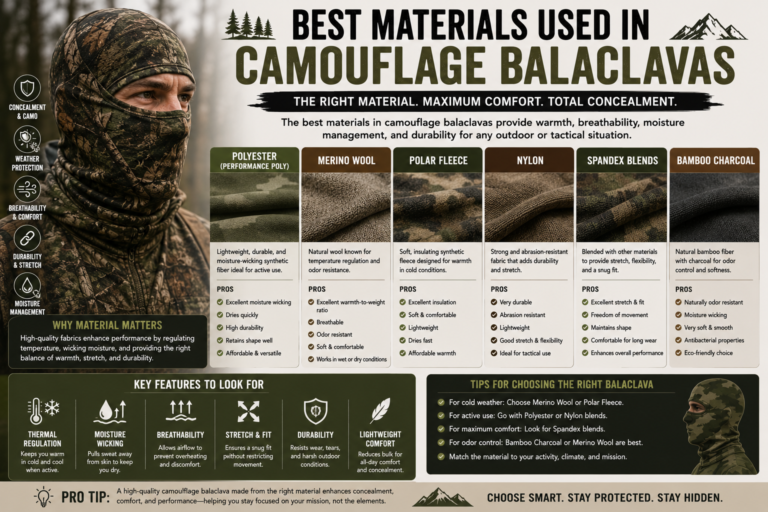
Your face deserves protection from the elements when you’re in the wilderness hunting or playing tactical games. A good camouflage balaclava will conceal your face, and will also keep you warm. However, you shouldn’t think all balaclavas will do the same job. The Best Materials Used in Camouflage Balaclavas will make the balaclava comfortable for hours. Pick the wrong material and overheating or freezing will result. Educating yourself regarding the different types of fabrics available is a smart thing. You should check this outdoor apparel manufacturer for great outdoor materials.

Soft but Not for Heavy Sweating

Cotton is the fabric that soaks up everyone’s favorite childhood moisture, sweat. It is also the fabric that sticks to you and traps freezing air while balancing your face to a sub-zero temperature. As such, it doesn’t qualify for any of the Best Materials Used in Camouflage Balaclavas for face protection while doing more strenuous activities like running or climbing. However, dry weather face protection while lightly walking is perfectly fine with cotton. For better options, look at hiking clothing manufacturers who use advanced fabrics.

Lightweight and Quick to Dry

Polyester is a fabric that is man-made. It is made in factories and doesn’t hold water like cotton, which means it won’t make the balaclava swampy and will instead be dry in a flash. Polyester is extremely lightweight and can be worn under a helmet. Along with it’s toughness, it is no surprise that many soldiers and hunters like polyester. Balaclavas that qualify for the Best Materials Used in Camouflage Balaclavas will most definitely use a polyester blend. You can find polyester in many camping apparel items because it works well outdoors. Plus, polyester holds dye very well, so your camouflage pattern stays sharp.

Strong and Wind-Resistant

Nylon is a synthetic fabric and is even tougher than polyester. It is also better at blocking the wind. Wind can sting your face when you are out in the open or on a mountain. Nylon can stop that wind. It is also one of the fastest drying fabric materials. It can be one of the Best Materials Used in Camouflage Balaclavas on windy days. Because nylon fabric is not very stretchy, a lot of brands combine it with spandex. For tough outdoor wear, see what ski wear manufacturers use in their products.

Warm Even When Wet

Merino wool is from sheep but don’t compare it to a wool sweater that your grandpa wears that is itchy. Merino wool is very soft, gets you warm even when it is wet, and doesn’t allow odor generating bacteria to thrive. This means that you can wear a merino wool balaclava for days on end without it smelling bad or needing to be washed which can be great for extended hunting trips which is why merino wool is one of the Best Materials Used in Camouflage Balaclavas for cold and wet weather. You can find similar smart fabrics in outdoor jackets as well.

Spandex (Elastane): For a Perfect Fit

Spandex is a very stretchy and flexible fabric and also can’t be used for an entire balaclava. However, when a bit of spandex is blended with polyester or nylon, that balaclava fabric acts like a second skin and moves along the head. This is crucial when a person is in the middle of aiming with a gun or running which is why many of the Best Materials Used in Camouflage Balaclavas contain anywhere from 5% to 15% of spandex. For more stretchy and comfortable gear, check out waterproof clothing options that also use spandex blends.

Soft and Insulating

Made from polyester, fleece keeps air and warmth trapped within its fibers. This makes it the perfect material for fleeced balaclavas and the like. Fleece is also incredibly lightweight. The combination of being lightweight and warm makes fleece balaclavas easy to wear for long periods of time. While fleece is a good material for insulation, it is not very good for blocking the winds. This is another reason fleece balaclavas, or fleece anything for that matter, are worn under windproof shells. Look at hunting apparel to see how fleece is used in different gear.

Summary of the Best Materials

Here is a quick list to help you remember which materials are best for different situations:

  • Cotton – Only for dry, light use.
  • Polyester – Best for sweat and fast drying.
  • Nylon – Best for wind and strength.
  • Merino wool – Best for cold, wet, and no smell.
  • Spandex – Best for stretch and fit.
  • Fleece – Best for soft warmth without wind.

So depending on your needs, the Best Materials Used in Camouflage Balaclavas can be different. For rain and snow, you need waterproof layers like rainwear. But for your face, choose a breathable, quick-dry fabric.

How to Care for Your Camouflage Balaclava

To make your balaclava last long, you must wash it the right way. Most man-made fabrics like polyester and nylon should be washed in cold water. Do not use softeners because they ruin the wicking ability. For wool, use special wool soap. Hang dry your balaclava. Do not put it in a hot dryer. This will keep the Best Materials Used in Camouflage Balaclavas working well for years. For more tips on caring for outdoor gear, visit waterproof jackets manufacturer pages for detailed guides.

Conclusion

The Comfort and Functionality of Camouflage Balaclavas on The Market relies on Their Materials. Polyester, fleece, microfiber, cotton mixes, etc. lead to Warmth and Breathability. It is necessary to keep Comfortable for Long Activities such as Hunting, Hiking, Camping, and Other Tactical Outdoor Activities. Modern Balaclavas are made for concealment and flexibility. Quality Balaclavas give protection from the Elements, while maintaining Visibility and Movement.

FAQs

What is the most breathable material for a camouflage balaclava?

Polyester and nylon blends with spandex are the most breathable. They let sweat vapor escape while keeping wind out.

Can I wear a camouflage balaclava in summer?

Yes, choose a very thin polyester or cotton-poly blend. Look for “lightweight” or “summer weight” labels.

Is merino wool itchy?

No, high-quality merino wool is very soft and not itchy. It is one of the Best Materials Used in Camouflage Balaclavas for sensitive skin.

How to Choose the Right Outdoor Cargo Pants

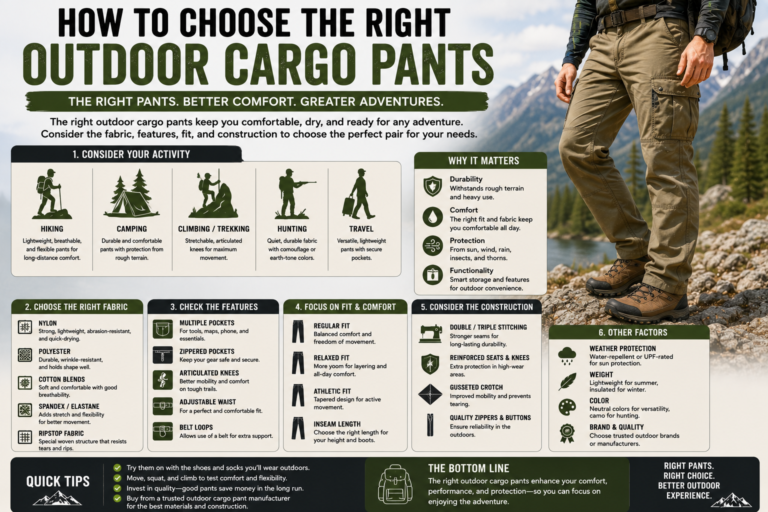
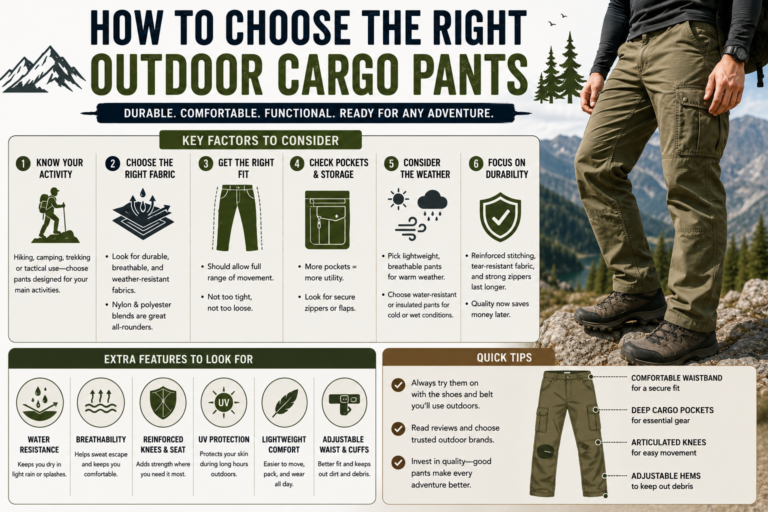
Good outdoor pants for outdoor lovers should keep you comfortable and dry and ready for any adventure. When choose the right Outdoor Cargo Pants, you should know how Outdoor Cargo Pants are made, the features, and the construction types. A majority of outdoor lovers use gear made by a well-established Outdoor Cargo Pant Manufacturer because the right materials and construction really make a difference on long outdoor trips for campers and hikers.

Choose the Right Outdoor Cargo Pants for Comfort

When figuring out How to Choose the Right Outdoor Cargo Pants, consider comfort the most. Outdoor cargo pants must fit well to allow unimpeded movement for walking, climbing, and bending. The right fit will minimize friction and discomfort during long trips. Outdoor enthusiasts will often compare cargo pants with products from a trusted hiking pants manufacturer to understand which designs offer better flexibility and all-day comfort. Remember, How to Choose the Right Outdoor Cargo Pants always starts with choosing a fit that feels natural.

Choose the Right Fabric

When learning How to Choose the Right Outdoor Cargo Pants, picking the right material is essential. Durable, sturdy, and strong material will last longer and withstand the outdoor environment much better. Lightweight material is good for warmer climates, and thicker, heavier material is good for cooler climates. Products from an experienced outdoor apparel manufacturer to learn which fabrics are best for different activities. Understanding fabric quality makes How to Choose the Right Outdoor Cargo Pants much easier.

Weather Protection Matters

To be an expert How to Choose the Right Outdoor Cargo Pants, think about the weather you most often experience. Rain, wind, and cold will greatly affect your outdoor experience. Cargo pants with weather-resistant material will help keep you comfortable. Many outdoor enthusiasts will combine their pants with products from a reliable waterproof clothing manufacturer because protection from moisture is often necessary during outdoor adventures. Weather protection is a key factor in How to Choose the Right Outdoor Cargo Pants.

Storage Needs

One of the biggest appeals of cargo pants is the storage. When learning How to Choose the Right Outdoor Cargo Pants, consider both the size and placement of the pockets. Well placed pockets will allow easy storage of tools, maps, snacks, etc. Outdoor enthusiasts who require more utility usually check out the products from a professional tactical outdoor apparel manufacturer because tactical designs usually include practical storage solutions. Smart storage is another important part of How to Choose the Right Outdoor Cargo Pants.

Key Features to Look For

When deciding How to Choose the Right Outdoor Cargo Pants, keep these features in mind. Outdoor experts often compare cargo pants with gear from an established outdoor shorts manufacturer to evaluate comfort and performance across different seasons.

  • Durable fabric for long-lasting use
  • Comfortable fit with freedom of movement
  • Multiple secure pockets
  • Quick-drying materials
  • Weather-resistant construction
  • Reinforced stitching for strength
  • Breathable fabric for better airflow

These features can help anyone understand How to Choose the Right Outdoor Cargo Pants more effectively.

Match the Pants to Your Activity

Different outdoor activities call for different apparel. To really understand How to Choose the Right Outdoor Cargo Pants, consider where and how you will be using the cargo pants. For example, hikers prefer a very lightweight design, while hunters need a cargo pant that has a fabric with a high denier and a high tear strength as well as a pant that will provide protection for the elements. trusted hunting apparel manufacturer to find the right balance between durability and comfort. Matching the pants to the activity is essential for How to Choose the Right Outdoor Cargo Pants.

Final Thoughts

When it comes to choosing outdoor cargo pants, the main factors to consider are comfort, fabric, protection from the elements, pockets and storage, and the purpose for which they will be used. Making these comparisons allows more people to enjoy the outdoors. Many outdoor fans try to find a quality outdoor jackets producer to complete their outdoor clothing system. Knowing these factors can help beginners and even the more seasoned outdoor person to better understand How to Choose the Right Outdoor Cargo Pants.

FAQs

Why is it important to learn How to Choose the Right Outdoor Cargo Pants?

Choosing the right cargo pants improves comfort, mobility, and protection during outdoor activities.

What fabric is best for outdoor cargo pants?

Durable, breathable, and quick-drying fabrics are usually the best choice for outdoor use.

Are waterproof cargo pants worth buying?

Yes, especially if you often hike, camp, or work in wet weather conditions.

Best Fabrics Used in Hardshell Jackets

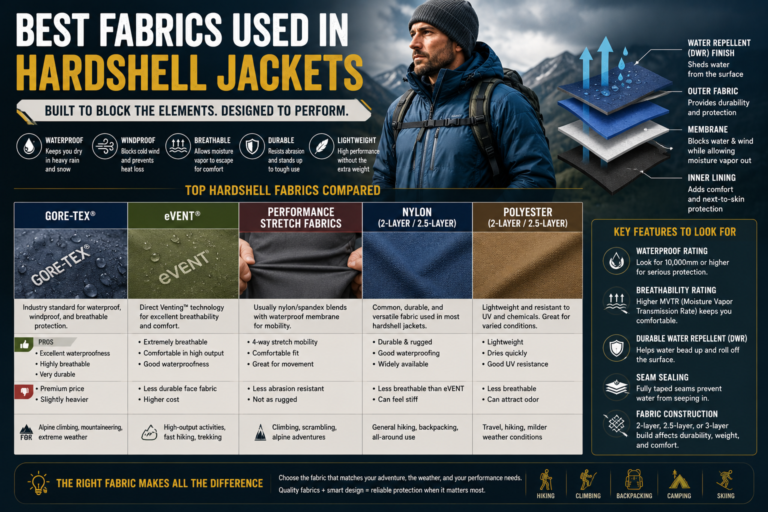
Hardshell jackets provide essential weather protection during outdoor pursuits. Understanding the Best Fabrics Used in Hardshell Jackets is essential since they help manufacturers create jackets that function well during inclement weather. To maintain the comfort of the end user, many outdoor brands partner with specialized manufacturers, like hardshell jacket manufacturers, to get high-quality material. The are critical for protection so that outdoor enthusiasts are not exposed to the elements during hiking, climbing, and camping.

Waterproof Fabrics for Maximum Protection

One attribute of the Best Fabrics Used in Hardshell Jackets is that they offer waterproof protection. The best waterproof fabrics will not let water penetrate the fabric while keeping the user comfortable. Many fabrics used by waterproof clothing manufacturers are designed with advanced membranes that block water and keep the wearer dry. The Best Fabrics Used in Hardshell Jackets often include multiple layers that improve weather resistance without making the jacket too heavy.

Breathable Materials for Comfort

When considering the Best Fabrics Used in Hardshell Jackets, the fabric must also be breathable. The user may sweat while participating in outdoor activities, so the jacket must allow for the escape of moisture. Many modern outdoor jackets are designed with fabrics that allow for both waterproofing and breathability by outdoor jacket manufacturers often uses breathable technologies to improve comfort during long adventures. The Best Fabrics Used in Hardshell Jackets balance waterproof protection with airflow, helping users stay comfortable throughout the day.

Durable Nylon Fabrics

Nylon is among the Best Fabrics Used in Hardshell Jackets because of its durability. It can withstand the rigors of the outdoors, like hiking on a trail, jumping over rocks, and pushing through branches with tactical outdoor apparel manufacturers often choose strong nylon fabrics for demanding environments. The Best Fabrics Used in Hardshell Jackets must withstand repeated use while maintaining their protective qualities.

Polyester Fabrics for Lightweight Performance

Polyester is also among the Best Fabrics Used in Hardshell Jackets. It is a lightweight fabric that offers quick drying time, and helps in keeping the weight of the outdoor gear to a minimum. Many products developed by hiking clothing manufacturers use polyester blends because they offer a good combination of durability and comfort. The Best Fabrics Used in Hardshell Jackets often include polyester to improve flexibility and ease of movement.

Best Fabrics Used in Hardshell Jackets for Harsh Weather

Best Hardshell Jackets should give you excellent protection against snow, rain, and wind. Leading manufacturers of specialized outdoor gear ski wear manufacturers focus on fabrics that can perform well in extreme weather conditions. The Best Fabrics Used in Hardshell Jackets are carefully selected to keep outdoor enthusiasts protected during winter sports and mountain adventures.

Key Features to Look For

When choosing the Best Fabrics Used in Hardshell Jackets, it is helpful to focus on several important features. Many outdoor clothing brands that collaborate with camping apparel manufacturers consider these characteristics when designing products.

  • Waterproof protection
  • Breathable construction
  • Durable outer layers
  • Lightweight performance
  • Wind resistance
  • Long-lasting comfort

These qualities help define the Best Fabrics Used in Hardshell Jackets and make them suitable for different outdoor activities.

Advanced Layered Fabric Systems

Layered fabric systems are ways to elevate the Best Fabrics Used in Hardshell Jackets. Many of the outer waterproof apparel developed by waterproof jacket manufacturers build using two, two and a half, or three-layer techniques. These systems are constructed to boost the strength, and physical and structural Protection. The Best Fabrics Used in Hardshell Jackets synergistically balance innovation and performance to satisfy outdoor lovers.

Conclusion

The Best Fabrics Used in Hardshel Jackets utilize strong nylon, light polyester, and modern waterproof membranes to safeguard against the rain, wind and snow. These membranes assist the design of jackets that are strong and breathable and comfortable for all outdoor activities. Hardshell jackets that utilize the Fabrics Used Jackets are designed for hiking, camping, skiing, or daily adventures, and provide protection and comfort that will endure.

FAQs

What are the Best Fabrics Used in Hardshell Jackets?

The most common fabrics include nylon, polyester, and waterproof membrane materials designed for weather protection and durability.

Why are waterproof fabrics important in hardshell jackets?

Waterproof fabrics prevent rain and snow from entering the jacket while keeping the wearer dry and comfortable.

Is nylon better than polyester for hardshell jackets?

Both are useful. Nylon offers greater durability, while polyester is lighter and dries quickly.

How to Choose the Right Outdoor Cargo Pants

Finding the ideal pants for outdoor activities is no easy task. You want a pair that can withstand the elements, that you can be comfortable in, and that has the utility you need. A lot of people settle on pants that rip after a couple wears. Learning how to choose the right outdoor cargo pants will greatly increase your appreciation of the outdoors. Good pants make a difference no matter the activity you are doing, be it hiking, camping, or just strolling your dog. This will teach you some key signs to look for.

Why Fabric is the Most Important Part

The first thing you want to look at is the material. The most common outdoor pants tend to be made from nylon or polyesters because of the speed at which they dry. Cotton is the worst for the outdoors and especially for pants that might get wet. Learning how to choose the right outdoor cargo pants means paying attention to the material and looking for the “quick-dry” in the description. For ease of movement, some brands will have a combination of spandex in the pants.

Check the Pockets Carefully

The big side pockets that cargo pants are well known for are a great feature, but you need to make sure that each of them is functional. A pocket that is going to hold your phone and some snacks needs to be secure, so look for zippers or buttons. A good pocket will also sit flat on your leg because you don’t want it moving around. A good way to learn how to choose the right outdoor cargo pants is to test out the pockets of the pants. Just put your hands in them and feel to see how strong they are. Many camping apparel manufacturers add extra stitching to pocket corners because that is where rips usually start.

Think About the Weather You Face

Make the right choice of cargo pants based on the weather. Summer hiking means choosing light pants that allow air flow. For winter, pack thicker pants, or ones you can put on over your long underwear. Rain is a problem, too. No one like wet pants. Don’t fear mastering the skill of choose the right outdoor cargo pants and matching pants to the weather in your area. Some pants even have a water-repellant coating. Check out waterproof clothing manufacturers to see how they make rain-ready pants that keep your legs dry in storms.

Fit and Mobility Matter a Lot

Pants need to be the right fit and allow for movement. For example, pants that are too tight are terrible for hiking. You need the ability to lift your knees high, especially when hiking over logs. On the other hand, pants that are too loose can be snagged on bushes and branches. Learning how to choose the right outdoor cargo pants also requires the ability to squat. The best cargo pants have extra room in the seat and thighs. Many hiking pants manufacturers design their pants with gussets. A gusset is a special piece of fabric in the crotch that lets you move better without ripping your pants.

Durability and Strong Stitching

Knees and the seat of cargo pants are the most worn out, so take a close look at the stitching of the cargo pants. Pants that are cheap frequently have single stitching and tear easily. When choose the right outdoor cargo pants. the best choice are neat, small, tightly stitched cargo pants. These types of pants will last a long time. You can see great examples from outdoor cargo pants manufacturers who use heavy-duty thread and reinforce high-stress areas.

Here are the key features to look for in good cargo pants:

  • Made from quick-dry fabric (nylon or polyester, not cotton)
  • Secure pockets (zippers or buttons)
  • Looseness (can perform a squat or knee lift)
  • Knees and seat (double stitched)
  • Water resistant (for rainy weather)
  • Comfortable (elastic or adjustable waistband)
  • Flat seams (won’t irritate)

Consider Special Features for Your Hobby

Different activities require different pants. Hunters need fabric that doesn’t swish. Climbers need fabric that is very stretchy. Fishermen need quick-dry fabric. Part of learning how to select the best cargo pants is considering your primary activity. If you are an avid hunter, pants that are camo and made from silent fabric are best. Check what hunting apparel manufacturers offer because they build pants for sitting still in the woods for hours.

How to Take Care of Your Cargo Pants

Even the best pants need the proper care. Always read the wash labels first. Most Choose the Right Outdoor Cargo Pants prefer cold water washes and no fabric softener. Softener can ruin the water-repellent coating. Hang to dry instead of a hot cycle. This will greatly prolong the life of your pants. Now you can confidently select the best cargo pants, and use this advice while shopping in person or online. Your legs will be thankful on every outdoor adventure. Caring for outdoor apparel is made simple with clear instructions from the manufacturers and on the tags.

Conclusion

Travel is better when you have the perfect Choose the Right Outdoor Cargo Pants. The perfect cargo pants are tough but lightweight with good flexibility. The pockets should be big and the fabric should be adaptable to the weather. The perfect pants make every outdoor activity comfortable. Investing in quality, durable cargo pants with a good fit will benefit you in the long run.

FAQs

Can I wear outdoor cargo pants for everyday use?

Yes, many people wear them for daily walks, gardening, or even school because they are comfortable and have many pockets.

Are expensive outdoor cargo pants always better?

Not always. Some mid-priced pants work great. Focus on fabric and stitching instead of just the price tag.

How do I know if cargo pants are truly waterproof?

Check for a “hydrostatic head” rating or look for words like “waterproof membrane.” Most are water-resistant, not fully waterproof.

Best Fabrics Used in Outdoor Cargo Pants

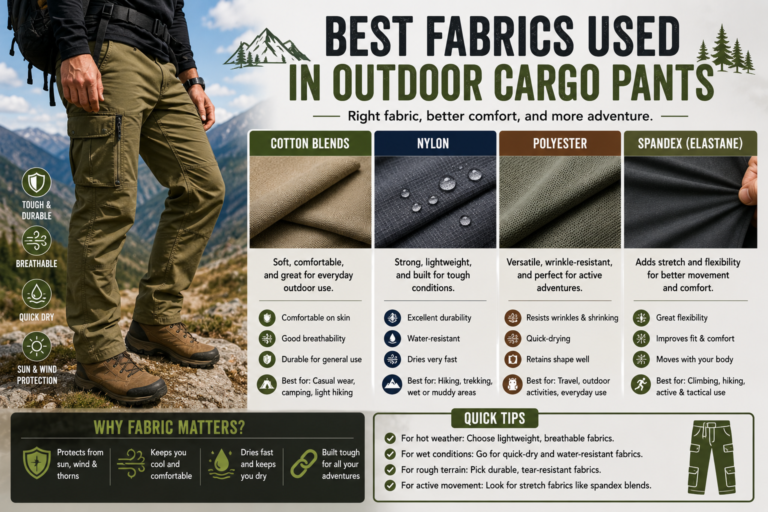
Outdoor cargo pants need to be tough, comfy, and ready for adventure. Fabric is important for all outdoor pants whether you relax on the grass, hike in the woods, or sleep in a tent. The Best Fabrics Used in Outdoor Cargo Pants include cotton blends, nylon, polyester, and spandex. Fabrics serve different uses. For example, some pants dry faster than others. Tactical outerwear manufacturers know what fabrics should be used when pants are likely to get wet and/or muddy. Good fabric can protect the wearer from the sun, wind, and/or thorns. It should be easy to breathe in. Let’s take a look at the fabrics in pants the easy way.

Why Nylon is a Top Choice

Nylon is strong and lightweight, which is why it is one of the Best Fabrics Used in Outdoor Cargo Pants. Pants can also get heavy when hiking long distances, but hiking pants with nylon don’t hold up the unneeded weight. Many hiking clothing manufacturers love nylon for this reason. When you walk for hours, you need pants that don’t feel heavy. Nylon solves that problem. It also blocks wind a little bit. But nylon alone can feel slippery, so often it is mixed with cotton or spandex. That makes it soft inside and tough outside. So if you see “nylon” on a tag, it is a good sign for outdoor fun.

Polyester for Long-Lasting Wear

The Best Fabrics Used in Outdoor Cargo Pants will nearly always contain polyester. Like nylon, polyester is colorfast and does not shrink, so it will look good and fit well even after many washings. It is also good with moisture and will pull water from your skin and help you stay dry. This is why camping apparel manufacturers often pick polyester for their pants. When you sit by a campfire, polyester does not catch fire quickly like cotton. But remember, it can get smelly if you wear it for many days without washing. So wash it after a long hike. Overall, polyester is cheap, strong, and perfect for kids and adults who love the outdoors.

Cotton Blends for Comfort

Like nylon, pure cotton feels good, but it also absorbs water and stays wet too long for good hiking. Cotton blends can also be among the Best Fabrics Used in Outdoor Cargo Pants. A cotton-nylon blend, for instance, is soft and strong. Some ski wear manufacturers construct pants using cotton-nylon blends, making them warm but not too heavy. A cotton blend also feels good on your skin, almost like your favorite school pants. Cotton blends are also not very hard to find and are inexpensive, making them a good choice for a short walk in the park.

Spandex for Movement

Have you ever tried to climb a large rock in stiff pants? It is a tough task. This is also why spandex is in the Best Fabrics Used in Outdoor Cargo Pants. Spandex is very stretchy. It may take very little percent to make a large difference. Flexibility in pants is a must. Most outdoor jackets manufacturers also use spandex in their jackets for the same reason. But spandex is never used alone because it is too soft. It is always mixed with nylon or polyester. So when you buy cargo pants, look for “stretch” on the label. That means spandex is inside. Your legs will thank you after a long day of hiking or playing.

Waterproof Fabrics for Rainy Days

Sometimes you need pants that stop rain completely. Then the Best Fabrics Used in Outdoor Cargo Pants are waterproof ones like treated polyester or nylon with a special coating. These fabrics have a layer that makes water roll off like a duck’s back. Many waterproof clothing manufacturers create pants that are light and packable. You can fold them into a small bag. Waterproof pants are not very breathable, so you might sweat inside. But for a rainy hike, they are lifesavers. Just make sure the label says “waterproof” and not just “water-resistant.” Water-resistant is good for light rain, but waterproof is for heavy downpours.

Bullet Point Paragraph: Quick Comparison of Fabrics

Here is a fast look at the Best Fabrics Used in Outdoor Cargo Pants in bullet points:

  • Nylon: Lightweight, Dry Fast, Strong, Filled up Wind.
  • Polyester: Doesn’t Shrink, Durable, Good for Sweating.
  • Cotton blend: Soft and Comfortable, but not for Heavy Rain.
  • Spandex: Good for Stretch, Climbing and Running.
  • Waterproof coating: Stops rain completely, less breathable.

Each fabric has a job. For hunting or hiding, hunting apparel manufacturers often use quiet, soft fabrics that do not make noise. So choose based on your activity.

How to Choose the Right Fabric for You

It’s easy to pick the right fabric when you consider the weather and your activities. What you might choose for rain would be waterproof nylon. If you have an activity planned that involves lots of climbing, consider using a spandex matter for its stretch. The Best Fabrics Used in Outdoor Cargo Pants for summertime are lightweight polyester and nylon blends. For the winter, look for a thicker fabric with a soft lining. You might also consider asking a waterproof jackets manufacturer for advice seeing as they are experts in the field on protection from the elements. It’s helpful to know that no fabric is going to be able to meet every need.

Caring for Your Outdoor Cargo Pants

Now that you know to select the Best Fabrics Used in Outdoor Cargo Pants, you also need to know how to care for your pants. Wash your pants with cold water. Wash them with a small amount of soap. Do not put your pants in a hot dryer, instead, air dry them. Heat can also ruin waterproof coatings and shrink the cotton blends. Many softshell jackets manufacturers give the same advice for their jackets. Also, if your pants get muddy, let the mud dry first, then brush it off. This keeps the fabric strong for years. Good care means your pants will be ready for every adventure.

Conclusion

Now you know everything regarding the Best Fabrics Used in Outdoor Cargo Pants. For the best outdoor cargo pants, remember to look for pants that have nylon for strength, polyester for durability, a cotton blend for comfort, spandex for stretch, and for the elements, consider waterproof fabrics. Check out pants made by windbreaker jackets manufacturers. Next time you go shopping, read the label and choose the right fabric for your day outside.

FAQs

What is the most durable fabric for outdoor cargo pants?

Nylon and polyester are the most durable. They resist tears and last many years.

 Can I wear cotton cargo pants for hiking?

Only on dry days. Cotton gets heavy and cold when wet. It is not good for rain.

Are spandex cargo pants good for climbing?

Spandex adds stretch, so you can move easily. Look for 2-5% spandex mixed with nylon.

How to Choose the Right Puffer Jacket

Are you one of those people who dislikes being outside in the cold during the winter? Puffer jackets can be very handy in keeping you warm during winter, but often customers wonder how to choose the best puffer jacket since there are so many options. This guide will help you Choose the Right Puffer Jacket, specifically how to consider the fit, fabric, and features of the jacket. After this guide, you will have the right knowledge to help you make the best decision. Let’s begin, so you can be warm during your winter outings.

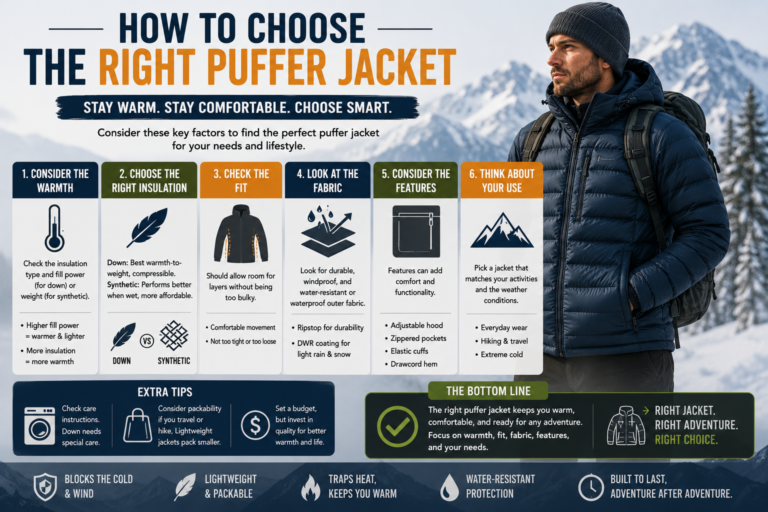
Why Filling Material is Key to Choose the Right Puffer Jacket

The filling is what sets puffer jackets apart. The filling, generally, traps heat. There are 2 standard fillings: down and synthetic. Down is bird stuffing and makes the jacket warm and lightweight, but synthetic filling is man-made and does the job for filling, PLUS it’s completely useful in cold and wet climates. When deciding Choose the Right Puffer Jacket for you, consider the type of weather you are in. In dry and cold climates, down is great. As for climates with wet and freezing weather, down is the way to go. You can find high-quality options from a tactical outdoor apparel manufacturer who uses both materials for tough conditions.

Understand the “Fill Power” Number

Numbers you see on Choose the Right Puffer Jacket (550, 650, 800) correlate to something called fill power. Fill power describes how warm the down is for its weight. The higher the number, the warmer and lighter the jacket will be. For example, an 800 fill power jacket will be warm and lightweight, while a 550 fill power jacket will be heavier, but still warmer than a jacket without down. A 550 fill power jacket would be adequate for daily use. Keep in mind, the higher the fill power, the more expensive the jacket.

Check the Outer Fabric for Strength

The outside fabric of your Choose the Right Puffer Jacket must be strong. It should not tear easily. Look for words like “ripstop” or “nylon.” These fabrics stop small tears from getting big. A strong shell also blocks the wind. This helps the filling do its job. If you like to hike or walk in the woods, a tough shell is a must. A reliable outdoors jacket manufacturer will use strong fabrics so your jacket lasts for many years of fun outdoor trips.

Look for Water-Resistance or Waterproofing

Getting a cold jacket wet can make you freezing in no time, so Choose the Right Puffer Jacket with a DWR coating (durable water repellent). A DWR coating helps water bead and slide right off. Some puffer jackets are fully waterproof and others are just water-resistant. It is fine to choose a water-resistant puffer jacket for light snow, but you should choose a waterproof puffer jacket for waterproofing in heavier rain, or a waterproof shell layered over your puffer jacket. Many hiking clothing manufacturers add DWR to their jackets to keep hikers dry on the trail.

Fit Matters: Snug or Loose?

The fit of your Choose the Right Puffer Jacket can be as important as the style or color. When your puffer jacket is a mid-layer, then it should fit closer. This is as the puffer sits under an outer waterproof shell. Can you move your arms freely? Is the fit of the jacket too tight around your shoulders? Too much free space in a jacket can make you fit, but too little space around the jacket can cause cold air from entering. A camping apparel manufacturer knows that a good fit helps you move when you set up a tent or cook food.

The Importance of a Good Hood and Cuffs

Small details make the jacket fit that much better. A good puffer jacket should have a hood that can keep your head and neck warm. A good puffer jacket should have a hood that can fit over a hat. Adjustable hoods should have a tightening cord. The fit of your puffer jacket also depends on the fit of the cuffs. Cuffs should be fitted to your wrists to keep warm in your arms. The best puffer jacket should have cuffs that can be stretched or adjusted with Velcro. A puffer jacket with bad details can keep you the cold. A professional ski wear manufacturer always adds these small features for comfort on the slopes.

Packability: Easy to Carry

Puffer jackets are known for their convenience and portability, as many can fold into tiny bags, with some even packing into their own pockets! This is perfect when traveling or going on a hike, as you can throw your puffer into your backpack and when you reach the chilly peak, simply take it out and put it on! However, not all puffer jackets are made to pack. If you do need a portable puffer jacket, then Choose the Right Puffer Jacket with “packable” on the tag. You can find many styles from a waterproof clothing manufacturer that are both packable and protective.

Think About the Activities You Do

  • A puffer for walking the dog is different than one for climbing a mountain. So, think about your main activity. For casual use, any warm jacket works. For running, get a light one with venting. For hunting, you need a quiet fabric and maybe camouflage. For skiing, you need a helmet-compatible hood and a tough face. Your activity guides every choice. That is the smartest way to Choose the Right Puffer Jacket. A good hunting apparel manufacturer will make puffers with silent, soft shells so animals do not hear you coming.

Check the Zippers and Pockets

Everything about a jacket can be great, but if the zippers are bad, then the jacket is bad. Pockets are also huge. Hand pockets can hold your hands while they warm, while a pocket on the chest can carry a phone or a map, and a pocket that is closed on the interior can carry a wallet. Choose the Right Puffer Jacket with Zippers and Pockets you can test, and it should be smooth to close and open! A leading waterproof jackets manufacturer will use high-quality zippers that can last for years.

Easy Care Makes Your Jacket Last Longer

Finally, think about cleaning. A puffer jacket is an investment. You want it to last. Always read the tag. Many puffers are machine washable. But you must use a special cleaner for down. You must dry it on low heat with tennis balls. This breaks up clumps of down. If you do not want this work, choose a synthetic puffer. It is easier to care for. To Choose the Right Puffer Jacket for a long life, pick one that fits your cleaning style. A responsible softshell jackets manufacturer can give you clear care instructions to keep your jacket looking and working like new.

Conclusion

The selection of your puffer jacket comes down to the elements you will face and your personal preference. A light weight jacket can be used for daily activities while something thick will be necessary for extra cold days. Also consider the insulation, fabric, and construction as well as the water proofing and comfort elements. A good puffer will improve the outdoor experience for years to come. Choosing the proper function and style will prepare you for all the adventures that life may have to offer.

FAQs

Is a 700 fill power puffer jacket good for very cold winters?

Yes, a 700 fill power puffer is very good for most cold winters. It offers excellent warmth without being too heavy. For extreme cold below -20°C, look for 800 fill power or a thicker synthetic jacket.

 Can I wear a puffer jacket in the rain?

You can, but a standard puffer is not fully waterproof. Light rain or snow is fine because of the DWR coating. For heavy rain, wear a separate rain shell over your puffer to keep the filling dry and effective.

What is the main difference between a puffer and a softshell jacket?

A puffer jacket is for insulation and warmth. It is thicker. A softshell jacket is for wind resistance and movement. It is thinner and more stretchy. Many people wear a softshell over a thin puffer for very cold, windy days.