Home Blog Page 4

MMA Shorts Material: Built to Withstand the Fight

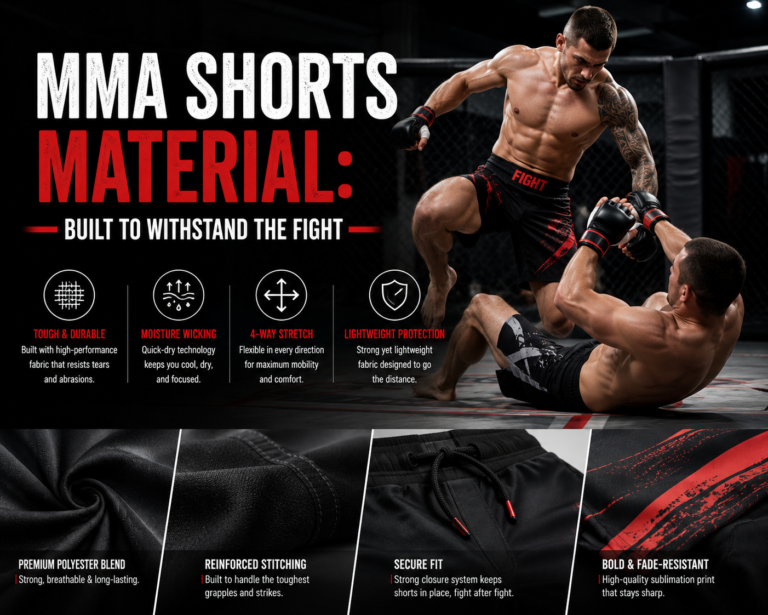
MMA is one of the most physically demanding sports in the world. Every movement — a takedown, a kick, a ground scramble — puts enormous stress on your gear. That’s why MMA shorts material is not something fighters can afford to overlook.

The right material keeps you moving freely, stays intact under pressure, and holds up through training sessions and fight nights alike. Whether you’re a fighter, a coach, or a brand looking to manufacture MMA gear, understanding what goes into the shorts matters more than you think.

What Is MMA Shorts Material?

MMA shorts material refers to the specific fabrics and construction techniques used to build shorts that can handle the unique demands of mixed martial arts. Unlike regular athletic shorts, MMA shorts need to survive grappling, striking, and ground work — all in one fight.

The most commonly used MMA shorts material includes polyester, nylon, spandex, and satin-like woven fabrics. Each brings different strengths to the table — and the best MMA shorts combine them to deliver performance, durability, and comfort in equal measure.

Why It Matters — Key Benefits

The right MMA shorts material makes a genuine difference inside the cage or on the mat. Here’s why it matters:

  • Maximum flexibility — Stretch fabrics like spandex blends allow full range of motion for high kicks, takedowns, and ground movement.
  • Exceptional durability — MMA training is brutal on gear. Quality materials resist tearing, fraying, and seam failure under stress.
  • Lightweight feel — Good MMA shorts feel barely there — so fighters stay focused on the fight, not their gear.
  • Moisture-wicking performance — Performance fabrics pull sweat away from the skin, keeping fighters dry and comfortable throughout the bout.
  • Quick-dry properties — Fast-drying materials prevent discomfort and reduce the risk of skin irritation during long training sessions.
  • Secure fit — The right material works with waistband construction to keep shorts firmly in place no matter how intense the movement gets.
  • Colorfastness — Vibrant fight-night designs stay bold and sharp even after repeated washing and heavy use.

How MMA Shorts Material Is Selected

Selecting the right MMA shorts material starts with understanding the demands of the sport. Striking-focused fighters often prefer lighter, more fluid fabrics that move with the body during stand-up exchanges. Grapplers and wrestlers tend to favor tighter, more structured materials that stay in place during intense ground work.

Manufacturers also consider the construction technique alongside fabric choice. Split side panels, stretch inserts, and reinforced seams all play a role in how the material performs under real fight conditions. The best MMA shorts bring all of these elements together — fabric, construction, and design — into one cohesive, fight-ready product.

Who Needs to Understand MMA Shorts Material?

Understanding MMA shorts material matters to more people than just fighters. Coaches and gym owners purchasing bulk training gear need to choose materials that hold up through daily use across multiple athletes. A poor fabric choice means constant replacements and unnecessary costs.

Sports retailers stocking MMA gear need to understand what their customers are looking for — and quality material is always at the top of the list. Activewear brands entering the MMA space need this knowledge to create products that serious fighters actually trust and use. If you’re also sourcing gear for other combat or high-intensity sports, you can explore rugby apparel, American football apparel, or ice hockey apparel alongside your MMA order.

Standards of Quality in MMA Shorts Material

Not every fabric that looks tough is actually built for the cage. Quality MMA shorts material needs to meet a specific set of standards to truly perform when it matters. Tear resistance is the first test — the fabric must handle grabs, pulls, and ground friction without giving way.

Stretch recovery is equally important. The material should bounce back to its original shape after every movement — not sag or lose structure mid-fight. Seam strength is critical too — reinforced stitching at stress points prevents the most common failure points during grappling exchanges. Finally, the material must remain comfortable against the skin throughout long training sessions and fight nights, with no chafing or irritation even under heavy sweat.

Why Choose Eco Jersey for Custom MMA Shorts?

Eco Jersey manufactures MMA apparel using carefully selected MMA shorts material that meets the demands of real fighters. We combine high-performance fabrics with precision construction to deliver shorts that truly hold up in training and competition.

Our sublimation printing covers the full surface of every pair — delivering bold, detailed designs that stay sharp fight after fight. We work with gyms, fight teams, retailers, and brands of all sizes, with flexible order quantities that scale to your needs. We also manufacture basketball apparel, soccer apparel, Formula 1 racing apparel, and more — all under one roof. Browse our full sportswear collection to explore everything we offer.

Conclusion

The right MMA shorts material is what separates gear that performs from gear that fails when it matters most. From flexibility and durability to moisture management and seam strength — every detail in the fabric counts.

At Eco Jersey, we build MMA shorts from the inside out — starting with the right material and finishing with a product fighters can trust. Ready to order custom MMA shorts built for the fight? Explore our MMA apparel options and get in touch with our team today.

FAQs

What is the best material for MMA shorts?

Polyester and nylon blends with spandex inserts are the top choices for MMA shorts. They offer the right balance of flexibility, durability, and moisture management that fighters need during training and competition.

Are MMA shorts made differently from regular athletic shorts?

Yes. MMA shorts are specifically constructed for combat sports — featuring reinforced seams, stretch panels, and fight-ready fabrics that handle grappling, striking, and ground work. Regular athletic shorts are not built for these demands.

Can I customize the fabric and design of my MMA shorts?

Absolutely. At Eco Jersey, you can choose your preferred fabric, design, colors, and branding for both sides of your shorts. We handle everything from sampling to full production runs.

How durable is MMA shorts material after repeated training use?

High-quality MMA shorts material is built to last through heavy daily training. With the right fabric and reinforced construction, your shorts will maintain their shape, color, and performance through an entire season of regular use and washing.
Bulk Basketball Uniforms: Ordering for Leagues and Schools

Running a basketball league or managing a school sports program comes with a long list of responsibilities. Uniforms are one of the biggest. You need the right quantity, the right quality, and the right look — all within a budget that makes sense.

That’s exactly where bulk basketball uniforms come in. Ordering in bulk simplifies the entire process — from cost savings to consistent sizing — and gives every player a professional appearance on the court. Let’s walk through everything you need to know.

What Are Bulk Basketball Uniforms?

Bulk basketball uniforms refer to large-quantity orders of basketball jerseys, shorts, and full uniform sets purchased directly from a manufacturer. Instead of buying individual pieces at retail prices, you order in volume and pay significantly less per unit.

For leagues, schools, and clubs, bulk basketball uniforms are the standard approach. They ensure every player on every team is dressed consistently — same fabric, same quality, same finish — without the chaos of sourcing from multiple places.

Why It Matters — Key Benefits

Ordering bulk basketball uniforms is a game-changer for leagues and schools. Here’s why:

  • Lower cost per unit — Bulk orders bring the price per uniform down significantly, freeing up budget for other program needs.
  • Consistent quality across all teams — Every uniform in the order meets the same standard — no mismatched fabrics or inconsistent sizing.
  • Custom branding on every piece — Add team names, numbers, logos, and school colors to every uniform in the batch.
  • Faster turnaround for large orders — Working directly with a manufacturer means your full order is produced and delivered efficiently.
  • Flexible sizing options — From youth sizes to adult, bulk orders can cover every player across all age groups.
  • Easy reordering — Once your design is set, reordering for new seasons or new players is quick and straightforward.
  • Professional appearance — Matching uniforms across an entire league instantly elevate the look and feel of every game.

How Bulk Basketball Uniform Ordering Works

The process of ordering bulk basketball uniforms is more straightforward than most people expect. It starts with choosing your design — colors, fonts, numbers, logos, and any other branding elements your league or school requires. Once the design is finalized, you share your size breakdown with the manufacturer.

From there, a sample is produced for your review. After you approve the sample, full production begins across your entire order. The completed uniforms are then packed and shipped directly to you, ready to distribute to every team. Working with an experienced manufacturer ensures the process stays smooth from start to finish — with no surprises along the way.

Who Orders Bulk Basketball Uniforms?

Bulk basketball uniforms serve a wide range of buyers across the sports world. School athletic departments are among the biggest buyers — they need consistent uniforms for multiple teams across different age groups and genders, all representing the same institution.

Community and recreational leagues also rely heavily on bulk ordering to keep all participating teams dressed in matching, branded uniforms throughout the season. Sports retailers stock bulk uniforms to meet demand from local teams and clubs. Corporate organizations running internal sports events and tournaments also place bulk orders to quickly outfit participants. If your organization also runs other sports programs, you can conveniently source soccer apparel, volleyball apparel, or rugby apparel alongside your basketball order.

Standards of Quality in Bulk Basketball Uniforms

Quality becomes even more critical when you’re ordering in bulk. Every single uniform in the batch needs to meet the same standard — because inconsistency across a large order reflects poorly on your league or school. High-quality bulk basketball uniforms start with performance fabrics that are lightweight, breathable, and moisture-wicking.

Stitching and construction must be durable enough to handle a full season of intense gameplay and regular washing. Print quality is equally important — team names, numbers, and logos should remain sharp and vibrant throughout the season. Sizing consistency across the entire order is non-negotiable. Every player deserves a uniform that fits well and performs at its best from the first game to the last.

Why Choose Eco Jersey for Bulk Basketball Uniforms?

Eco Jersey is built for exactly this kind of order. We manufacture basketball apparel at scale — delivering bulk basketball uniforms that meet professional standards in fabric, construction, and customization.

Our sublimation printing ensures every name, number, and logo stays bold and clear through an entire season of use. We handle size runs efficiently — from youth to adult — so no player gets left out. Our team works closely with leagues, schools, and clubs to meet specific deadlines and deliver on time, every time. We also manufacture American football apparel, ice hockey apparel, MMA apparel, and much more. Browse our full sportswear collection to explore everything we offer.

Conclusion

Bulk basketball uniforms are the smartest way for leagues and schools to dress their teams professionally without overspending. From consistent quality to custom branding, bulk ordering covers everything a sports program needs in one efficient process.

At Eco Jersey, we make bulk ordering simple, reliable, and fully customizable. Whether you’re outfitting one team or an entire league, we’re ready to deliver. Explore our basketball apparel options and reach out to our team today to get started.

FAQs

What is the minimum order quantity for bulk basketball uniforms?

Minimum order quantities vary by manufacturer. At Eco Jersey, we offer flexible MOQs to accommodate both small school teams and large league orders. Contact us to discuss your specific requirements.

Can I customize the design for each team within a bulk order?

Yes. We can produce multiple designs within a single bulk order — so each team in your league gets its own unique colors, numbers, and branding while still benefiting from bulk pricing.

What fabrics are used in bulk basketball uniforms?

We use premium moisture-wicking polyester and spandex blends — lightweight, breathable, and built for high-intensity gameplay. Both fabric quality and construction are consistent across every piece in the order.

How long does it take to produce and deliver a bulk order?

Production timelines depend on order size and design complexity. In most cases, you can expect delivery within 2–4 weeks from sample approval. We always provide a clear timeline before production begins.

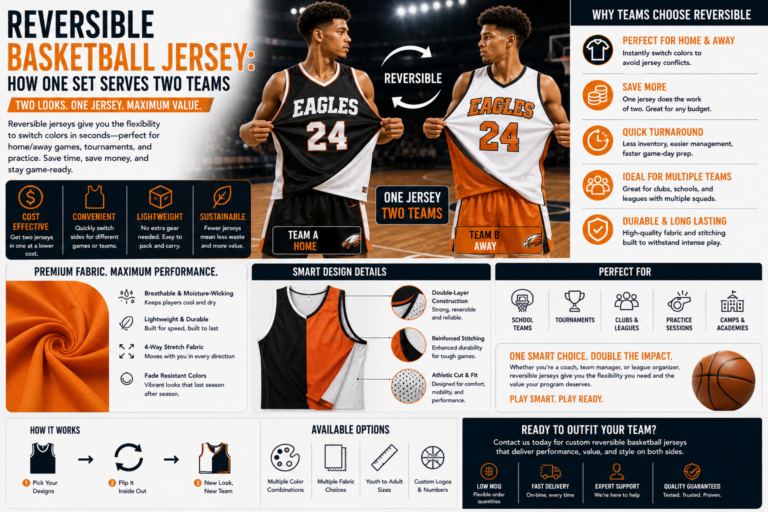
Reversible Basketball Jersey: How One Set Serves Two Teams

Imagine getting two jerseys in one. That’s exactly what a reversible basketball jersey offers. One side for your home game, the other for away — no extra cost, no extra bulk, and no confusion on the court.

It’s a practical solution that coaches, teams, and leagues around the world are adopting fast. Whether you’re managing a school team or running a professional league, reversible jerseys make your life easier and your budget go further.

What Is a Reversible Basketball Jersey?

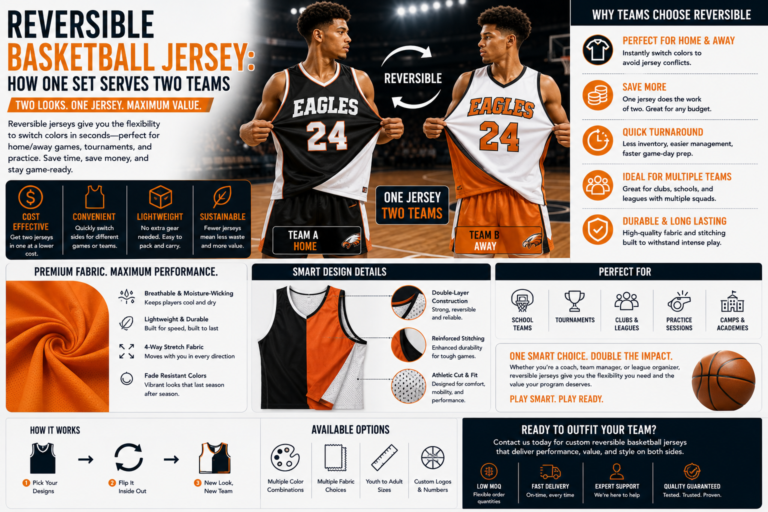
A reversible basketball jersey is a dual-sided uniform that can be worn inside out to display two completely different colors or designs. One flip of the jersey and your team switches identity — from home colors to away colors in seconds.

The construction of a reversible basketball jersey is different from a standard jersey. Both sides are finished, printed, and wearable — making it a genuinely functional two-in-one product rather than just a jersey with a colored lining.

Why It Matters — Key Benefits

Reversible basketball jerseys are growing in popularity for good reason. Here’s what makes them such a smart choice:

  • Two jerseys in one — You get home and away uniforms in a single purchase, cutting your apparel costs significantly.
  • Budget-friendly for teams — Coaches and team managers save money without compromising on quality or appearance.
  • Quick switchover — Players can flip their jersey in seconds, making game-day transitions smooth and hassle-free.
  • Lightweight and breathable — Despite being double-sided, quality reversible jerseys remain light and comfortable to wear.
  • Full customization on both sides — Numbers, names, logos, and colors can be fully customized on each side independently.
  • Perfect for training — Use one side for drills and the other for scrimmages to easily identify teams during practice.
  • Durable construction — Both sides are built to handle intense gameplay, repeated washing, and a full season of use.

How a Reversible Basketball Jersey Is Made

Manufacturing a reversible basketball jersey requires more precision than a standard jersey. Both sides of the fabric need to be performance-grade — breathable, moisture-wicking, and durable. Neither side is a lining or a throwaway layer.

The fabric is carefully bonded or sewn so that seams remain clean and flat on both sides. Sublimation printing is applied to each side separately before the jersey is assembled. This ensures colors are vivid, sharp, and long-lasting no matter which side the player is wearing. The result is a jersey that truly performs on both sides — not just one.

Who Is a Reversible Basketball Jersey For?

The reversible basketball jersey is a versatile solution that works across many different settings. School and college teams love it because it cuts uniform costs in half while still giving players a professional look for both home and away games.

Community leagues and recreational clubs benefit from the flexibility — one set of jerseys covers all game scenarios without the need for two separate orders. Corporate sports events and tournaments also use reversible jerseys to quickly divide participants into two teams. Even training academies use them during practice sessions to separate squads without needing extra gear. If you’re also sourcing uniforms for other sports, check out our soccer apparel, volleyball apparel, or tennis apparel to cover all your team needs in one place.

Standards of Quality in Reversible Basketball Jerseys

A reversible jersey is only as good as the quality of both its sides. Cutting corners on one side defeats the entire purpose. High-quality reversible basketball jersey construction starts with selecting the right fabric — lightweight polyester mesh that breathes well and wicks moisture efficiently on both sides.

The stitching and seam work must be equally clean on the inside and outside. There should be no rough edges, exposed seams, or uncomfortable textures that distract the player. Print quality is also critical — both sides need to hold their colors through an entire season of games and washes. A well-made reversible jersey should feel like two premium jerseys, not one good jersey and one compromise.

Why Choose Eco Jersey for Reversible Basketball Jerseys?

At Eco Jersey, we manufacture basketball apparel with the same level of care and precision on both sides of every reversible basketball jersey. Our team understands that both sides need to perform — and we never cut corners on either.

We use premium moisture-wicking polyester fabric and apply sublimation printing separately to each panel before assembly. This gives you bold, vibrant designs on both sides that stay sharp wash after wash. We work with teams, schools, leagues, and retailers of all sizes — with flexible order quantities and reliable delivery timelines. We also manufacture rugby apparel, American football apparel, ice hockey apparel, and more. Explore our full sportswear collection to see everything we offer.

Conclusion

A reversible basketball jersey is one of the smartest investments a team can make. It solves the home and away uniform challenge in one product — saving money, simplifying logistics, and keeping players looking sharp on both sides.

At Eco Jersey, we build reversible jerseys that truly deliver on both sides — in quality, performance, and design. Ready to outfit your team? Explore our basketball apparel options and get in touch with us today.

FAQs

What is a reversible basketball jersey?

A reversible basketball jersey is a dual-sided uniform that can be worn on either side. Each side features a different color or design — giving teams a home and away jersey in a single garment.

Are reversible basketball jerseys comfortable to wear?

Yes. Quality reversible jerseys are made from lightweight, breathable polyester mesh that feels comfortable on both sides. There are no rough seams or uncomfortable textures when worn on either side.

Can both sides of a reversible jersey be fully customized?

Absolutely. At Eco Jersey, we customize both sides independently — including numbers, names, logos, and colors. Each side can have a completely unique design tailored to your team’s identity.

How durable are reversible basketball jerseys?

Very durable. Both sides are constructed with the same high-quality fabric and stitching. With proper care, reversible jerseys hold their shape, color, and performance throughout a full season of regular use and washing.
Basketball Jersey Fabric: Breathability and Game-Ready Fit

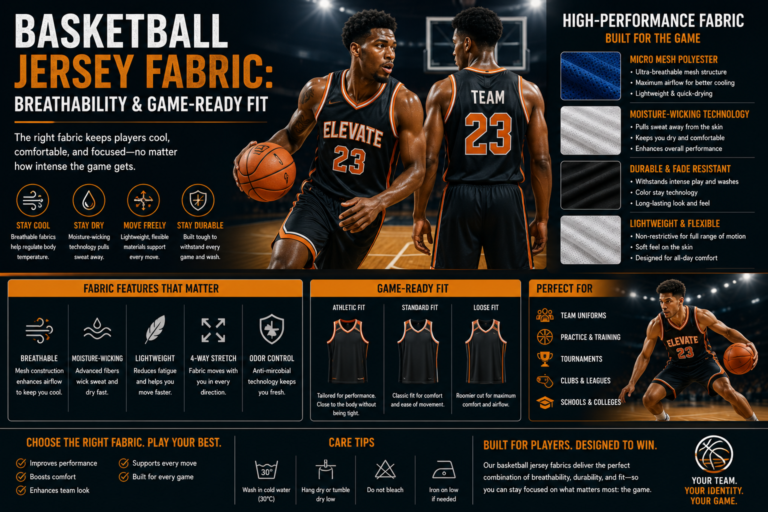
When it comes to basketball, your jersey is more than just a uniform. It directly affects how you move, how you feel, and how you perform on the court. The right basketball jersey fabric makes a real difference — keeping you cool under pressure and free to move at full speed.

Whether you’re a coach, a team manager, or a brand looking to manufacture custom jerseys, understanding fabric is the first step to making the right choice. Let’s break it all down.

What Is Basketball Jersey Fabric?

Basketball jersey fabric refers to the specific materials used to construct jerseys worn during games and training. These fabrics are engineered for athletic performance — not just everyday comfort. They need to handle sweat, intense movement, and repeated washing without losing their shape or color.

The most commonly used basketball jersey fabric includes polyester, mesh, and spandex blends. Each material brings something different to the table — and the best jerseys combine them strategically for maximum performance.

Why It Matters — Key Benefits

Choosing the right basketball jersey fabric isn’t just about looks. Here’s why it matters for players and teams:

  • Superior breathability — Performance fabrics allow air to circulate freely, keeping players cool during intense gameplay.
  • Moisture-wicking properties — Sweat is pulled away from the skin and evaporated quickly, so players stay dry and comfortable.
  • Lightweight feel — Good basketball fabric feels almost weightless, so it never slows a player down.
  • Stretch and flexibility — Spandex blends allow full freedom of movement — jumping, pivoting, and sprinting without restriction.
  • Durability — High-quality fabrics hold up through dozens of games and washes without fading or tearing.
  • Color retention — Sublimation-friendly fabrics keep team colors vibrant and sharp throughout the season.
  • Skin-friendly comfort — Soft, non-irritating materials prevent chafing during long matches and training sessions.

How Basketball Jersey Fabric Is Chosen

Choosing the right basketball jersey fabric starts with understanding how the jersey will be used. Game jerseys demand higher performance than training gear — they need to look sharp, feel lightweight, and handle heavy sweat.

Manufacturers consider factors like fabric weight, weave type, and stretch percentage before making a selection. For example, a tightly woven mesh offers excellent ventilation while a polyester-spandex blend adds the stretch needed for athletic movement. The right combination depends on the team’s needs, the climate they play in, and the level of customization required.

Who Needs to Understand Basketball Jersey Fabric?

Understanding basketball jersey fabric is important for more people than just players. Coaches and team managers need to make informed decisions when ordering bulk uniforms for their squads. Getting the fabric right means players perform better and feel more comfortable throughout the season.

Sports retailers also benefit from knowing their fabrics — it helps them stock jerseys that customers actually love. Fashion and activewear brands entering the basketball space need this knowledge to create products that compete in the market. If you’re sourcing apparel across multiple sports, you can also explore options like soccer apparel, volleyball apparel, or tennis apparel alongside your basketball order.

Standards of Quality in Basketball Jersey Fabric

Not every fabric that looks good on the shelf performs well on the court. Quality basketball jersey fabric should meet specific standards to deliver real value for players and teams. Breathability is the top priority — the fabric must allow heat and moisture to escape quickly during high-intensity play.

Durability is equally important. The jersey needs to maintain its structure, color, and fit after repeated washes and heavy use. Colorfastness ensures team colors stay bold and consistent throughout the entire season. A quality fabric also moves with the player — never pulling, bunching, or restricting motion. These standards are what define a truly game-ready jersey.

Why Choose Eco Jersey for Custom Basketball Jerseys?

Eco Jersey specializes in manufacturing high-performance basketball apparel built on premium basketball jersey fabric. We carefully select materials that deliver the breathability, stretch, and durability that players demand at every level.

Our custom sublimation printing works seamlessly with our performance fabrics — producing vivid, long-lasting designs that don’t crack or fade. We work with teams, retailers, and brands of all sizes, offering flexible order quantities and fast turnaround times. Beyond basketball, we also manufacture rugby apparel, American football apparel, MMA apparel, and more. Browse our full sportswear collection to explore everything we offer.

Conclusion

The right basketball jersey fabric is the foundation of every great uniform. It affects how players feel, how they move, and how they perform when it matters most. From breathability to durability, every detail counts.

At Eco Jersey, we take fabric selection seriously because we know it makes a difference on the court. If you’re ready to order custom basketball jerseys built on premium materials, get in touch with our team today and let’s build something great together.

FAQs

What is the best fabric for basketball jerseys?

Polyester mesh and polyester-spandex blends are the most popular choices. They offer the perfect combination of breathability, stretch, and durability for on-court performance.

Is basketball jersey fabric different from regular sportswear fabric?

Yes. Basketball jersey fabric is specifically engineered for high-intensity movement and heavy sweating. It is lighter, more breathable, and more flexible than standard sportswear materials.

Can I customize the fabric and design of my basketball jerseys?

Absolutely. At Eco Jersey, you can choose your fabric type, design, colors, and branding. We handle everything from sampling to full production.

How durable is basketball jersey fabric after repeated washing?

High-quality basketball jersey fabric is designed to last. With proper care, jerseys made from premium polyester blends retain their shape, color, and performance properties through an entire season of regular washing.

Wholesale Tennis Clothing for Coaching Programs and Retailers

If you run a tennis coaching program or a retail store, you already know how important the right apparel is. Players want to feel comfortable, move freely, and look professional on the court.

That’s where wholesale tennis clothing comes in. Buying in bulk gives you the flexibility to outfit your entire team or stock your shelves without breaking the budget. Moreover, it opens the door to custom branding — so your logo, colors, and identity are always on display. Whether you’re building a coaching brand or growing a retail business, wholesale is the smartest way to do it.

What Is Wholesale Tennis Clothing?

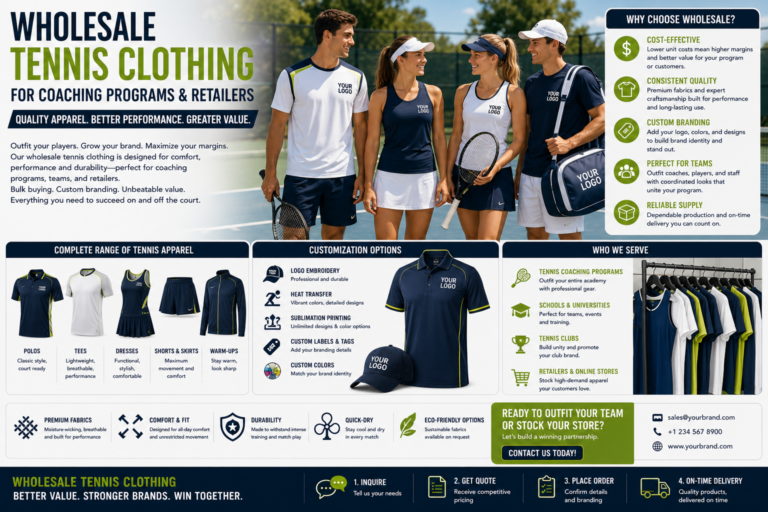
Wholesale tennis clothing means purchasing tennis apparel in large quantities directly from a manufacturer at a lower per-unit cost. It’s a smarter way to buy — especially when you need consistent quality across dozens or hundreds of pieces.

This approach works perfectly for coaching academies, sports retailers, clubs, and activewear brands. From performance polos and shorts to skirts, tracksuits, and warm-up jackets — wholesale tennis clothing covers everything players need on and off the court.

Why It Matters — Key Benefits

Choosing wholesale over retail purchasing comes with some real advantages. Here’s why coaching programs and retailers love it:

  • Lower cost per unit — The more you order, the less you pay per piece. Your margins stay healthy.
  • Custom branding options — Add your academy name, logo, or sponsor details directly on the apparel.
  • Consistent sizing across the team — Everyone gets the same fit and style, creating a professional look.
  • Faster restocking — Reliable wholesale suppliers keep your shelves or storage stocked without delays.
  • High-quality fabrics — Performance materials like moisture-wicking polyester keep players cool and comfortable.
  • Flexibility in design — Choose colors, cuts, and styles that match your brand identity.
  • Stronger supplier relationships — Long-term wholesale partnerships mean better pricing and priority service over time.

How the Wholesale Process Works

The process of ordering wholesale tennis clothing is straightforward and stress-free. You start by sharing your requirements with the manufacturer — quantities, sizes, design preferences, and branding details. From there, a sample is created for your review and approval.

Once you approve the sample, full production begins. Your completed order is then packed and delivered directly to you, ready to distribute or stock. Throughout the entire process, you stay in control of how your apparel looks and feels. If you also need apparel for other sports, you can conveniently source basketball apparel or volleyball apparel alongside your tennis order.

Who Is Wholesale Tennis Clothing For?

Wholesale tennis clothing is a smart solution for more people than you might think. Tennis coaching academies use it to outfit students and coaches in branded uniforms that build instant credibility. Sports retailers stock wholesale tennis apparel to meet customer demand and maintain healthy profit margins.

Tennis clubs and associations create a unified, professional look across all their members and events. Activewear and fashion brands use wholesale manufacturing to launch or grow their tennis clothing line with full customization. Even tournament organizers rely on wholesale apparel to dress staff and participants in style. If your program also covers racket sports beyond tennis, you can explore badminton apparel as well.

Standards of Quality in Wholesale Tennis Clothing

Quality is everything when you’re buying apparel in bulk. Every piece that goes out under your name represents your brand — so the standards have to be high. Good wholesale tennis clothing starts with breathable, moisture-wicking fabrics that keep players comfortable through long matches and training sessions.

Beyond fabric, construction matters just as much. Strong seams, reinforced stitching, and colorfastness ensure the apparel holds up through repeated use and washing. The fit should also allow full freedom of movement — stretchy and flexible without being baggy. Consistent sizing across the entire order is essential so every player or customer gets exactly what they expect.

Why Choose Eco Jersey for Wholesale Tennis Clothing?

Eco Jersey is a dedicated custom apparel manufacturer with deep expertise in bulk sportswear production. We bring together quality fabrics, advanced printing techniques, and flexible ordering options to deliver wholesale tennis clothing that truly performs.

Our sublimation printing produces bold, vibrant designs that stay sharp wash after wash. We accommodate both small coaching programs and large-scale retailers, with order quantities that scale to your needs. We also deliver on time — every time. And since we manufacture across a wide range of sports, you can source soccer apparel, rugby apparel, golf apparel, and more — all in one place. Browse our complete sportswear collection to see the full range

Conclusion

Wholesale tennis clothing gives coaching programs and retailers a powerful advantage — better quality, lower costs, and full control over branding. It’s the professional way to equip players and stock shelves at the same time.

At Eco Jersey, we make the entire process simple and reliable. From your first inquiry to final delivery, we’re with you every step of the way. Ready to place your first order? Explore our tennis apparel options and get in touch with our team today.

FAQs

What is the minimum order quantity for wholesale tennis clothing?

Minimum order quantities depend on the manufacturer. At Eco Jersey, we offer flexible MOQs designed to work for both small coaching programs and large retail buyers. Reach out to us and we’ll find the right fit for your order size.

Can I customize the design and add my branding?

Absolutely. Custom branding is one of the biggest reasons people choose wholesale. You can add your logo, team name, colors, and sponsor details — we handle the full design and production process for you.

What fabrics are commonly used in wholesale tennis clothing?

Most performance tennis apparel is made from moisture-wicking polyester, spandex blends, or lightweight mesh. These materials keep players cool, dry, and unrestricted during play — exactly what you need on the court.

How long does production take for a bulk order?

Timelines vary based on order size and design complexity. In most cases, you can expect production and delivery within 2–4 weeks from the time your sample is approved. We’ll always give you a clear timeline before production starts.

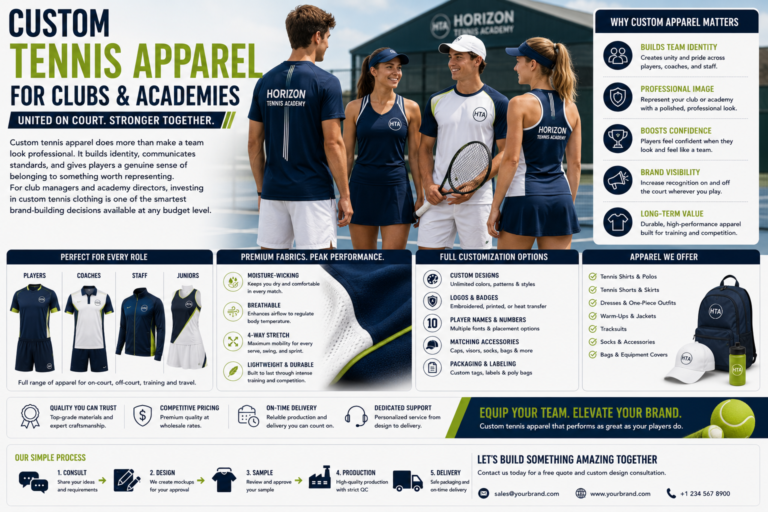
Custom Tennis Apparel for Clubs and Academies

Walk onto any serious tennis club or academy and you immediately notice the teams wearing coordinated, branded apparel. There’s a reason for that — custom tennis apparel does more than make a team look professional. It builds identity, communicates standards, and gives players a genuine sense of belonging to something worth representing. For club managers and academy directors, investing in custom tennis clothing is one of the smartest brand-building decisions available at any budget level.

Here’s exactly why it matters and how to get it right.

Why Custom Tennis Apparel Matters for Clubs and Academies

Generic sportswear tells players nothing about where they belong or what standards they represent. Custom apparel tells a completely different story — one of professionalism, commitment, and collective identity that generic alternatives simply cannot communicate.

When every player on your courts wears coordinated branded apparel, several things happen simultaneously. Visitors notice your club’s professionalism immediately. Prospective members form positive first impressions before speaking to anyone. Current members feel pride in representing a club that takes its identity seriously. Junior players develop the discipline and team orientation that wearing team apparel consistently builds from early in their development.

For academies specifically, custom tennis apparel communicates training standards to parents who are investing significantly in their children’s development — and parents who see organized, professional presentation from day one feel more confident about the quality of coaching and environment their investment supports.

What Custom Tennis Apparel Typically Includes

A complete custom tennis apparel program for clubs and academies covers more than just shirts. A well-developed program creates a cohesive wardrobe that players wear confidently across all club activities — from casual practice sessions through competitive match days and tournament representation.

A complete club or academy kit typically includes:

  • Performance polo shirts and crew neck tees in club colorways
  • Training shorts with club branding and performance fabric construction
  • Women’s skirts and dresses with integrated compression shorts
  • Warm-up jackets and hoodies for pre-match and cool weather training
  • Track pants and training bottoms for full-session coverage
  • Branded caps and visors for outdoor court sun protection
  • Club-branded bags and accessories completing the professional presentation

Working with a professional tennis apparel manufacturer ensures every piece in the program uses consistent performance fabric specifications — so the quality your brand communicates through custom design is backed by genuine athletic performance that serious players notice during actual training and competition.

Performance Fabric Requirements for Club and Academy Apparel

Custom apparel for serious tennis clubs and academies must perform as well as it looks. Players training multiple sessions per week and competing regularly place genuine performance demands on their clothing — and custom apparel that looks impressive but performs poorly damages club reputation rather than enhancing it.

Key performance requirements for quality custom tennis apparel include:

  • Four-way stretch fabric construction accommodating full athletic movement across serving, groundstrokes, and court movement
  • Moisture-wicking polyester blends managing perspiration during intensive training sessions
  • Quick-dry properties maintaining comfortable garment weight through long practice days
  • UPF sun protection for outdoor court sessions where UV exposure accumulates significantly
  • Colorfast fabric treatments maintaining appearance across the repeated washing that regular training demands

Sportswear manufacturers with genuine performance fabric expertise guide clubs and academies through fabric selection — ensuring custom apparel delivers training session after training session rather than impressive only during initial wear before performance degrades through regular use and washing.

Customization Options Available for Clubs and Academies

The range of customization available through professional manufacturing gives clubs and academies comprehensive control over their visual identity across every garment in the program.

Color customization — full Pantone color matching to club colors across all garment pieces, ensuring consistent brand color expression regardless of garment type or fabric construction.

Logo application — embroidery for premium structured appearance on polo collars and chest placements, sublimation printing for all-over design integration, and heat transfer for detailed graphic applications where embroidery cannot capture fine design detail.

Name and number personalization — individual player names and squad numbers applied consistently across matching garments for competitive team identification during tournament and league play.

Design exclusivity — custom cut-and-sew constructions creating garment designs unique to your club rather than standard blank garments with logo additions that any other organization could purchase and brand identically.

Label and packaging — custom woven labels, care tags, and branded packaging completing the professional product presentation that serious clubs communicate through every touchpoint of their brand experience.

MOQ Considerations for Clubs and Academies

Minimum order quantities represent a practical consideration for club and academy custom apparel programs — particularly for smaller organizations where member numbers limit total order volumes. Understanding MOQ structures helps clubs plan apparel programs realistically.

Most professional sportswear manufacturers offer flexible MOQ structures for club and academy programs — recognizing that building long-term supply relationships with organized sports organizations provides ongoing commercial value that justifies lower initial minimum quantities than standard commercial orders require.

Clubs with smaller membership numbers benefit from working with manufacturers who offer per-style MOQs of 20 to 50 pieces — allowing complete program development across multiple garment types without requiring unrealistically large individual style quantities that small clubs cannot consume within a single season.

Academies with larger student enrollment and multiple training groups across age categories often qualify for better pricing through consolidated ordering that combines junior, senior, and coaching staff requirements into single production runs — reducing per-unit costs significantly compared to separate small orders for each program tier.

Building a Long-Term Club Apparel Partnership

The most successful club and academy custom apparel programs treat manufacturer relationships as long-term partnerships rather than single transaction purchases. Establishing consistent fabric specifications, colorway standards, and design templates across multiple seasons creates significant efficiency — making each subsequent season’s apparel program faster, easier, and more cost-effective than starting from scratch annually.

Long-term manufacturing partnerships also allow clubs to maintain consistent brand appearance across player generations — new members joining years after initial program development receive apparel that matches existing members’ kits precisely, maintaining the coordinated professional appearance that makes club identity genuinely powerful rather than inconsistent across different vintage cohorts of club apparel.

Clubs expanding their branded merchandise beyond playing apparel into casual wear, training accessories, and lifestyle pieces benefit from working with manufacturers producing broader sportswear ranges — allowing the same brand standards and color accuracy to extend across every branded item the club offers to members and supporters.

Conclusion

Custom tennis apparel for clubs and academies is an investment in identity, professionalism, and the collective pride that serious tennis organizations build over time. Performance fabric construction keeps players comfortable and performing well. Professional customization communicates standards that attract and retain quality members. Consistent brand presentation across complete apparel programs creates the cohesive visual identity that distinguishes serious clubs from casual recreational facilities. Get the apparel program right and it becomes one of the most visible, lasting expressions of everything your club or academy stands for on and off the court.

FAQs

What is a reasonable MOQ for custom club tennis apparel?

Most professional manufacturers accommodate club programs starting from 20 to 50 pieces per style — making complete custom apparel programs accessible for clubs of most membership sizes without requiring unrealistic initial order volumes.

How long does custom tennis apparel production take?

From design approval through sampling and bulk production, most custom club apparel programs take six to ten weeks — planning ahead of season start dates ensures kit availability before competitive fixtures begin.

Can junior and senior club apparel be produced in matching designs?

Absolutely. Professional manufacturers produce coordinated junior and senior apparel across consistent designs, colorways, and branding — creating cohesive club identity across all age groups and program tiers.

What customization method produces the most durable club logo application?

Embroidery produces the most durable logo application for structured placement on polo collars and chest positions — maintaining appearance across hundreds of washing cycles that printed alternatives may not withstand across full garment service life.

Bulk Soccer Kits: A Buyer’s Guide for Clubs and Distributors

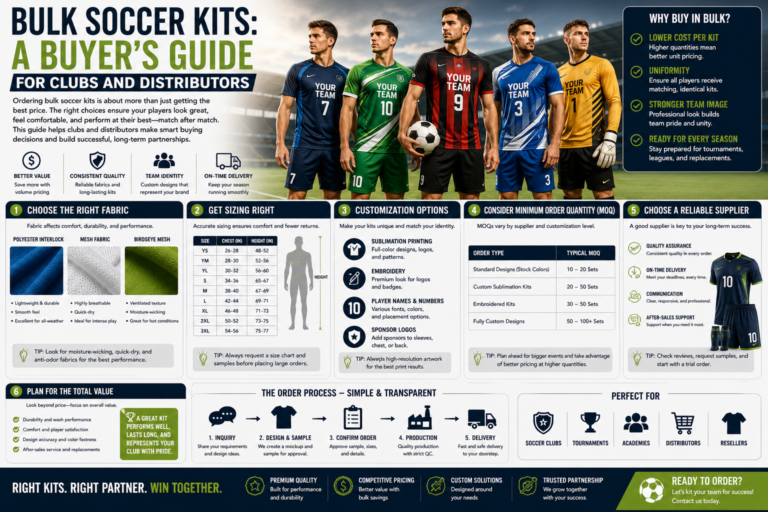
It takes more than just choosing a design to order bulk soccer kits. To ensure that the product is both affordable and performs as expected, buyers must consider minimum order quantities, fabric, size accuracy, and reliability of suppliers. This guide will help clubs and distributors navigate the important considerations when purchasing bulk soccer kit, allowing them to avoid common pitfalls, and develop a long-term strategy.

Why Bulk Soccer Kits Need Careful Planning

Bulk purchases of soccer kits are different from buying a single jersey, as buyers have to consider the size distribution for an entire team, fabric quality consistency across hundreds or even thousands of units and realistic production schedules. Distributors who sell kits to several clubs are also under pressure to ensure that the quality of their products is consistent. By implementing a clear strategy for sourcing bulk soccer kits, you can avoid costly mistakes, delays in seasons and unhappy players or customers.

Bulk Soccer Kits Minimum Order Quantities

The minimum order quantity, or MOQ, is the lowest number of units that a manufacturer can produce for a single purchase. Understanding MOQs helps buyers to plan their budgets and negotiate with suppliers.

Why MOQs vary by customization level

Manufacturers usually set lower MOQs when customizing simple designs, like single-color printing. They raise MOQs when creating complex designs, like sublimation patterns. Suppliers need to place larger orders because sublimation printing takes more time for setup and fabric preparation. This makes it difficult to keep costs per unit down. Buyers with lower budgets might want to simplify the design in order to reduce the MOQ requirement.

Negotiating MOQs with Multi-Team Orders

Distributors and league managers who manage multiple teams are able to combine orders from several clubs in order to meet the MOQ of a supplier more easily. Some manufacturers also offer flexibility to buyers who place recurring orders during the season, as this ensures a predictable and ongoing revenue stream for them. In order to achieve better pricing, it is often beneficial to discuss long-term orders during the initial negotiation.

How to evaluate the fabric quality of bulk soccer kits

Fabric quality has a direct impact on player comfort, the durability of kits, and satisfaction in a club or league. Before placing a large order, buyers should ask for fabric samples and specifications.

Key Fabric Properties Confirmed

Most quality soccer kits are made of moisture-wicking polyester, which is a material that effectively manages sweat during match play. The four-way stretch material supports the player’s movement while breathable mesh panels regulate temperature when intense activity is taking place. It is important to confirm these properties before ordering in bulk. This will ensure that the order as a whole is consistent.

Test Samples before Bulk Production

By requesting a physical sample, buyers can evaluate the fabric’s weight, stretch and overall feel without relying on written specifications. While sampling can add time to sourcing, it is often necessary to avoid costly problems that are only apparent when the bulk order arrives. By not skipping the sample stage, buyers can avoid receiving a full shipment of fabric that is unsuitable.

Managing Sizing Across Bulk Soccer Kits

As order volumes increase, it becomes more important to ensure that the size is accurate.

Collecting accurate size data

Since soccer rosters include players of all body types, clubs should take player measurements instead of relying solely on standard sizes for adults or youths. This data should be provided to manufacturers in an organized, clear format. This will reduce the chance of miscommunications during production. By investing in the accurate collection of sizes upfront, you can avoid costly reorders.

How to use size charts and grading

Most manufacturers use a system of size grading that is consistent across the full range of sizes. Reviewing a manufacturer’s chart and comparing it to your own measurements before placing an order can help you catch any discrepancies. Requesting a few samples across the entire range rather than one gives buyers greater confidence in overall sizing.

Selecting a Reliable Soccer Kit Supplier

The success of any order for bulk soccer kits is heavily influenced by the choice of the manufacturing partner. Buyers should consider the following factors before committing to a particular supplier:

  • Production Capacity: Verify that the supplier is able to handle your order volume and within your desired timeline.
  • Quality Control Processes: Inquire about inspection procedures before and after production in order to detect defects early.
  • Turnaround time for samples: Assess how quickly the supplier can provide samples. A faster turnaround will help you meet tighter deadlines.
  • Customization capability: Verify that the supplier offers printing or embroidery methods to match your design.
  • Transparency in pricing: Request an individual quote for fabric, customization and shipping.
  • Communication responsiveness Assess the clarity and speed of the supplier’s responses to questions throughout the sourcing process.

These factors can help clubs and distributors choose a supplier who will deliver high-quality, consistent bulk soccer kits year after season.

Plan realistic timeframes for bulk soccer kit orders

The production timelines of bulk soccer kits can vary depending on the order size, complexity of customization, and capacity. Buyers should ask for a production schedule that includes design approval, sample production, bulk production and shipping. In addition, allowing for delays can help ensure that kits arrive in time to kick off the season rather than causing a mad rush at the last minute. Planning timelines in advance will reduce stress for clubs and distributors who are managing multiple orders.

The Future of Soccer is More Than Bulk Kits

Some clubs and distributors go beyond the jersey to source shorts, socks and training gear to match their kit. Buyers can coordinate uniform packages from one supplier by exploring the soccer clothing category. Distributors who work across different sports can also review the sportswear range to streamline their sourcing.

Join forces with a trusted manufacturer of bulk soccer kits

When you work with a manufacturer that understands the needs and wants of distributors and clubs, sourcing bulk soccer kits is much easier. A reliable manufacturer can help you manage orders for an entire league or outfit a single team.

We are a custom apparel maker that helps clubs and distributors find bulk soccer kits to meet their performance, quality and budget needs. Contact our team to learn more about fabric options, sizing assistance, and production schedules that are tailored to the needs of your organization.

Conclusion

When buying bulk soccer kits, it is important to pay attention to the minimum order quantities (MOQs), fabric quality, size accuracy, and reliability of suppliers. Understanding minimum order quantities helps clubs and distributors negotiate and plan effectively. Evaluating fabric and asking for samples will ensure the final product performs on the pitch. A responsive and capable supplier, as well as realistic planning, will help you avoid costly delays. This buyer’s guide will help clubs and distributors source bulk soccer kit that is pleasing to both players and customers.

FAQs

What is the typical minimum order quantity for bulk soccer kits?

The minimum order quantity (MOQ) varies by manufacturer and customization. However, most bulk orders of soccer kits start at 50 to 200 units per design. Minimums are often lower for simpler customization methods than sublimation printing.

How can I make sure that all of my soccer kits are the same size?

Compare your player’s measurements with the manufacturer’s grading and size chart before you place an order. Sample sizes of your entire range can also help confirm consistency prior to bulk production.

How can distributors lower the MOQ for multiple clubs?

Distributors can often meet the MOQ of a supplier more easily by combining orders from several clubs into one bulk order. Determining to place recurring orders during the season can also encourage suppliers to lower their minimum order quantities.

What should I consider when selecting a soccer equipment supplier?

Before committing to any supplier, evaluate their production capacity, quality assurance processes, turnaround time for samples, and transparency in pricing. A reliable partner is one who communicates clearly throughout the entire sourcing process.

Custom Soccer Kit Design: From Concept to Delivery

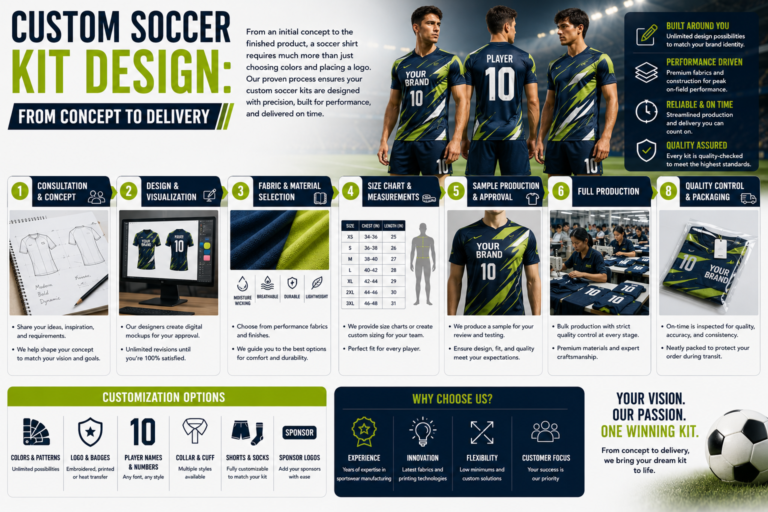
From an initial concept to the finished product, a soccer shirt requires much more than just choosing colors and placing a logo. To ensure that the final product is accurate and performs well, custom soccer kit design involves careful planning at multiple stages. These include concept development, fabric choice, sample production and final production. This guide will walk you through the custom soccer kit designing process from conception to delivery.

Why Structured Design Matters

Soccer kits are a way to express identity for any club or team. Unorganized or rushed design processes can lead to color mismatches, a poor fit or fabrics that don’t perform well in match conditions. A structured process for designing custom soccer kits can help you avoid expensive revisions, and the end product will meet both performance and aesthetic expectations. Understanding each step of the process will help you plan your timelines, budgets and approvals better.

Stage One: Conceptual Development

Each custom soccer kit begins with a design concept that reflects a team’s brand, identity or sponsorship requirements. This phase involves gathering inspiration, choosing a color scheme, and creating design elements such as stripes, patterns or graphic details.

Defining Brand identity through Design

This stage begins with a review of existing brand guidelines and club heritage. Sponsors or league regulations can also dictate requirements such as color restrictions or logo placement. Designers must take these into consideration from the beginning. By communicating these restrictions early on, designers can avoid costly redesigns.

Sketching and digital mockups

Designers create digital mockups to visualize the kit on the front, the back and the sleeves once the concept direction has been determined. These digital mockups enable stakeholders to check proportions, placement and the overall aesthetic of the kit before making a fabric choice or committing to production. Reviewing multiple mockups at this stage allows the designer to refine their design, while still allowing for easy and inexpensive changes.

Second Stage: Fabric and Materials Selection

After the finalization of the visual concept is complete, the focus shifts to choosing fabrics that will make the design come to life and meet performance requirements.

Choose Performance Fabric

Custom soccer kits are often designed using polyester blends with moisture-wicking properties that help manage sweat while supporting movement. At this stage, it is common to incorporate breathable mesh panels and four-way stretch fabrics in order to make the kit perform well during matches. Fabric choice affects comfort, durability and visual appeal.

The Color Matching and Printing Technique

To bring a digital design alive on fabric, you need to choose the right printing technique, whether it’s screen printing or sublimation for all-over, full-color designs. Sublimation printing is ideal for soccer kits, as it allows for intricate patterns and gradients to be printed without adding bulk. Manufacturers often provide digital proofs or color swatches before sampling to ensure accurate color matching.

Stage Three: Sampling & Fit Approval

The sampling process is a crucial checkpoint for the design of a custom soccer kit, as it allows the stakeholders to evaluate the design physically before they commit to mass production.

Requesting and reviewing samples

Manufacturers usually produce one or two physical samples based upon the approved digital design, fabric selection and manufacturing process. Teams should assess color accuracy, fabric quality, and overall construction during this stage. While samples can add to the timeline, skipping it often results in costly mistakes that are only discovered after mass production.

Fit Testing Across Sizes

Sample garments are used to test the fit of garments across a range of sizes. Fit testing with real players is important because soccer kits need to allow for unrestricted movements during sprints and changes in direction. Digital mockups can’t replicate this. Involving players at this stage allows for sizing problems to be caught before they impact the entire order.

Stage Four: Production and quality control

After the final approval of samples, the design for a custom soccer kit is then put into mass production where quality and consistency are essential.

Manage Production Timelines

The production timeline can vary depending on the order size, availability of fabric, and complexity of printing. Establishing a schedule with your manufacturer will help avoid delays before season starts. Adding buffer time to allow for possible revisions or delays in shipping can help prevent last-minute panic when delivery dates are approaching.

Checkpoints for Quality Control

Reputable manufacturers conduct quality control checks during production. They check stitching, color consistency and size accuracy throughout the entire order. Requesting documentation or photos at these quality checkpoints will give teams the confidence to know that the bulk order is the same as the approved sample.

Stage Five: Delivery & Final Inspection

Custom soccer kit design ends with receiving your order and checking that everything is as you expected.

  • Verify quantity: Confirm the delivered quantities are the same as the original order for all sizes.
  • Inspect the jerseys for defects. Check for any stitching problems, color issues or printing errors.
  • Verify the accuracy of the size: Check the sizes on the sample approved to ensure consistency throughout the entire order.
  • Check the packaging: Make sure that jerseys are properly packaged in order to avoid wrinkling and damage during transport.
  • Resolve issues quickly: Contact the manufacturer as soon as possible if you notice any issues. Most quality problems are easier to fix shortly after delivery.

This checklist can help teams and brands identify and fix any problems quickly so that the kit will be ready for the next season.

How to Expand Your Custom Soccer Kit into a Full Apparel Range

Some clubs and brands expand their custom soccer kits into a wider product line, which includes travel gear, training wear, and merchandise for supporters. The soccer clothing category allows teams to coordinate training tops, shorts and socks that match the design and performance of their kit. Brands that manage multiple sports in their organization can also review the entire sportswear to maintain consistency and design principles.

Custom Soccer Kits: Partner with a Reliable Manufacturer

To successfully navigate custom soccer kit design, from conception to delivery, you need a manufacturing partner that understands the creative as well as the technical aspects of the process. Working with an experienced manufacturer is the best way to ensure smooth communication, a reliable timeline, and consistent quality at every stage, whether you are designing a kit or sportswear for a professional team, youth league, new brand, etc.

We are a custom apparel company that guides brands and clubs from the initial concept sketches through to delivery and quality assurance. Contact our team if you are ready to begin your kit project. We can discuss fabric options and production timelines that suit your team.

Final Thoughts

The process of designing a custom soccer kit is a structured one, starting with the initial concept, moving through fabric selection, sample production, final delivery, and finally, the delivery. Each stage is important in ensuring that the final kit represents your team while also performing well during match conditions. A careful eye on quality control and sampling will help to prevent costly mistakes before mass production. Understanding and following this process will help clubs and brands confidently take their custom designed soccer kit from the concept stage to a product that is ready for use on the pitch.

FAQs

How long does it take to design a custom soccer kit?

The entire process can take several weeks or even months depending on the complexity of the design and the size of your order. Allowing for time to allow for revisions and sampling will help you achieve a more efficient timeline.

What is the best printing method for custom soccer jerseys?

Sublimation printing is a great option for soccer jerseys because it allows intricate designs in full color without adding bulk. Screen printing is a good option for simple logos.

Why is it important to sample when designing custom soccer kits?

Before committing to mass production, teams can evaluate color accuracy, the fabric’s feel and the fit. This step is often skipped, which can lead to costly mistakes that are difficult to fix after the order has been completed.

Can I change the sample after it has been approved?

Most manufacturers will allow a few changes after the sample has been approved, but revisions at a late stage can often prolong production and increase costs. It is important to review samples carefully before approval in order to minimize the need for changes later.

Custom Soccer Jersey Fabric: What Makes a Match-Grade Kit

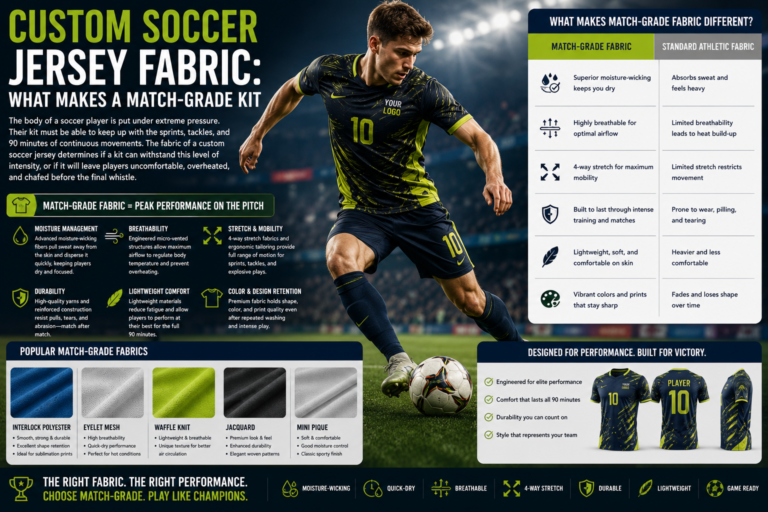
The body of a soccer player is put under extreme pressure. Their kit must be able to keep up with the sprints, tackles and 90 minutes of continuous movements. The fabric of a custom soccer jersey fabric determines if a kit can withstand this level of intensity, or if it will leave players uncomfortable, overheated and chafed before the final whistle. This guide will explain what makes match-grade fabrics different from standard athletic  badminton wear. It will cover moisture management, stretchability, durability and breathability.

Why Fabric Quality Is Important in a Match-Grade Football Kit

The constant running, abrupt direction changes and physical contact that are part of soccer create heat and stress. High-quality fabric for custom soccer jerseys wicks away sweat, promotes airflow, and allows the garment to stretch with the player without losing its shape. Low-quality fabrics trap heat, retain moisture and quickly wear out under repeated match usage. Fabric choice affects player comfort as well as the overall life of a kit over a season.

Core Fabric Properties of a High-Grade Soccer Kit

A jersey that can handle the intensity of a match day is made up of a combination fabric properties.

Moisture-Wicking Polyester

Nearly all custom soccer jerseys are made of polyester because it draws sweat from the skin, spreads it out and allows it to evaporate quickly. Microfiber polyester also increases the surface area of the fabric, improving moisture transport when performing intense exercise. Players stay more comfortable and drier for longer periods of time.

Lightweight Construction

Lightweight fabric is used in match-grade jerseys to absorb sweat and reduce drag. Even small weight variations in fabric can impact player comfort and fatigue perception because Soccer apparel involves sustained running over a long distance. Manufacturers prioritize lightweight polyester fabrics specifically designed for performance wear.

Breathable Mesh Panels

Mesh panels strategically placed across the back and underarms increase airflow to high-heat areas of the body. Mesh construction is used to regulate body temperature in these areas, which generate heat when sprinting and moving continuously. Modern match-grade kit designs now include breathable mesh panels.

Four-Way Stretch Fabric

Fabric with four-way stretch moves in multiple directions to allow players to reach, twist and change direction. This is important in soccer where quick movements and physical battles require unrestricted mobility. Four-way stretch fabrics are known to recover their shape quickly. This helps the jersey keep a uniform fit during a match.

Durable and tear-resistant Weave

The fabric of a soccer shirt is put under stress by physical contact, sliding tackles and grass abrasion. Match-grade kits are made of tightly woven fabric or reinforced fabrics that resist tearing, pilling and repeated use. Manufacturers balance breathability with durability in order to make sure the jersey lasts through a season of competitive playing.

Antimicrobial and Odor Resistant Finishes

The antimicrobial treatment helps control bacteria that cause odors. This is especially important for jerseys used during training sessions or matches. Reapplying these treatments during fabric manufacture can extend their durability.

What makes match-grade fabric different from basic jerseys?

Brands and teams can make better purchasing decisions by understanding the differences between basic and match-grade soccer jerseys. Consider the following distinctions.

  • Fabric Weight: Match grade jerseys are made from lighter, more technical fabrics compared to heavier cotton blends used in replica kits.
  • Moisture Management: Fabrics of match-grade fabric actively wick sweat, while jerseys of basic quality absorb moisture instead.
  • Stretching and recovering: The four-way stretch fabric used in match-grade kits allows for dynamic movement. Basic jerseys, on the other hand, offer little stretch.
  • Ventilation Design: Strategic Mesh Paneling in Match-Grade Kits Targets Specific Heat Zones, whereas basic jerseys rarely have this level of detail.
  • Durability in stress situations: High-quality fabrics can withstand tackles, sliding and slipping without tearing. Lower-quality fabrics wear out faster.

These differences can help teams and brands ensure that their custom-made soccer jersey fabric investment will translate into real performance on the field.

Construction Details that Complement Matching Fabric

Fabric quality is not enough to create a match-grade kit. Construction techniques are also important. Flatlock seams are less likely to cause chafing around stitch points. This is important during 90 minutes of continuous activity. The jersey is also shaped to conform to the natural movement of the body, which reduces fabric bunching at the shoulders and torso. The garment is further protected from tearing by reinforced stress points located at the side seams and underarms.

Custom Soccer Jersey Fabrics for Your Team or Brand

The right fabric for your team depends on its competitive level, climate and budget. The best performance on the field is achieved by elite teams that prioritize moisture-wicking poly with mesh panels and four-way stretch. Recreational or youth teams can balance cost and performance by choosing a moisture-wicking material without the most sophisticated ventilation systems. Working closely with your manufacturer, to understand the fabric weight, stretch percentage and durability tests, will help you ensure that your kit is up to matchday requirements.

You can coordinate your shorts, training gear, and socks with the same fabric performance if you are developing a full kit that goes beyond the jersey. Brands that manage multiple sports in their product line may also review the sportswear to compare fabrics and construction methods across different athletic categories.

How to Care for Match-Grade Soccer jerseys

The performance of a custom-made soccer jersey can be extended with proper care. Avoid fabric softeners and wash your jerseys with cold water and mild detergent. They coat the fibers, reducing moisture-wicking ability. Air-drying, or using low heat to dry the jerseys will also help prevent shrinkage. This will preserve the fabric’s stretch. If teams consistently follow these steps, their jerseys will maintain their performance characteristics throughout the entire season.

Partner with a trusted manufacturer for custom soccer jersey fabric

A manufacturing partner that understands the demands of competitive soccer is essential to developing a match-grade kit. Working with a manufacturer who has experience in the field will ensure that your jerseys are up to professional standards.

We help brands and teams select the right fabric for their custom soccer jerseys and design details to match their budget and competitive level. Contact our team if you are ready to design your team’s uniform. We can discuss customization options, fabric choices, and production schedules.

Conclusion

Fabric customization for soccer jerseys can make the difference between a kit which looks good and one which performs well in match conditions. Moisture-wicking Polyester, lightweight construction, mesh panels with breathable airflow, and 4-way stretch work together to help players endure 90 minutes of intense exercise. The kit will also last a whole season with the help of durable, tear-resistant fabrics and thoughtful details such as flatlock seams. These fabric and construction features are what allow brands and teams to produce soccer jerseys worthy of the match-grade title.

FAQs

What is the fabric used for professional soccer jerseys

Most professional soccer jerseys are made of lightweight polyester, with a four-way stretch and strategically placed mesh panels. These fabrics are designed to manage sweat while supporting the demands of competitive play.

What is the difference between match-grade and replica jersey fabrics?

The match-grade fabric is made of lighter, more technical fabrics with active moisture-wicking capabilities, while replica jerseys are often made from heavier, less-breathable fabric that’s designed for everyday wear, rather than performance.

Does custom soccer jersey fabric affect player performance?

Fabrics that effectively manage moisture and heat can reduce the perceived fatigue and discomfort of a match. A lightweight, breathable material also provides a better range of movement during sprints and changes in direction.

How often should you replace your soccer jerseys?

With proper care, match-grade jerseys can last for a whole competitive season. However, heavy use and frequent laundering can speed up wear. It is important to inspect the fabric and seams regularly in order to determine when it’s time for a replacement.

Custom Sportswear: Fabrics, Fit, and Performance Explained

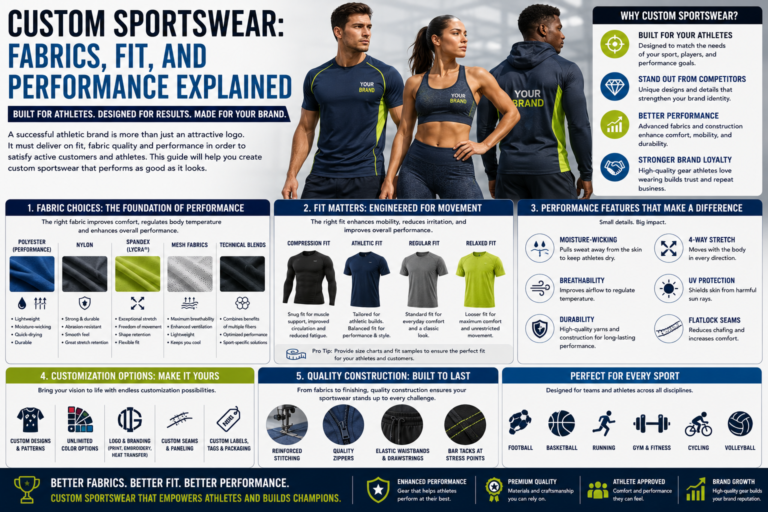
A successful athletic brand is more than just an attractive logo. It must deliver on fit, fabric quality and performance in order to satisfy active customers and athletes. Brands who understand the relationship between these three elements can produce apparel that is both professional and functional, while also supporting comfort, durability, and movement. This guide will help you to make informed decisions about your next product line by explaining the fabric choices, fit considerations and performance features of quality custom sportswear.

Fabrics, fit, and performance define custom sportswear

When design, functionality, and comfort are all in sync, custom sportswear is a success. Fabric selection determines the ability of a garment to manage moisture and resist wear. Fit influences how an athlete can move freely during activity. Performance features such as compression, breathability and stretch bind these elements into a final product that meets the real needs of athletes. Brands that consider all three factors in the development of custom sportswear produce products that are as functional as they are beautiful.

Custom Sportswear Fabric Options

The fabric you choose will determine the comfort, durability and performance of your custom sportswear.

Polyester and Blends of Polyester

The most popular fabric for custom sportswear is polyester. It wicks away moisture, dries fast, and resists wrinkles. Polyester blends with spandex provide stretch and recovery to improve comfort when moving dynamically. Many jerseys, training tops and shorts are made from polyester blends.

Nylon Fabrics

Nylon is a durable and abrasion-resistant material, which makes it an excellent choice for sportswear that will be exposed to frequent friction or rough contact. Nylon dries fast and does not stretch out of shape. This means that garments will maintain their fit even after repeated wear. While nylon by itself can feel less breathable, adding mesh panels or moisture wicking finishes will improve airflow.

Spandex and Elastane blends

Custom sportswear can move more freely with the body when made from elastane and spandex. Manufacturers blend these fibers in small amounts into nylon or polyester fabrics to increase flexibility without compromising durability. Blends of spandex are used in leggings, fitted athletic tops and compression wear.

Mesh and Ventilated fabrics

Mesh fabrics allow for greater breathability, especially in areas that generate heat, like the back, sides, and underarms of a garment. Strategic mesh placement is important to regulate temperature in these areas, which generate heat when exercising. Custom sportswear often incorporates mesh panels to provide athletes with targeted cooling.

Recycled and sustainable fabrics

Many brands are now incorporating recycled polyester or sustainable fabric blends in their custom sportswear line. These materials are comparable to virgin polyester, but have a lower environmental impact. This appeals to eco conscious athletes and consumers. Sustainability has therefore become a more important factor when selecting fabrics for new sportswear collections.

Fit considerations for custom sportswear

The fit directly impacts how comfortable and functional an item feels when worn. Brands must therefore carefully consider the sizing and shape of the garment during design.

Compression Fit

The compression fit garments hug your body tightly, helping to reduce muscle fatigue and increase circulation when you are doing high intensity activity. This style is ideal for leggings and sports-specific tops that are worn underneath additional layers.

Athletic Fitness

Athletic fit is a compromise between compression and loose sizing. It allows for enough movement without sacrificing too much fabric. Athletic fit garments are used in many team sports including basketball and soccer because they allow for dynamic movement while avoiding restrictions on flexibility.

Relaxed Fit

The relaxed fit provides more space throughout the body. This is ideal for casual training, warm-up clothing, or athletes that prefer extra airflow. While relaxed fit garments sacrifice some of the benefits of compression clothing, they offer greater comfort during lower-intensity exercises.

Size Consistency across a Product Line

Consistency in sizing is important to build customer confidence and reduce returns. Working closely with manufacturers to develop detailed size charts and test fittings will help ensure that every piece of your custom sportswear fits exactly as you intended.

Performance features that elevate custom sportswear

Specific performance features separate quality custom sportswear and basic athletic apparel beyond fabric and fit:

  • Moisture wicking technology: Draws sweat away from skin during exercise to keep athletes dry.
  • Four-way Stretch: Fabric can move in multiple directions to support dynamic athletic movements.
  • Antimicrobial Treatment: Reduces bacteria that cause odors to keep you fresh during training sessions.
  • Flatlock Seams: Reduces irritation and chafing at stitch points when repeated motions are performed.
  • UV protection Protects the skin from harmful rays when training or competing outdoors.
  • Reinforced stress areas: Strengthens areas of high tension like seams and underarms to improve durability.

You can design custom sportswear with real performance benefits by incorporating these features in your designs.

The Fabrics, Fit and Performance of Your Sport

Understanding your target sport will help you make the right design decisions. Brands developing Soccer apparel, for example, prioritize lightweight, breathable fabric paired with athletic fit to allow constant movement. basketball clothing often combines moisture wicking mesh panels and a relaxed to athletic fit for comfort in fast-paced games.

Rugby apparel, and American Football apparel are designed to be durable with reinforced stress points for contact sports. Ice Hockey Apparel pairs compression base layer fabrics with moisture-wicking exterior fabrics to combat cold environments.

Combat sports brands that produce MMA clothing choose fabrics with a four-way stretch and a compression fit for support of grappling and striking. badminton clothing , golf apparel , and tennis apparel also favor lightweight fabrics that are breathable with athletic fits for quick lateral movements. golf clothing is often made of moisture-wicking fabrics and sun-protective materials with a relaxed fit. baseball clothingvolleyball attire, all balance durability with flexibility to accommodate sport-specific movements.

Specialized categories require unique solutions. Formula 1 apparel is made from fire-resistant fabrics and a compression-style fit to provide driver comfort in extreme conditions. The sportswear range showcases different design approaches for nearly all sports.

Custom Sportswear from a trusted manufacturer

Working with a manufacturing partner who has experience is a great way to ensure that you get the right fabric, fit and performance features. A reliable manufacturer can help you with material selection, sizing and production.

We help brands create custom sportswear by aligning fabric selection, fit and performance features to their athletes’ needs. Contact our team to learn more about fabric options, sizing assistance, and production schedules that are tailored to your sport.

Conclusion

Fabrics, fit and performance features must work together to meet the athletes’ needs. Blends of polyester, nylon and spandex provide moisture management and flexibility. Compression, athletic and relaxed fits are available to accommodate different comfort levels and activity levels. Flatlock seams and antimicrobial treatments elevate the performance of basic apparel. Understanding how these elements are connected allows brands to design custom sportswear for athletes that builds customer loyalty.

FAQs

What is the best fabric for custom sportswear garments?

Most custom sportswear is made from polyester and polyester-spandex mixtures, which are wicking and stretchy and provide good recovery. The best fabric will depend on the sport you play and your performance requirements.

How can I find the perfect fit for my custom-made sportswear?

Athletic fit is best for team sports and base layers. Relaxed fit is good for casual training and warm-up. This decision is influenced by the movements of your athletes.

Why is moisture-wicking an important feature in custom sportswear designs?

The moisture-wicking fabric draws sweat from the skin, spreading it over the fabric’s surface to evaporate faster. This keeps athletes dryer and more comfortable. This feature is especially useful during long-duration or high-intensity activities.

Custom sportswear can include sustainable fabrics

Many manufacturers offer recycled polyester blends and other sustainable fabrics that perform as well as traditional materials. This option allows brands align their custom sportswear to eco-conscious values, without sacrificing the quality.