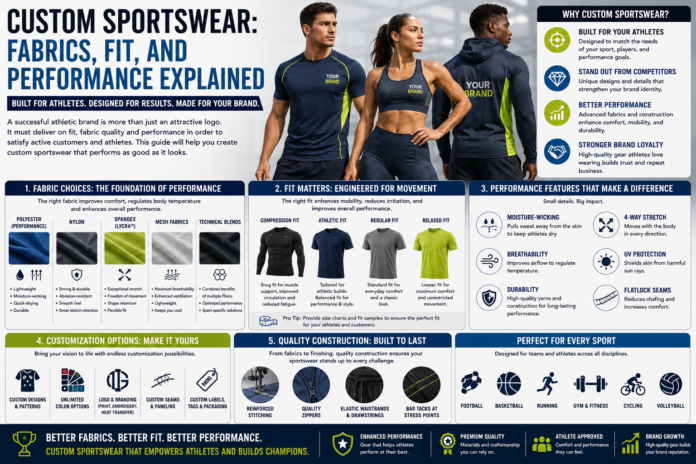
A successful athletic brand is more than just an attractive logo. It must deliver on fit, fabric quality and performance in order to satisfy active customers and athletes. Brands who understand the relationship between these three elements can produce apparel that is both professional and functional, while also supporting comfort, durability, and movement. This guide will help you to make informed decisions about your next product line by explaining the fabric choices, fit considerations and performance features of quality custom sportswear.
Fabrics, fit, and performance define custom sportswear
When design, functionality, and comfort are all in sync, custom sportswear is a success. Fabric selection determines the ability of a garment to manage moisture and resist wear. Fit influences how an athlete can move freely during activity. Performance features such as compression, breathability and stretch bind these elements into a final product that meets the real needs of athletes. Brands that consider all three factors in the development of custom sportswear produce products that are as functional as they are beautiful.
Custom Sportswear Fabric Options
The fabric you choose will determine the comfort, durability and performance of your custom sportswear.
Polyester and Blends of Polyester
The most popular fabric for custom sportswear is polyester. It wicks away moisture, dries fast, and resists wrinkles. Polyester blends with spandex provide stretch and recovery to improve comfort when moving dynamically. Many jerseys, training tops and shorts are made from polyester blends.
Nylon Fabrics
Nylon is a durable and abrasion-resistant material, which makes it an excellent choice for sportswear that will be exposed to frequent friction or rough contact. Nylon dries fast and does not stretch out of shape. This means that garments will maintain their fit even after repeated wear. While nylon by itself can feel less breathable, adding mesh panels or moisture wicking finishes will improve airflow.
Spandex and Elastane blends
Custom sportswear can move more freely with the body when made from elastane and spandex. Manufacturers blend these fibers in small amounts into nylon or polyester fabrics to increase flexibility without compromising durability. Blends of spandex are used in leggings, fitted athletic tops and compression wear.
Mesh and Ventilated fabrics
Mesh fabrics allow for greater breathability, especially in areas that generate heat, like the back, sides, and underarms of a garment. Strategic mesh placement is important to regulate temperature in these areas, which generate heat when exercising. Custom sportswear often incorporates mesh panels to provide athletes with targeted cooling.
Recycled and sustainable fabrics
Many brands are now incorporating recycled polyester or sustainable fabric blends in their custom sportswear line. These materials are comparable to virgin polyester, but have a lower environmental impact. This appeals to eco conscious athletes and consumers. Sustainability has therefore become a more important factor when selecting fabrics for new sportswear collections.
Fit considerations for custom sportswear
The fit directly impacts how comfortable and functional an item feels when worn. Brands must therefore carefully consider the sizing and shape of the garment during design.
Compression Fit
The compression fit garments hug your body tightly, helping to reduce muscle fatigue and increase circulation when you are doing high intensity activity. This style is ideal for leggings and sports-specific tops that are worn underneath additional layers.
Athletic Fitness
Athletic fit is a compromise between compression and loose sizing. It allows for enough movement without sacrificing too much fabric. Athletic fit garments are used in many team sports including basketball and soccer because they allow for dynamic movement while avoiding restrictions on flexibility.
Relaxed Fit
The relaxed fit provides more space throughout the body. This is ideal for casual training, warm-up clothing, or athletes that prefer extra airflow. While relaxed fit garments sacrifice some of the benefits of compression clothing, they offer greater comfort during lower-intensity exercises.
Size Consistency across a Product Line
Consistency in sizing is important to build customer confidence and reduce returns. Working closely with manufacturers to develop detailed size charts and test fittings will help ensure that every piece of your custom sportswear fits exactly as you intended.
Performance features that elevate custom sportswear
Specific performance features separate quality custom sportswear and basic athletic apparel beyond fabric and fit:
- Moisture wicking technology: Draws sweat away from skin during exercise to keep athletes dry.
- Four-way Stretch: Fabric can move in multiple directions to support dynamic athletic movements.
- Antimicrobial Treatment: Reduces bacteria that cause odors to keep you fresh during training sessions.
- Flatlock Seams: Reduces irritation and chafing at stitch points when repeated motions are performed.
- UV protection Protects the skin from harmful rays when training or competing outdoors.
- Reinforced stress areas: Strengthens areas of high tension like seams and underarms to improve durability.
You can design custom sportswear with real performance benefits by incorporating these features in your designs.
The Fabrics, Fit and Performance of Your Sport
Understanding your target sport will help you make the right design decisions. Brands developing Soccer apparel, for example, prioritize lightweight, breathable fabric paired with athletic fit to allow constant movement. basketball clothing often combines moisture wicking mesh panels and a relaxed to athletic fit for comfort in fast-paced games.
Rugby apparel, and American Football apparel are designed to be durable with reinforced stress points for contact sports. Ice Hockey Apparel pairs compression base layer fabrics with moisture-wicking exterior fabrics to combat cold environments.
Combat sports brands that produce MMA clothing choose fabrics with a four-way stretch and a compression fit for support of grappling and striking. badminton clothing , golf apparel , and tennis apparel also favor lightweight fabrics that are breathable with athletic fits for quick lateral movements. golf clothing is often made of moisture-wicking fabrics and sun-protective materials with a relaxed fit. baseball clothing, volleyball attire, all balance durability with flexibility to accommodate sport-specific movements.
Specialized categories require unique solutions. Formula 1 apparel is made from fire-resistant fabrics and a compression-style fit to provide driver comfort in extreme conditions. The sportswear range showcases different design approaches for nearly all sports.
Custom Sportswear from a trusted manufacturer
Working with a manufacturing partner who has experience is a great way to ensure that you get the right fabric, fit and performance features. A reliable manufacturer can help you with material selection, sizing and production.
We help brands create custom sportswear by aligning fabric selection, fit and performance features to their athletes’ needs. Contact our team to learn more about fabric options, sizing assistance, and production schedules that are tailored to your sport.
Conclusion
Fabrics, fit and performance features must work together to meet the athletes’ needs. Blends of polyester, nylon and spandex provide moisture management and flexibility. Compression, athletic and relaxed fits are available to accommodate different comfort levels and activity levels. Flatlock seams and antimicrobial treatments elevate the performance of basic apparel. Understanding how these elements are connected allows brands to design custom sportswear for athletes that builds customer loyalty.
FAQs
What is the best fabric for custom sportswear garments?
Most custom sportswear is made from polyester and polyester-spandex mixtures, which are wicking and stretchy and provide good recovery. The best fabric will depend on the sport you play and your performance requirements.
How can I find the perfect fit for my custom-made sportswear?
Athletic fit is best for team sports and base layers. Relaxed fit is good for casual training and warm-up. This decision is influenced by the movements of your athletes.
Why is moisture-wicking an important feature in custom sportswear designs?
The moisture-wicking fabric draws sweat from the skin, spreading it over the fabric’s surface to evaporate faster. This keeps athletes dryer and more comfortable. This feature is especially useful during long-duration or high-intensity activities.
Custom sportswear can include sustainable fabrics
Many manufacturers offer recycled polyester blends and other sustainable fabrics that perform as well as traditional materials. This option allows brands align their custom sportswear to eco-conscious values, without sacrificing the quality.