
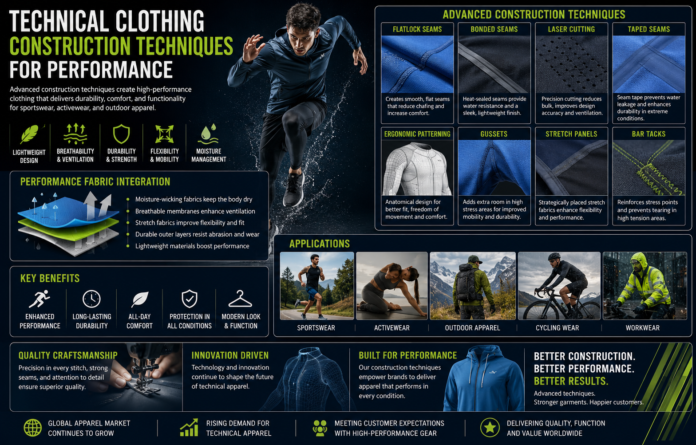
The use of technical clothing construction techniques helps manufacturers to create high-performance clothing for sportswear, active clothing, and outdoor apparel. Brands today need apparel that provides durability, comfort and flexibility. Manufacturers use advanced production techniques to improve the performance of garments.
Technical apparel is now a necessity for many industries, as customers demand lightweight, breathable and durable garments. Modern construction methods also help improve the quality and functionality of products. The global apparel market continues to grow as a result of the growth in technical clothing production.
Fabric selection improves technical apparel performance
Fabric selection is a crucial part of technical garment manufacturing. Performance apparel can lose its flexibility, comfort and durability if it is not made of high-quality materials. Fabrics are tested by manufacturers before production begins.
Professional Fabric Source Development helps brands choose suitable materials for performance clothing.
Manufacturers test their products:
- Moisture control
- Stretch recovery
- Breathability
- Fabric durability
- Lightweight performance
In turn, these techniques improve the functionality of clothing and its long-term performance.
The Pattern Maker Supports Better Garment Structural Design
The development of patterns is a key component in the production of technical clothing. The right garment pattern improves comfort, movement and fit consistency. Manufacturers focus on pattern accuracy before mass production.
Sample Making and Pattern Making can improve garment accuracy, and reduce production mistakes.
Professional pattern development improves:
- Garment Flexibility
- Product consistency
- Exercise and athletics
- Fit precision
Technical clothing construction techniques have improved apparel performance due to these improvements.
Cut and Sew Construction increases durability
The strength of technical garments is significantly improved by using advanced stitching techniques. Poor stitching can damage garments when worn repeatedly or during physical activity. Manufacturers use reinforced stitching methods to increase durability.
Professional Capability for Cut and Sew allows factories to produce durable and reliable apparel.
The factories usually reinforce:
- Shoulder seams
- Underarms
- Knees
- Side panels
- Waistbands
The result is that technical clothing construction methods improve the garment’s strength and reliability.
Performance Construction Enhances Functionality
Modern clothing requires more than just simple garment manufacturing. Today, many brands focus on functional features to improve comfort and performance. Manufacturers use advanced construction systems in production.
Performance Garment construction improves flexibility, airflow and moisture management.
Performance clothing includes:
- Ventilation panels
- Compression support
- Lightweight fabrics
- Stretch zones
In order to support the production of activewear and performance clothing, there are a number of technical construction techniques.
Tech Packs Improve Production Accuracy
A detailed production plan helps manufacturers to maintain consistency in their garments. Technical documents are used by factories to clearly guide each production stage.
Professional tech packs development helps reduce production errors and improve clothing accuracy.
Tech packs help improve:
- Measurement consistency
- Production speed
- Material Management
- Product quality
This process makes the construction of technical clothing more efficient and scalable.
Quality Control Maintains Product Standard
Technical apparel production requires a high level of quality control. Continuous inspections are required for large-scale production to reduce defects and increase consistency. Manufacturers inspect garments at every stage of production.
Professional QC Standards help factories maintain better apparel quality.
Teams of quality inspectors:
- Stitch quality
- Fabric defects
- Measurements
- Printing accuracy
- Garment finishing
The result is that technical clothing construction methods improve product reliability and customer satisfaction.
The use of size grading improves fit consistency
In the production of technical garments, it is crucial to use accurate sizing. Incorrect sizing can reduce comfort and increase product returns. Manufacturers use grading system to maintain consistency in fit.
Using development and size grading improves garment fit for all sizes.
This process is a step in the right direction.
- Fit precision
- Product consistency
- Customer satisfaction
- Brand Reputation
In turn, this helps brands create better products.
The conclusion of the article is:
Modern industries can benefit from the use of technical clothing construction techniques to create high-performance, durable apparel. The functionality of garments is improved by using strong fabrics, advanced sewing, professional pattern-making, and strict quality controls.
Brands today rely on the technical construction of clothing to create reliable apparel that meets customers’ expectations. Manufacturers continue to improve production systems in order to achieve better garment performance and durability.
FAQs
What are technical clothing construction techniques?
Technical clothing construction techniques are advanced production methods used to create durable and performance-focused garments.
Why is fabric selection important in technical apparel?
High-quality fabrics improve comfort, flexibility, durability, and moisture control in performance garments.
How does pattern making improve garment quality?
Pattern making improves fit accuracy, garment structure, and overall product consistency.
Why is quality control important in technical apparel manufacturing?
Quality control helps reduce production defects and maintain consistent garment quality.


